

State Supreme Court’s final decisions of term, Trump’s judicial nominee appears before Senate | COURT CRAWL
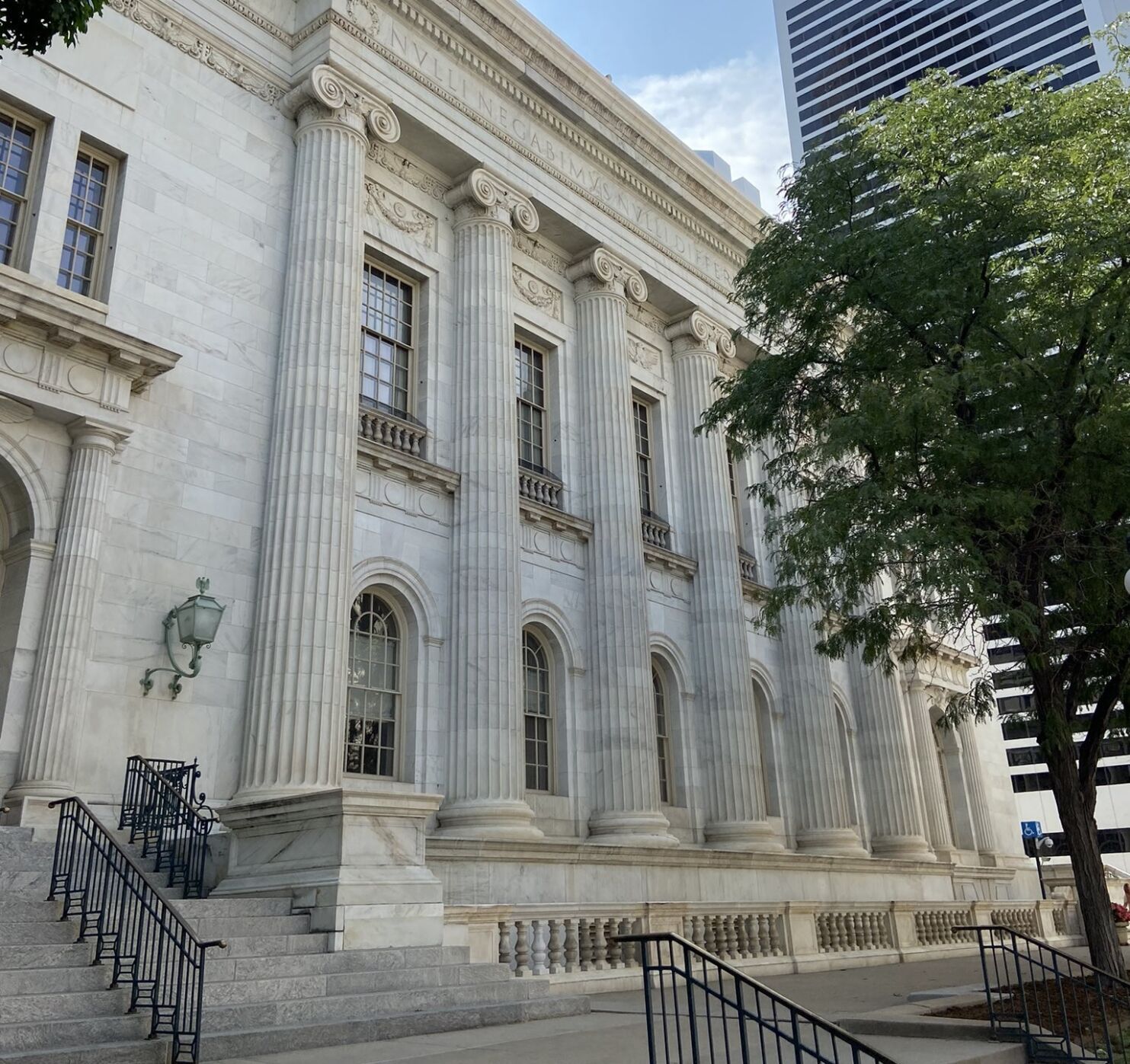
Welcome to Court Crawl, Colorado Politics’ roundup of news from the third branch of government.
The state Supreme Court has released its final opinions before its summer recess, plus the president’s nominee for the Denver-based federal appeals court fielded questions from the U.S. Senate Judiciary Committee.
Colorado Supreme Court news
• The Supreme Court decided that voters will not have a say about whether to adopt new congressional district boundaries for the 2028 and 2030 elections, spiking various proposals that favored Democrats or Republicans.
• A group that spent $4 million to influence the 2020 election doesn’t have to disclose its donors or expenditures, the justices decided.
• A man who sued over his daughter’s death in a traffic accident waited too long to file his complaint under a confusing matrix of conditions in state law, the Supreme Court decided.
• Intimate messages planning a sexual encounter were irrelevant to a defendant’s assault case because the injuries he inflicted on the victim bore little resemblance to the talked-about activities, the justices concluded.
• Even though a jury instruction didn’t accurately reflect Colorado law, the Supreme Court upheld a defendant’s convictions for child abuse resulting in death by 6-1.
• Property owners may access evidence before a judge decides whether a government entity can take possession of property in eminent domain proceedings.
• The justices decided that Boulder detectives overreached when they interrogated a suspect at length using an order narrowly authorizing them to collect his DNA.

• Leaving-the-scene prosecutions don’t require proof that drivers knew they were involved in an accident resulting in injury, although one member of the Supreme Court argued there is an unacceptable risk of convicting a “morally blameless” driver.
• The court concluded that prosecutors can receive an extension to file an appeal of a trial judge’s order in the same way that defendants can under the criminal rules.
• By 6-1, the justices concluded that a civil defendant can avoid participating in a case, show up at trial to testify for their codefendant, and receive the benefit of the jury’s verdict.
• The Supreme Court decided that a corporate plaintiff could pursue fraud claims in addition to breach-of-contract claims, as the fraud occurred before the relevant contract was signed.
• During oral arguments, the justices considered whether an insurer has an obligation to defend a manufacturing company against further asbestos-related lawsuits after its primary insurance policies became insolvent.
• The justices considered two relatively far-apart proposals for whether a plaintiff can belatedly amend their civil lawsuit and ask for a jury trial.
• The court considered how to fix a problem it created when it told a defendant two years ago to file a postconviction challenge after a change in legal interpretation, but didn’t outline the proper procedure for doing so.
• The justices seemed to agree that a father is entitled to a review of a temporary child custody order that, due to a procedural twist, is simultaneously the final decision and no longer in effect.
Heard on appeal
• The Court of Appeals revived a proposed class-action lawsuit against multiple landlords who violated state law with certain language in their leases.
• The Court of Appeals reversed a defendant’s assault convictions because the trial judge omitted a key jury instruction that could have affected the outcome.

In federal news
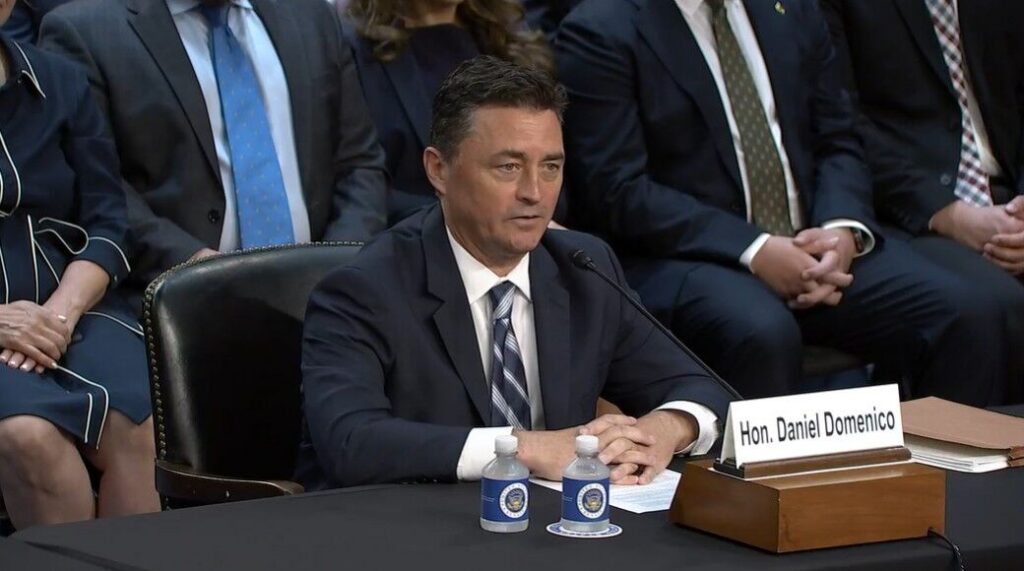
• The White House’s nominee for a Colorado-based vacancy on the U.S. Court of Appeals for the 10th Circuit appeared for his Senate confirmation hearing last month. U.S. District Court Chief Judge Daniel D. Domenico, like other nominees, refused to say who won the 2020 presidential election and whether the Jan. 6, 2021, attack on the U.S. Capitol was an “attack on the Capitol.”
• “His allegiance is to the law and he will conduct himself free of partisan influence. He understands the importance of an independent judiciary to our system of government,” wrote former Attorney General John Suthers, who hired Domenico as Colorado’s solicitor general, in a letter of support.
• Domenico also defended his decision to side with the government’s expansive view of its immigration detention authority, and shared his thoughts about the constitutional right to due process for noncitizens.
• Citing his answers to the committee and his immigration views, U.S. Sens. Michael Bennet and John Hickenlooper have announced that they will vote against confirming Domenico.
• The 10th Circuit provided a binding answer to the question of whether the government can place people in immigration detention in the interior of the country without an opportunity to demonstrate their suitability for release on bond: No, it can’t.
• Less than 24 hours later, Domenico, who was the only Colorado judge to embrace the government’s view, ordered bond hearings in at least 20 cases that had been awaiting a ruling.
• Even before the 10th Circuit ruled, the government’s lawyers in Colorado had begun declining to advance arguments in opposition to multiple immigration detention challenges, for reasons that are unclear.
• The 10th Circuit reversed a defendant’s perjury conviction and had some pointed words for the prosecutor who asked a poor question in the first place.
• The 10th Circuit agreed that Colorado satisfied its obligation to pay a jury’s award to a plaintiff who proved the state violated his rights, even though the state intercepted the money and applied it toward the plaintiff’s crime victim restitution balance.
• A fire chief cannot be sued for firing a union leader in accordance with the procedures he negotiated in the labor agreement.
• The U.S. Supreme Court will hear Nebraska’s lawsuit against Colorado over a proposed canal in Sedgwick County.
Vacancies and appointments
• The governor appointed Magistrate Adam D. Kendall to succeed retiring District Court Judge Philip J. McNulty in the First Judicial District (Jefferson and Gilpin counties).
• The governor also selected Magistrate Michael B. Garlan to succeed now-Mesa County Court Judge Courtney L. Dinnel in her prior role as an Adams County Court judge.
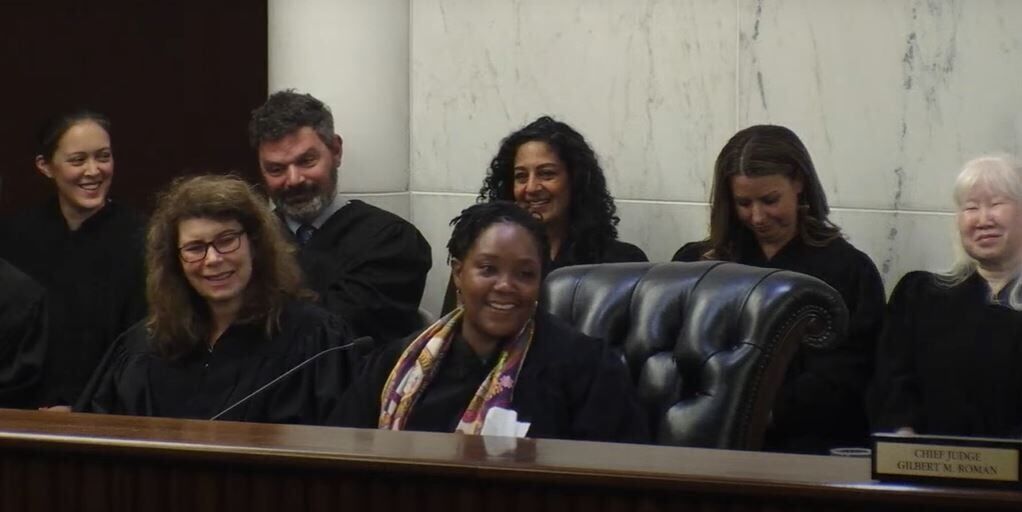
• There are three nominees to succeed retiring Chief Judge Gilbert M. Román on the Court of Appeals: Kyle Wesley Brenton, Denver District Court Judge Adam J. Espinosa, and Jillian Joy Price.
• There are three finalists to succeed District Court Judge A. Danielle Touart in her former role as an Arapahoe County Court judge: Jefferson County Magistrate Nicholas Jacob Campbell, Arapahoe County Magistrate Dalia D. Labrador, and Patrick E. Thompson.
• Finally, there are two nominees to succeed now-District Court Judge Deni E. Eiring in her prior role as a Cheyenne County Court judge: Ashton Evonne Mitchek and Stacy L. Noe.
• Applications are due by July 15 to succeed retiring Kit Carson County Court Judge Michael K. Grinnan in the part-time role.
• Kara Veitch, the governor’s chief legal counsel who has been heavily involved in judicial selection, will be leaving for the States United Democracy Center.
• The chief justice appointed District Court Judge Samuel S. Vigil to be the new chief judge of the 16th Judicial District (Bent, Crowley, and Otero counties). He succeeded retired Chief Judge Mark A. MacDonnell.
Miscellaneous proceedings
• Denver Public Schools is facing a federal lawsuit challenging the constitutionality of its school board district boundaries.
• A Denver judge dismissed a challenge to the city’s ban on flavored tobacco products.
• Disgraced former Colorado DNA scientist Yvonne “Missy” Woods pleaded guilty to four charges related to her alteration of evidence in criminal cases.
On break
• Because things will be a bit slower during the summer, Court Crawl will be published every other week during July and August.

Schoolchildren’s presence at child sex-related trial did not harm Arapahoe County defendant, appeals court says
Michael Karlik
michael.karlik@coloradopolitics.com
Updated 2 hours ago
Colorado’s second-highest court decided on Thursday that the presence of a group of schoolchildren on the first day of a child sexual exploitation trial did not violate an Arapahoe County defendant’s constitutional right to a fair trial. Prosecutors charged Jerry...
Appeals court cites week-old Colorado law to reinstate child neglect case at child, father’s request
Michael Karlik
michael.karlik@coloradopolitics.com
Updated 1 day ago
Colorado’s second-highest court invoked a new state law for the first time on Thursday and reinstated a child neglect case that both the child and her father wished to reopen. House Bill 1227 took effect on Aug. 12, reversing a...
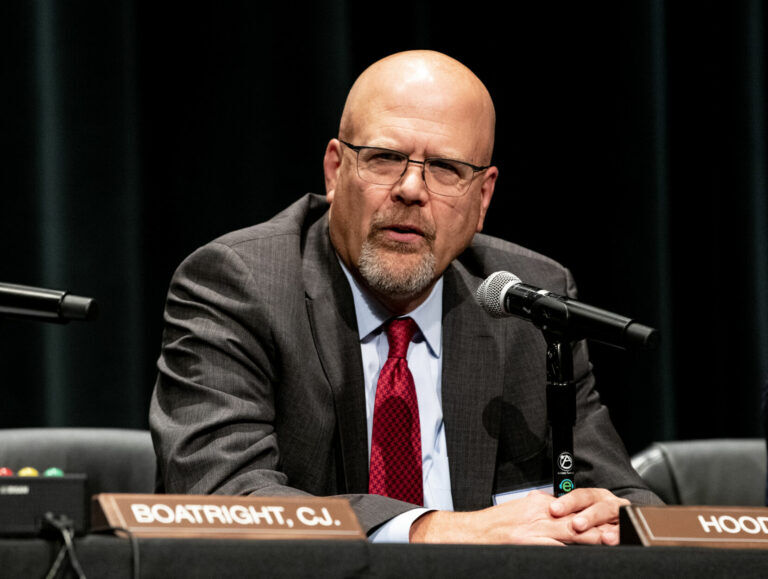
Colorado Supreme Court names William Hood as next chief justice
Michael Karlik
michael.karlik@coloradopolitics.com
Updated 1 day ago
The Colorado Supreme Court has selected Justice William W. Hood III to be the next chief justice, the judicial branch announced on Friday. Hood will succeed Chief Justice Monica M. Márquez, who took over the role in July 2024. “I...

Appeals court upholds Park County trophy hunting conviction
Michael Karlik
michael.karlik@coloradopolitics.com
Updated 24 hours ago
Colorado’s second-highest court clarified on Thursday that a defendant may stand convicted under the state’s trophy hunting laws if he abandons a bear carcass but returns later to remove the meat. Under Colorado law, it is a felony to detach...

Judge grants partial injunction to GEO in fight against state health inspection law
Kyla Pearce
kyla.pearce@gazette.com
Updated 2 days ago
A judge ruled Thursday that The GEO Group does not have to follow parts of a new state law requiring more frequent health and safety inspections at the U.S. Immigration and Customs Enforcement processing center in Aurora. Under the order...

Parker man faces 20 years to life for serial sexual assaults
Nicholas Fogleman
nicholas.fogleman@denvergazette.com
Updated 2 days ago
A 25-year-old Parker man who sexually assaulted three women in 2025 pleaded guilty Wednesday and will serve 20 years to life in prison. Javier Rodriguez-Andrade pleaded guilty to charges stemming from three sexual assaults involving women ages 19 to 24. ...
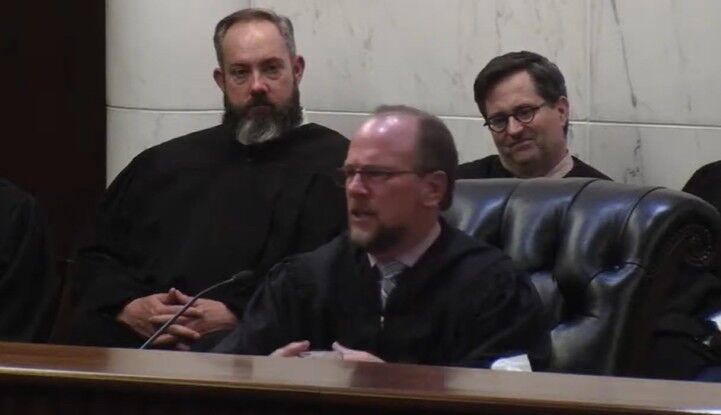
Divided appeals court upholds warrantless DNA collection in Colorado cold case, cautions of government overreach
Michael Karlik
michael.karlik@coloradopolitics.com
Updated 2 days ago
Colorado’s second-highest court upheld the warrantless collection of a suspect’s DNA from a discarded soda can as constitutional on Thursday, while warning about potential abuse of DNA privacy in the absence of further guardrails. By 2-1, a three-judge Court of...
Man charged in Northglenn homicide of wife
Matt Kyle
matt.kyle@denvergazette.com
Updated 2 days ago
A man has been formally charged with murder and burglary relating to a homicide last week in Northglenn. Alexei Munive-Rodriguez, 48, was arrested Sunday after he was at large following the homicide, which occurred Friday. Police were dispatched around 10:30...

10th Circuit grants immunity to officers for fatal Manitou Springs shooting
Michael Karlik
michael.karlik@coloradopolitics.com
Updated 1 day ago
The Denver-based federal appeals court ruled on Wednesday that responding officers from Manitou Springs and El Paso County cannot be held constitutionally liable for shooting and killing a man after a 20-minute standoff. Wilford Deweese allegedly pulled out a gun...
10th Circuit rejects invitation for full-court review of tax-avoidance case
Michael Karlik
michael.karlik@coloradopolitics.com
Updated 3 days ago
The Denver-based federal appeals court declined to reconsider the standards for holding entities liable for their tax-avoidance schemes, with a majority of judges voting against full-court review on Monday. In April, a three-judge panel of the U.S. Court of Appeals...
PREV
PREVIOUS

Colorado joins 24-state challenge to USPS rule tied to Trump election order
The Colorado Attorney General’s Office joined 24 state attorneys general in filing a formal complaint against what it called the U.S. Postal Service’s attempt to aid President Donald Trump’s efforts to seize control of elections and restrict mail-in voting. In March, Trump signed an executive order calling for the compilation of a list of individuals […]

United Way of Southern Colorado calls for donations, anticipates long recovery from Aspen Acres fire
As firefighters battle the Aspen Acres fire, the United Way of Southern Colorado is helping those displaced by the blaze. “This is going to take months and months to recover from,” said Shanna Farmer, president and CEO of the nonprofit, who noted the full scope of the disaster is unknown. The United Way of Southern […]