

Trump’s 10th Circuit nominee declines to name 2020 election winner, defends immigration decisions
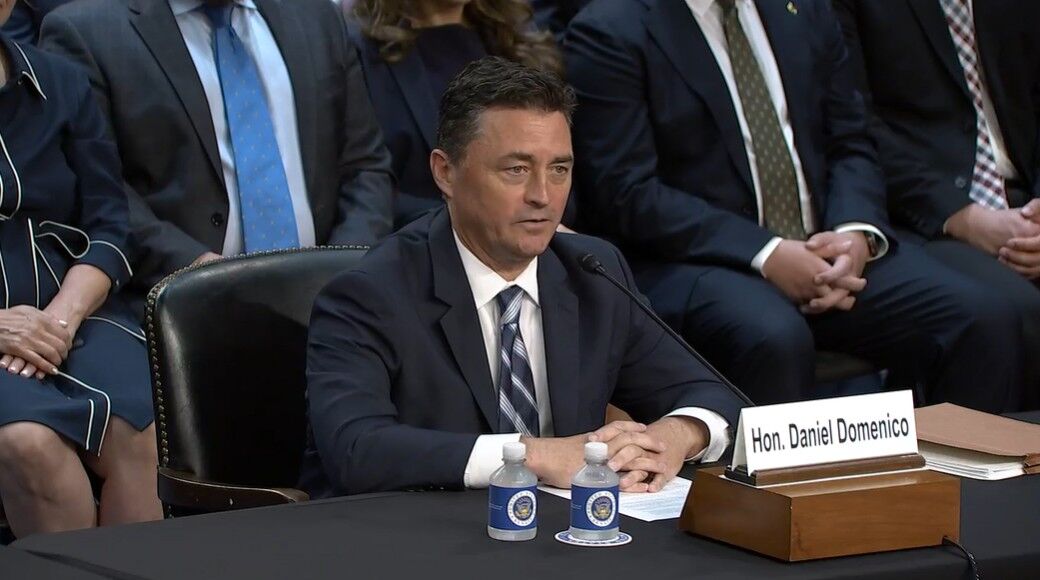
President Donald Trump’s nominee to the Denver-based federal appeals court declined to say who won the 2020 presidential election during his appearance before the U.S. Senate Judiciary Committee on Wednesday, and defended his recent rulings in immigration detention cases.
U.S. District Court Chief Judge Daniel D. Domenico, who Trump appointed during his first term to Colorado’s federal trial court, is seeking to fill a vacancy on the U.S. Court of Appeals for the 10th Circuit, which hears appeals in federal cases arising from Colorado and five neighboring states. The court has seven Democratic and five Republican appointees among its 12 full-time judges, and Domenico’s appointment would not alter that balance.
During Domenico’s Senate hearing, Sen. Richard Blumenthal, D-Conn., asked Domenico who won the 2020 election, which is a routine question he poses to Trump’s judicial nominees. Domenico, like other nominees, did not acknowledge that former President Joe Biden had prevailed.
“I was not told what to say,” Domenico responded when Blumenthal suggested that the White House had coached him on the topic, although Domenico acknowledged he “did engage with the Justice Department.”
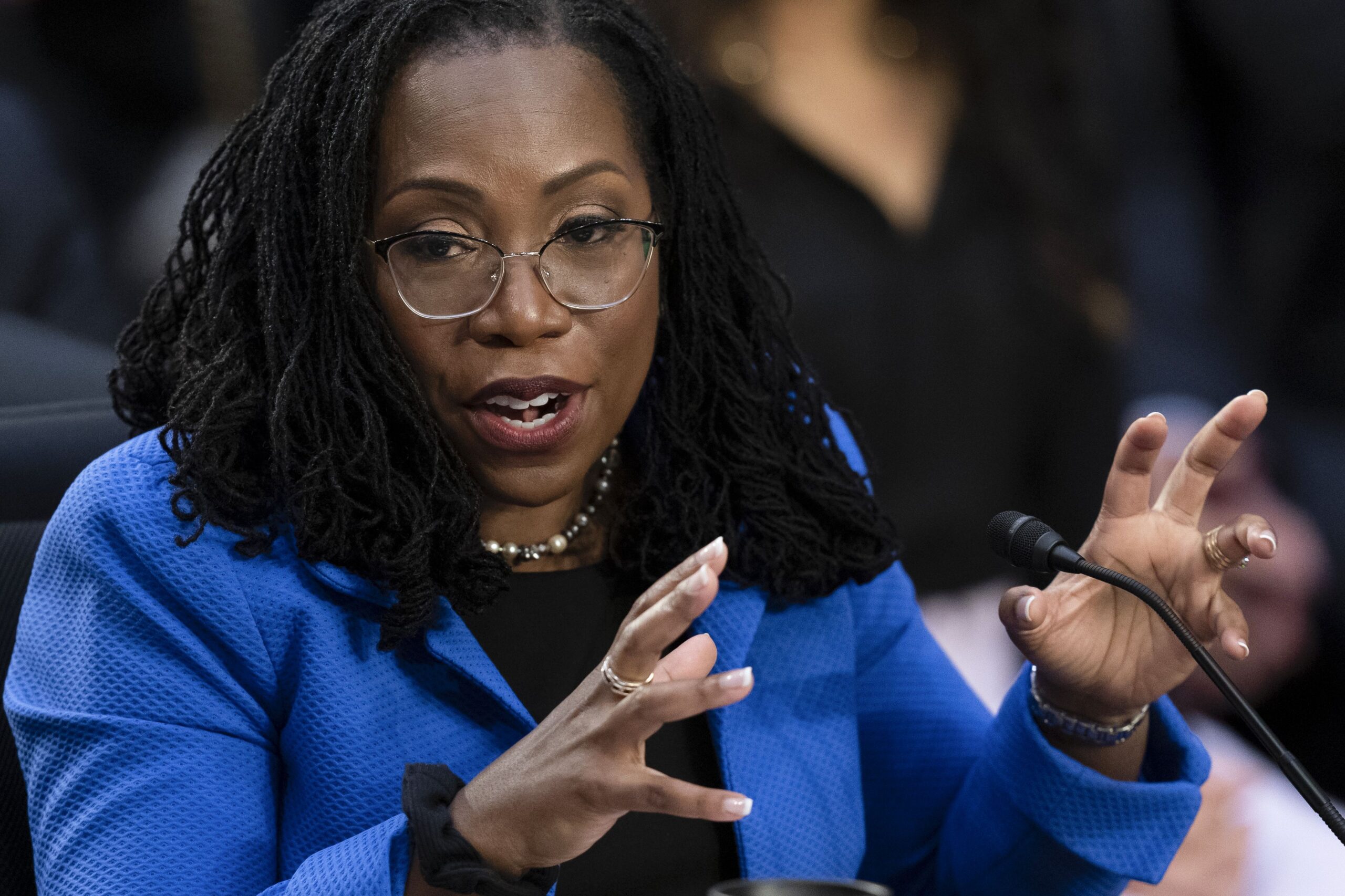
When asked who won the popular vote, Domenico responded that “commenting on a matter of political debate like that is inappropriate for a sitting judge,” and referenced U.S. Supreme Court Justice Ketanji Brown Jackson’s response during her 2022 confirmation process.
At the time, replying to a written question about whether she had “commented, publicly or otherwise, on the results of the 2020 election,” Jackson wrote that it would be inappropriate under the judicial code of conduct to weigh in on “any subject of political debate.”
Domenico further declined to say whether the Jan. 6, 2021, attack on the U.S. Capitol by Trump’s supporters was an “attack on the Capitol,” but he acknowledged that participants “attacked police officers” and engaged in violence and vandalism.
“I’m willing to say that if I were in your courtroom and I gave these kinds of answers to you as a judge on the federal bench,” said Blumenthal, “you would throw me out of your courtroom.”
History on the bench
Domenico hopes to succeed Judge Timothy M. Tymkovich on the 10th Circuit, who is taking a form of semi-retirement known as “senior status.” Domenico was one of Tymkovich’s first clerks after graduating from Georgetown University and the University of Virginia’s law school. He then became Colorado’s solicitor general under Republican Attorney General John Suthers. He argued two cases before the Supreme Court and otherwise represented the state until he entered private practice in 2015.
According to the questionnaire Domenico submitted to the Senate Judiciary Committee for his district court nomination, he was originally interested in succeeding now-Justice Neil M. Gorsuch on the 10th Circuit after Gorsuch joined the Supreme Court in Trump’s first term. The White House, however, chose to nominate Domenico for a district court vacancy.
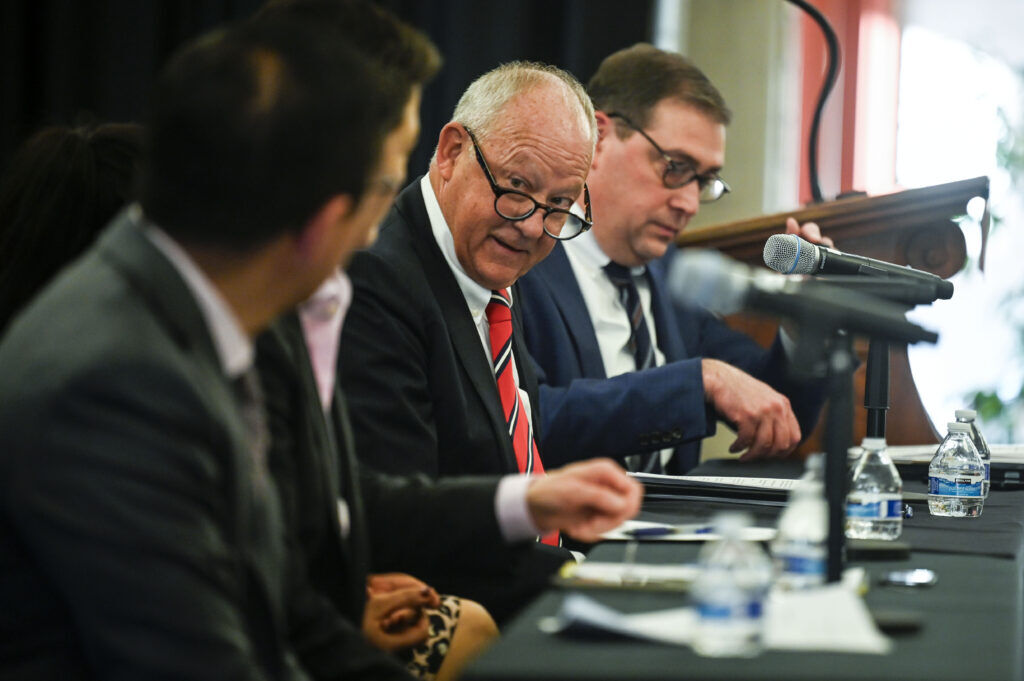
As a trial judge, Domenico has handled cases of high political significance. He blocked Colorado from enforcing a ban on “abortion reversal” treatment against a Catholic health clinic; required the state to accept a Christian preschool into its universal pre-kindergarten program despite its policies conflicting with the state’s non-discrimination requirements; exempted two Denver-area churches from certain health restrictions early in the COVID-19 pandemic; and permitted a Castle Rock church to circumvent zoning restrictions for faith-based reasons.
One case he handled, involving Colorado’s effort to regulate interest rates charged by out-of-state banks to Colorado residents, is destined for a rare full-court review by the 10th Circuit in August, after a 2-1 decision overturned his preliminary injunction last year.
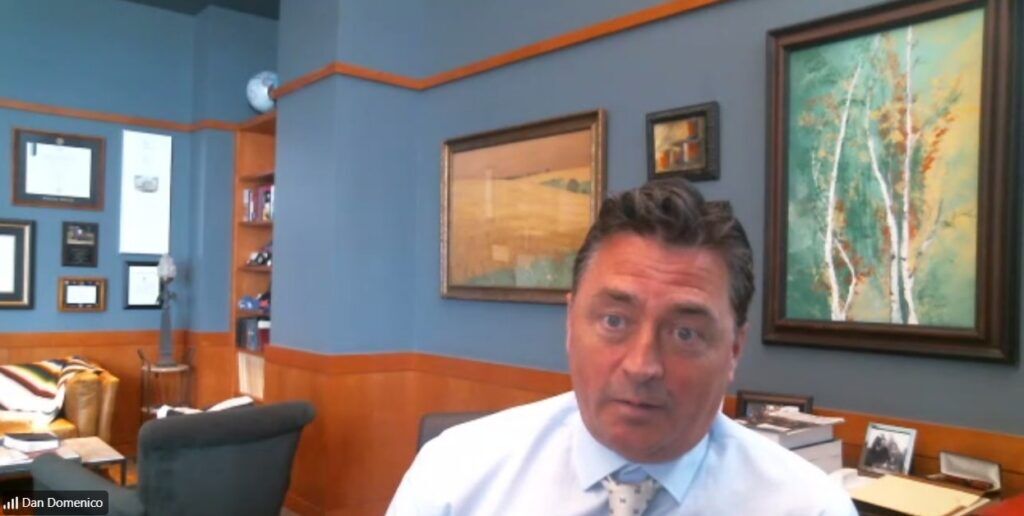
Recently, he became the only federal judge in Colorado to rule that the government is empowered to detain people in immigration custody without a bond hearing when they have been present in the country for years. Domenico has also waited much longer than his colleagues to issue decisions in detention challenges and has sided with the government more often, a recent Colorado Politics analysis found.
Sen. Dick Durbin, D-Ill., pressed Domenico on his decision-making.
“Overwhelmingly, district court judges, appointed by both presidents Republican and Democrat, have held that mandatory detention of these individuals is illegal,” he said. “You, however, are an outlier, which even you’ve acknowledged in several of your opinions.”
Durbin asked how Domenico could be “a neutral arbiter presiding over challenges to this administration’s action?”
“I have ruled in favor of petitioners in a number of those cases on separate bases. So, I take those cases very seriously,” Domenico responded. “I think the best interpretation (of the government’s detention authority) is the one that I’ve adopted. On other issues, I have, in fact, ruled against the federal government’s position and granted petitions a number of times.”
Endorsements
Sen. Ted Cruz, R-Texas, wrote a statement introducing Domenico, which was read by committee chair Sen. Chuck Grassley, R-Iowa. Cruz knew Domenico when each was the solicitor general of his respective state.
“Even lawyers who disagreed with him on questions of policy respected him as a serious lawyer who approached every case with professionalism, preparation and intellectual honesty,” Cruz wrote. “Since taking the bench as a federal district judge, Judge Domenico has continued to demonstrate the qualities that made him such an effective advocate: diligence, fairness, humility and respect for the proper role of the judiciary.”
The committee received several letters endorsing Domenico’s nomination. Suthers, the former attorney general, wrote that he “always believed (Domenico) was best suited for the appellate bench.”
“His allegiance is to the law and he will conduct himself free of partisan influence. He understands the importance of an independent judiciary to our system of government,” Suthers added.
Two former governors, Republican Bill Owens and Democrat Bill Ritter, wrote that Domenico “earned a reputation across the Colorado legal community for his intellectual rigor, fairness, and fidelity to the law. He does not approach cases with an eye toward political outcomes but follows precedent, applies the law as written and respects the proper role of the judiciary in our constitutional system.”

The committee also heard from former law clerks of Tymkovich, Colorado attorneys, six former solicitors general of other states, Domenico’s former law clerks and a former 10th Circuit judge from Utah.
Sen. Michael Bennet, who voted for Domenico’s confirmation to the district court in 2019 and who played a major role in filling Colorado-based judicial vacancies during the Biden administration, submitted a statement to the committee about Domenico’s circuit nomination. Neither Bennet’s office nor the committee could immediately provide Colorado Politics with the statement after the hearing.
Other questions
Domenico also fielded questions about what he learned as a trial judge, about his experience and about his demeanor. Grassley alluded to recent reporting about federal judges who exhibited poor behavior in their chambers and asked Domenico about his thoughts on treating clerks with “dignity and respect.”
“I think that’s perhaps one thing we can thank, in part, Judge Tymkovich for. He was an example of that. … He treated us all with respect and dignity,” Domenico said. “A judge has incredible power over what will happen to them in their careers. There is a real power dynamic there that can be abused. And avoiding that sort of abuse is important to me.”
Sen. Mike Lee, R-Utah, asked Domenico about his views on the role dissenting opinions play in appellate courts.
“A large part of the reason that we judges write written opinions is to explain our position, to serve a public purpose,” he said. “I think there’s that value. It can perhaps lay out reasons why the court should, in the future, reconsider things.”
Finally, Durbin asked whether the due process guarantees of the U.S. Constitution, which apply to any “person,” are limited to citizens. Domenico said the right is “mostly for citizens,” but there are protections for others “under binding current precedent.”

Local party leaders, incoming judge among members of judicial performance commission that violated law
Michael Karlik
michael.karlik@coloradopolitics.com
Updated 13 hours ago
A local Democratic leader and 2024 presidential elector. A legislative aide and leader in the Young Republicans. An incoming county court judge freshly appointed by the governor. They are among the eight members of the northeastern Colorado judicial performance commission...
Judge dismisses lawsuit seeking records from Colorado Democratic group
Marianne Goodland
marianne.goodland@coloradopolitics.com
Updated 1 day ago
A lawsuit seeking to obtain records from Democratic lawmakers affiliated with a caucus has been thrown out by a Denver District Court judge. On July 17, Judge Ericka Englert dismissed the April lawsuit filed by progressive activist Derrick Blanton, who...
Colorado Springs mother Deborah Nicholls’ murder conviction overturned
Nick Smith
nick-smith@coloradopolitics.com
Updated 2 days ago
A Colorado Springs mother convicted in 2008 of murdering her three children in a house fire might get a new trial after a judge ruled that prosecutors withheld key evidence that could have impacted the jury’s verdict. Deborah Nicholls, whose...
Colorado court overturns illegal $7,000 restitution order
Michael Karlik
michael.karlik@coloradopolitics.com
Updated 1 day ago
Colorado’s second-highest court overturned a Weld County defendant’s obligation to pay more than $7,000 in crime victim restitution on Thursday because a trial judge failed to issue a legally compliant restitution order at the time of sentencing. In Colorado, as...

Appeals court rejects former DougCo commissioner’s legal fee claim
Nicholas Fogleman
nicholas.fogleman@denvergazette.com
Updated 2 days ago
The Colorado Court of Appeals rejected a former Douglas County commissioner’s bid for reimbursement of attorney fees she incurred while responding to multiple investigations into her conduct. The dispute stemmed from a 2019 anonymous letter sent to county officials alleging...
Appeals court orders second look at Denver Water’s immunity for cyclist’s injury
Michael Karlik
michael.karlik@coloradopolitics.com
Updated 2 days ago
Colorado’s second-highest court ordered another look at a bicyclist’s negligence lawsuit against Denver Water on Thursday, concluding that a trial judge needed to evaluate the utility’s potential immunity using the state Supreme Court’s new guidance. Joseph A. “Joey” Scott alleged...
Labels, duration not definitive proof of ‘intimate relationship,’ Colorado court rules in domestic violence case
Michael Karlik
michael.karlik@coloradopolitics.com
Updated 1 day ago
Colorado’s second-highest court clarified on Thursday that the length of a couple’s relationship and the labels they attach to it are not conclusive evidence of whether it is an “intimate relationship” that can give rise to a domestic violence prosecution....

Colorado AG urges Supreme Court to let Boulder climate lawsuit proceed
Marissa Ventrelli
marissa.ventrelli@coloradopolitics.com
Updated 2 days ago
Colorado Attorney General Phil Weiser has filed a court brief with the U.S. Supreme Court in a lawsuit brought by Boulder city officials seeking to hold oil companies liable for their environmental impact. The case began in 2018, when the...
10th Circuit says landowner cannot sue ex-Routt County judge for statements in decision
Michael Karlik
michael.karlik@coloradopolitics.com
Updated 3 days ago
A Routt County landowner cannot sue a former judge for his allegedly inaccurate statements in a case where the landowner was not a party, the Denver-based federal appeals court decided on Wednesday. Anne Fitzsimmons, who lives in Germany, owns a...
Defendant’s competency in question in El Paso County case involving slain Army police officer
Nick Smith
nick-smith@coloradopolitics.com
Updated 3 days ago
It will be another 60 days before a 4th Judicial District court determines if a man charged in the shooting death of an Army police officer is competent to proceed in his case. Judge Erin Sokol granted a request Wednesday...
PREV
PREVIOUS
Colorado repeals attorney immigration attestation law after one year
One year and 12 days. That’s how long a Colorado law requiring attorneys to certify they would not use court data for federal immigration enforcement remained on the books before lawmakers repealed it. Gov. Jared Polis signed the initial legislation, Senate Bill 25-276, on May 23, 2025. That legislation extended to the courts a law […]
Homeless recruits of 'The Program' say they were told to sign NDAs amid investigations in Colorado
Several formerly homeless people — each drawn into an Aurora-based enterprise known as “The Program” that promised free housing and cash in return for letting a home-health business administer prescriptions they were given — said they were pressed into signing nondisclosure agreements about the arrangement just days before Medicaid suspended the agency amid investigations into […]