

10th Circuit says landowner cannot sue ex-Routt County judge for statements in decision
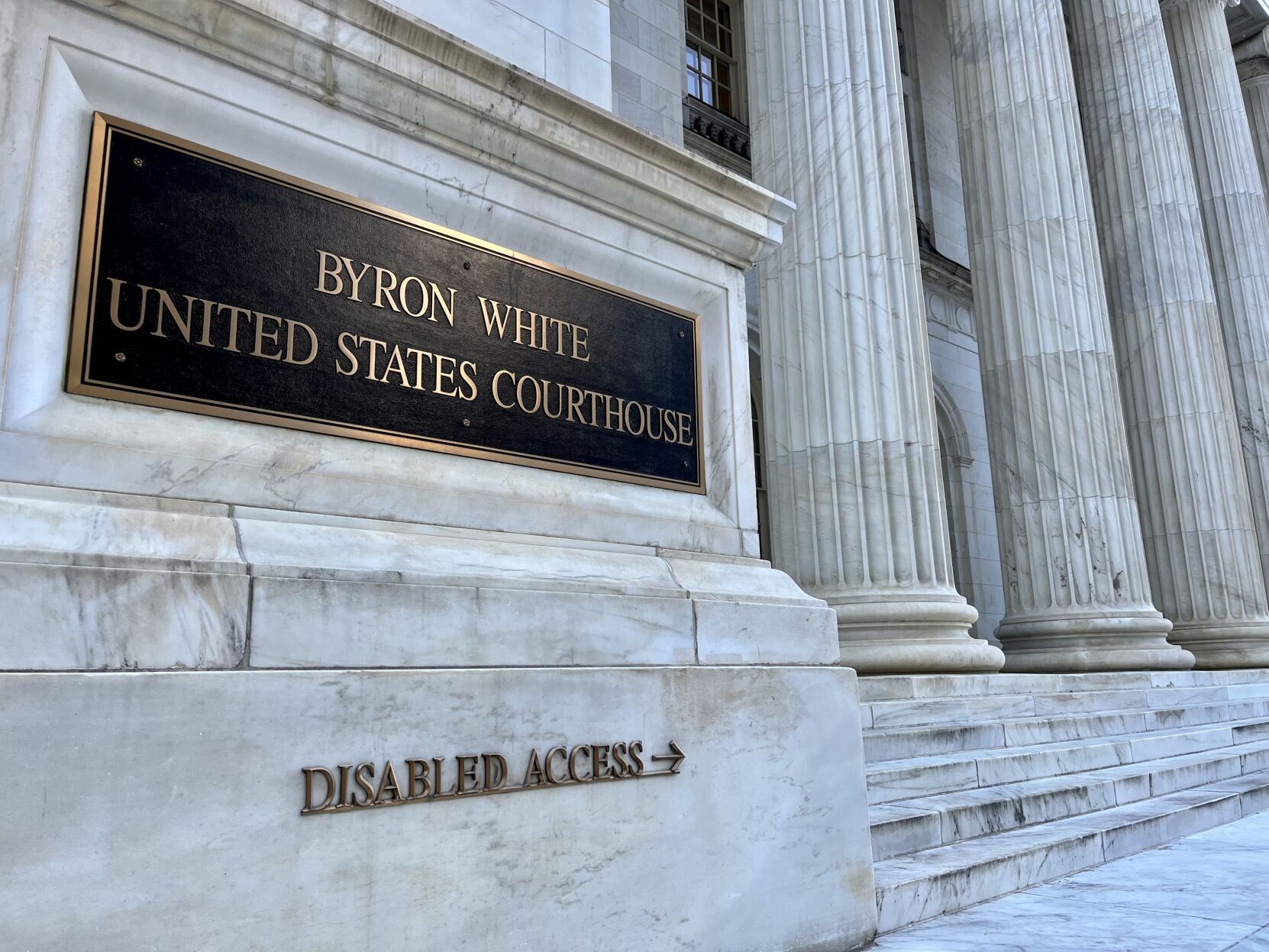
A Routt County landowner cannot sue a former judge for his allegedly inaccurate statements in a case where the landowner was not a party, the Denver-based federal appeals court decided on Wednesday.
Anne Fitzsimmons, who lives in Germany, owns a residence and farm in Routt County that includes a single-lane easement. She alleged that a neighboring property owner threatened her if she did not allow others to access the easement. Fitzsimmons’ sister, Kathleen Fitzsimmons, who was living at the property, installed a locked gate across the lane in 2021.
Prosecutors charged Kathleen Fitzsimmons with a misdemeanor for obstructing a highway, and the jury found her guilty. She appealed her county court conviction to then-District Court Chief Judge Michael A. “Mick” O’Hara III. O’Hara upheld the conviction, and he briefly described the case as stemming from the installation of a gate “across an easement road that benefits multiple properties.” He added that Anne Fitzsimmons’ property “is one of the parcels benefitted by the easement.”
Representing herself, Fitzsimmons sued O’Hara over that characterization of her property. She alleged his brief description of the criminal case “adjudicated her property rights,” and law enforcement or neighboring property owners could use those two sentences to justify access to the easement.
“There is no evidence anywhere to substantiate the Defendant’s statements of facts,” Fitzsimmons wrote. “Plaintiff’s driveway easement does not ‘benefit multiple properties,’ and the Plaintiff’s property is not one of many properties benefitted by her driveway easement.”
In May 2025, U.S. Magistrate Judge Timothy P. O’Hara, who is not related to Chief Judge O’Hara, recommended dismissing Fitzsimmons’ lawsuit. He determined there were multiple reasons to do so, including the 11th Amendment’s general prohibition on lawsuits against states. Because Fitzsimmons had sued Chief Judge O’Hara in his official capacity, she was effectively suing the state.
Even though an exception exists for plaintiffs seeking to halt ongoing harmful conduct, “Plaintiff seeks to correct past conduct, not to address any ongoing, prospective violation of federal law by Defendant,” wrote Magistrate Judge O’Hara.
U.S. District Court Judge Gordon P. Gallagher adopted the recommendation and had unusually harsh words for Fitzsimmons.
“Sometimes it is incumbent upon a Court to not only be clear about its reasoning but to also be incredibly blunt. This is one of those times,” he wrote. “Ms. Fitsimmons, (sic) you need to stop filing these frivolous lawsuits.”

Gallagher elaborated that he handled a previous lawsuit Fitzsimmons filed against Routt County officials over the easement. At the time, Gallagher dismissed the case for multiple reasons and Fitzsimmons did not appeal. Although Chief Judge O’Hara was not a defendant, Fitzsimmons filed a second lawsuit in 2023 that named him. A different judge dismissed that case after Fitzsimmons did not follow the filing instructions.
Gallagher now emphasized that Fitzsimmons had “no actionable case in federal court regarding this situation.”
“Any attempt to bring action against Judge Michael O’Hara … is misguided, precluded by the operative immunity doctrines, and likely untimely,” Gallagher wrote. “Plaintiff is again cautioned not to attempt to relitigate this action under the guise of some other case.”
Fitzsimmons appealed to the U.S. Court of Appeals for the 10th Circuit, where she maintained that Chief Judge O’Hara effectively decided her property rights in his summary of the criminal case, which has “ongoing consequences.”
“By pronouncing that the easement ‘benefits multiple properties,’ the order invites third-party use of Plaintiff’s privately maintained driveway — functionally converting it to a public-facing access route — without process or compensation,” she wrote.
Case: Fitzsimmons v. O’Hara
Decided: August 5, 2026
Jurisdiction: U.S. District Court for Colorado
Ruling: 3-0
Judges: Robert E. Bacharach (author)
Harris L Hartz
Allison H. Eid
But a three-judge 10th Circuit panel agreed that the 11th Amendment prohibited Fitzsimmons from suing Chief Judge O’Hara as if she were suing the state itself.
“Granted, an exception exists when state officials are sued for prospective injunctive relief to prevent them from enforcing a law that creates an ongoing violation of federal law,” wrote Judge Robert E. Bacharach in the Aug. 5 order. “But this exception doesn’t apply. The alleged violation consists of two discrete statements about property rights (rather than an ongoing violation of federal law), and the judge isn’t charged with enforcement; his duties ended when he affirmed the sister’s conviction.”
The case is Fitzsimmons v. O’Hara.

Colorado Springs mother Deborah Nicholls’ murder conviction overturned
Nick Smith
nick-smith@coloradopolitics.com
Updated 3 hours ago
A Colorado Springs mother convicted in 2008 of murdering her three children in a house fire might get a new trial after a judge ruled that prosecutors withheld key evidence that could have impacted the jury’s verdict. Deborah Nicholls, whose...
Colorado court overturns illegal $7,000 restitution order
Michael Karlik
michael.karlik@coloradopolitics.com
Updated 3 minutes ago
Colorado’s second-highest court overturned a Weld County defendant’s obligation to pay more than $7,000 in crime victim restitution on Thursday because a trial judge failed to issue a legally compliant restitution order at the time of sentencing. In Colorado, as...
Appeals court orders second look at Denver Water’s immunity for cyclist’s injury
Michael Karlik
michael.karlik@coloradopolitics.com
Updated 2 minutes ago
Colorado’s second-highest court ordered another look at a bicyclist’s negligence lawsuit against Denver Water on Thursday, concluding that a trial judge needed to evaluate the utility’s potential immunity using the state Supreme Court’s new guidance. Joseph A. “Joey” Scott alleged...
Labels, duration not definitive proof of ‘intimate relationship,’ Colorado court rules in domestic violence case
Michael Karlik
michael.karlik@coloradopolitics.com
Updated 42 seconds ago
Colorado’s second-highest court clarified on Thursday that the length of a couple’s relationship and the labels they attach to it are not conclusive evidence of whether it is an “intimate relationship” that can give rise to a domestic violence prosecution....

Colorado AG urges Supreme Court to let Boulder climate lawsuit proceed
Marissa Ventrelli
marissa.ventrelli@coloradopolitics.com
Updated 3 hours ago
Colorado Attorney General Phil Weiser has filed a court brief with the U.S. Supreme Court in a lawsuit brought by Boulder city officials seeking to hold oil companies liable for their environmental impact. The case began in 2018, when the...
Defendant’s competency in question in El Paso County case involving slain Army police officer
Nick Smith
nick-smith@coloradopolitics.com
Updated 11 hours ago
It will be another 60 days before a 4th Judicial District court determines if a man charged in the shooting death of an Army police officer is competent to proceed in his case. Judge Erin Sokol granted a request Wednesday...
Parole, appeals deadlines and restitution: Colorado justices accept cases
Michael Karlik
michael.karlik@coloradopolitics.com
Updated 2 days ago
The Colorado Supreme Court announced on Monday that it will determine how a defendant’s parole-eligibility date should be calculated in instances where a new trial results in a sentence being imposed retroactively to the date of the original, since-overturned sentence....

Federal judge rejects DOJ bid to force Colorado to hand over voter information
Marissa Ventrelli
marissa.ventrelli@coloradopolitics.com
Updated 1 day ago
A U.S. district court judge has dismissed a lawsuit filed by the U.S. Department of Justice against Colorado Secretary of State Jena Griswold for refusing to provide the agency with personal voter information. Last December, the DOJ’s Civil Rights Division asked...
3 Colorado judges receive unfavorable retention recommendation as one performance commission violates rules
Michael Karlik
michael.karlik@coloradopolitics.com
Updated 2 days ago
Of the 123 Colorado judges standing for retention on the November ballot, citizen-led performance commissions found that three did not meet the required performance standards. However, in an unprecedented move, the commission charged with evaluating Supreme Court and Court of...

10th Circuit weighs Gross Reservoir expansion, judge’s ‘punishment’ of Denver Water
Michael Karlik
michael.karlik@coloradopolitics.com
Updated 1 day ago
Members of the Denver-based federal appeals court considered on Friday whether they could intervene in an ongoing infrastructure project to enlarge a Boulder County dam after a trial judge deemed the underlying permit unlawful nearly two years ago. Denver Water...
PREV
PREVIOUS
Major Colorado cannabis chain cuts 141 jobs at plant after selling its dispensaries
Native Roots, one of the longest-running and most well-known marijuana chains in Colorado, is shuttering its plant facility in Denver and has sold its retail locations to an investor. The plant closure at 4990 Dahlia St. will affect 141 workers, the company said in a letter filed with the state on Monday as required by […]

Northglenn city manager resigns immediately after 8 years
Northglenn will have a new city manager after the current one resigned effective immediately after eight years with the city. City Manager Heather Geyer was appointed in July 2018 and was the first woman to hold the role in the city’s history, a news release said. The city announced her resignation Tuesday, saying she will […]