

Labels, duration not definitive proof of ‘intimate relationship,’ Colorado court rules in domestic violence case
Colorado’s second-highest court clarified on Thursday that the length of a couple’s relationship and the labels they attach to it are not conclusive evidence of whether it is an “intimate relationship” that can give rise to a domestic violence prosecution.
In Colorado, domestic violence is not a crime itself, but rather a finding that accompanies criminal charges and triggers the requirement for defendants to receive domestic violence treatment on top of their sentence. Domestic violence applies to those in an intimate relationship, which the Colorado Supreme Court has interpreted to mean “romantic attachment.”
Yasniel Fonseca Jr. argued on appeal that his conviction for assault as an act of domestic violence could not stand because he and the victim were not in an intimate relationship. Specifically, the short length of time that they knew each other and their characterizations of the relationship were evidence that they were not boyfriend and girlfriend at the time of the assault.
A three-judge Court of Appeals panel disagreed that those factors were the only relevant metrics of an intimate relationship.
“No case appears to support the position that parties are in an intimate relationship only if they engage in what might be considered traditional dating activities like going to restaurants or movie theaters,” wrote Judge Elizabeth L. Harris in the Aug. 6 opinion.
Case: People v. Fonseca
Decided: Aug. 6, 2026
Jurisdiction: Adams County
Ruling: 3-0
Judges: Elizabeth L. Harris (author)
Ted C. Tow III
Jaclyn Casey Brown
There was no dispute that the victim stayed overnight at Fonseca’s house and confronted Fonseca in the morning about receiving notifications from other women on his phone. Both parties testified at trial, with the victim portraying Fonseca as the aggressor who assaulted her and Fonseca maintaining that the victim assaulted him.
Jurors convicted Fonseca of assault as an act of domestic violence.
On appeal, the prosecution and the defense argued whether Fonseca and the victim were in an intimate relationship at the time. The evidence showed that:
- They met over social media and saw each other three or four times over the course of three weeks
- They had sex on the first day they met, but not again
- They hung out and would “usually smoke and watch movies”
- The victim called their relationship one of “talking” and “on the verge of kind of maybe becoming something”
- The night before the assault they fell asleep cuddling
- The victim said Fonseca told her they were “locked in,” but Fonseca denied it
“If ‘intimate relationships’ are expanded to include the non-relationship here,” wrote public defender Daniel J. Sequeira, “it would open the door to inclusion of numerous forms of platonic friendships that the legislature did not intend to capture within the purview of domestic violence.”
“The very basis for the argument on the day of the assault was the victim’s concern that someone was interfering in their romantic relationship,” countered Assistant Attorney General Jaycey DeHoyos. “The law cares not about the title of the relationship, but the nature of the relationship. And here, the two acted as though they were dating.”
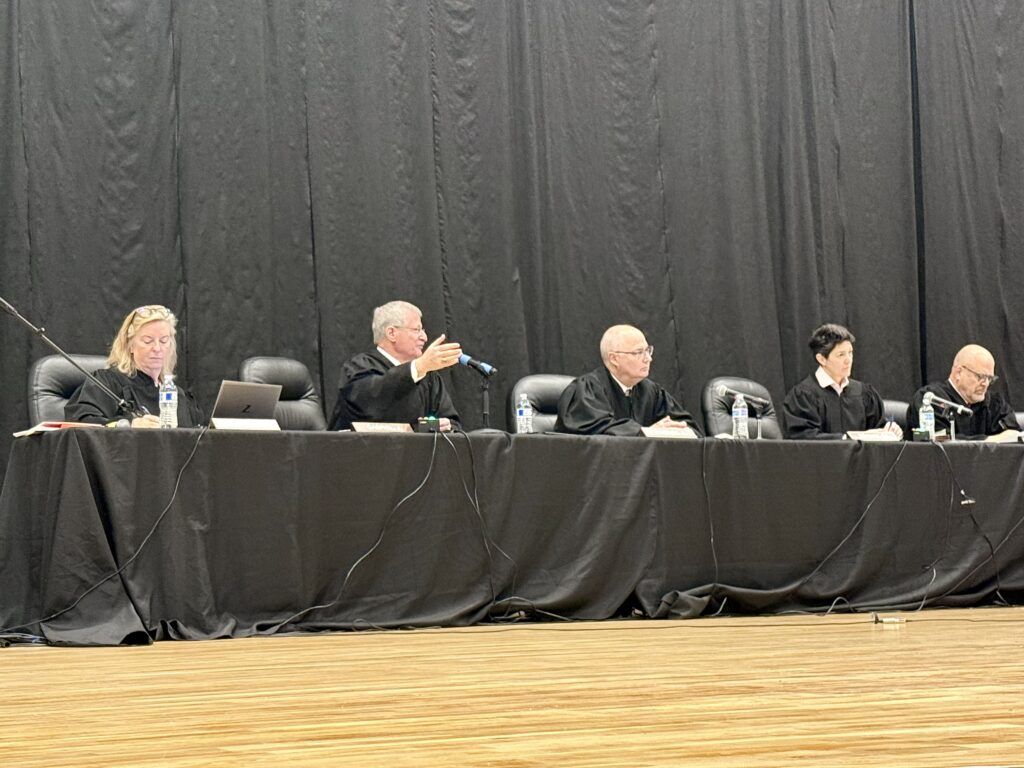
The Court of Appeals panel relied on a 2010 Supreme Court decision in which the justices rejected a defendant’s argument that an intimate relationship necessarily had to be sexual. The court indicated that the length and nature of a relationship plus the frequency of interactions were key factors in determining whether the relationship was intimate.
“We disagree with Fonseca that the duration of the relationship (three weeks of in-person contact) and the frequency of interactions (four over three weeks) preclude a finding of an intimate relationship,” wrote Harris.
She acknowledged that the evidence in Fonseca’s case was “not overwhelming,” but jurors could have reasonably found the two were romantically attached at the time of the assault.
“In addition, if the court simply deferred to the parties’ labels for the relationship, the purpose of the domestic violence statute might be undermined,” Harris wrote. “After the fact, the perpetrator could minimize the nature of the relationship, characterizing it as a mere acquaintanceship or friendship. A victim fearing retaliation might do the same. For this reason, whether the parties’ relationship constitutes an intimate relationship for purposes of the statute must turn on objective criteria.”
She added that conceptions of dating and the terminology couples use will change across generations, and a relatively brief relationship does not foreclose the possibility of intimacy.
“Moreover, according to the victim, the parties’ relationship ended after three weeks because of Fonseca’s violence. Under Fonseca’s logic, perpetrators who assault their intimate partners early in the relationship, and thereby end it during its initial stage, would not be subject to the domestic violence statute, no matter how often the cycle repeats itself,” Harris wrote. “We do not think the legislature intended this illogical result.”
The case is People v. Fonseca.

Colorado Springs mother Deborah Nicholls’ murder conviction overturned, case vacated
Nick Smith
nick-smith@coloradopolitics.com
Updated 2 hours ago
A Colorado Springs mother convicted of murdering her three children in a house fire in 2008 had her verdict overturned and her case vacated. According to a judge’s order, 59-year-old Deborah Nicholls’ conviction was overturned Saturday, Aug. 1 by District...

Colorado AG urges Supreme Court to let Boulder climate lawsuit proceed
Marissa Ventrelli
marissa.ventrelli@coloradopolitics.com
Updated 5 hours ago
Colorado Attorney General Phil Weiser has filed a court brief with the U.S. Supreme Court in a lawsuit brought by Boulder city officials seeking to hold oil companies liable for their environmental impact. The case began in 2018, when the...
10th Circuit says landowner cannot sue ex-Routt County judge for statements in decision
Michael Karlik
michael.karlik@coloradopolitics.com
Updated 19 hours ago
A Routt County landowner cannot sue a former judge for his allegedly inaccurate statements in a case where the landowner was not a party, the Denver-based federal appeals court decided on Wednesday. Anne Fitzsimmons, who lives in Germany, owns a...
Defendant’s competency in question in El Paso County case involving slain Army police officer
Nick Smith
nick-smith@coloradopolitics.com
Updated 4 hours ago
It will be another 60 days before a 4th Judicial District court determines if a man charged in the shooting death of an Army police officer is competent to proceed in his case. Judge Erin Sokol granted a request Wednesday...
Parole, appeals deadlines and restitution: Colorado justices accept cases
Michael Karlik
michael.karlik@coloradopolitics.com
Updated 2 days ago
The Colorado Supreme Court announced on Monday that it will determine how a defendant’s parole-eligibility date should be calculated in instances where a new trial results in a sentence being imposed retroactively to the date of the original, since-overturned sentence....
Federal judge rejects DOJ bid to force Colorado to hand over voter information
Marissa Ventrelli
marissa.ventrelli@coloradopolitics.com
Updated 18 hours ago
A U.S. district court judge has dismissed a lawsuit filed by the U.S. Department of Justice against Colorado Secretary of State Jena Griswold for refusing to provide the agency with personal voter information. Last December, the DOJ’s Civil Rights Division asked...
3 Colorado judges receive unfavorable retention recommendation as one performance commission violates rules
Michael Karlik
michael.karlik@coloradopolitics.com
Updated 2 days ago
Of the 123 Colorado judges standing for retention on the November ballot, citizen-led performance commissions found that three did not meet the required performance standards. However, in an unprecedented move, the commission charged with evaluating Supreme Court and Court of...
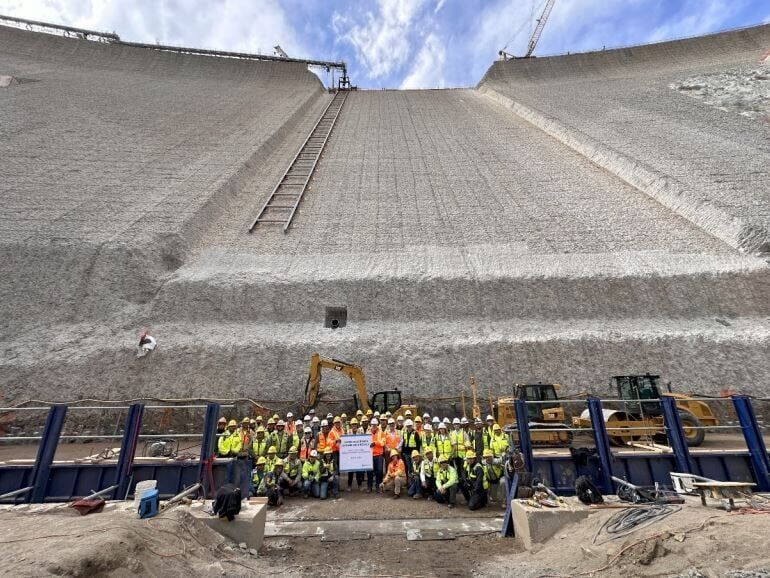
10th Circuit weighs Gross Reservoir expansion, judge’s ‘punishment’ of Denver Water
Michael Karlik
michael.karlik@coloradopolitics.com
Updated 20 hours ago
Members of the Denver-based federal appeals court considered on Friday whether they could intervene in an ongoing infrastructure project to enlarge a Boulder County dam after a trial judge deemed the underlying permit unlawful nearly two years ago. Denver Water...
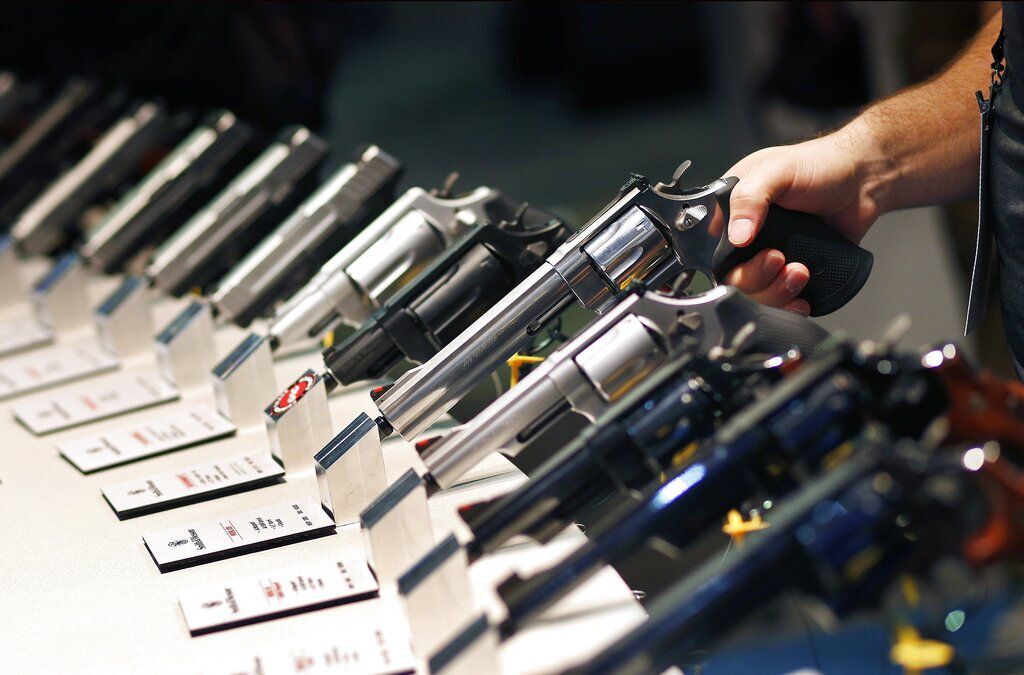
10th Circuit upholds federal prohibition on juvenile handgun possession
Michael Karlik
michael.karlik@coloradopolitics.com
Updated 2 days ago
The Denver-based federal appeals court concluded on Monday that Congress acted within its constitutional powers to make it a crime for juveniles to possess handguns in most instances. The decision from the U.S. Court of Appeals for the 10th Circuit...

Senate advances judicial nominee, Montezuma County judge agrees to discipline | COURT CRAWL
Michael Karlik
michael.karlik@coloradopolitics.com
Updated 3 days ago
Welcome to Court Crawl, Colorado Politics’ roundup of news from the third branch of government. A U.S. Senate committee advanced a judicial nominee from Colorado, plus a Montezuma County judge agreed to receive discipline for his misconduct that stops short...
PREV
PREVIOUS

Colorado Springs mother Deborah Nicholls' murder conviction overturned, case vacated
A Colorado Springs mother convicted of murdering her three children in a house fire in 2008 had her verdict overturned and her case vacated. According to a judge’s order, 59-year-old Deborah Nicholls’ conviction was overturned Saturday, Aug. 1 by District Senior Judge Michael Mullins. The decision was made after the court found prosecutors suppressed important […]

'Right to natural gas' proposal in Colorado qualifies for ballot
A ballot initiative that would enshrine the right to natural gas has qualified for the November ballot, the Colorado Secretary of State’s Office confirmed on Thursday. Petitions containing signatures for Initiative No. 177 were turned in to the Secretary of State’s Office for review in late June. On Thursday, the Secretary of State’s Office said 146,165 of […]