

Right-to-natural-gas proposal in Colorado qualifies for ballot

A citizen initiative that seeks to enshrine the right to natural gas has qualified for the November ballot, Colorado’s election office confirmed on Thursday.
Petitions containing signatures for Initiative No. 177 were turned in to the Secretary of State’s Office for review in late June. On Thursday, the Secretary of State’s Office said 146,165 of the 189,508 signatures collected were valid, surpassing the threshold.
The initiative from Advance Colorado establishes consumers’ right to purchase natural gas for cooking and heating their homes and businesses, as well as the right of distributors and utilities to sell natural gas to homes and businesses.
“Natural gas is a clean, reliable and affordable form of energy that more than 70% of Colorado homes use today,” said Michael Fields, president of Advance Colorado. “That right should be protected.”
The measure is the group’s response to a palpable shift in state policy to turn away from fossil energy, notably including natural gas.
Some 1.9 million Colorado households warm their homes each winter using gas. That’s also how tens of thousands of businesses heat their buildings. Last December, for example, energy regulators ordered Xcel Energy — the state’s biggest utility company — and other nonmunicipal utilities to slash their carbon output by 41% by 2035 as a step toward a 100% carbon-free future fired by solar and wind.
The only way to reduce carbon that much is by switching out the gas-fired furnaces, stoves and appliances of as many as 600,000 customers and changing them to electric heating. That’s according to the Colorado Energy Office, which was among two state agencies that cautioned the utility commission against its ultimate decision.
The environmental organization Conservation Colorado has introduced four ballot initiatives to counter Initiative No. 177. Those measures would have, among other provisions, established a statutory liability for oil and gas companies operating in Colorado found to have damaged the state’s air, water, land or communities and prohibited them from passing on costs to customers for pipeline extensions or decommissioning.
Those measures did not qualify for the ballot.
In May, Democratic lawmakers sought — and then abandoned — plans for a last-minute bill they said would have addressed the potential impact that Initiative No. 177 could have on the state’s air quality.
House Speaker Julie McCluskie, D-Dillon, argued the initiative was “overly broad, lacks clarity and could upend years of work to craft durable policy that advances our goals of better air quality, more affordable transit and cleaner energy.” However, after discussions with parties, McCluskie said she and her cosponsors determined their proposal would not “meaningfully change” the impacts of Initiative No. 177.
Republicans celebrated the bill’s withdrawal, with Rep. Dan Woog of Erie, who sits on the House Energy and Environment Committee, saying it would have undermined Initiative 177 and “circumvented the proper legislative process.”
“This policy was directly within our committee’s scope and expertise, and yet, we would have been bypassed,” Woog said. “I’m grateful that with guidance from our leadership, our caucus held the line and made clear that we would not stand for such a blatant disregard of the legislative process.”
Colorado’s state and local governments have adopted a series of policies to rapidly transition away from fossil fuel. Supporters say the shift — even if disruptive in the short term — will leave the state with a more sustainable, energy-efficient system, reduce reliance on foreign oil and deliver long-term environmental and public-health benefits.
Critics argue the transition is moving too quickly and lacks sufficient consideration of whether businesses and consumers can realistically meet the new requirements. They contend that the policies often overlook the financial strain on households, especially low-income residents and that they reflect ideological goals more than practical planning.
Meanwhile, environmental groups and some local governments have long blamed oil and gas companies for causing climate change, a political fight that’s also been tied up in litigation.
In October, the U.S. Supreme Court will hear a case out of Boulder, in which the county’s Board of Commissioners alleged oil and gas companies knowingly caused environmental damage for decades but misrepresented or concealed their internal filings from the public.
The oil companies have leaned on a decision out of the New York-based 2nd U.S. Circuit Court of Appeals. In that lawsuit, where New York City sued ExxonMobil and other energy corporations, the 2nd Circuit ruled that the city would be “jeopardizing our nation’s foreign policy goals” by deploying state-level legal claims against longstanding national and international energy agreements.
Reporter Scott Weiser contributed to this article.

Judge dismisses lawsuit seeking records from Colorado Opportunity Caucus
Marianne Goodland
marianne.goodland@coloradopolitics.com
Updated 3 hours ago
A lawsuit seeking to obtain records from Democratic lawmakers affiliated with the Colorado Opportunity Caucus has been thrown out by a Denver District Court judge. On July 17, Judge Ericka Englert dismissed the April lawsuit filed by progressive activist Derrick...
DOJ official decries ‘nonsense’ in Jeffco schools at fundraising gala
Matt Kyle
matt.kyle@denvergazette.com
Updated 4 hours ago
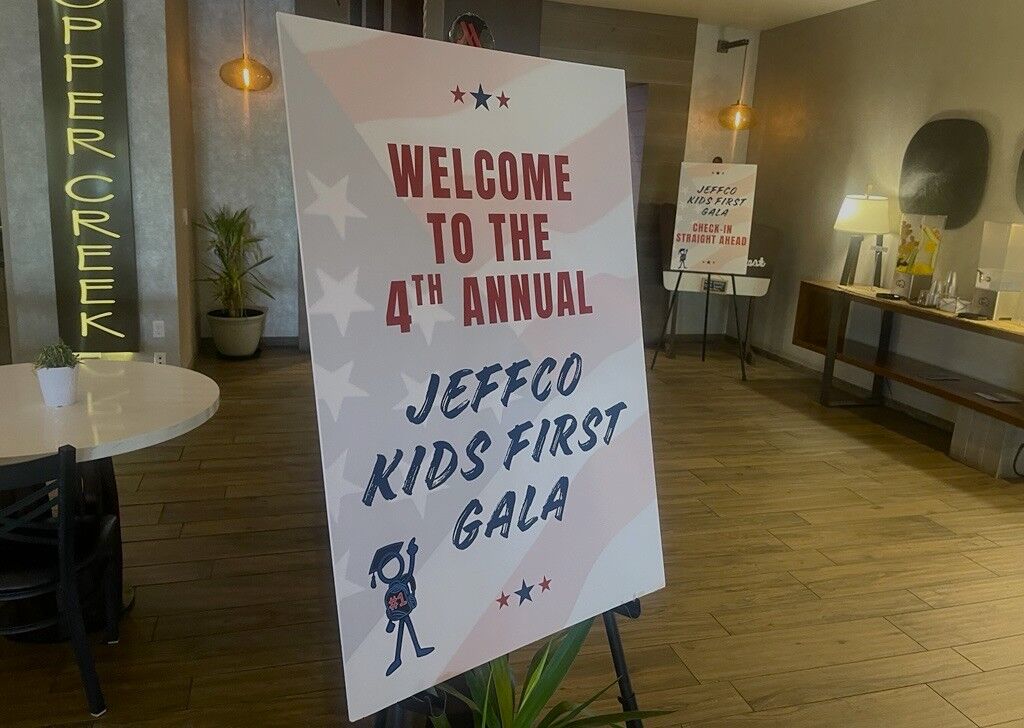
Amid a legal battle between Jeffco Public Schools and the federal government, a Department of Justice official spoke at a fundraising gala and decried “crazy stuff” and “nonsense” in the school district. The gala was for Jeffco Kids First, an...

Colorado Springs mother Deborah Nicholls’ murder conviction overturned
Nick Smith
nick-smith@coloradopolitics.com
Updated 20 hours ago
A Colorado Springs mother convicted in 2008 of murdering her three children in a house fire might get a new trial after a judge ruled that prosecutors withheld key evidence that could have impacted the jury’s verdict. Deborah Nicholls, whose...

Aurora Community College student journalist accuses college of ‘unconstitutional gag order’
Kyla Pearce
kyla.pearce@gazette.com
Updated 6 hours ago
An Aurora Community College student is accusing the college of putting an “unconstitutional gag order” on his student-run publication, saying the college banned it from publishing until students jumped through “countless bureaucratic hoops.” A college spokesperson said the college is...

Polis administration relaunches Colorado e-bike rebates with $3 million
Scott Weiser
scott.weiser@gazette.com
Updated 30 minutes ago
Gov. Jared Polis and the Colorado Energy Office announced Thursday the return of the state’s popular e-bike rebate program, with registration set to open later this month. The office plans to provide point-of-sale rebates totaling $3 million from the Community...

Appeals court rejects former DougCo commissioner’s legal fee claim
Nicholas Fogleman
nicholas.fogleman@denvergazette.com
Updated 6 hours ago
The Colorado Court of Appeals rejected a former Douglas County commissioner’s bid for reimbursement of attorney fees she incurred while responding to multiple investigations into her conduct. The dispute stemmed from a 2019 anonymous letter sent to county officials alleging...

Emerald ash borer confirmed in Colorado Springs, ‘pest is here to stay’
Brennen Kauffman
brennen-kauffman@coloradopolitics.com
Updated 1 day ago
Colorado Springs is asking residents to be on the lookout for an invasive beetle species that has jumped down the Front Range and into local ash trees. City officials said Wednesday that a confirmed emerald ash borer infestation had been...

Former Parker police sergeant pleads guilty to unlawful sexual conduct, misconduct charge
Nicholas Fogleman
nicholas.fogleman@denvergazette.com
Updated 1 day ago
Former Parker Police Department Sgt. Troy Brienzo pleaded guilty Monday to a felony charge of unlawful sexual conduct by a police officer and first-degree official misconduct in Douglas County District Court. Brienzo entered the guilty pleas before Judge Ryan Stuart,...

Annual survey documents emerging threat to Pikes Peak’s bighorn sheep
Savannah Eller
savannah-eller@coloradopolitics.com
Updated 1 day ago
After a brief pre-dawn gathering, over 40 volunteers and Colorado Parks and Wildlife staff split into teams Wednesday morning and headed off into the high alpine. They were on an annual mission to count and catalog the bighorn sheep population...
What happens if voters pass Colorado’s two competing income tax measures?
Marianne Goodland
marianne.goodland@coloradopolitics.com
Updated 1 day ago
The battle between two competing ballot measures — one seeking to cap Colorado’s income tax rate, the other pushing for a tiered system depending on income levels — might come down to whichever ballot proposal gets one more vote. The...
PREV
PREVIOUS
Labels, duration not definitive proof of 'intimate relationship,' Colorado court rules in domestic violence case
Colorado’s second-highest court clarified on Thursday that the length of a couple’s relationship and the labels they attach to it are not conclusive evidence of whether it is an “intimate relationship” that can give rise to a domestic violence prosecution. In Colorado, domestic violence is not a crime itself, but rather a finding that accompanies […]

Appeals court orders second look at Denver Water’s immunity for cyclist’s injury
Colorado’s second-highest court ordered another look at a bicyclist’s negligence lawsuit against Denver Water on Thursday, concluding that a trial judge needed to evaluate the utility’s potential immunity using the state Supreme Court’s new guidance. Joseph A. “Joey” Scott alleged that he was biking northbound in the 800 block of Ogden Street when he encountered […]