Judge dismisses lawsuit seeking records from Colorado Opportunity Caucus

A lawsuit seeking to obtain records from Democratic lawmakers affiliated with the Colorado Opportunity Caucus has been thrown out by a Denver District Court judge.
On July 17, Judge Ericka Englert dismissed the April lawsuit filed by progressive activist Derrick Blanton, who was represented by attorney Scott Moss.
According to 9News, Blanton sought membership lists, attendee records, financial documents, event agendas, and policy presentation materials from a Vail retreat held by the caucus in October of last year.
The retreat was paid for by One Main Street Colorado, and led to ethics complaints filed against the caucus by Moss on behalf of Colorado Common Cause in November.
According to those complaints, One Main Street organized a closed-door “summit” for business advocates to “educate” Opportunity Caucus members on issues important to business interests.
Legislators couldn’t afford the $25,000 cost of their rooms at the hotel, the complaint said, “so they asked One Main Street to pay that bill”.
“One Main Street paid for legislators’ rooms as requested and also appears to have funded other expenses of the legislators’ Summit, including staff effort and food and drink,” the complaint said. “In short, OMSC wielded undisclosed influence over a large number of Colorado legislators by paying significant costs of the event, including their individual travel expenses.”
Blanton’s open‑records request focused on Sen. Lindsay Daugherty and Rep. Sean Camacho, but the Office of Legislative Legal Services told him it had no records that met the parameters of his request.
The lawsuit claimed the caucus was a public entity subject to the state open records law.
That was disputed by the legislature’s attorneys, who responded that the caucus “is not an entity created within the Colorado General Assembly, but rather it is a separate 501(c)(4) nonprofit and that the state’s open records act “is not the mechanism” to obtain the records sought by Blanton.
The caucus, in its response, said the records fall under its First Amendment right of freedom of association and that, because the caucus is not a public entity, Blanton cannot demonstrate that CORA applies.
A hearing was held on July 15. The caucus, represented by attorney Scott Martinez, presented arguments in favor of a motion to dismiss under the state’s anti-SLAPP statute, which allows for an expedited hearing within 63 days of a lawsuit’s filing.
Englert noted in her ruling that a private entity can be subject to the state’s open records law but only under nine factors that would determine if the caucus was a public entity.
Those factors included whether there was public funding, a commingling of funds, whether the activity was conducted on publicly owned property, whether services were an integral part of a public agency’s decision-making process, whether the private entity was performing a government function that a public agency would otherwise perform, whether the public agency has a “substantial financial interest” in the private entity and “for whose benefit the private entity was functioning.”
Englert, in her ruling, decided the state’s anti-SLAPP statute did apply. She also ruled that Blanton failed to demonstrate that the caucus was subject to the state open records act and that he could not expect success at trial.
Blanton claimed that because the legislature was paying the caucus’s attorneys’ fees in the ethics complaint, the caucus became a public entity.
Englert disagreed, based on the nine factors. “There is no dispute” that the caucus is a private non-profit,” she wrote.
“The Court finds that the fact that Defendants Camacho and Daughtery [sic] asserted that [the caucus] is part of the government in an ethics inquiry is insufficient evidence for this Court to find [the caucus] is essentially a public entity and thus subject to CORA under the [nine factors] analysis.”
Daugherty said in a statement this week that “The dismissal of this meritless lawsuit confirms what we have known from the start. This was a frivolous lawsuit intended not to champion transparency but simply an attempt to harm and harass members of the caucus and score cheap political points.”
Since the lawsuit was filed in June, two caucus members have lost their efforts to win a second term in the Colorado House: Camacho and Jacque Phillips of Thornton.
The separate ethics complaints are still under investigation by the state ethics commission. One complaint was dismissed against the then-Rep. Shannon Bird as she was not with the caucus at the time of the retreat.
Three others were filed against caucus members who are either no longer state lawmakers (Sen. Dafna Michaelson Jenet) or will no longer be in the legislature come January (Camacho and Phillips).

DOJ official decries ‘nonsense’ in Jeffco schools at fundraising gala
Matt Kyle
matt.kyle@denvergazette.com
Updated 1 hour ago
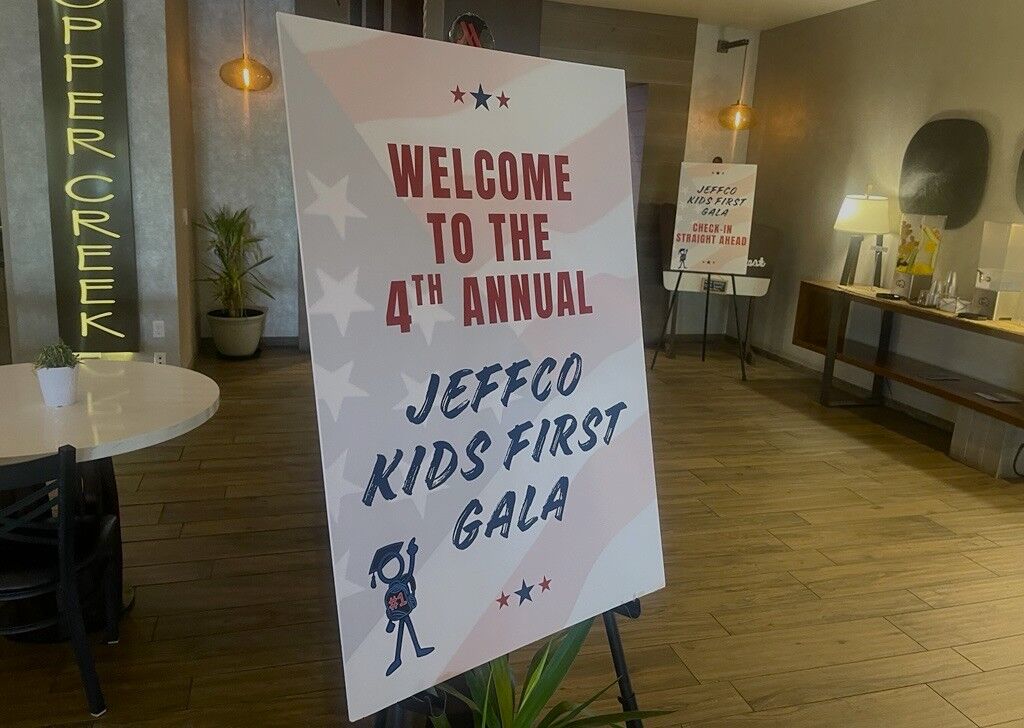
Amid a legal battle between Jeffco Public Schools and the federal government, a Department of Justice official spoke at a fundraising gala and decried “crazy stuff” and “nonsense” in the school district. The gala was for Jeffco Kids First, an...

Colorado Springs mother Deborah Nicholls’ murder conviction overturned
Nick Smith
nick-smith@coloradopolitics.com
Updated 18 hours ago
A Colorado Springs mother convicted in 2008 of murdering her three children in a house fire might get a new trial after a judge ruled that prosecutors withheld key evidence that could have impacted the jury’s verdict. Deborah Nicholls, whose...

Aurora Community College student journalist accuses college of ‘unconstitutional gag order’
Kyla Pearce
kyla.pearce@gazette.com
Updated 4 hours ago
An Aurora Community College student is accusing the college of putting an “unconstitutional gag order” on his student-run publication, saying the college banned it from publishing until students jumped through “countless bureaucratic hoops.” A college spokesperson said the college is...

Polis administration relaunches Colorado e-bike rebates with $3 million
Scott Weiser
scott.weiser@gazette.com
Updated 4 hours ago
Gov. Jared Polis and the Colorado Energy Office announced Thursday the return of the state’s popular e-bike rebate program, with registration set to open later this month. The office plans to provide point-of-sale rebates totaling $3 million from the Community...

Appeals court rejects former DougCo commissioner’s legal fee claim
Nicholas Fogleman
nicholas.fogleman@denvergazette.com
Updated 4 hours ago
The Colorado Court of Appeals rejected a former Douglas County commissioner’s bid for reimbursement of attorney fees she incurred while responding to multiple investigations into her conduct. The dispute stemmed from a 2019 anonymous letter sent to county officials alleging...

Right-to-natural-gas proposal in Colorado qualifies for ballot
Marissa Ventrelli
marissa.ventrelli@coloradopolitics.com
Updated 19 hours ago
A citizen initiative that seeks to enshrine the right to natural gas has qualified for the November ballot, Colorado’s election office confirmed on Thursday. Petitions containing signatures for Initiative No. 177 were turned in to the Secretary of State’s Office for review...

Emerald ash borer confirmed in Colorado Springs, ‘pest is here to stay’
Brennen Kauffman
brennen-kauffman@coloradopolitics.com
Updated 1 day ago
Colorado Springs is asking residents to be on the lookout for an invasive beetle species that has jumped down the Front Range and into local ash trees. City officials said Wednesday that a confirmed emerald ash borer infestation had been...

Former Parker police sergeant pleads guilty to unlawful sexual conduct, misconduct charge
Nicholas Fogleman
nicholas.fogleman@denvergazette.com
Updated 1 day ago
Former Parker Police Department Sgt. Troy Brienzo pleaded guilty Monday to a felony charge of unlawful sexual conduct by a police officer and first-degree official misconduct in Douglas County District Court. Brienzo entered the guilty pleas before Judge Ryan Stuart,...

Annual survey documents emerging threat to Pikes Peak’s bighorn sheep
Savannah Eller
savannah-eller@coloradopolitics.com
Updated 1 day ago
After a brief pre-dawn gathering, over 40 volunteers and Colorado Parks and Wildlife staff split into teams Wednesday morning and headed off into the high alpine. They were on an annual mission to count and catalog the bighorn sheep population...

What happens if voters pass Colorado’s two competing income tax measures?
Marianne Goodland
marianne.goodland@coloradopolitics.com
Updated 1 day ago
The battle between two competing ballot measures — one seeking to cap Colorado’s income tax rate, the other pushing for a tiered system depending on income levels — might come down to whichever ballot proposal gets one more vote. The...