

10th Circuit upholds federal prohibition on juvenile handgun possession
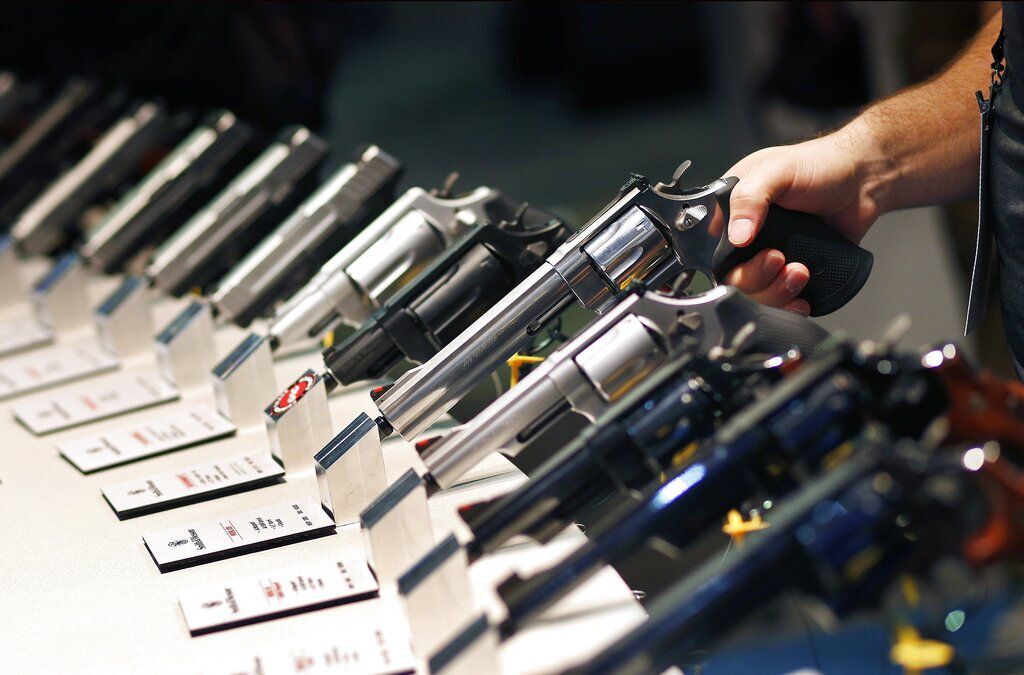
The Denver-based federal appeals court concluded on Monday that Congress acted within its constitutional powers to make it a crime for juveniles to possess handguns in most instances.
The decision from the U.S. Court of Appeals for the 10th Circuit was highly unusual, as it involved a juvenile defendant’s prosecution in federal court. The Juvenile Delinquency Act recognizes that state courts will handle cases involving juvenile defendants, except in circumstances where the U.S. attorney certifies to a federal judge that specific circumstances are present that would allow for the prosecution to unfold in federal court.
Under the law, unlawful possession of a handgun is one of the crimes eligible for juvenile prosecution, so long as it involves a “substantial” interest by the federal government.
In the underlying case, defendant “John Doe” challenged his probationary sentence for one count of unlawful handgun possession. The Juvenile Delinquency Act triggered the sealing of all information related to the case, so it is unclear where Doe’s case transpired in the 10th Circuit, which encompasses Colorado, Oklahoma, Utah, Kansas, New Mexico, and Wyoming.
To a three-judge 10th Circuit panel, Doe did not argue that the prohibition on juvenile handgun possession, with certain exceptions, violated his Second Amendment rights. Instead, Doe maintained Congress exceeded its powers to regulate interstate commerce in enacting the provision.
Case: United States v. Doe
Decided: August 3, 2026
Jurisdiction: Unknown
Ruling: 3-0
Judges: Nancy L. Moritz (author)
Gregory A. Phillips
Paul J. Kelly Jr.
Judge Nancy L. Moritz, writing in the panel’s Aug. 3 decision, agreed with two other federal appeals courts that rejected similar arguments.
“Congress’s power to regulate ‘activities having a substantial relation to interstate commerce’ is relatively broad,” she wrote.
The panel determined the prohibition on juvenile handgun possession was directly and substantially related to regulating the interstate handgun market.
“Congress’s goal,” Moritz wrote, “is to exclude juveniles from interstate handgun markets. This goal is within Congress’s Commerce Clause power, which extends to excluding buyers from interstate or foreign markets.”
She added that if Congress lacked the ability to largely exclude juveniles from the handgun market, “it’s further rational to believe there would be an increase in juvenile handgun buyers compared to the status quo because it would be harder to police juvenile buyers who could unconditionally possess handguns.”
Although the law creates exceptions for temporary and work-related possession of guns, Moritz wrote that those provisions did not undercut Congress’ decision to exclude juveniles from the handgun market in the “vast majority of conceivable situations.”
“Individuals and businesses can’t sell handguns to juveniles, regardless of the juvenile’s purpose in obtaining a handgun; juveniles can’t own handguns, regardless of the purpose of their ownership; and, by necessary implication, juveniles can’t sell handguns that they can’t temporarily possess,” she wrote. Neither “the Supreme Court nor we have ever held that a total ban on the possession of an item is a prerequisite to finding the existence of a general regulatory scheme.”
The 10th Circuit’s clerk told Colorado Politics that, to his knowledge, the court likely decides fewer than five federal juvenile appeals each year. A spokesperson for Colorado’s U.S. Attorney’s Office said it handles fewer than one juvenile case per year, on average.
Multiple federal practitioners who spoke to Colorado Politics agreed that such cases are rare and generally arise from tribal reservations.
The case is United States v. Doe.

Parole, appeals deadlines and restitution: Colorado justices accept cases
Michael Karlik
michael.karlik@coloradopolitics.com
Updated 1 hour ago
The Colorado Supreme Court announced on Monday that it will determine how a defendant’s parole-eligibility date should be calculated in instances where a new trial results in a sentence being imposed retroactively to the date of the original, since-overturned sentence....

Federal judge rejects DOJ bid to force Colorado to hand over voter information
Marissa Ventrelli
marissa.ventrelli@coloradopolitics.com
Updated 3 hours ago
A U.S. district court judge has dismissed a lawsuit filed by the U.S. Department of Justice against Colorado Secretary of State Jena Griswold for refusing to provide the agency with personal voter information. Last December, the DOJ’s Civil Rights Division asked...
3 Colorado judges receive unfavorable retention recommendation as one performance commission violates rules
Michael Karlik
michael.karlik@coloradopolitics.com
Updated 7 hours ago
Of the 123 Colorado judges standing for retention on the November ballot, citizen-led performance commissions found that three did not meet the required performance standards. However, in an unprecedented move, the commission charged with evaluating Supreme Court and Court of...

10th Circuit weighs Gross Reservoir expansion, judge’s ‘punishment’ of Denver Water
Michael Karlik
michael.karlik@coloradopolitics.com
Updated 22 hours ago
Members of the Denver-based federal appeals court considered on Friday whether they could intervene in an ongoing infrastructure project to enlarge a Boulder County dam after a trial judge deemed the underlying permit unlawful nearly two years ago. Denver Water...

Senate advances judicial nominee, Montezuma County judge agrees to discipline | COURT CRAWL
Michael Karlik
michael.karlik@coloradopolitics.com
Updated 1 day ago
Welcome to Court Crawl, Colorado Politics’ roundup of news from the third branch of government. A U.S. Senate committee advanced a judicial nominee from Colorado, plus a Montezuma County judge agreed to receive discipline for his misconduct that stops short...
Judge denies Calderon injunction case against Denver, Johnston
Deborah Grigsby
deborah.smith@denvergazette.com
Updated 1 day ago
A U.S. District Court judge has denied a preliminary injunction in the case of Jessica Calderon, the Denver city employee who won a temporary restraining order preventing the City and County of Denver from terminating her amid the 2025 citywide...
10th Circuit partially revives lawsuit over 2020 Denver protest injuries
Michael Karlik
michael.karlik@coloradopolitics.com
Updated 2 days ago
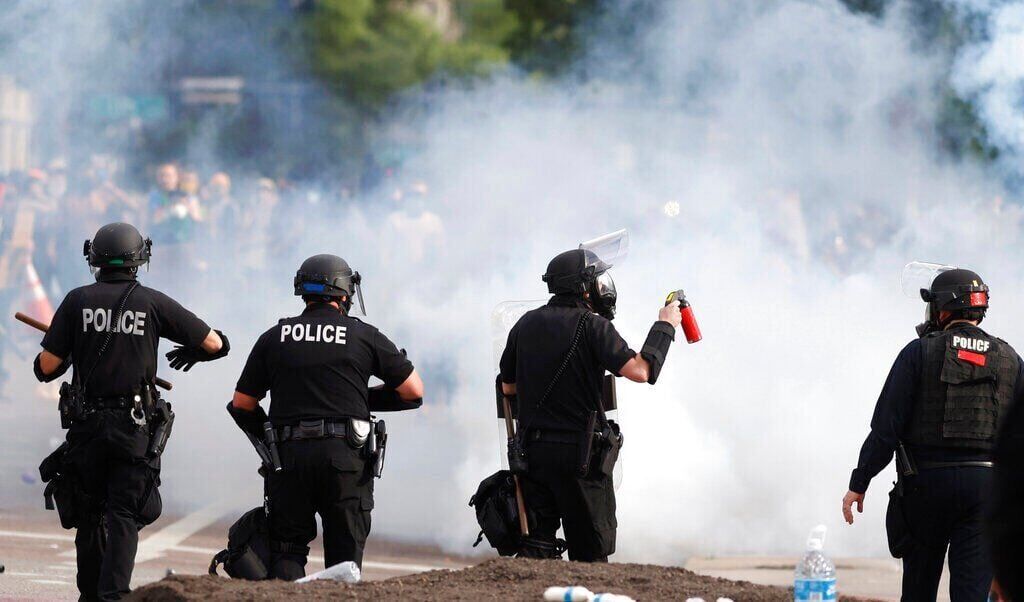
The Colorado-based federal appeals court revived a man’s claims against Denver on Friday after concluding a trial judge resolved the case in the city’s favor without analyzing two of the three instances of alleged excessive force and other constitutional violations....
Federal judges find Colorado immigration judge violated several orders
Michael Karlik
michael.karlik@coloradopolitics.com
Updated 3 days ago
Multiple federal judges in Colorado have freed people from immigration custody after determining that one immigration judge violated their directives for properly conducting bond hearings. For nearly a year, Colorado’s U.S. District Court has faced a flood of habeas corpus petitions...

Misconduct complaints from ex-Colorado judicial discipline director dismissed against federal judges
Michael Karlik
michael.karlik@coloradopolitics.com
Updated 5 days ago
The administrative body for the Denver-based federal appeals court upheld a finding last week that misconduct complaints against Colorado’s chief federal trial judge and the chief appeals judge warranted dismissal and appeared to be a “litigation tactic” by the complaining...

First-ever Red Rocks naturalization ceremony draws most diverse group of new citizens
Michael Karlik
michael.karlik@coloradopolitics.com
Updated 3 days ago
Colorado’s federal trial court held its first-ever naturalization ceremony for nearly 300 new citizens on Thursday at Red Rocks Park and Amphitheatre. “We’re doing it to commemorate the 250th anniversary of the Declaration of Independence and the United States. Red...
PREV
PREVIOUS
Aurora police officer charged in Belt-Stubblefield shooting
The Aurora police officer who shot and killed Rajon Belt-Stubblefield was charged with murder, the 18th Judicial District Attorney’s Office announced Monday morning. A grand jury returned an indictment charging APD Officer Matthew Neely with one count of second-degree murder, a class two felony, and one count of manslaughter, a class four felony, a news […]

Castle Rock launches Link On Demand rideshare service
Residents in Castle Rock now have access to Douglas County’s app-based rideshare service Link On Demand. Link On Demand officially began serving Castle Rock Friday, expanding the transportation program which already operates in Highlands Ranch, Lone Tree and select areas of Parker. “Link On Demand is about much more than transportation — it’s a program […]