10th Circuit partially revives lawsuit over 2020 Denver protest injuries
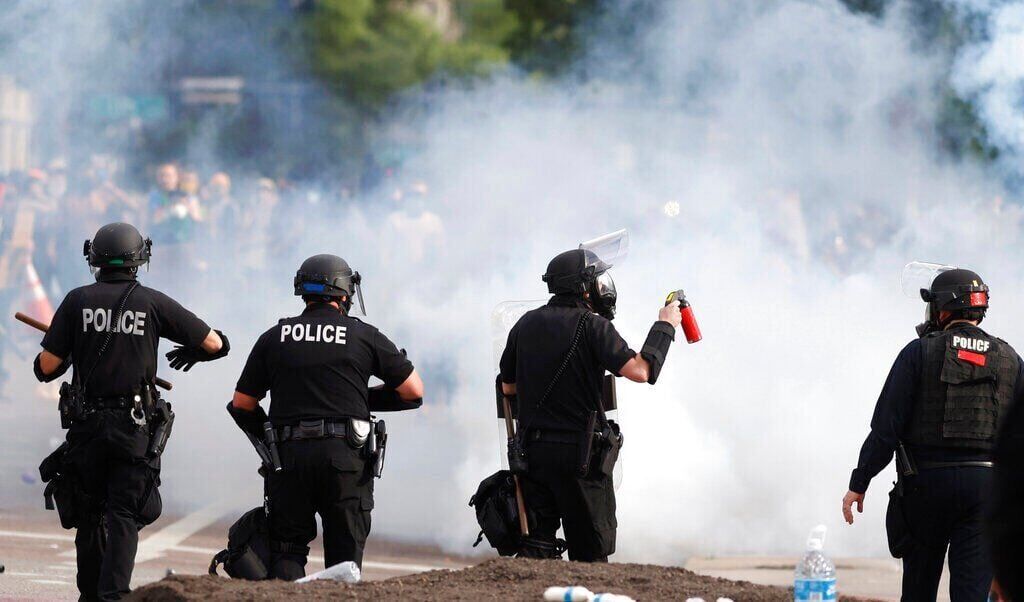
The Colorado-based federal appeals court revived a man’s claims against Denver on Friday after concluding a trial judge resolved the case in the city’s favor without analyzing two of the three instances of alleged excessive force and other constitutional violations.
For the past six years, plaintiffs have litigated several lawsuits arising from the demonstrations that began in May 2020. At the time, protesters in Denver and across the world took to the streets in response to the police killing of George Floyd in Minneapolis. Law enforcement used chemicals, projectiles and other force against them.
Michael Driscoll went downtown on May 30 and 31. At the intersection of Lincoln Street and Colfax Ave., police deployed pepper spray and threw a tear gas canister at him. Around Clarkson Street and Colfax, police threw a rubber ball grenade at Driscoll and shot him with a projectile. Finally, at 13th Ave. and Cherokee Street, outside the police administration building, an officer shot Driscoll in the face with a munition, causing severe injuries.
Driscoll sued for excessive force and violations of his First Amendment and due process rights. After several individual defendants were dismissed, Denver itself moved to end the case in its favor without a trial.
In a March 2025 order, U.S. District Court Judge Philip A. Brimmer sided with the city. Focusing on the 13th and Cherokee encounter, Brimmer determined Driscoll did not provide sufficient evidence that a Denver officer — as opposed to Jefferson County law enforcement operating under its own policies to aid Denver — shot Driscoll.
“At most, Mr. Driscoll’s evidence suggests that Denver police officers were present and that either a Jeffco SWAT officer or a Denver police officer fired the projectile that injured him. However, this is insufficient for Mr. Driscoll’s claims against Denver to proceed based on a theory that he was injured by a Denver police officer,” Brimmer wrote.
Driscoll appealed to the U.S. Court of Appeals for the 10th Circuit, arguing the evidence “demonstrates to a near-certainty” that a Denver officer shot him at 13th and Cherokee. Moreover, Brimmer had overlooked Driscoll’s claims based on police conduct at the other two locations.
“Even if the district court were correct that Plaintiff had provided no evidence of causation as to the 13th and Cherokee Event,” his lawyers wrote, “causation was not at issue as to the other events: the DPD officers who used force on Plaintiff were known, and Denver has not suggested that officers from another jurisdiction may have been present.”
In a July 31 order, a three-judge appellate panel partly agreed with Driscoll.
Case: Driscoll v. The City and County of Denver
Decided: July 31, 2026
Jurisdiction: U.S. District Court for Colorado
Ruling: 3-0
Judges: Joel M. Carson III (author)
Carolyn B. McHugh
Veronica S. Rossman
As for the projectile injury at 13th and Cherokee, wrote Judge Joel M. Carson III, Brimmer was correct to side with the city because a jury would need to “jump through several hoops of speculation and assumption to conclude that a Denver SWAT officer more likely than not shot Plaintiff.”
Carson pointed out that Denver had conceded Brimmer’s failure to engage with potential constitutional violations at the other two locations. While the city argued on appeal that there was no evidence the city’s policies motivated Driscoll’s injuries at those sites, the panel declined to reach that conclusion on its own.
“The district court erred to the extent it concluded that Plaintiff’s insufficient evidence that Denver caused Plaintiff’s face injury at the 13th and Cherokee Event disposed of all his claims against Denver,” wrote Carson.
The panel returned Driscoll’s lawsuit to Brimmer to analyze whether a jury trial was warranted against Denver for constitutional violations based on the Lincoln and Colfax and the Clarkson and Colfax encounters.
The case is Driscoll v. The City and County of Denver et al.


Federal judges find Colorado immigration judge violated several orders
Michael Karlik
michael.karlik@coloradopolitics.com
Updated 3 hours ago
Multiple federal judges in Colorado have freed people from immigration custody after determining that one immigration judge violated their directives for properly conducting bond hearings. For nearly a year, Colorado’s U.S. District Court has faced a flood of “habeas corpus” petitions...

Misconduct complaints from ex-Colorado judicial discipline director dismissed against federal judges
Michael Karlik
michael.karlik@coloradopolitics.com
Updated 22 hours ago
The administrative body for the Denver-based federal appeals court upheld a finding last week that misconduct complaints against Colorado’s chief federal trial judge and the chief appeals judge warranted dismissal and appeared to be a “litigation tactic” by the complaining...
First-ever Red Rocks naturalization ceremony draws most diverse group of new citizens
Michael Karlik
michael.karlik@coloradopolitics.com
Updated 4 hours ago
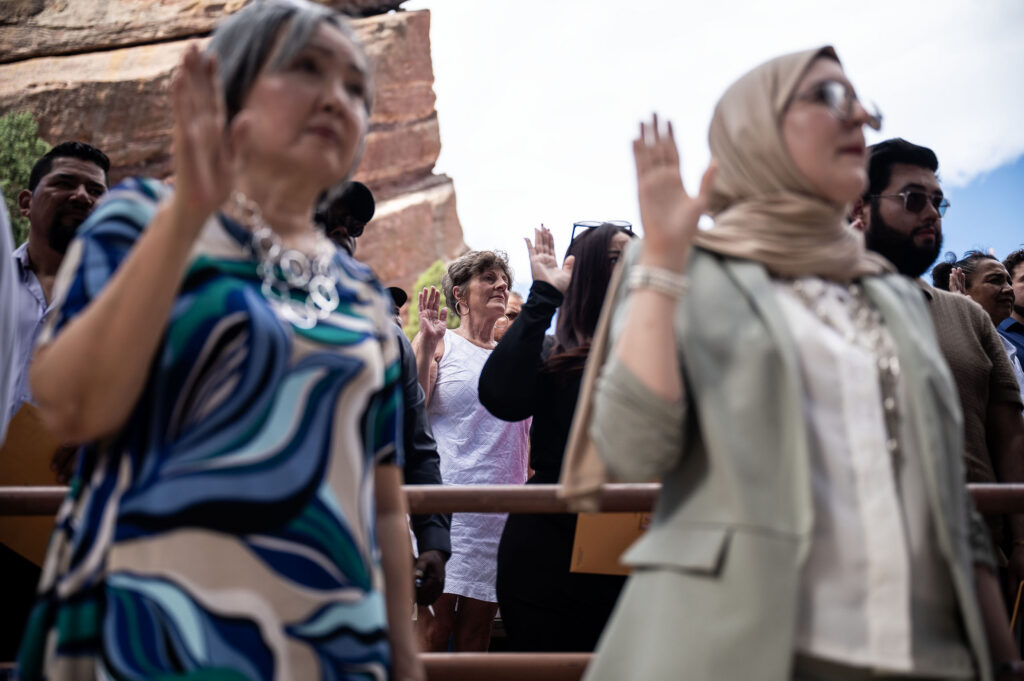
Colorado’s federal trial court held its first-ever naturalization ceremony for nearly 300 new citizens on Thursday at Red Rocks Park and Amphitheatre. “We’re doing it to commemorate the 250th anniversary of the Declaration of Independence and the United States. Red...
Jeffco taxpayers could be on the hook for a possible child sex assault settlement
Matt Kyle
matt.kyle@denvergazette.com
Updated 8 hours ago
Taxpayers may end up on the hook for a child sexual assault settlement, possibly worth up to $15 million, after Jeffco Public Schools failed to notify its insurance company in a timely manner about the case. The incident stems from...
10th Circuit finds no fair housing violation by Littleton landlord for worker’s alleged rape of tenant
Michael Karlik
michael.karlik@coloradopolitics.com
Updated 1 hour ago
The Denver-based federal appeals court concluded on Monday that Littleton’s housing authority could not be held liable for a maintenance worker’s alleged rape of a tenant, as the worker’s employment did not provide any special access to the victim. A...

Jeffco Public Schools sues Trump administration to protect funding after alleged transgender policies violation
Matt Kyle
matt.kyle@denvergazette.com
Updated 1 day ago
In the wake of several threats by the Trump administration to revoke federal funding, Jeffco Public Schools filed a lawsuit against the Department of Education seeking to protect that badly needed money. Jeffco has been under investigation by the DOE’s...
Denver detox center did not violate man’s rights with 10-hour hold, 10th Circuit says
Michael Karlik
michael.karlik@coloradopolitics.com
Updated 3 days ago
The Colorado-based federal appeals court concluded on Tuesday that Denver’s detoxification facility did not violate a man’s rights by holding him against his will for 10 hours until his blood alcohol content was projected to reach zero. Unusually, Brian Garrett’s...
Federal judge clarifies ex-GOP treasurer candidate’s burden to prove defamation claims
Michael Karlik
michael.karlik@coloradopolitics.com
Updated 3 days ago
A federal judge clarified last week that businessman and former Republican statewide candidate Brian Watson will need to surmount a higher hurdle in proving his claim that a party guest’s alleged description of him as a “criminal” amounted to defamation....
Colorado board permits state to appeal injunction against arthritis drug price cap
Marissa Ventrelli
marissa.ventrelli@coloradopolitics.com
Updated 3 days ago
A Colorado board voted Friday to allow the Attorney General’s Office to fight an injunction against a price cap on a drug that treats arthritis. A U.S. district court judge had granted the company Amgen a preliminary injunction, temporarily blocking...
Federal judge rejects constitutional claims, ‘expressions of hatred’ by Club Q defendant
Michael Karlik
michael.karlik@coloradopolitics.com
Updated 4 days ago
A federal judge rejected a defendant’s claims that he received constitutionally ineffective assistance of counsel while facing federal hate crime and firearms charges for murdering five people at a Colorado Springs LGBTQ nightclub in 2022. Anderson Lee Aldrich is serving...