Federal judge rejects constitutional claims, ‘expressions of hatred’ by Club Q defendant
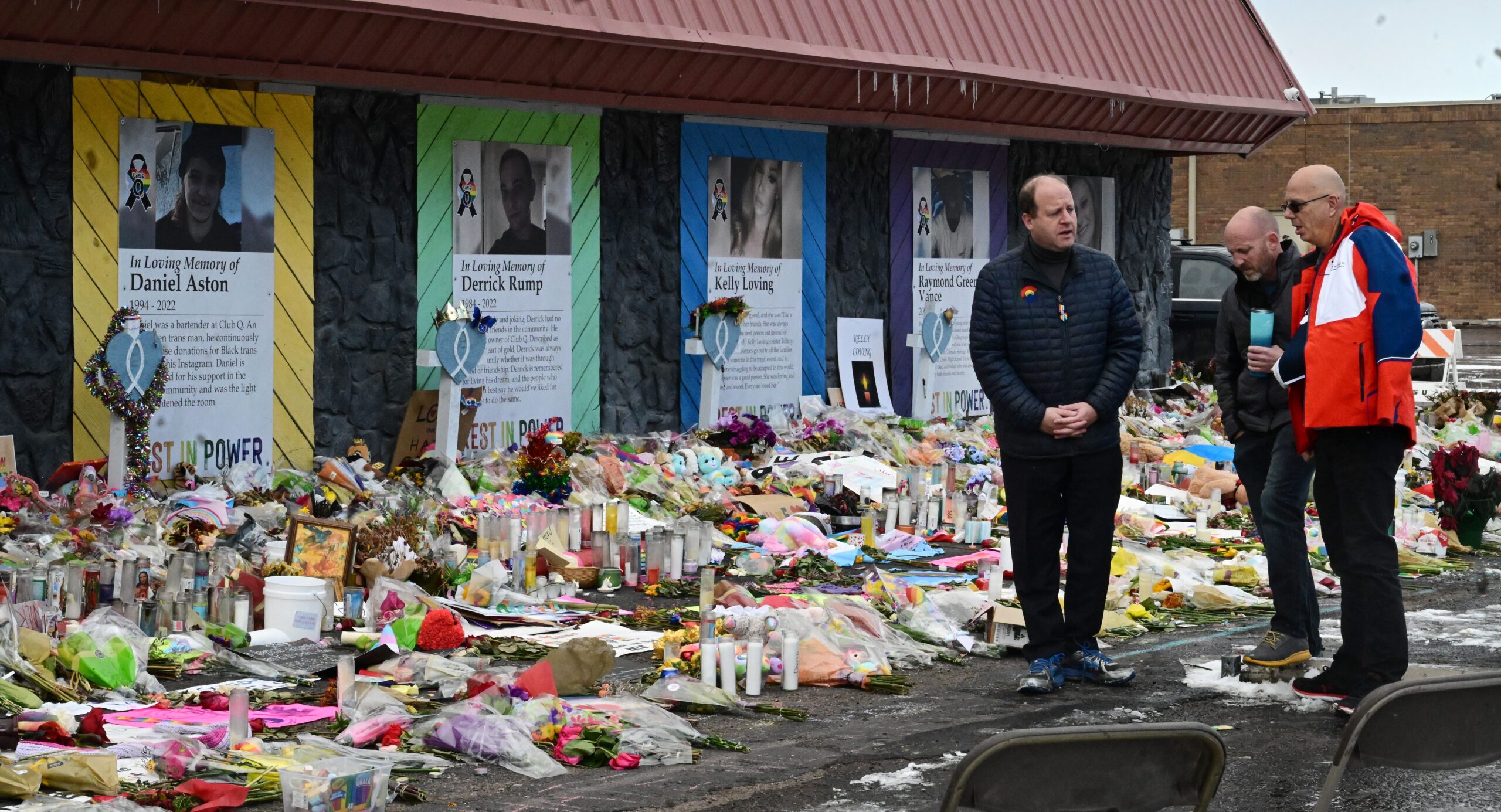
A federal judge rejected a defendant’s claims that he received constitutionally ineffective assistance of counsel while facing federal hate crime and firearms charges for murdering five people at a Colorado Springs LGBTQ nightclub in 2022.
Anderson Lee Aldrich is serving multiple lifetime sentences in prison on state murder charges, plus an effective life sentence for dozens more attempted murder charges. In 2024, he pleaded guilty to 74 additional federal charges, all related to the mass murder he committed at Club Q on Nov. 19, 2022. Aldrich received a life sentence for the federal charges, as well.
On May 22, Aldrich moved to set aside his sentence and pursue a trial. Although his plea agreement generally barred any appeal, Aldrich could still challenge his convictions on the grounds that he received assistance of counsel that fell below constitutionally reasonable standards.
Among other things, Aldrich alleged he was “under the influence of mind altering, psychotropic medication for most of my life,” including when he signed the plea agreement. Further, he “may be insane or autistic or both.” He also argued that one of his attorneys had a conflict of interest when she left the federal public defender’s office to take a state judicial appointment.
The U.S. Attorney’s Office responded that Aldrich’s deadline to seek relief on those grounds was September 2025. His motion, filed eight months later, was far past that deadline and Aldrich had not specifically explained why the delay should not be held against him.
The government also argued that Aldrich had knowingly and voluntarily entered into the plea agreement, and had disclaimed that his medications affected his ability to think clearly.
Replying to the government, Aldrich appeared to justify his murder of the Club Q patrons, claiming he was “directed as a Christian man to eradicate ‘abomination’ in the eyes of the lord.” He added that he “has done no wrongdoing in the eyes of god.”
In a July 17 order, U.S. District Court Senior Judge Raymond P. Moore rejected all of Aldrich’s assertions.
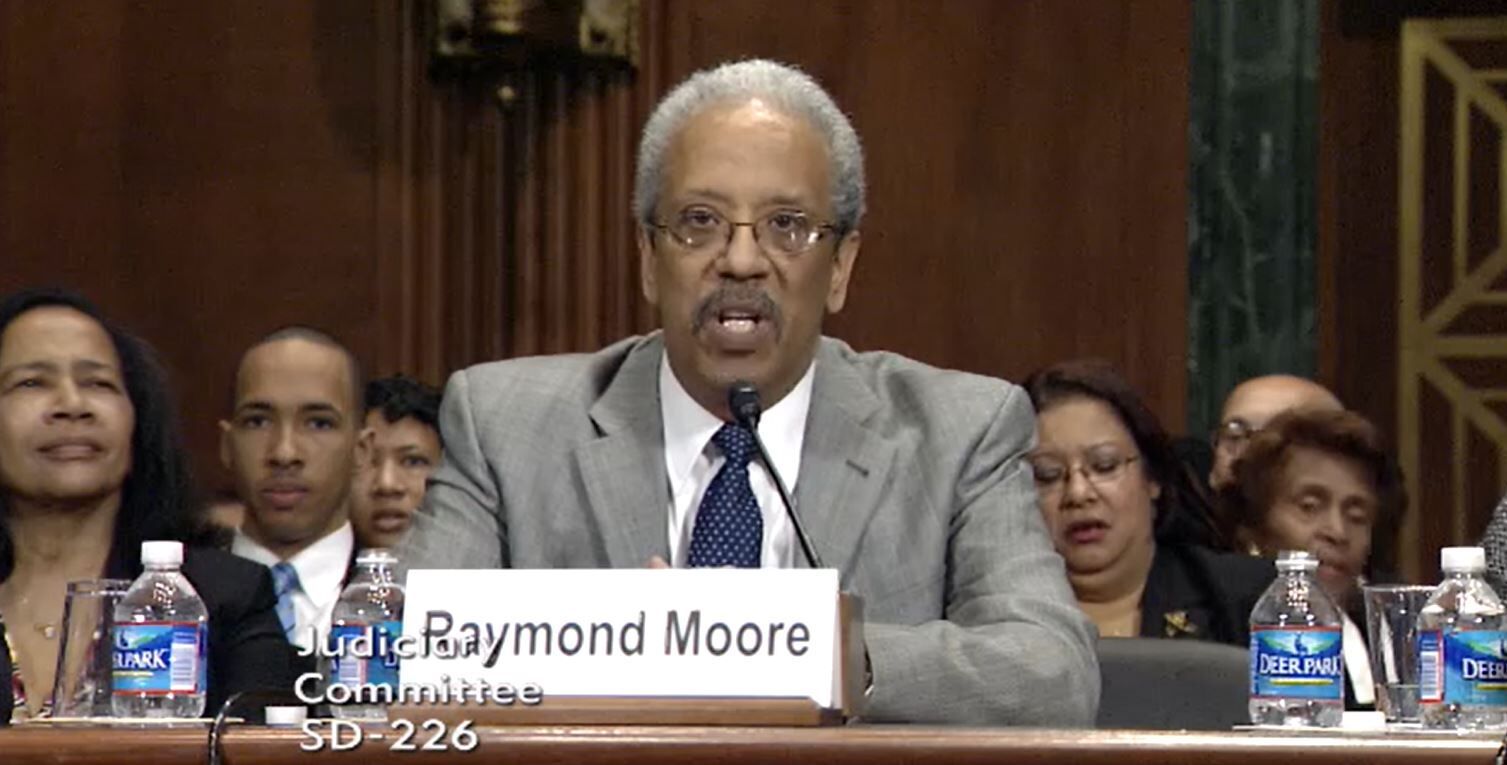
As for Aldrich’s reply, it is “a legally worthless pleading which responds to nothing and only belches out hate disguised as religion,” wrote Moore. “The Reply contains nothing more than expressions of hatred coupled with impotent demands and warnings both to the Court and to the government. All that it accomplishes is to provide some proof that the sentence imposed in this matter was minimally correct.”
Moore otherwise agreed with the government that Aldrich’s motion was far beyond the deadline, and his basic assertions of diminished capacity “amount to little more than pleas for sympathy or, perhaps, simply throwing mud against the wall to see what sticks.”
“The fact that a medication is being taken, even a ‘mind altering’ one, does not mean that a person’s mental capacity is necessarily impaired. It may well be helped by medication,” Moore continued. “With no specifics and no records pertaining to his medications, the Court has no ability to discern anything meaningful.”
He recited the transcript of Aldrich’s plea hearing, when U.S. District Court Judge Charlotte N. Sweeney asked him to list his medications and his mental conditions.
“I need to make sure you’re understanding what’s going on,” she said, after which Aldrich listed his conditions.
“You feel you’re thinking clearly and able to understand the proceedings?” Sweeney asked.
“Yes, your honor,” said Aldrich.

That exchange, observed Moore, undermined Aldrich’s claim that mind-altering medication affected his decision to sign the plea.
As for the argument that Aldrich’s public defender, Natalie Stricklin, had a conflict of interest by leaving to accept an appointment as an Arapahoe County judge, “there is no authority for the proposition that a conflict is created whenever defense counsel decides to change careers,” wrote Moore. “The Court cannot even hypothesize how the mere act of accepting a position in a jurisdiction having no association with Aldrich or his offense creates a conflict of interest for defense counsel. It does not.”
Moreover, Aldrich acknowledged in his plea agreement that he was “represented effectively and competently in this case.” He confirmed that statement to Sweeney in person.
Finally, Moore wrote that Aldrich also needed to show that his defense counsel’s deficient performance harmed his case. Given the evidence, “which included being on camera in Club Q committing the charged offenses,” Moore wrote, rejecting the guilty plea would not have been reasonable.
Three days later, Moore issued a second order. He acknowledged that, due to processing issues, Aldrich had submitted a second, substantive reply to the government’s arguments that did not appear on the docket until after Moore’s original decision. Moore noted that he would have considered the second reply had he seen it.
However, Moore concluded Aldrich’s additional arguments did not alter his decision.
Moore also noted that Aldrich had embedded pro-Nazi and white supremacist language in his filing, and a seemingly random quote from the movie “Natural Born Killers.”
“Does the Court take this expression as a sign of mental illness subtly showing that Aldrich should not have been allowed to plead guilty? No,” wrote Moore, adding that the document also contained faint traces of a procedural checklist Aldrich apparently drafted to pursue challenges to his state and federal convictions.
Moore suggested the “crazy thoughts” may have been Aldrich’s attempts to feign incompetency, which amounted to “manipulation and misdirection.”
The case is United States v. Aldrich.

10th Circuit dismisses woman’s lawsuit following 10-year attempt to undo restraining order
Michael Karlik
michael.karlik@coloradopolitics.com
Updated 3 days ago
The Denver-based federal appeals court rejected a woman’s challenge on Friday to a restraining order imposed on her more than a decade ago, finding that she cannot credibly claim she will be prosecuted for violating the restraining order through her...
10th Circuit dismisses woman’s lawsuit following 10-year attempt to undo restraining order
Michael Karlik
michael.karlik@coloradopolitics.com
Updated 3 days ago
The Denver-based federal appeals court rejected a woman’s challenge on Friday to a restraining order imposed on her more than a decade ago, finding that she cannot credibly claim she will be prosecuted for violating the restraining order through her...
Colorado equal pay law does not require plaintiffs to allege gender-based retaliation, appeals court finds
Michael Karlik
michael.karlik@coloradopolitics.com
Updated 2 days ago
The 2019 Colorado law aimed at rooting out pay discrimination on the basis of sex does not require a plaintiff to allege their employer retaliated against them for sex- or gender-related reasons, the state’s second-highest court decided on Thursday. Lawmakers...
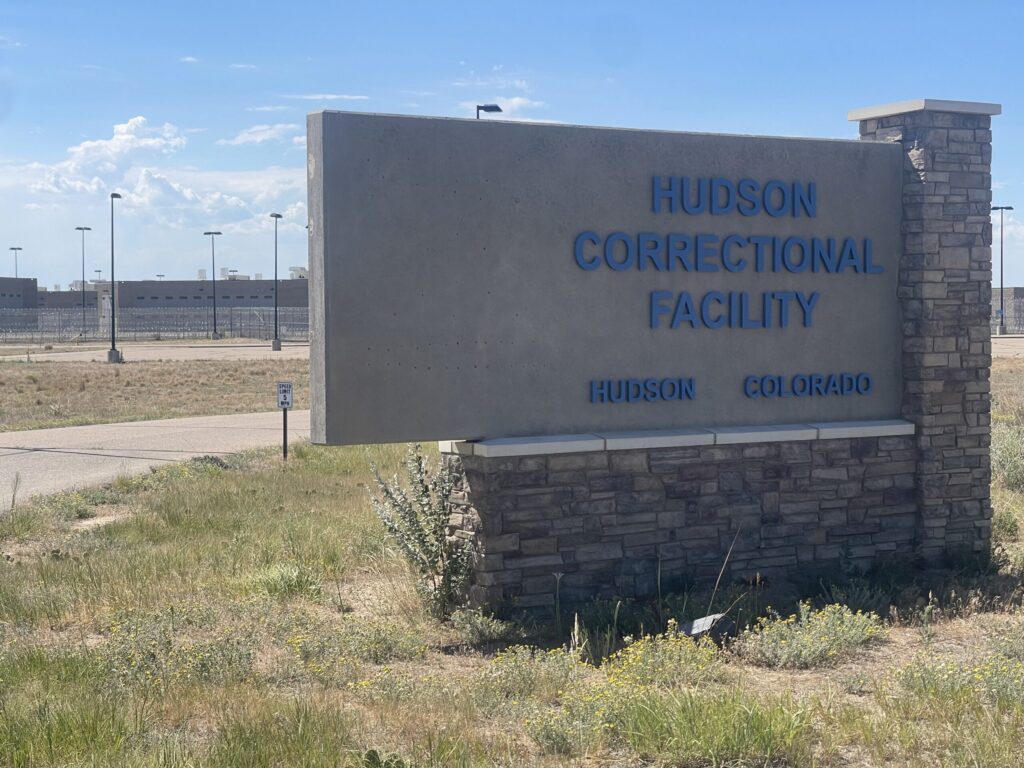
Hudson faces lawsuit over ICE detention facility
Nicole C. Brambila
nicole-c-brambila@coloradopolitics.com
Updated 3 days ago
A nonprofit organization filed a lawsuit against the Town of Hudson Wednesday, challenging plans to reopen a former federal prison in the town as a U.S. Immigration and Customs Enforcement detention facility. Together Colorado, along with Janet E. Carlson, filed...
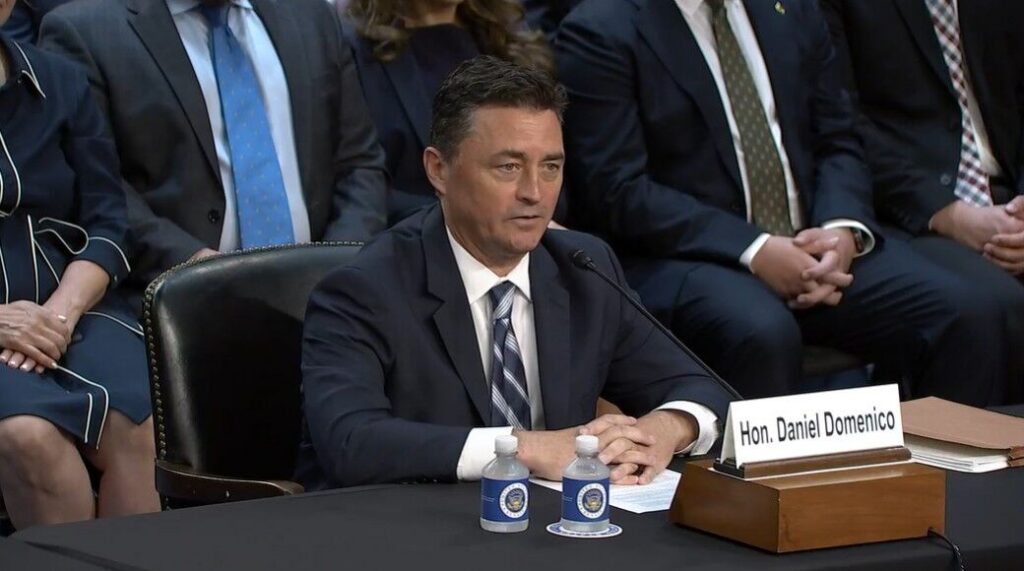
Senate committee advances Trump’s 10th Circuit nominee, as Domenico responds to questions about delays
Michael Karlik
michael.karlik@coloradopolitics.com
Updated 3 days ago
The U.S. Senate Judiciary Committee advanced President Donald Trump’s nominee to the Denver-based federal appeals court on Thursday by a party-line vote of 12-10. U.S. District Court Judge Daniel D. Domenico, who was Trump’s first-term appointee to Colorado’s federal trial...
Colorado justices to hear embryonic donation dispute
Michael Karlik
michael.karlik@coloradopolitics.com
Updated 4 days ago
The Colorado Supreme Court announced on Monday that it will decide whether lower court judges properly applied its framework for adjudicating disputes over the fate of pre-embryos, in which one person wants to use them to become a parent and...
Isolation, emotion, persona: Colorado judicial programming prepares people for life on the bench
Michael Karlik
michael.karlik@coloradopolitics.com
Updated 4 days ago
As a trial judge and now as a member of the Colorado Supreme Court, Justice Carlos A. Samour Jr. has heard the view that being a judge is isolating. “In neither court have I felt isolated. I’ve always interacted a...

Federal judge dismisses Colorado county sheriff’s challenge to law limiting immigration cooperation
Michael Karlik
michael.karlik@coloradopolitics.com
Updated 2 days ago
A federal judge dismissed a challenge from Mesa County Sheriff’s Office leaders last week to a Colorado law limiting public employees’ cooperation with immigration authorities, concluding that the plaintiffs did not allege they engage in any conduct that the law...
10th Circuit raises bar for fraud victims to sue debt collectors over inaccurate information
Michael Karlik
michael.karlik@coloradopolitics.com
Updated 2 days ago
The Denver-based federal appeals court wiped away a jury’s $500,000 award to a fraud victim on Monday and made it more difficult for consumers to hold companies liable for disseminating inaccurate credit information. The Fair Credit Reporting Act regulates credit...
Montezuma County judge’s censure, suspension approved by discipline panel
Michael Karlik
michael.karlik@coloradopolitics.com
Updated 5 days ago
A three-member disciplinary panel accepted, on Monday, an agreement between a Montezuma County judge and the Colorado Commission on Judicial Discipline that specifies he will receive a censure, a suspension, and additional education for his admitted instances of misconduct. Under...