

Colorado equal pay law does not require plaintiffs to allege gender-based retaliation, appeals court finds

The 2019 Colorado law aimed at rooting out pay discrimination on the basis of sex does not require a plaintiff to allege their employer retaliated against them for sex- or gender-related reasons, the state’s second-highest court decided on Thursday.
Lawmakers enacted the Equal Pay for Equal Work Act with a stated intent to “close the pay gap in Colorado and ensure that employees with similar job duties are paid the same wage rate regardless of sex, or sex plus another protected status.”
To that end, the law empowers a worker to sue for alleged pay-based sex discrimination. It also forbids employers from asking for a prospective employee’s wage rate history, prohibiting an employee from disclosing their pay, and retaliating against someone who inquired about or discussed their wages.
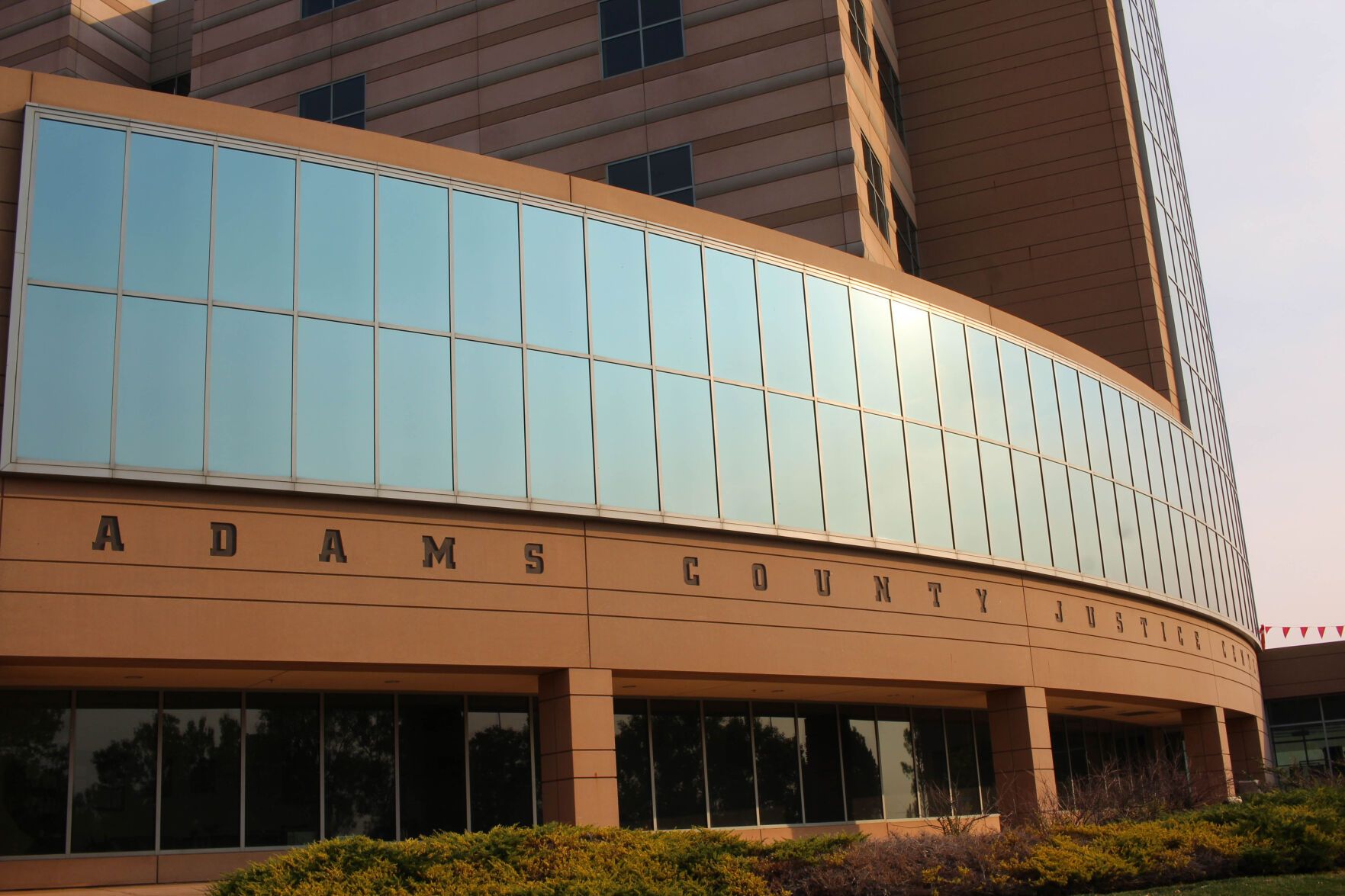
In 2023, Emily Camp Verheggen sued Adams County for allegedly underpaying her for years in her various positions with the county’s department of human services. She alleged that for more than a decade, her employer required her to work 76-hour weeks, but only paid her for 40. Her attorney sent a demand for more than $745,000 in back pay.
Verheggen also alleged that after she filed her lawsuit, the defendants reprimanded and suspended her without pay for “unprofessional and disrespectful behavior.”
Among her claims, Verheggen argued that her employer violated the Equal Pay for Equal Work Act by retaliating against her after she engaged in an activity the law protected: raising unfair wage practices and pursuing a lawsuit over her pay.
Last July, District Court Judge Toni J. Wehman dismissed all of Verheggen’s claims. For the alleged violations of the equal pay law, Wehman noted its “central provision” was a prohibition on sex-based pay discrimination. In contrast, she viewed Verheggen’s allegations as revolving solely around her pursuit of back pay.
“Plaintiff’s ‘protected activities’ do not constitute the protected ‘discussion of wages’ within the intended meaning,” Wehman wrote. “Protecting backpay discussions was not the wrongful conduct that the Legislature was intending to address.”
She added that Verheggen needed to allege that she suffered “a wage disparity due to her identified gender, and that she suffered an adverse action due to reporting such gender discrimination.”
The legislature’s goal “could be undermined or diluted when misapplied to non-gender-based discrimination,” Wehman concluded. “The Court finds it is important to uphold not only the protections intended by these statutes but also to prevent their dilution through misuse or out-of-context application.”
Verheggen appealed Wehman’s dismissal of her claims related to the equal pay law, arguing that the portion of the law forbidding retaliation for wage-related discussions did not specify that gender or sex be a factor.
“Ms. Verheggen precisely made such inquiries,” wrote Verheggen’s lawyers. “And the retaliation she experienced falls just as squarely within the conduct the statute prohibits: shortly after making those protected inquiries, she was ‘disciplined,’ ‘coerced,’ ‘intimidated,’ and ‘interfere(d) with’ when she was issued a fabricated reprimand and suspension, escorted out of the office, barred from working, and denied her pay.”
Case: Verheggen v. Adams County Department of Human Services
Decided: July 23, 2026
Jurisdiction: Adams County
Ruling: 3-0
Judges: Katharine E. Lum (author)
Craig R. Welling
Karl L. Schock
During oral arguments to a three-judge Court of Appeals panel, Judge Karl L. Schock worried about Wehman’s narrow view of the law.
“The whole point of the statutes is so you can share with whoever you want for whatever reason you want and talk about whatever you want,” he said. “Because if everybody knows how much everybody gets paid, you might realize that there’s gender pay discrimination that you had no idea was there. And instead, if you need to have some gender-based suspicion first, doesn’t that undermine the whole point?”
Ultimately, the panel agreed that Verheggen could bring a retaliation claim without alleging gender or sex discrimination was a factor.
“Open discussion among employees about wage rates — regardless of whether those discussions pertain to gender-based pay disparities and regardless of whether any gender-based discrimination occurred — promotes wage transparency and helps uncover discriminatory wage practices,” wrote Judge Katharine E. Lum in the July 23 opinion. “The statutes’ prohibitions on retaliating against employees for inquiring about or discussing their wages furthers that purpose.”
She added that employers can violate the portion of the law forbidding sex-based pay disparities and the portion prohibiting retaliation against employees who speak about their wages, but nothing in the retaliation provision requires allegations of sex-based discrimination.
The case is Verheggen v. Adams County Department of Human Services et al.

Federal judge green-lights civil trial against ex-Fort Collins DUI officer
Michael Karlik
michael.karlik@coloradopolitics.com
Updated 2 days ago
A federal judge ruled on Thursday that Fort Collins’ former “DUI officer” will face a civil trial for allegedly investigating a motorist for impaired driving without any reasonable suspicion to do so. In recent years, several people arrested by Officer...

Colorado Supreme Court suspends Mesa County judge pending misconduct investigation
Michael Karlik
michael.karlik@coloradopolitics.com
Updated 15 hours ago
The Colorado Supreme Court suspended Mesa County Court Judge Michael J. Grattan on Thursday amid a misconduct investigation. The court’s Sept. 10 order gave Grattan 21 days to explain why his paid suspension should not continue through the end of...
Colorado Supreme Court changes course, dismisses case about special district bonds
Michael Karlik
michael.karlik@coloradopolitics.com
Updated 15 hours ago
The Colorado Supreme Court declined on Friday to decide a dispute between a large-scale Commerce City development and the various districts financing it, after initially showing interest in the ongoing case. Colorado has roughly 2,800 special districts, which are local...
10th Circuit tosses GEO Group’s pretrial appeal in human trafficking lawsuit
Michael Karlik
michael.karlik@coloradopolitics.com
Updated 2 days ago
The Denver-based federal appeals court dismissed an attempt by The GEO Group on Wednesday to appeal a trial judge’s non-existent decision two months before the company is scheduled to face a civil trial over alleged trafficking violations at the Aurora...
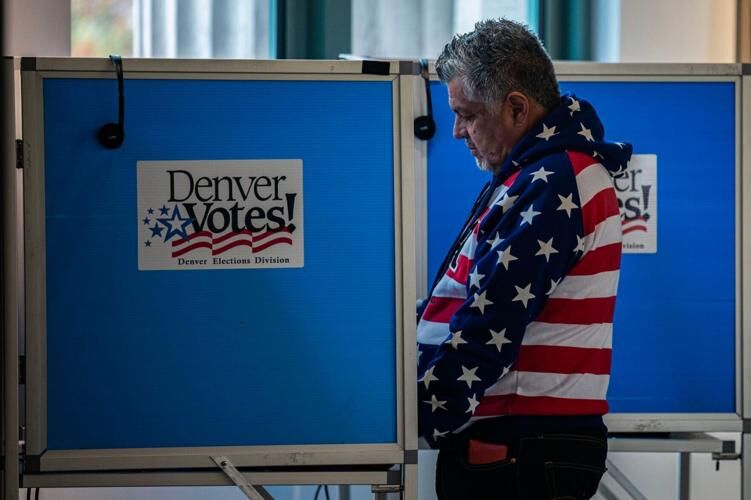
Denver sues Trump to block armed ICE agents from polling sites
Deborah Grigsby
deborah.smith@denvergazette.com
Updated 3 days ago
The city of Denver, along with several groups, sued the Trump administration Thursday, seeking to block U.S. Immigration and Customs Enforcement officers who are armed from polling sites during the upcoming midterm elections. In fact, there are no official orders...

Federal judge takes no action against ICE in Colorado after hearing about mistakes, not ‘blatant violations’
Michael Karlik
michael.karlik@coloradopolitics.com
Updated 13 hours ago
A federal judge declined to take action against U.S. Immigration and Customs Enforcement on Thursday after hearing that a pattern of alleged lawbreaking amounted to mistakes and a misunderstanding of the government’s position in court. For nearly a year, Colorado’s...
Colorado doctors, dentists challenge state law on gender‑transition services in new federal lawsuit
Marissa Ventrelli
marissa.ventrelli@coloradopolitics.com
Updated 10 hours ago
A group of Christian doctors and dentists has filed a federal lawsuit challenging a Colorado law they say requires them to provide gender‑transition services that conflict with their religious and ethical beliefs. The lawsuit, filed by the Christian Medical and...
Federal judge directs plaintiff to revise complaint alleging Denver officers’ constitutional violations
Michael Karlik
michael.karlik@coloradopolitics.com
Updated 13 hours ago
A federal judge directed a plaintiff to revise his allegations on Wednesday to more precisely state what two Denver officers and the city itself allegedly did to violate his constitutional rights by facilitating his prosecution for murder until prosecutors dropped...
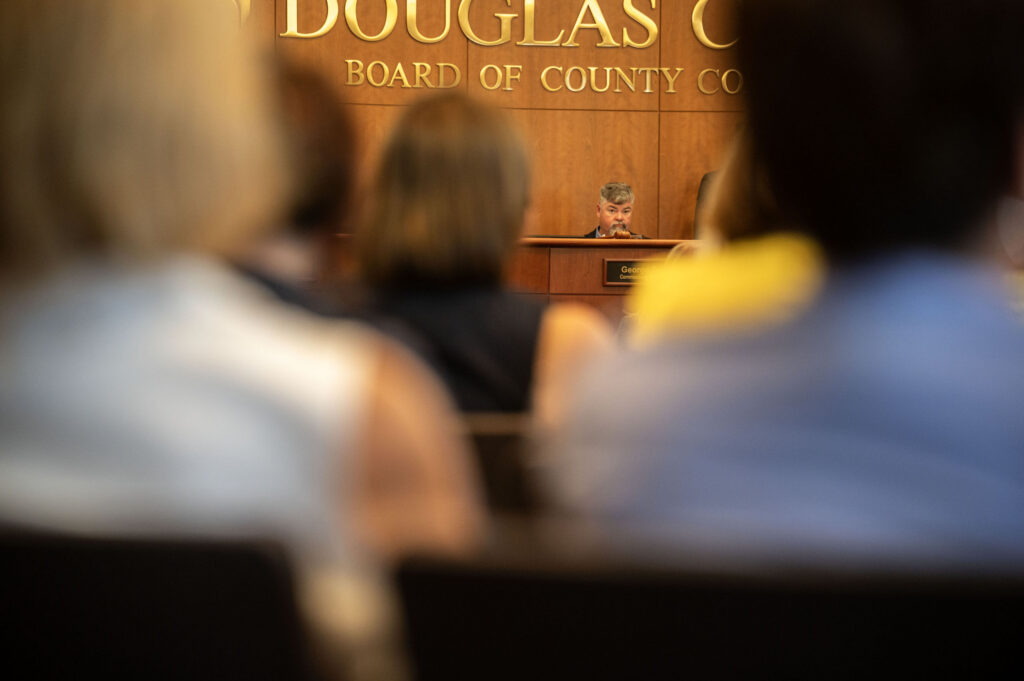
Lawsuit challenges Douglas County commissioners’ ballot actions
Nicholas Fogleman
nicholas.fogleman@denvergazette.com
Updated 3 days ago
A new lawsuit against Douglas County commissioners seeks to invalidate the board’s intervention in efforts to expand the commission from three members to five and restore the original ballot language approved by more than 20,000 petition signers. The suit marks...
Federal judge explores new sanctions against ex-Colorado judicial discipline director
Michael Karlik
michael.karlik@coloradopolitics.com
Updated 16 hours ago
A federal judge on Wednesday directed Colorado’s former judicial discipline director, for the third time this year, to explain why she should not sanction him for his latest conduct in his litigation against the state’s judiciary. Christopher S.P. Gregory, who served...
PREV
PREVIOUS

Denver City Council to weigh Xcel franchise, $18M move to liability fund
The Denver City Council will hold a combined courtesy hearing during its regular Monday meeting to consider a previously introduced trio of Xcel Energy measures. The first would ask voters to extend the utility company’s franchise license with the city through 2026. The franchise license question would go before voters on the Nov. 3 ballot. […]

UNC opens College of Osteopathic Medicine
The University of Northern Colorado held a grand opening for its new College of Osteopathic Medicine on Friday, with Gov. Jared Polis in attendance to celebrate the culmination of a two-year, $127.5 million project. The project was funded through legislation in 2024, which also provided money for a new health institute tower at Metropolitan State […]