

Isolation, emotion, persona: Colorado judicial programming prepares people for life on the bench
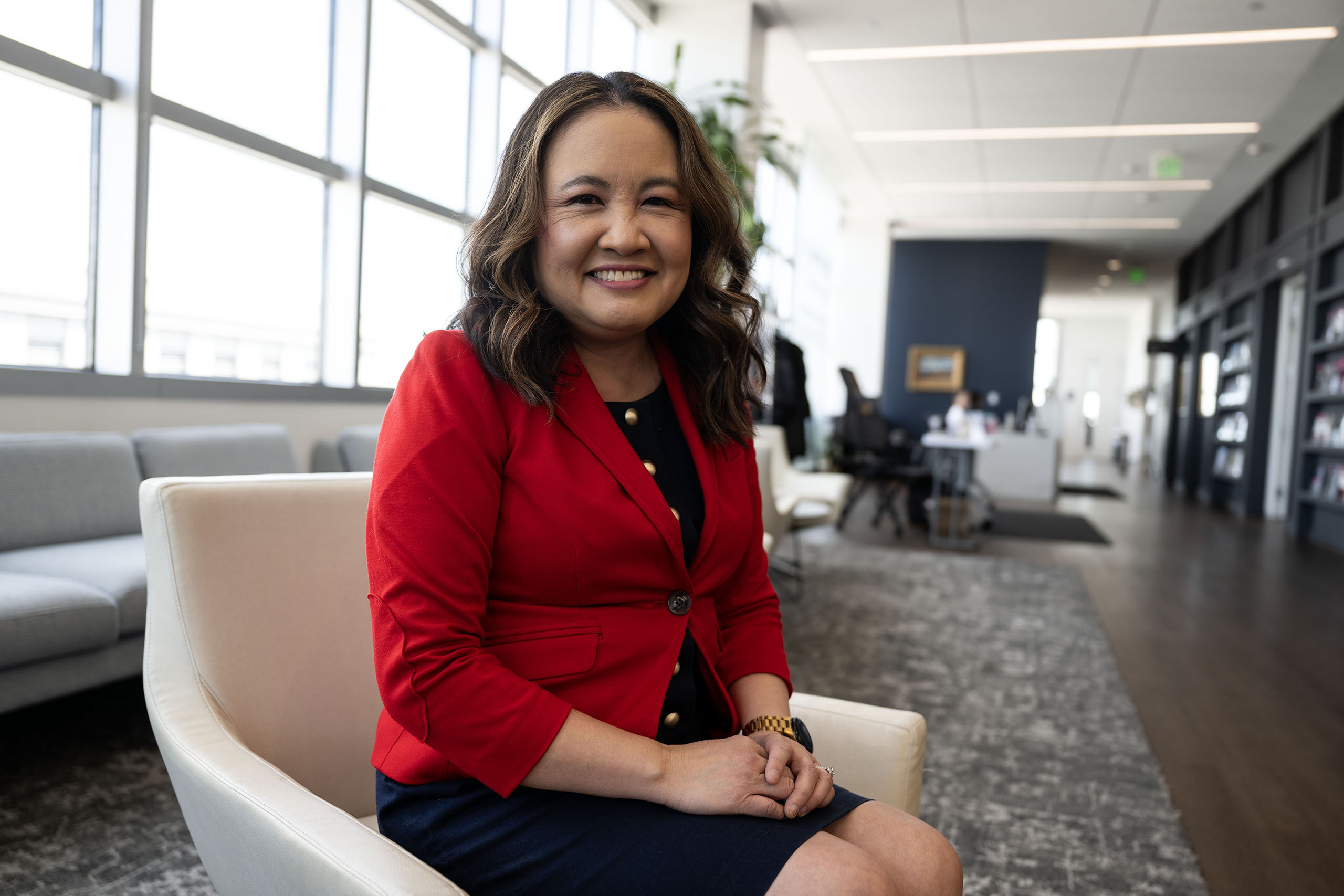
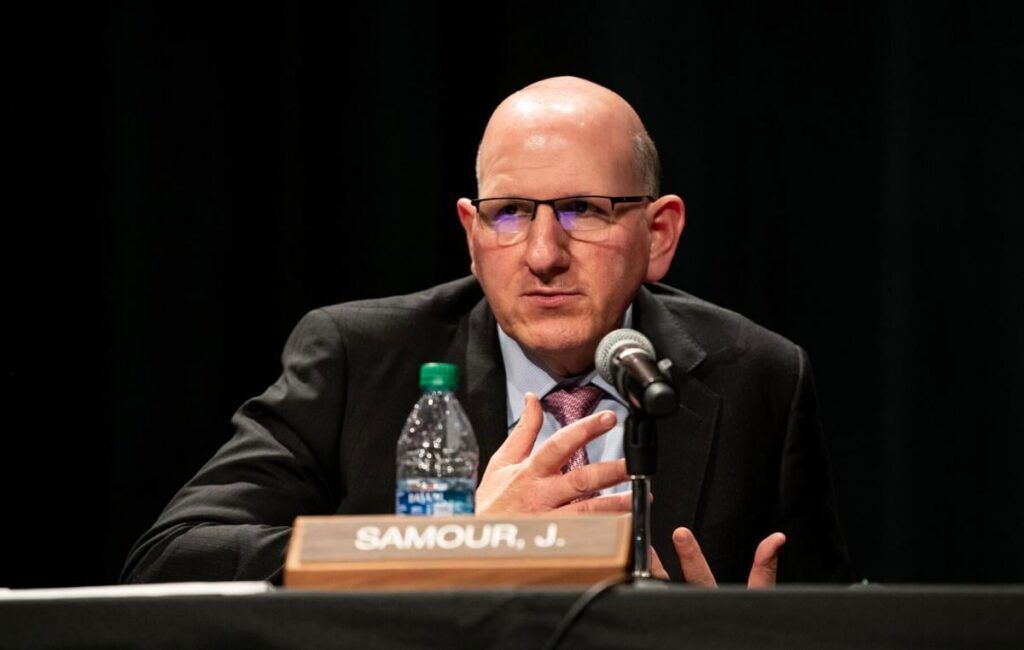
As a trial judge and now as a member of the Colorado Supreme Court, Justice Carlos A. Samour Jr. has heard the view that being a judge is isolating.
“In neither court have I felt isolated. I’ve always interacted a lot with my staff and it becomes sort of a second family,” he said on a Jan. 7 webinar entitled “Behind the Robe.”
“There are great friendships, I think, that you are able to forge. So, to the extent people are reluctant to apply for the bench because they think it’s isolating, it’s different from being in practice. But at least for me, it hasn’t felt isolating,” Samour added.
The virtual discussion was one in a multipart “Your Honor” series in early 2026. Organized by the state’s Judicial Officer Outreach Program, the goal was to familiarize judicial aspirants with what to expect if they apply for and become a judge.
“I have two screens, for example, in my courtroom. One screen just has Webex on it. I usually have my docket on another screen. And I have people appearing in the courtroom,” said Weld County District Court Judge Anita Jain Crowther, who spoke on the same panel as Samour. “And just making sure to look up sometime, too. I have someone at the podium.”
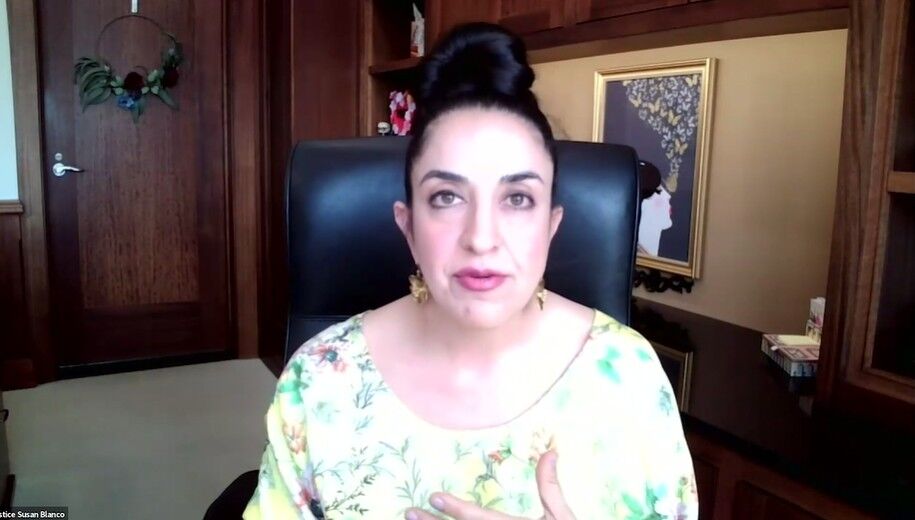
“Sometimes the microphones pick up a lot in that courtroom,” added then-Chief Judge Susan Blanco of Larimer and Jackson counties. “Your head is really on a swivel because that attorney may not realize that microphone at counsel table is going live and streaming into the public-facing internet.”
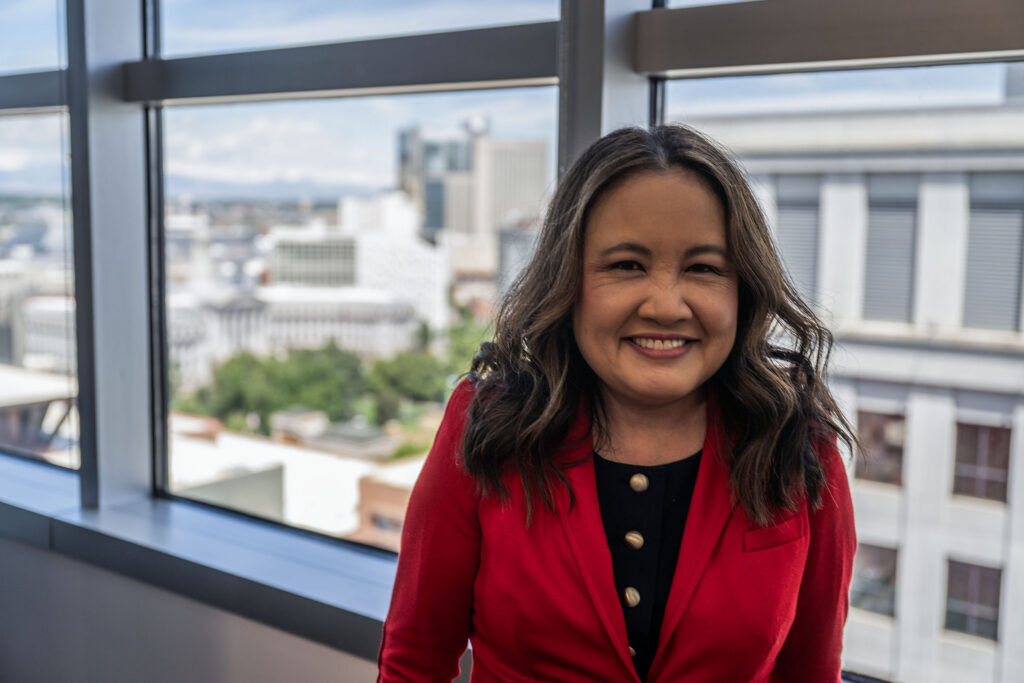
The facilitator for the “Your Honor” series, and judicial outreach programming broadly, was Nga Vương-Sandoval, who arrived at the Colorado Judicial Department after serving in advocacy roles locally and globally.
“The work itself has a common thread in all of the positions that I’ve held,” she told Colorado Politics. “This need to ensure that there is equity built in, there is fairness, there is representation in decision-making roles — has been the common thread.”
Personal interactions with judges
One way to assess the state judiciary’s outreach programming is through the metrics. In the 2024-2025 fiscal year, there were slightly more women than men serving as judicial officers in Colorado, compared to 58% of judges being male and 42% being female in 2020. However, racial diversity has not changed significantly — with White judges comprising 84% in 2020 and around 82% now, based on survey responses. The percentage of Hispanic judges has also dropped.
The outreach program also now tracks other forms of background diversity. A recent survey of 248 judicial officers found that more than 14% speak Spanish, nearly 7% are military veterans and around half were the first in their family to graduate from law school.
“We all want a system that is impartial and fair, and one of the avenues in order to do that is to ensure that the courts are reflective of those that they serve,” said Vương-Sandoval, the outreach program leader, “and that the voices and experiences and perspectives of those from these communities are what is being presented in the courtroom.”
A Vietnamese refugee who served as a refugee representative to the United Nations High Commissioner for Refugees, Vương-Sandoval arrived at the judicial branch after working in the Colorado Department of Law and the state Homeland Security office. The inaugural holder of the role, Sumi Lee, had moved on to the Governor’s Office of Legal Counsel in 2023 and Vương-Sandoval said she was intrigued by the intricacies of judicial selection.
“I think from the outside, it appears as if if a person wants to become a judge, they just apply,” she said. “But there are so many steps and mechanisms in place that can be built upon to ensure that people are well-equipped, well-informed and see whether or not that is truly something that they want to serve in.”
One of Vương-Sandoval’s first major events was a 2025 symposium at the Colorado Bar Association’s Denver headquarters, at which two Supreme Court justices and multiple trial judges spoke. The topics included deciding when and where to apply for the bench, navigating interviews with citizen-led nominating commissions and the governor’s office and managing “impostor syndrome” as a judge.
Multiple attendees found one component of the symposium particularly useful: “speed networking” one-on-one with judges.
“I certainly remember as a young lawyer, and even as a maturing lawyer, being intimidated by the concept of talking to a judge,” said Larimer County District Court Judge Daniel M. St. John II, who attended the symposium as a civil attorney and successfully applied for a vacancy afterward. “One thing that I think bears emphasis is that if you want to be a judge, you should not be afraid to reach out to judges in the jurisdiction where you want to be a judge. That’s the best source of information about what the job’s gonna be like.”
Larimer County Magistrate Shana R. Beggan said that after she attended the symposium, she “broadened (her) horizons” to apply for judicial positions she previously had not considered. She also recognized that she had the time to commit to joining the bench, and said it is important to apply at the right moment when a person has the proper support systems in place.
“We need our benches to reflect our composition of our community. But I think people need to be steeled for what they’re in store for,” said Beggan. “The judiciary is spending a lot of time and money training people. And if they only last for a couple of years, it’s really hard to develop a team if you’re constantly having to replace somebody.”
‘A need we had not fully foreseen’
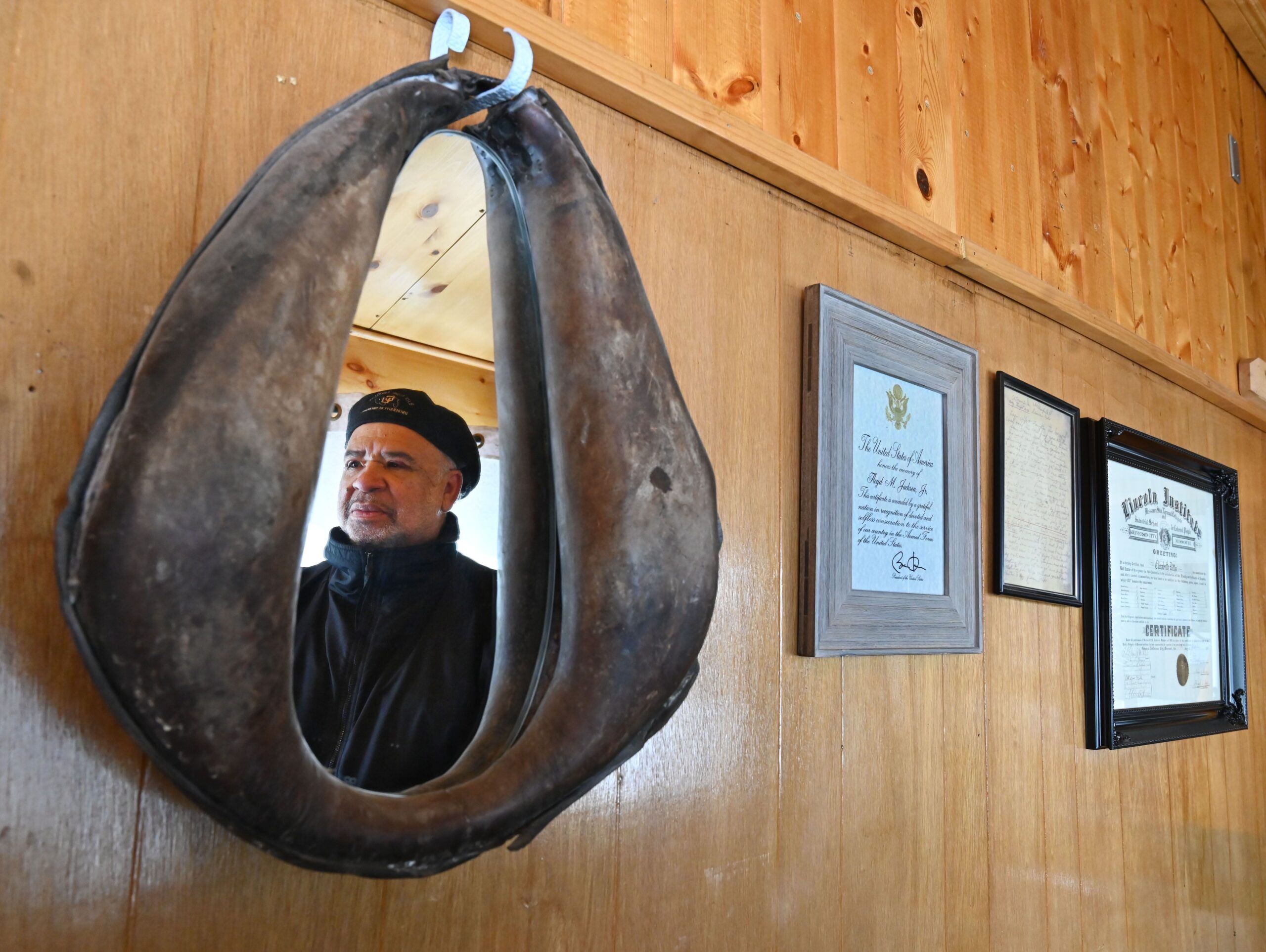
The judicial outreach program is less than a decade old. In fall 2018, then-Denver County Court Judge Gary M. Jackson sounded a “call to action” when the retirement of William D. Robbins from Denver’s District Court threatened to leave Colorado with no sitting Black district judges. The following year, the Colorado Judicial Institute and Colorado Bar Association formed the Diversity on the Bench Coalition.
Also in 2019, the legislature enacted Senate Bill 43 to primarily add more judges. However, one section of the bill created “a position responsible for education and outreach regarding judicial officer vacancies,” whose job was to deliver “educational programming” about judicial vacancies and the application process.
The first-of-its-kind creation of the outreach coordinator was “not my idea. It was, to be honest, kind of the price of getting the bill done and getting it done on a bipartisan basis,” recalled former Sen. Bob Gardner, R-Colorado Springs, who was one of SB 43’s sponsors. “My own position at the time — and remains — is that was a job best left to the bar associations.”
After hearing a description of Vương-Sandoval’s programming and the reactions of participants, Gardner suggested the position is “fulfilling a need we had not fully foreseen in 2019.”
“It seems like that position has perhaps adapted to what the needs are,” he said.
Vương-Sandoval said the virtual “Your Honor” series was aimed at people who could not make the trip to Denver for in-person programming. She has also visited with judicial districts to try and ensure strong candidates continue to apply for vacancies.
Coincidentally, Vương-Sandoval’s series also saw one of the panelists successfully apply for a vacancy: Blanco, who sought and got appointed to a new position on the Supreme Court after participating.
“I think it was pretty serendipitous,” said Vương-Sandoval. “There are a lot of positives to be had, whether as an attendee or a panelist.”
‘You really have to change your persona’
Among the topics covered in the series, participants spoke about the nuances of managing a courtroom.
“My job is not to internalize the emotion. If that’s going on, then everyone needs a break,” said Denver Probate Court Presiding Judge Elizabeth D. Leith. She added that the ability to manage expectations of everyone in the courtroom is “something to think about. Because you’re in charge of all of that.”
“When I first became a judge, I saw that a lot of judges, a lot of judicial officers, seemed to get upset when the media wanted to cover a case,” said Samour, the Supreme Court justice. “If we push the media away in high-profile cases — the cases the public is interested in — then essentially we’re closing the doors to the public. … The media is there because they want to report for the public because the public can’t be there.”
Even in cases that are seemingly not high-profile, they can feel that way in small jurisdictions, added Blanco.
“Everybody in the community will know how you came out on a particular decision,” she said.
In a subsequent discussion entitled “Learning New Areas of the Law,” District Court Judge Elise Myer, of Garfield and Rio Blanco counties, said it is a challenge to become a judge and instantly need to have a high level of proficiency across various categories of law.
“I think it’s incredibly important to set aside order-writing time. And have that be time that cannot be compromised,” she said. “That is such a big part of the job, writing and researching.”
Boulder County District Court Judge Michael Kotlarczyk added that, as a litigator, he would spend weeks trying to get a 30-page filing perfect.
“That’s not something that serves my litigants well as a judge,” he said. “There’s an element of letting go of ego there. To be like, ‘You know what? I’m confident that I have it right and it’s more important for these parties to get their answer now.’”
In yet another panel about ethics and integrity, Chief Judge Paul R. Dunkelman, who presides across several mountain counties, said new judges will need to get used to letting go of the relationships they had with attorneys.
“At some point, that goes away and you’re no longer one of them. You’re the judge and that relationship has changed. It’s difficult to handle that situation and it falls on the judge,” he said. “That’s a difficult thing you don’t think about. These are your friends. They’re your colleagues. Now, they’re in front of you.”
Denver District Court Judge Mark T. Bailey cautioned that judges have to be aware of what they say or do in a heightened way — for example, by reconsidering whether to continue marching in a community parade.
“I think about all the variety of cases that I rule on every day and I ask myself, ‘The person who lost or the side who lost that case, how would they look at me?’ And I try to think of the person who feels the most jilted and got the most unfair result from their perspective. What would they think about something I said once on an unrelated topic?” he said. “When you think about taking this plunge, it’s something to think hard about. You really have to change your persona, the person you present to the community.”

Federal judge green-lights civil trial against ex-Fort Collins DUI officer
Michael Karlik
michael.karlik@coloradopolitics.com
Updated 2 days ago
A federal judge ruled on Thursday that Fort Collins’ former “DUI officer” will face a civil trial for allegedly investigating a motorist for impaired driving without any reasonable suspicion to do so. In recent years, several people arrested by Officer...

Colorado Supreme Court suspends Mesa County judge pending misconduct investigation
Michael Karlik
michael.karlik@coloradopolitics.com
Updated 22 hours ago
The Colorado Supreme Court suspended Mesa County Court Judge Michael J. Grattan on Thursday amid a misconduct investigation. The court’s Sept. 10 order gave Grattan 21 days to explain why his paid suspension should not continue through the end of...
Colorado Supreme Court changes course, dismisses case about special district bonds
Michael Karlik
michael.karlik@coloradopolitics.com
Updated 22 hours ago
The Colorado Supreme Court declined on Friday to decide a dispute between a large-scale Commerce City development and the various districts financing it, after initially showing interest in the ongoing case. Colorado has roughly 2,800 special districts, which are local...
10th Circuit tosses GEO Group’s pretrial appeal in human trafficking lawsuit
Michael Karlik
michael.karlik@coloradopolitics.com
Updated 3 days ago
The Denver-based federal appeals court dismissed an attempt by The GEO Group on Wednesday to appeal a trial judge’s non-existent decision two months before the company is scheduled to face a civil trial over alleged trafficking violations at the Aurora...
Denver sues Trump to block armed ICE agents from polling sites
Deborah Grigsby
deborah.smith@denvergazette.com
Updated 3 days ago
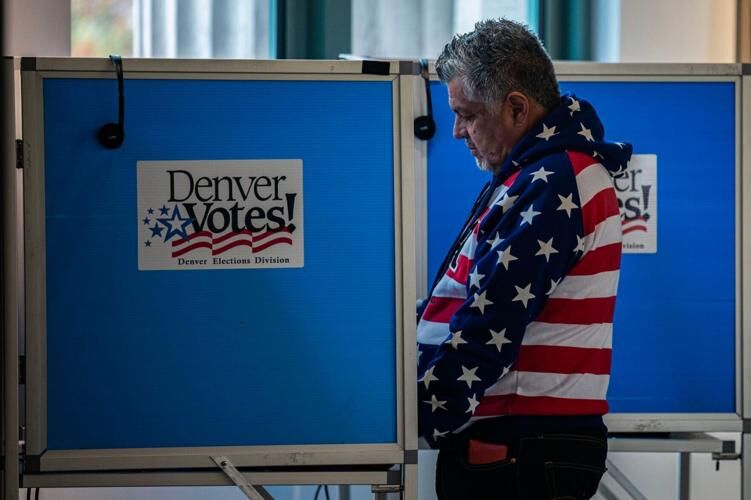
The city of Denver, along with several groups, sued the Trump administration Thursday, seeking to block U.S. Immigration and Customs Enforcement officers who are armed from polling sites during the upcoming midterm elections. In fact, there are no official orders...
Federal judge takes no action against ICE in Colorado after hearing about mistakes, not ‘blatant violations’
Michael Karlik
michael.karlik@coloradopolitics.com
Updated 20 hours ago
A federal judge declined to take action against U.S. Immigration and Customs Enforcement on Thursday after hearing that a pattern of alleged lawbreaking amounted to mistakes and a misunderstanding of the government’s position in court. For nearly a year, Colorado’s...
Colorado doctors, dentists challenge state law on gender‑transition services in new federal lawsuit
Marissa Ventrelli
marissa.ventrelli@coloradopolitics.com
Updated 17 hours ago
A group of Christian doctors and dentists has filed a federal lawsuit challenging a Colorado law they say requires them to provide gender‑transition services that conflict with their religious and ethical beliefs. The lawsuit, filed by the Christian Medical and...
Federal judge directs plaintiff to revise complaint alleging Denver officers’ constitutional violations
Michael Karlik
michael.karlik@coloradopolitics.com
Updated 20 hours ago
A federal judge directed a plaintiff to revise his allegations on Wednesday to more precisely state what two Denver officers and the city itself allegedly did to violate his constitutional rights by facilitating his prosecution for murder until prosecutors dropped...
Lawsuit challenges Douglas County commissioners’ ballot actions
Nicholas Fogleman
nicholas.fogleman@denvergazette.com
Updated 3 days ago
A new lawsuit against Douglas County commissioners seeks to invalidate the board’s intervention in efforts to expand the commission from three members to five and restore the original ballot language approved by more than 20,000 petition signers. The suit marks...
Federal judge explores new sanctions against ex-Colorado judicial discipline director
Michael Karlik
michael.karlik@coloradopolitics.com
Updated 22 hours ago
A federal judge on Wednesday directed Colorado’s former judicial discipline director, for the third time this year, to explain why she should not sanction him for his latest conduct in his litigation against the state’s judiciary. Christopher S.P. Gregory, who served...
PREV
PREVIOUS

Colorado housing laws take effect, expanding tools for affordable and workforce housing
New housing laws taking effect on Aug. 12 in Colorado aim to boost affordability, improve homelessness response and ensure safer water systems for mobile‑home communities. The first bill, Senate Bill 001, allows municipalities to sell county- or town-owned property to affordable housing developers and use certain property tax revenue for housing authorities and workforce housing […]

Colorado justices to hear embryonic donation dispute
The Colorado Supreme Court announced on Monday that it will decide whether lower court judges properly applied its framework for adjudicating disputes over the fate of pre-embryos, in which one person wants to use them to become a parent and the other wishes to donate them. At least three of the court’s seven members must […]