

Montezuma County judge, discipline officials agree upon suspension for numerous misconduct admissions
A Montezuma County judge and the Colorado Commission on Judicial Discipline both agreed this month that a suspension and public censure are the appropriate consequences for his multiple instances of misconduct, including invoking his title when facing a citation from state officials and exhibiting bias against a criminal defendant.
Under constitutional Amendment H, which voters adopted in November 2024, a three-member panel will formally administer discipline to County Court Judge Ian J. MacLaren. The commission originally sought MacLaren’s removal from the bench for actions that allegedly included lying to disciplinary officials. However, on July 11, the parties told the panel that a combination of a public censure, unpaid suspension and additional education were their preferred outcome.
The joint filing suggested that Montezuma County residents should be the ones to decide whether MacLaren’s conduct merits removal from office.
“Judge MacLaren will stand for voter retention in November of 2028. The Complaint, its exhibits and this stipulation will all be available to the voters to inform their choice about whether Judge MacLaren should be retained as a judge,” wrote attorneys for MacLaren and the commission.
The parties filed a follow-up motion on July 13, asking the adjudicative panel to decide by July 20 whether to accept the agreed-upon outcome. The panel — consisting of Weld County District Court Judge Vincente G. Vigil, former Pueblo County District Attorney Jeff Chostner and non-attorney Jeannie Valliere — has scheduled a disciplinary trial for next month.
MacLaren and the commission “need to know as soon as possible if this Panel disagrees so that, if a hearing is deemed necessary, they can, among other things, subpoena witnesses, prepare pretrial briefs and generally get ready for trial,” the attorneys wrote.
Christopher S.P. Gregory, the former executive director of the judicial discipline commission who is suing the judicial branch for an alleged conspiracy, filed his own misconduct complaint against MacLaren last month, alleging conflicts of interest. Specifically, he was concerned about certain participants in MacLaren’s case also being members of the rulemaking body created by Amendment H.
Gregory told Colorado Politics that he believed the entities with appointment authority “have structured the Colorado Judicial Discipline Rulemaking Committee in a manner that protects longstanding misconduct and public fraud that I have documented and exposed.”

As alleged by the commission and documented in contemporary materials, MacLaren was assigned the misdemeanor case of Montezuma-Cortez School District Superintendent Tom Burris. Prosecutors charged Burris with failing to report an alleged sexual relationship between a teacher and a student.
Last year, the parties filed a diversion agreement, which would require Burris to undergo training on his obligations as a mandatory reporter, abstain from criminal activity and, in exchange, the case would be dismissed.
Colorado law required MacLaren, under the circumstances, to discontinue — or stay — the proceedings. MacLaren chose to schedule a hearing and texted a reporter about when would be “a good time to show up” in his courtroom.
At the hearing, MacLaren acknowledged he was “in no position to … do anything about” the diversion agreement and that “legally, I have to stay the proceedings.” Yet, MacLaren delivered extended remarks about the “very concerning” allegations against Burris. He called the diversion agreement a “slap on the wrist,” adding that if the diversion agreement were a plea deal — which it was not — he would have rejected it.
Cameryn Cass, The Cortez Journal’s reporter who MacLaren texted, published an article about the hearing and included a picture she took without authorization in the courtroom. MacLaren texted that he “like(d) that picture!”
In responding to the discipline commission’s inquiry about the hearing, MacLaren made multiple statements the commission alleged were verifiably false. For example, MacLaren asserted that holding a hearing for Burris’ diversion agreement was his practice “consistent across all cases.” In reality, the commission alleged MacLaren had never done that before, based on case records.
MacLaren also stated that at “no point did I suggest” Cass should attend or cover the hearing, that he was “not trying to generate any press coverage” and that he “never provided her with ‘news tips.’” His text messages with Cass appeared to contradict all of those statements.
Separately, while the discipline investigation was pending, Colorado Parks and Wildlife officials approached MacLaren two days in a row in June while he was boating on McPhee Reservoir. According to the incident report, MacLaren acknowledged during the first encounter that he knew he needed to register his boat but had not done so.
The following day, MacLaren “claimed he had tried to register” online but had encountered “technical difficulties.” After an officer informed MacLaren he could update his registration in person, MacLaren “claimed he did not have time due to his occupation as a judge.”

“While navigating their own boat to shore, and out of earshot of Judge MacLaren, the officers debated among themselves whether to ticket Judge MacLaren in light of his revelation that he was a judge,” special counsel Jeffrey M. Walsh wrote in the discipline commission’s complaint. “Their concern was that, if they ticketed Judge MacLaren, he might have a poor opinion of CPW officers or their agency and that this might adversely affect cases before Judge MacLaren in which CPW officers were witnesses.”
In the July 11 resolution to the case, the parties’ final narrative largely tracked the commission’s allegations. The commission and MacLaren did not stipulate that he had responded falsely to the original inquiry, but he admitted to multiple types of misconduct with the Burris hearing and his “ticket-fixing” behavior.
MacLaren acknowledged that his comments during the hearing “were based on incomplete information, unfairly denied Mr. Burris the presumption of innocence, created the appearance of bias against Mr. Burris, could have compromised Mr. Burris’ right to a fair trial, had one become necessary and generally created an appearance of impropriety,” the parties wrote.
MacLaren also admitted that his comments to the CPW officers could have influenced their approach to his boating violation.
“Judge MacLaren understood then, as he does now, that law enforcement officers, like judges, must enforce the law whether they agree with it or not,” the parties wrote. “Judge MacLaren knew he was boating illegally and was properly ticketed as such, yet his comment could reasonably be interpreted to suggest to the officers that he believed he shouldn’t have been ticketed.”
The parties argued to the adjudicative panel that a trial would not introduce new evidence “not already available to the public.” In addition to a censure, suspension and two-week educational course, MacLaren also agreed to receive mentoring until his judicial term expires in 2028.
“Here, the public censure and 90-day suspension are neither disproportionately lenient, nor disproportionately harsh, for the admitted misconduct,” wrote the lawyers for MacLaren and the commission. “In fact, the parties submit the sanction is directly proportionate to the misconduct.”


Colorado Supreme Court end-of-term stats, federal judges’ backlogs increase | COURT CRAWL
Michael Karlik
michael.karlik@coloradopolitics.com
Updated 12 hours ago
Welcome to Court Crawl, Colorado Politics’ roundup of news from the third branch of government. The state Supreme Court’s term revealed increased division among the justices in their opinions, plus Colorado’s federal judges have started to accumulate more overdue motions...
Finding of no discrimination against former Cherry Creek Schools principal upheld
Michael Karlik
michael.karlik@coloradopolitics.com
Updated 1 day ago
The Denver-based federal appeals court agreed on Friday that a judge properly resolved a former Cherry Creek School District administrator’s claims of discrimination in the district’s favor based on employees’ “loss of confidence” in her leadership. Linda Maccagnan was a...
Arapahoe County murder prosecution botched a second time as appeals court reverses for same mistake
Michael Karlik
michael.karlik@coloradopolitics.com
Updated 2 days ago
Colorado’s second-highest court reversed a man’s felony murder conviction for the second time on Thursday after an Arapahoe County prosecutor made the same mistake that triggered reversal of the defendant’s first conviction years earlier. Although David Alberto Garcia was not...
Federal judge dismisses lawyer’s disability discrimination claims against judge
Michael Karlik
michael.karlik@coloradopolitics.com
Updated 3 days ago
A federal judge dismissed a lawyer’s discrimination claims last month against a judge in El Paso County who allegedly failed to provide reasonable accommodations for her long COVID disability. Andrea M. Hall sued District Court Judge Chad Miller and his...
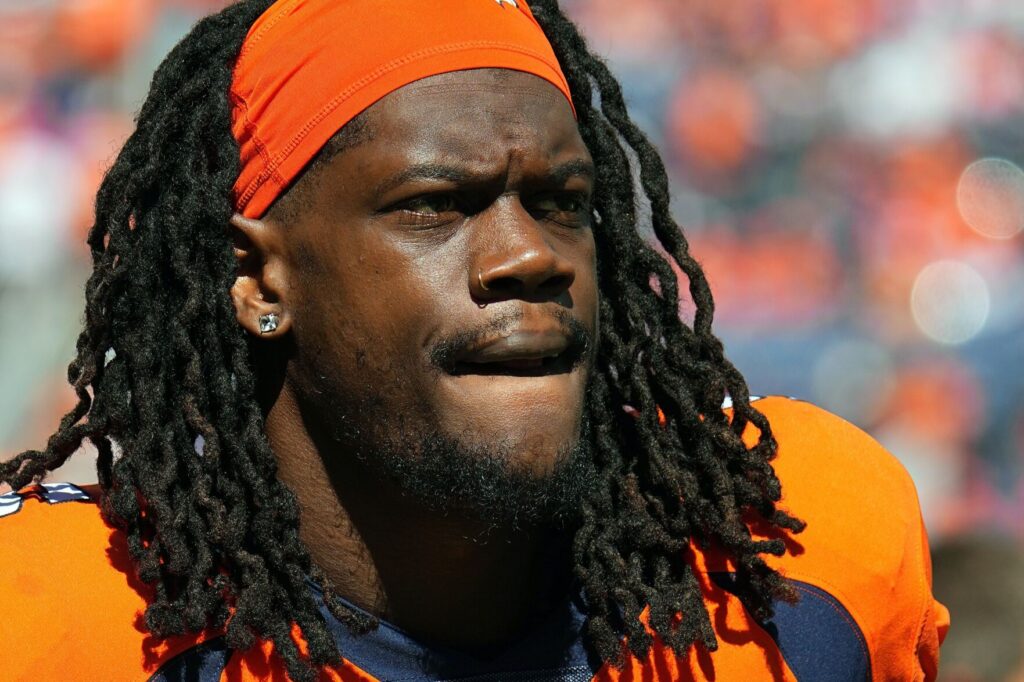
Ex-Broncos linebacker’s discrimination lawsuit returned to Colorado court
Michael Karlik
michael.karlik@coloradopolitics.com
Updated 4 days ago
A federal judge returned a former Broncos linebacker’s disability discrimination lawsuit to state court last month, rejecting the NFL defendants’ attempt to keep the case in federal court. Randy Gregory, who played for the Broncos between 2022 and 2023, sued...
10th Circuit concludes Army was justified in initially withholding Purple Heart to soldier
Michael Karlik
michael.karlik@coloradopolitics.com
Updated 5 days ago
The Denver-based federal appeals court agreed last week that the U.S. Army was “substantially justified” in its initial decision to withhold the Purple Heart from an injured soldier, then reverse itself when new evidence surfaced during litigation. Joshua Savelkoul ultimately...
Judge removes Fremont County DA from murder case
Nick Smith
nick-smith@coloradopolitics.com
Updated 6 days ago
Discovery violations cited in at least 23 cases since former El Paso County prosecutor took over the office Eleventh Judicial District Attorney Jeffrey Lindsey and his entire office in Fremont County were removed from a double homicide and kidnapping case...
Federal judges’ backlogs increase in Colorado
Michael Karlik
michael.karlik@coloradopolitics.com
Updated 2 days ago
Colorado’s federal trial judges collectively had 73 motions in civil cases that had been sitting on their dockets for at least six months without a ruling as of March 31, a backlog that nearly doubled from the previous reporting period....

Appeals court clarifies guardrails for mandatory arbitration
Michael Karlik
michael.karlik@coloradopolitics.com
Updated 6 days ago
Colorado’s second-highest court issued two decisions in recent weeks that clarified the limits on mandatory arbitration, including for cases that raise workplace sexual harassment claims. While arbitration can be a more efficient and private form of dispute resolution compared to...

Divided opinions tick upward, member goes missing | Colorado Supreme Court term in review
Michael Karlik
michael.karlik@coloradopolitics.com
Updated 7 hours ago
The Colorado Supreme Court released the last decisions of its 2025-2026 term at the end of June, with the final numbers showing a significant uptick in non-unanimous opinions over the prior two terms. Further, the composition of the court had...
PREV
PREVIOUS

Colorado Supreme Court end-of-term stats, federal judges' backlogs increase | COURT CRAWL
Welcome to Court Crawl, Colorado Politics’ roundup of news from the third branch of government. The state Supreme Court’s term revealed increased division among the justices in their opinions, plus Colorado’s federal judges have started to accumulate more overdue motions in civil cases. Colorado Supreme Court 2025-2026 term • Like its federal counterpart, the state […]
Aurora church tied to group that exploited homeless people is under scrutiny
Two regional Seventh-day Adventist conferences that oversee the activities of its member churches across several states have launched inquiries into an Aurora-based congregation tied to a Medicaid operation that exploited the homeless. The Rocky Mountain Conference and the Central States Conference of the Seventh-day Adventist church — based in Denver and Kansas City, Kansas, respectively, […]