

10th Circuit concludes Army was justified in initially withholding Purple Heart to soldier
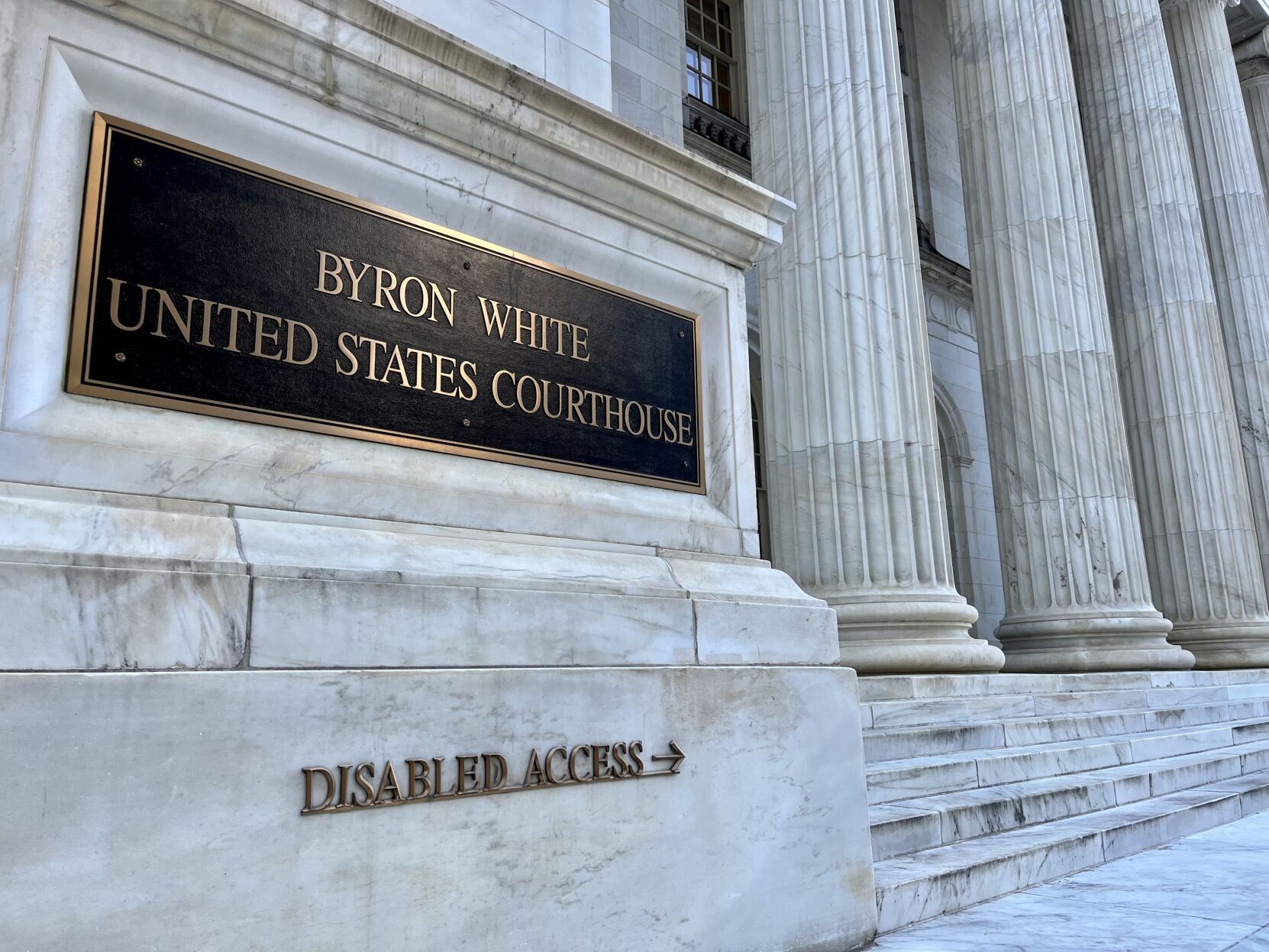
The Denver-based federal appeals court agreed last week that the U.S. Army was “substantially justified” in its initial decision to withhold the Purple Heart from an injured soldier, then reverse itself when new evidence surfaced during litigation.
Joshua Savelkoul ultimately received the award nearly two decades after a sniper shot him in Iraq. But the question Savelkoul raised to the U.S. Court of Appeals for the 10th Circuit was whether he was entitled to nearly $22,000 in attorney fees for litigating and prevailing against the Army.
A three-judge panel determined that Savelkoul did not meet either of the criteria for receiving attorney fees from the government. Specifically, he was not a “prevailing party” and the government’s position was “substantially justified” based upon what it knew.
“Altogether, the evidence available,” wrote Judge Gregory A. Phillips in a July 6 order, “did not require awarding Savelkoul a Purple Heart.”
Case: Savelkoul v. Driscoll
Decided: July 6, 2026
Jurisdiction: U.S. District Court for Colorado
Ruling: 3-0
Judges: Gregory A. Phillips (author)
Carolyn B. McHugh
Allison H. Eid
When a sniper shot and wounded Savelkoul during his service as an infantryman in 2006, a combat medic identified a blunt trauma wound. After arriving at an aid station, Capt. Christopher Yamamoto treated Savelkoul. Yamamoto wrote that he gave Tylenol to Savelkoul and returned him to duty, while also ordering a re-evaluation of the wound.
Savelkoul served for six more years in the Army, then transferred to the Colorado Army National Guard. In 2020, he applied for the Purple Heart for his injury. His commanders approved the request, but the Army’s Human Resources Command denied it.
The HRC determined Savelkoul had not met the criteria for the Purple Heart because his injuries “were not severe enough to require additional treatment by a medical officer.”
Savelkoul appealed to the Army Board for Correction of Military Records, which agreed that his wound was “not severe enough” to require medical treatment.
Savelkoul sought judicial review of the ABCMR’s decision. He attached to his complaint a statement from Yamamoto, who had since entered private medical practice. Yamamoto elaborated on the treatment he provided and opined that Savelkoul was entitled to the Purple Heart.
The government asked that the case be returned to the ABCMR because Yamamoto’s statement amounted to “new, material evidence” in support of Savelkoul’s Purple Heart application. Savelkoul argued the statement only reaffirmed what Yamamoto described in 2006, which, Savelkoul conceded, was a “slightly difficult to read” handwritten report.
U.S. District Court Senior Judge Robert E. Blackburn declined to return the case to the Army. He acknowledged that some of Yamamoto’s statements were new evidence, but they were “not relevant to the key question of whether the wound was incurred as a result of hostile enemy action.”
The evidence the Army relied upon in its original decision “is not altered significantly by the three new items in the Yamamoto declaration,” Blackburn concluded in March 2024.
The case proceeded further, and the court eventually reassigned it to U.S. District Court Judge Gordon P. Gallagher. A year after Blackburn’s order, Gallagher changed course and decided to remand it to the Army after all.
“Ultimately, the Yamamoto declaration provides new evidence that speaks directly to the sole disputed issue in the case,” wrote Gallagher, referring to Savelkoul’s need for medical treatment. “The Yamamoto declaration fundamentally undermines the agency’s stated basis for its action by providing substantial evidence that the wound, notwithstanding its small size as shown by prior evidence, was the sort of wound that could be life-threatening and required treatment by a medical officer.”
Upon remand, the ABCMR awarded the Purple Heart to Savelkoul.
Savelkoul sought to have the government pay his attorney fees. Gallagher rejected the request, explaining that he was not sure whether Savelkoul “prevailed” in the case. Regardless, Gallagher determined the Army’s initial position to deny the Purple Heart was justified, as was the government’s reversal once it saw the Yamamoto declaration.
“This action was filed within mere weeks of Plaintiff obtaining the Yamamoto Declaration. The Army, upon receipt of the Declaration, almost immediately made the call to reevaluate its earlier decision and ask for remand,” Gallagher wrote. “Each of those inflection points in this action were reasonable and substantially justified. While at this stage it remains unclear to this Court whether (the) government was wrong, its litigating position enjoyed substantial justification in fact and law.”
Savelkoul appealed Gallagher’s order to the 10th Circuit.
“It’s important to remember that Mr. Savelkoul is a decorated combat veteran who honorably served his country, and yet his own government treated him this way when all he sought was the award he was entitled to,” his lawyers wrote. “Nothing about the agency actions or the government’s defense of them comes close to substantial justification.”
But the 10th Circuit panel disagreed with him.
Savelkoul did not become a prevailing party because the Army considered new evidence and independently concluded he should receive the Purple Heart, Phillips wrote. Further, the evidence prior to the lawsuit suggested a denial of Savelkoul’s application was reasonable.
“The government defended the position that the ABCMR took based on a limited record — one that lacked a key declaration that Savelkoul waited seventeen years to secure,” wrote Phillips.
The case is Savelkoul v. Driscoll.

Appeals court confirms Colorado judges can compel electronic records from out of state
Michael Karlik
michael.karlik@coloradopolitics.com
Updated 5 hours ago
Colorado’s second-highest court clarified on Thursday that judges are empowered to compel out-of-state companies to produce electronic records under state law. El Paso County jurors convicted Mischa Jargowsky on three counts of money laundering and one violation of Colorado’s organized...
10th Circuit upholds finding of no racial discrimination against family at Denver Chili’s
Michael Karlik
michael.karlik@coloradopolitics.com
Updated 1 hour ago
The Denver-based federal appeals court agreed on Wednesday that a Black plaintiff failed to show that a Chili’s manager’s request for her family to provide valid payment at the outset of their meal amounted to racial discrimination. Markesha Futrell-Smith filed...
Appeals court reinstates Mesa County defendant’s request for DNA testing under new Colorado law
Michael Karlik
michael.karlik@coloradopolitics.com
Updated 1 day ago
Colorado’s second-highest court revived a Mesa County defendant’s petition for DNA testing in his three-decade-old attempted murder case on Thursday, concluding that a trial judge wrongly interpreted a recent Colorado law in dismissing the request outright. Jurors convicted Billy Joe...
Appeals court reverses Denver juvenile’s conviction due to improper expert testimony
Michael Karlik
michael.karlik@coloradopolitics.com
Updated 1 day ago
Colorado’s second-highest court reversed a juvenile defendant’s conviction for unlawful sexual contact on Thursday after an expert witness’s testimony improperly suggested the child victim was telling the truth. The defendant, identified as S.H-S., was around 16 years old when he...

Judge orders home confinement for Barry Morphew
Dennis Huspeni
dennis.huspeni@gazette.com
Updated 1 day ago
An Alamosa County district judge has ordered home confinement for Barry Morphew, who is accused of murdering his wife. Barry Morphew, 59, faces a first-degree murder charge in the death of his wife, Suzanne Morphew, who disappeared Mother’s Day weekend...
Appeals court says jury does not need to view porn to determine if it’s ‘obscene’
Michael Karlik
michael.karlik@coloradopolitics.com
Updated 5 hours ago
Colorado’s second-highest court ruled for the first time on Thursday that a jury does not always need to view pornographic material to determine if it meets the criteria for obscenity. Mesa County jurors found Shayla Ann Simpson guilty of child...
10th Circuit disagrees Sterling officer had no basis to arrest motorist who lacked insurance details
Michael Karlik
michael.karlik@coloradopolitics.com
Updated 2 days ago
The Denver-based federal appeals court disagreed on Tuesday with a trial judge’s decision to bar evidence from a pat-down search from being used against a defendant. Federal prosecutors obtained an indictment of Jorge Sigala-Baray for being a felon in possession of a...

Colorado Springs officers’ tasing, threats prompt federal judge to block use of suspect’s statements
Michael Karlik
michael.karlik@coloradopolitics.com
Updated 2 days ago
A federal judge blocked the government last month from using some of a defendant’s statements as evidence, reasoning that the defendant made them involuntarily as Colorado Springs officers tased him five times and one officer threatened to kill him. Officers...

Appeals court rejects CDOT employee’s discrimination, retaliation claims
Michael Karlik
michael.karlik@coloradopolitics.com
Updated 2 hours ago
Colorado’s second-highest court agreed last week that a Colorado Department of Transportation employee had not shown that his employer discriminated and retaliated against him due to his religion and national origin. Ayman Salloum, who described himself as a 70-year-old Muslim...
Colorado judges may use professional name in lieu of legal name, ethics panel says
Michael Karlik
michael.karlik@coloradopolitics.com
Updated 1 day ago
Colorado’s Judicial Ethics Advisory Board concluded on Tuesday that members of the bench may go by a professional name, rather than their legal name, so long as their intent is not to deceive. The board, which consists of judges, attorneys...
PREV
PREVIOUS

Trump says ‘we cannot give up’ on ICE vehicle stops after temporary halt
WASHINGTON • President Donald Trump said on Wednesday he doesn’t want to see the end of vehicle stops conducted by Immigration and Customs Enforcement after they were halted by the agency Tuesday in response to multiple fatal officer-involved shootings. The Department of Homeland Security shifted a key part of its immigration policy after ICE officers […]

Republican candidates pass on signing Colorado gubernatorial nominee Victor Marx’s ‘unity compact’
A spokesperson for Republican gubernatorial nominee Victor Marx said his campaign is “extremely encouraged” by responses to a document the campaign circulated late last week, asking fellow GOP nominees how they want to collaborate in the months ahead before Colorado’s November election. Two of the four other statewide Republican candidates, however, told Colorado Politics that […]