

Secret orders, requests for recusal bog down Colorado’s death penalty prosecution
Colorado’s only criminal case in which federal prosecutors are actively pursuing the death penalty has taken unusual turns in recent weeks, with defense attorneys continuing to challenge the judge’s ability to hear the case and the judge issuing orders not available for public viewing.
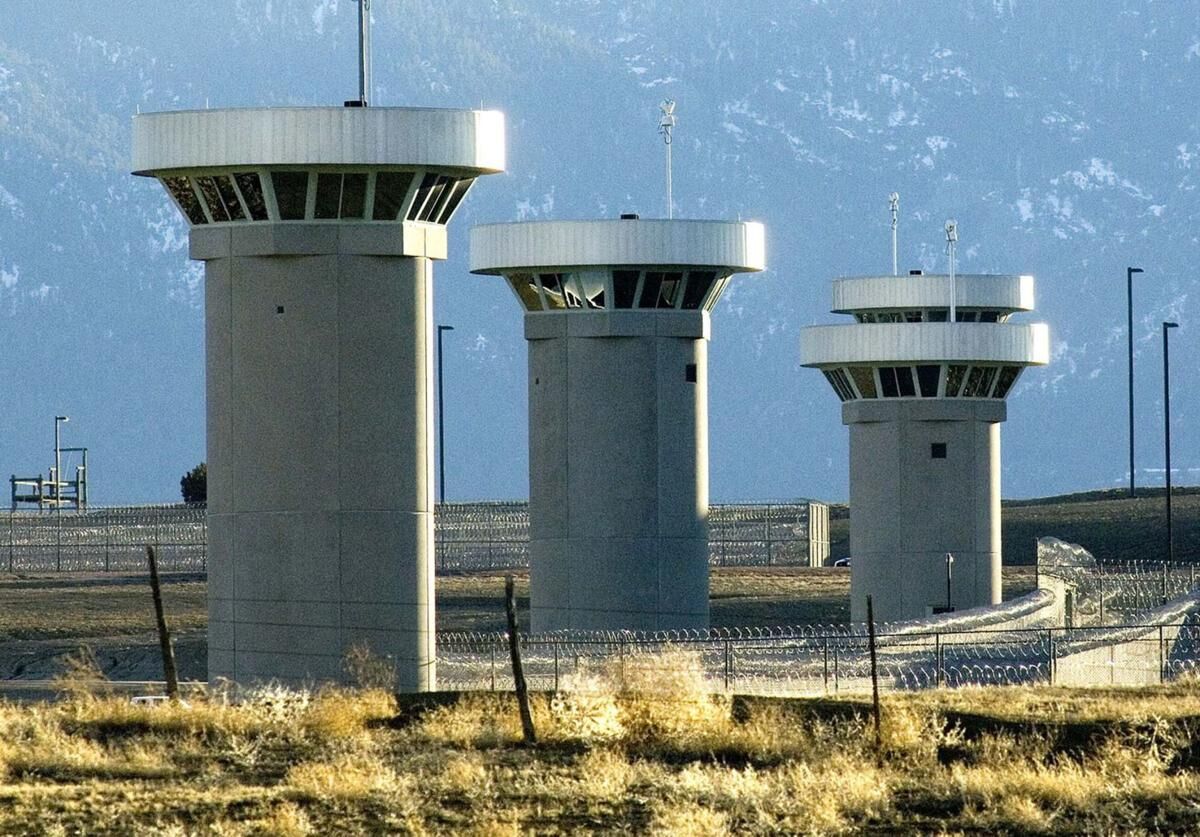
Ishmael Petty stands accused of killing a fellow inmate at the U.S. Penitentiary, Administrative Maximum Facility in Florence (ADX). According to an after-action report from the prison, Petty immediately confessed to murdering Lamarcus Hillard on Sept. 19, 2020. Petty said he induced Hillard to fake a hostage-taking scenario in their housing area, but he strangled and stabbed Hillard while the lights were off.
After indicting Petty in April 2025, prosecutors immediately announced their intent to seek the death penalty. However, several developments have clouded the case’s trajectory.
In March, U.S. District Court Judge Charlotte N. Sweeney went to ADX with the lawyers to tour the facility. She viewed relevant portions that could help her better address motions related to the penalty phase of Petty’s trial. However, after Sweeney had three interactions with the warden, ADX’s attorney, and other personnel outside the presence of the defense and prosecution, Petty’s lawyers sought her recusal from the case.
Sweeney declined to step aside in a May 28 order, rejecting the defense’s view that she had “ex parte” communications, meaning those without both parties present.
She slammed the defense for making “tenuous allegations as to what Defendant believes occurred without any evidence tending to support Defendant’s speculations or characterizations of this event,” Sweeney wrote. “And to be clear, the Court has no such partial interest in this case in favor of either party, nor has it ‘prejudged’ any aspect of this case.”

Then, on June 26, the defense filed two additional motions related to her prison visit.
First, it asked her once again to step off the case. Petty’s lawyers argued that, under Sweeney’s view, it would be appropriate for her to privately interview witnesses, receive off-the-record information, and conduct her own investigation without overstepping the prohibition on ex parte communications.
“A reasonable person knowing these facts — that a judge in a capital case, with pending and anticipated disputes about surveillance capabilities and conditions of confinement, privately toured disputed areas of the prison with the warden and the prosecution’s institutional contact, without counsel present and without any record — would question the Court’s impartiality,” wrote the defense. “The fact that no one, including the Court, can identify what was communicated during those interactions is not a reason to deny recusal. It is the reason to grant it.”
Second, the defense asked Sweeney to disclose what she talked about with Acting Warden Derrick Jones and ADX’s attorney, Brandon Willms. It argued that Sweeney was chiding the defense for failing to back up its allegations, even though it was impossible for the parties to know what happened when Sweeney left the room.
“The defense must be allowed to inquire as to what the Court heard when counsel was not present, what the Court saw when counsel was not present, and what conversations occurred when counsel was not present,” Petty’s attorneys wrote, asking Sweeney to make Jones, Willms, and her law clerks available to testify.
However, before the government could respond to the defense’s requests, Sweeney hit pause.
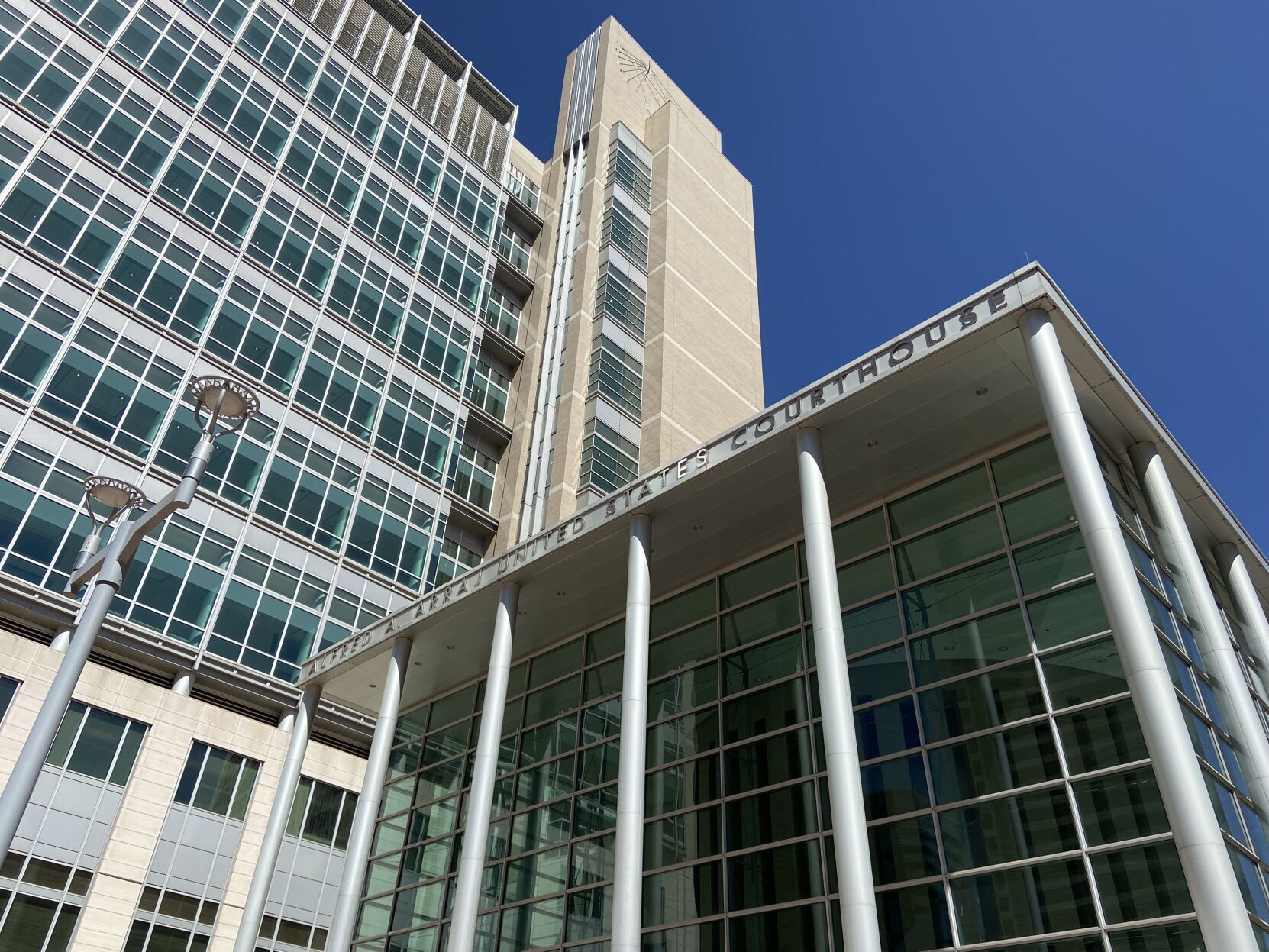
On June 30, Sweeney had planned to hold a “Faretta hearing,” an apparent reference to the process by which a judge allows a criminal defendant to represent himself.
At the outset of the hearing, Sweeney cleared the courtroom to talk with Petty and his attorneys. After more than an hour, she allowed the public and the prosecution to return and announced that the scheduled hearing would not proceed.
Sweeney said that she would not be ruling on a document that is shielded from public view on the docket, and that she could only provide “vague input” for the government about a forthcoming order.
When the prosecution asked whether her order would be viewable by the parties, Sweeney said it would be a “Level 3″ order, meaning viewable only by her.
“I don’t know. I think when you see it, you’ll see why I don’t know at this point,” she said. “You will be advised one way or the other as to what direction we’re going in.”
One week later, Sweeney uploaded her Level 3 order to the docket. She also posted a “Level 2″ order, which allowed some of the attorneys to see the contents.
On Thursday, the government asked her to lift all restrictions on the order, noting it did not contain Petty’s confidential medical information or attorney-client details. Further, Sweeney gave instructions to the Federal Bureau of Prisons that the government could not share under the current prohibition.
“The parties have conferred, and the defense does not object,” wrote Assistant U.S. Attorney Brian Dunn. “However, defense has requested that (the order) only be unrestricted for the limited purpose of showing the order to BOP.”
Finally, on Friday, Sweeney seemed to agree with the government. In a brief order, she suggested the restriction should not “remain in-place indefinitely.” Still, she gave the defense until July 17 to raise any concerns with making the document public.
One of Petty’s lawyers declined to comment to Colorado Politics while the document remains under restriction.
The case is United States v. Petty.


10th Circuit overturns framework for sentencing probation violators by 11-1
Michael Karlik
michael.karlik@coloradopolitics.com
Updated 19 hours ago
In a rare decision by all 12 of its full-time judges, the Denver-based federal appeals court ruled in a lopsided vote on Friday that one of its members created a sentencing process for probation violators that was out of step...

Federal judge dismisses excessive force lawsuit against Colorado Springs, officer
Michael Karlik
michael.karlik@coloradopolitics.com
Updated 9 minutes ago
A federal judge concluded last week that a Colorado Springs police officer could not be held liable for shooting a suspect three times after the man menaced two victims with a gun and fled the scene. Al’morion Germany was involved...
Weld County man sentenced to 236 years for sexually assaulting 9-year-old girl
Kyla Pearce
kyla.pearce@gazette.com
Updated 21 hours ago
A Weld County man was sentenced to 236 years in prison for repeatedly sexually assaulting a 9-year-old girl. Joshua Andrews, 41, was charged in June with 12 counts of sexual assault on a child by a person in a position...
Wrongfully deported man to be returned to U.S., Colorado federal judge orders
Michael Karlik
michael.karlik@coloradopolitics.com
Updated 2 days ago
Colorado’s chief federal judge took the extraordinary step of directing the government on Tuesday to do everything it can to return a man it deported in violation of his order. At the same time, Colorado’s chief magistrate judge has set...
Denver murder, assault convictions reversed due to faulty jury instructions
Michael Karlik
michael.karlik@coloradopolitics.com
Updated 1 day ago
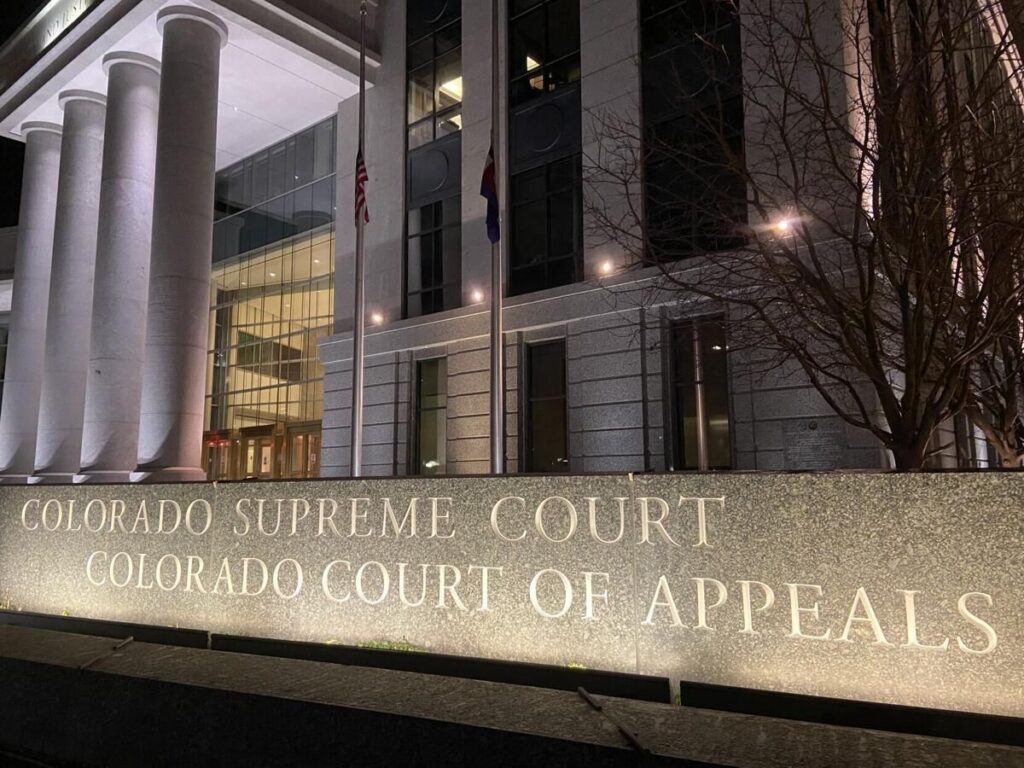
Colorado’s second-highest court reversed a defendant’s convictions for murder and assault last week after concluding a Denver judge incorrectly omitted key jury instructions that could have affected the verdict and sentencing. Stephen C. Swainson fatally stabbed Israel Casillas in downtown...
‘Understand people for who they are’: 2 federal judges talk about compassion in courtroom
Michael Karlik
michael.karlik@coloradopolitics.com
Updated 14 hours ago
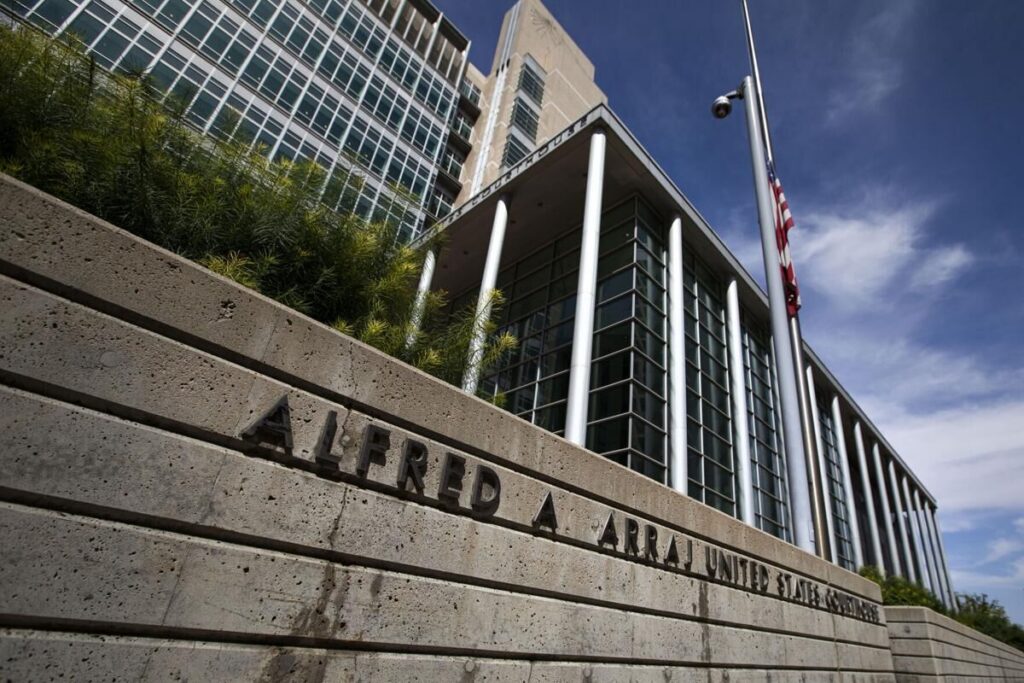
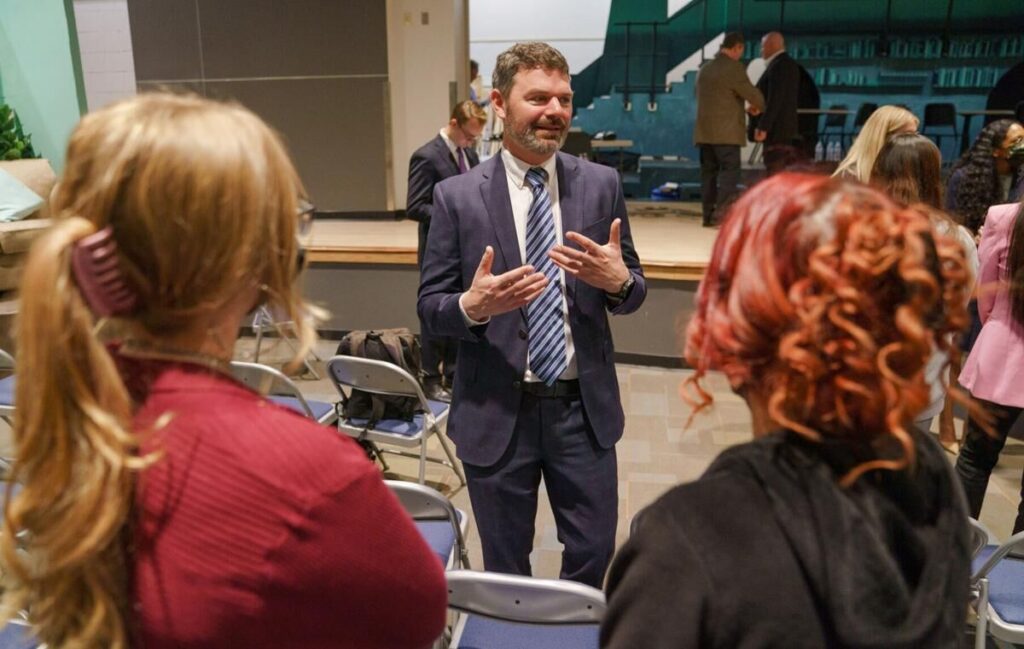
Before taking the bench in 2022, U.S. District Court Judge Charlotte N. Sweeney was an employment discrimination attorney. While the cases could be emotionally charged, they were different from the criminal proceedings she is now handling. “It wasn’t necessarily affecting...
Denver murder conviction reversed for incomplete self-defense instruction
Michael Karlik
michael.karlik@coloradopolitics.com
Updated 4 days ago
Colorado’s second-highest court reversed a defendant’s murder conviction last week because a Denver judge gave an incomplete instruction to the jury about the man’s right to self-defense. Donald R. Gonzales and Gary McLaughlin met up in a Capitol Hill parking...
Colorado lawmaker, House leaders named in workplace-retaliation lawsuit
Marianne Goodland
marianne.goodland@coloradopolitics.com
Updated 4 days ago
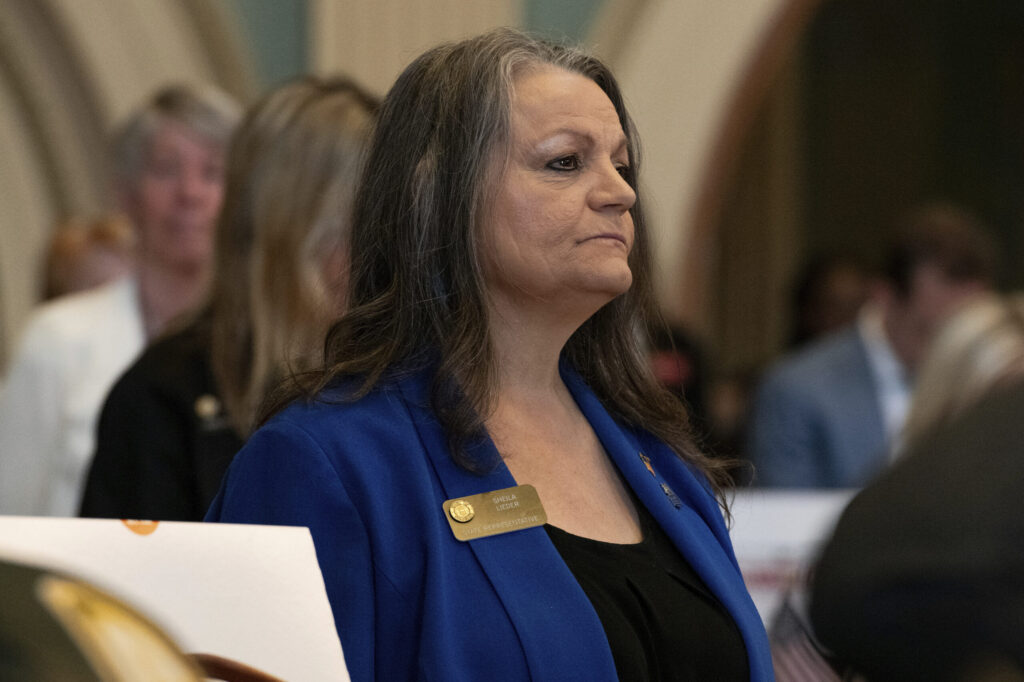
A former legislative aide has filed a lawsuit alleging she was mistreated, illegally directed to perform campaign work and harmed by a House leadership structure she charged was fragmented, politicized and ineffective at protecting employees. The lawsuit, filed by Jennifer...
Federal judge hears arguments about Colorado’s 3-day gun purchase waiting period
Michael Karlik
michael.karlik@coloradopolitics.com
Updated 4 days ago
A federal judge heard arguments on Monday about the constitutionality of a 2023 Colorado law that generally imposes a three-day waiting period on firearm purchases after the initiation of a background check. The test that the U.S. Supreme Court created...
Colorado Supreme Court intervenes in Weld County prosecution dismissed due to Missy Woods misconduct
Michael Karlik
michael.karlik@coloradopolitics.com
Updated 4 days ago
The Colorado Supreme Court ordered a Weld County trial judge last week to respond to the district attorney’s claim that he improperly dismissed a criminal case because of “outrageous” conduct by the Colorado Bureau of Investigation. Daniel Lee Eatinger stood...
PREV
PREVIOUS

Designs for Front Range Passenger Rail trains released
The Front Range Passenger Rail District on Sunday unveiled the new brand identity and personality for its planned Colorado Connector intercity train service, known as CoCo. The district said the branding is intended to be welcoming, optimistic and distinctly Colorado while presenting a trustworthy and approachable identity for the service, according to a news release. […]

Colorado extends filing deadlines for taxpayers affected by wildfires
The Colorado Department of Revenue is offering an extension on tax filing deadlines to taxpayers affected by the wildfires raging throughout the state. The agency said all residents and businesses in Dolores, Montezuma, Lake, Mesa, Pueblo, Custer, Ouray, Las Animas, Baca, Routt, San Miguel and Huerfano counties are eligible for a tax filing extension. The […]