

Appeals court reverses convictions after judge blocked defendant’s character witnesses
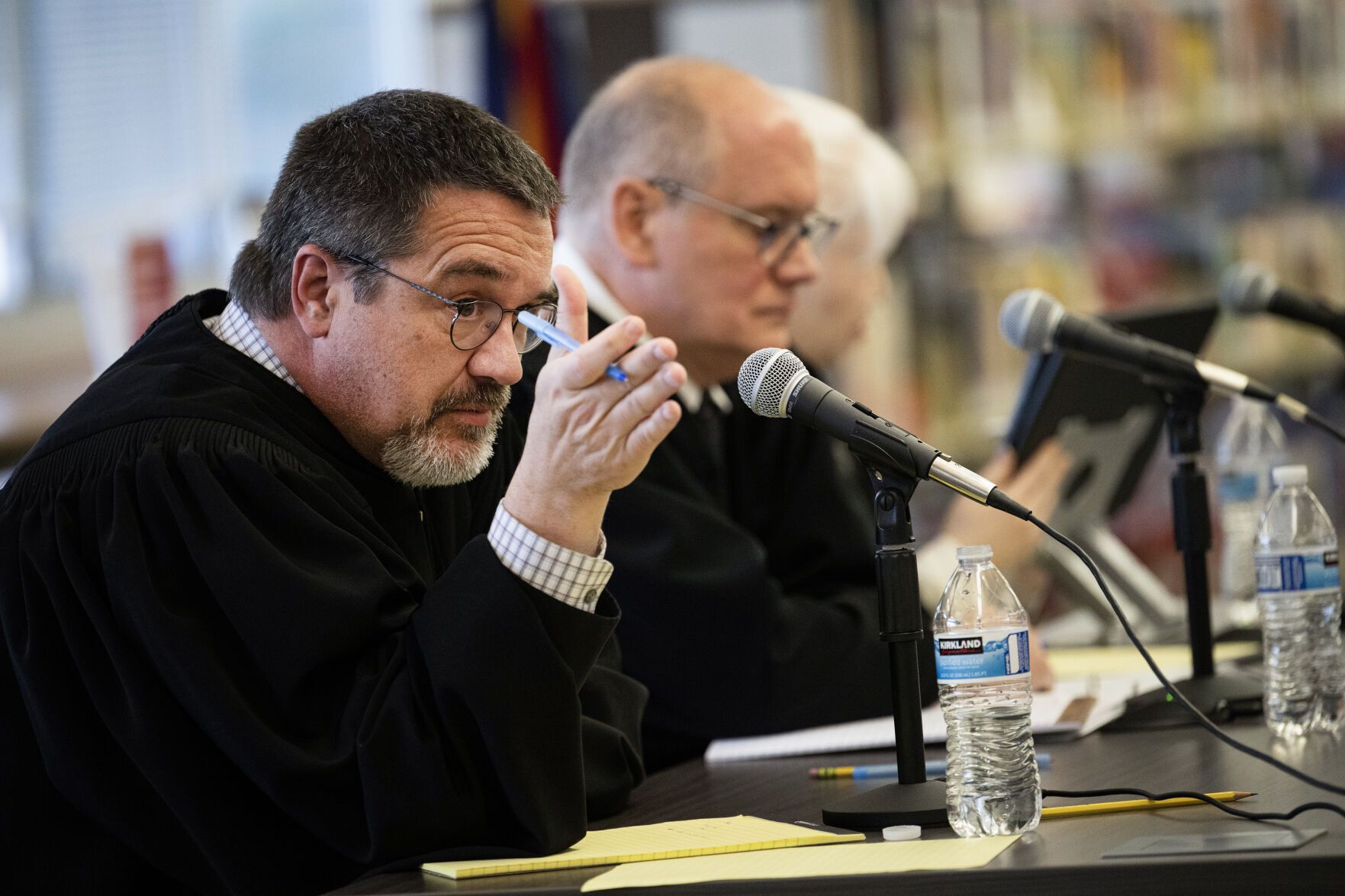
Colorado’s second-highest court reversed a defendant’s convictions for forgery and attempting to influence a public servant last month because a Boulder County judge improperly blocked him from calling witnesses who could testify about his truthfulness.
A three-judge Court of Appeals panel also clarified for the first time that a person can be convicted for attempting to influence a public servant even if the government employee ultimately lacks the authority to act on the matter at hand.
Lawmakers “enacted this provision to criminalize deceitful acts that could potentially influence a public servant,” wrote Judge Ted C. Tow III in the panel’s June 25 opinion. “And it logically follows that the General Assembly would not treat differently a defendant who intended to influence a public servant, and took deceitful action to do so, but happened to mistakenly believe the particular public servant actually had control over the requisite decision.”
Case: People v. Schmidt
Decided: June 25, 2026
Jurisdiction: Boulder County
Ruling: 3-0
Judges: Ted C. Tow III (author)
Craig R. Welling
Lino S. Lipinsky de Orlov
In early 2020, Charles M. Schmidt received a two-year probationary sentence, which included the requirement that he perform public service. While Schmidt’s appeal in that criminal case was pending, probation officials alleged Schmidt violated the terms and moved to revoke his probation. In 2023, then-Chief Judge Ingrid Bakke resentenced Schmidt to jail and an additional two years of probation.
At that same hearing, Schmidt presented Bakke with a purported letter from the Salvation Army attesting to his community service. Bakke spotted irregularities in the document and asked the district attorney’s office to investigate. Prosecutors concluded the letter was inauthentic and charged Schmidt with forgery and attempting to influence a public servant.
On the final day of his trial, the Court of Appeals overturned Bakke’s decision to reimpose probation. The appellate judges determined that Schmidt’s original sentence had expired at the time, and Bakke had no authority to impose another sentence.
The defense moved for a mistrial. Attempting to influence a public servant requires someone to use deceit while intending to affect a public servant’s action “concerning any matter which is to be considered or performed by the public servant.” Because Bakke ultimately had no resentencing authority, “there was nothing to be considered by the court,” the defense argued.
Stephen E. Howard, a retired judge presiding over the trial, denied the motion.
Separately, Howard rejected the defense’s attempt to call witnesses who could speak to Schmidt’s character and his truthfulness.
On appeal, Schmidt argued that no prior case in Colorado had established that a defendant can stand convicted of attempting to influence a public servant “where the relevant public official had no power to take any action.”
“Schmidt’s argument would lead to an absurd result,” countered Assistant Attorney General Rachel Lieb. “Schmidt essentially argues that presenting forged documents to a court is legal, so long as it is later determined that the trial court lacked jurisdiction. However, the legal authority is clear that it is the defendant’s intent in presenting the false utterance, not the ultimate impact of that utterance, that is central.”
The Court of Appeals panel agreed with her.
“And regardless of the subsequent determination that the district court judge lacked jurisdiction over the resentencing hearing,” wrote Tow, “Schmidt nevertheless presented the forged public service letter with the intent to affect the decision the judge was actively considering at that time.”
However, the panel agreed that Howard’s decision to exclude the defense’s character witnesses was erroneous. Because both charges required the prosecution to prove that Schmidt acted deceitfully, explained Tow, Schmidt’s character for truthfulness was relevant.
“In other words, the erroneous exclusion of Schmidt’s character witnesses effectively deprived him of the only means of effectively challenging the prosecution’s evidence regarding a significant issue in the case — his character for truthfulness,” wrote Tow.
The panel ordered a new trial.
The case is People v. Schmidt.

Schoolchildren’s presence at child sex-related trial did not harm Arapahoe County defendant, appeals court says
Michael Karlik
michael.karlik@coloradopolitics.com
Updated 16 hours ago
Colorado’s second-highest court decided on Thursday that the presence of a group of schoolchildren on the first day of a child sexual exploitation trial did not violate an Arapahoe County defendant’s constitutional right to a fair trial. Prosecutors charged Jerry...
Appeals court cites week-old Colorado law to reinstate child neglect case at child, father’s request
Michael Karlik
michael.karlik@coloradopolitics.com
Updated 12 hours ago
Colorado’s second-highest court invoked a new state law for the first time on Thursday and reinstated a child neglect case that both the child and her father wished to reopen. House Bill 1227 took effect on Aug. 12, reversing a...
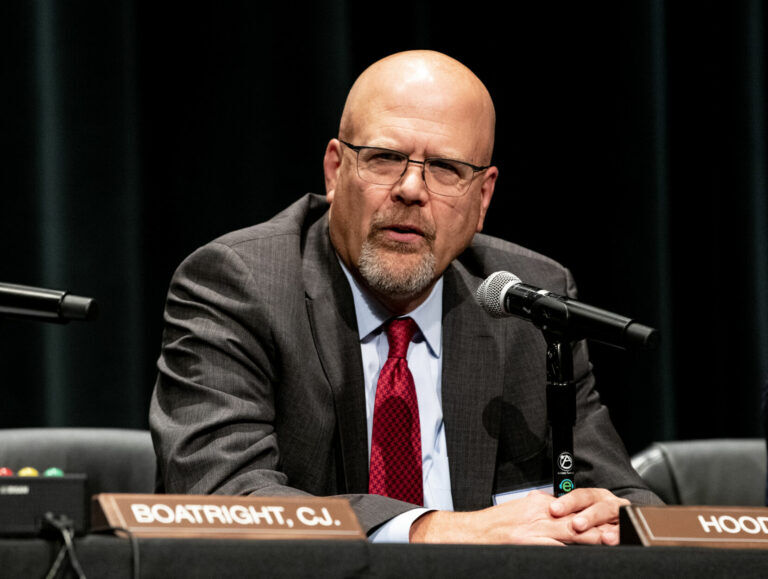
Colorado Supreme Court names William Hood as next chief justice
Michael Karlik
michael.karlik@coloradopolitics.com
Updated 2 days ago
The Colorado Supreme Court has selected Justice William W. Hood III to be the next chief justice, the judicial branch announced on Friday. Hood will succeed Chief Justice Monica M. Márquez, who took over the role in July 2024. “I...

Appeals court upholds Park County trophy hunting conviction
Michael Karlik
michael.karlik@coloradopolitics.com
Updated 2 days ago
Colorado’s second-highest court clarified on Thursday that a defendant may stand convicted under the state’s trophy hunting laws if he abandons a bear carcass but returns later to remove the meat. Under Colorado law, it is a felony to detach...
Judge grants partial injunction to GEO in fight against state health inspection law
Kyla Pearce
kyla.pearce@gazette.com
Updated 3 days ago
A judge ruled Thursday that The GEO Group does not have to follow parts of a new state law requiring more frequent health and safety inspections at the U.S. Immigration and Customs Enforcement processing center in Aurora. Under the order...

Parker man faces 20 years to life for serial sexual assaults
Nicholas Fogleman
nicholas.fogleman@denvergazette.com
Updated 3 days ago
A 25-year-old Parker man who sexually assaulted three women in 2025 pleaded guilty Wednesday and will serve 20 years to life in prison. Javier Rodriguez-Andrade pleaded guilty to charges stemming from three sexual assaults involving women ages 19 to 24. ...
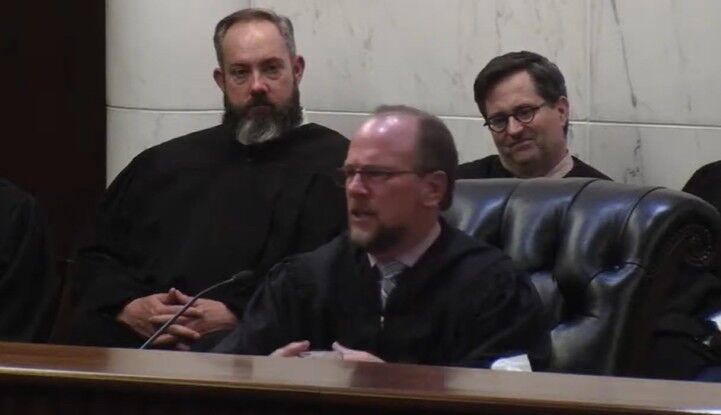
Divided appeals court upholds warrantless DNA collection in Colorado cold case, cautions of government overreach
Michael Karlik
michael.karlik@coloradopolitics.com
Updated 3 days ago
Colorado’s second-highest court upheld the warrantless collection of a suspect’s DNA from a discarded soda can as constitutional on Thursday, while warning about potential abuse of DNA privacy in the absence of further guardrails. By 2-1, a three-judge Court of...
Man charged in Northglenn homicide of wife
Matt Kyle
matt.kyle@denvergazette.com
Updated 3 days ago
A man has been formally charged with murder and burglary relating to a homicide last week in Northglenn. Alexei Munive-Rodriguez, 48, was arrested Sunday after he was at large following the homicide, which occurred Friday. Police were dispatched around 10:30...

10th Circuit grants immunity to officers for fatal Manitou Springs shooting
Michael Karlik
michael.karlik@coloradopolitics.com
Updated 2 days ago
The Denver-based federal appeals court ruled on Wednesday that responding officers from Manitou Springs and El Paso County cannot be held constitutionally liable for shooting and killing a man after a 20-minute standoff. Wilford Deweese allegedly pulled out a gun...
10th Circuit rejects invitation for full-court review of tax-avoidance case
Michael Karlik
michael.karlik@coloradopolitics.com
Updated 4 days ago
The Denver-based federal appeals court declined to reconsider the standards for holding entities liable for their tax-avoidance schemes, with a majority of judges voting against full-court review on Monday. In April, a three-judge panel of the U.S. Court of Appeals...
PREV
PREVIOUS

Aspen Acres fire damage footage released, residents seek reentry
First looks at the damage path are emerging in the Aspen Acres fire, as more than 11,000 people wait for news on when they can return. Tuesday afternoon, the Pueblo County Sheriff’s Office released a nine-minute video showing fire damage from the air along Pine Drive in Beulah. More footage will be coming out later, […]

Broomfield passes temporary ban on new data center construction
Those looking to build a data center in Broomfield will need to look elsewhere for the next 18 months. The City and County of Broomfield on Tuesday established a moratorium barring new data center construction that is set to last until December 2027, or until City Council passes regulations for new developments. Officials said the […]