10th Circuit agrees Colorado Springs paramedic, officer not liable for constitutional violations in man’s death

The Denver-based federal appeals court decided on Monday that a Colorado Springs paramedic and police officer could not be held liable for constitutional violations for their roles in restraining a man in a mental health crisis, leading to his death.
Kevin Dizmang’s surviving daughter alleged that paramedic Nick Fischer used excessive force on Dizmang in violation of the Fourth Amendment’s prohibition on unreasonable seizures. Sean Reed, a police officer, also allegedly failed to intervene to stop Fischer’s unlawful seizure. A trial judge initially determined that the defendants were entitled to qualified immunity, a judicial doctrine that shields government employees from civil lawsuits unless they violate a person’s clearly established legal rights.
A three-judge panel of the U.S. Court of Appeals for the 10th Circuit declined to say whether Fischer’s actions amounted to a constitutionally unreasonable seizure against Dizmang, whose death was ruled a homicide. Instead, the panel concluded no prior cases would have put Fischer on clear notice that his use of force violated the Fourth Amendment.
“Fischer restrained Dizmang for roughly 81 seconds — the length of time it took Reed to apply handcuffs. In the first half of that period, Dizmang appears to have been struggling to avoid being handcuffed. In the second half, Reed finished handcuffing Dizmang,” wrote Judge Nancy L. Moritz in a July 6 order.
In contrast to other excessive force cases, she continued, “Fischer’s conduct was not particularly egregious,” and “we certainly cannot say he committed an obvious constitutional violation by restraining Dizmang so that Reed could apply handcuffs.”
Case: Estate of Dizmang v. Reed
Decided: July 6, 2026
Jurisdiction: U.S. District Court for Colorado
Ruling: 3-0
Judges: Nancy L. Moritz (author)
Robert E. Bacharach
Robert J. Shelby* (district judge from Utah)
Dizmang’s daughter alleged in her lawsuit that her father was potentially having a psychotic breakdown on Nov. 15, 2022. He may have damaged his own property and was possibly attempting suicide by walking into traffic near his home on Mount View Lane.
A crisis response team arrived, consisting of Reed, Fischer, and a licensed clinician. After Dizmang wandered into the street again and said, “help me,” Reed attempted to handcuff Dizmang. But Dizmang pulled away and walked into an area with trees while in an “obviously stressed and panicked state.”
At that point, Fischer allegedly tackled Dizmang and put him in a chokehold. Reed handcuffed Dizmang and Dizmang allegedly stopped moving. Fischer continued to put his weight on Dizmang before rolling him into a seated position. Dizmang remained handcuffed and unresponsive for seven minutes before he was moved into an ambulance.
He died at the hospital. The lawsuit quoted body-worn camera footage that captured Fischer saying it was his “first time taking someone down with this job,” and that it was like “high school football.” The coroner’s office ruled Dizmang’s death a homicide.
Reed and Fischer moved to dismiss the constitutional claims against them. In part, they argued it was not clear that Fischer, a paramedic, would violate the Fourth Amendment by seizing Dizmang, nor would Reed violate it by failing to intervene.
“As Fischer is not a law enforcement officer, he could not affect a Fourth Amendment seizure,” wrote Sara L. Cook, an attorney for Reed. “As such, where the excessive force at issue is not applied by a fellow law enforcement officer, there is no constitutional violation for which a law enforcement officer would have a duty to intervene.”
U.S. District Court Judge Charlotte N. Sweeney granted qualified immunity to the defendants. She wrote that Fischer was “not attempting to arrest Mr. Dizmang or otherwise enforce the law” with the chokehold, but was trying to “subdue him so that he could be properly treated.”
Because the 10th Circuit has not described the circumstances in which paramedics can “seize” someone, Sweeney continued, “regardless of whether Plaintiff adequately pleaded that Defendant Fischer effected a Fourth Amendment seizure, the law was not clearly established.”

During oral arguments to the 10th Circuit in January, Judge Robert E. Bacharach pressed Fischer’s attorney on his “extraordinary position,” suggesting a paramedic cannot be held liable for an unreasonable seizure if they are seeking to “simply subdue” a person like Dizmang.
“If you’re saying that it doesn’t matter what Fischer does — if he’s trying to tackle him, if he’s tying to inflict blood — it doesn’t matter as long as he’s saying, ‘I’m a paramedic. I can do whatever the heck I want. I can kill a guy because I’m doing it as a paramedic,’” said Bacharach. “And that can never be a clearly established violation because we have never had a precedent with such a remarkable position. Nobody’s ever argued that.”
“I concede, your honor, that if paramedic Fischer, as a paramedic, used a firearm to shoot someone who was fleeing for the purpose of providing medical treatment,” responded attorney Jonathan N. Eddy, “potentially that would be a clearly egregious example that would overcome qualified immunity.”
Ultimately, the panel determined that no prior cases were similar enough to put Fischer on notice that he would violate Dizmang’s constitutional rights through his chokehold. Therefore, he was entitled to qualified immunity.
Moritz added that the 10th Circuit has not addressed whether a medical professional like Fischer can seize a person unconstitutionally, but she suggested the Fourth Amendment’s prohibitions would apply to paramedics.
The panel declined to say outright whether Fischer committed a constitutional violation, as Sweeney had not cleanly ruled on that question.
The case is Estate of Dizmang v. Reed et al.

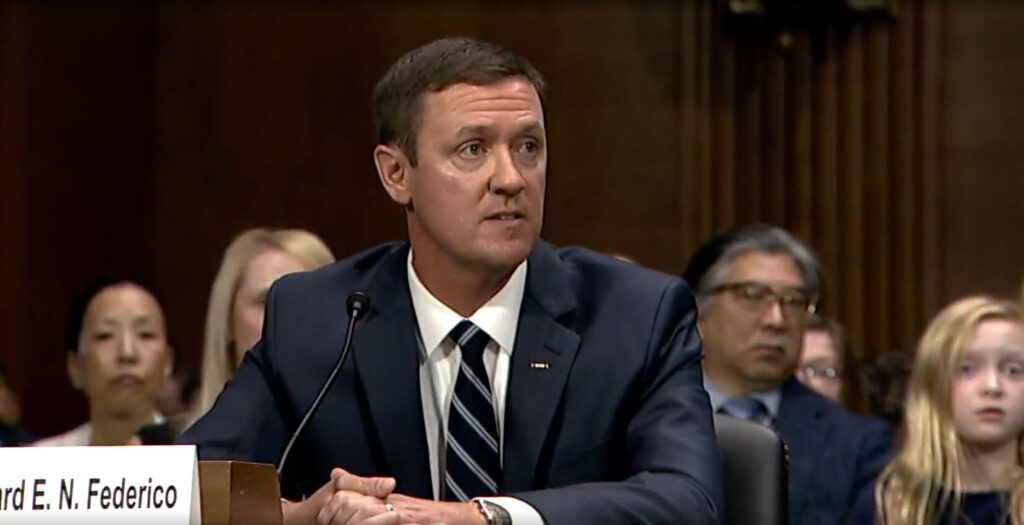
10th Circuit revives Colorado voter intimidation lawsuit due to judge’s error
Michael Karlik
michael.karlik@coloradopolitics.com
Updated 3 hours ago
The Denver-based federal appeals court on Monday reversed a trial judge’s finding that the leaders of an “election integrity” effort had not illegally intimidated Colorado voters through an organized door-to-door canvassing project to search for election fraud in the wake...

State Supreme Court’s final decisions of term, Trump’s judicial nominee appears before Senate | COURT CRAWL
Michael Karlik
michael.karlik@coloradopolitics.com
Updated 4 hours ago
Welcome to Court Crawl, Colorado Politics’ roundup of news from the third branch of government. The state Supreme Court has released its final opinions before its summer recess, plus the president’s nominee for the Denver-based federal appeals court fielded questions...

Civil rights law firm sues DPS over race-based redistricting
Nico Brambila
nico.brambila@denvergazette.com
Updated 8 hours ago
A civil rights law firm based out of Virginia has filed a lawsuit against Denver Public Schools, alleging Colorado’s largest school district redrew its five district seats with an “illegal racial intent” that violates the Fifteenth Amendment. Filed in U.S....
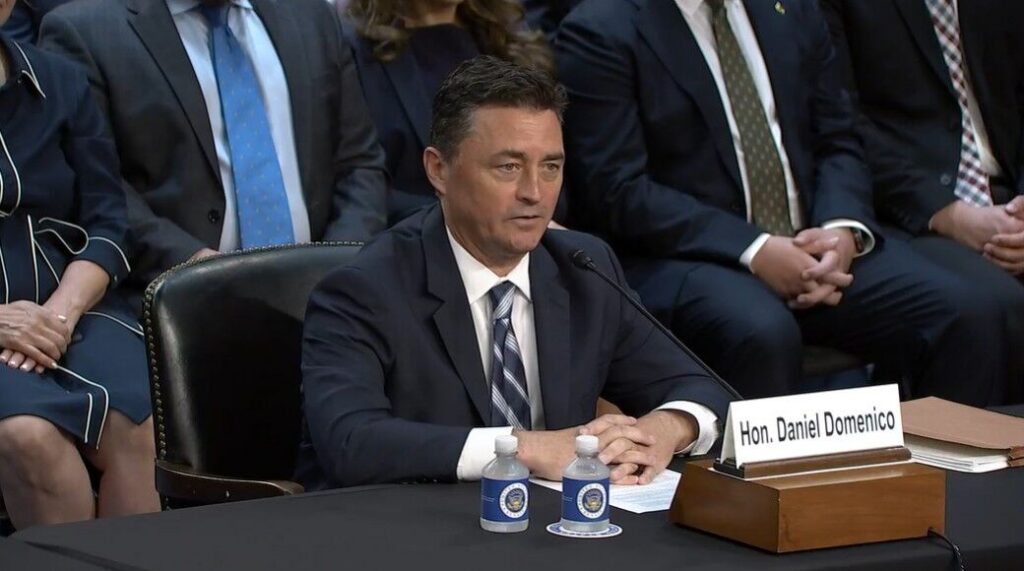
Trump’s judicial nominee orders bond in wave of cases after 10th Circuit rejects government’s position
Michael Karlik
michael.karlik@coloradopolitics.com
Updated 4 days ago
Within 24 hours of the Denver-based federal appeals court rejecting the government’s expansive view of its immigration detention authority, the lone judge in Colorado to embrace that view ordered bond hearings for detainees in at least 20 cases. U.S. District...

10th Circuit agrees Colorado satisfied jury award after intercepting money for restitution
Michael Karlik
michael.karlik@coloradopolitics.com
Updated 4 days ago
The Denver-based federal appeals court agreed last week that Colorado satisfied its obligations by not paying a man directly for violating his rights, but rather crediting the jury’s multimillion-dollar award toward the crime victim restitution he still owed in his...
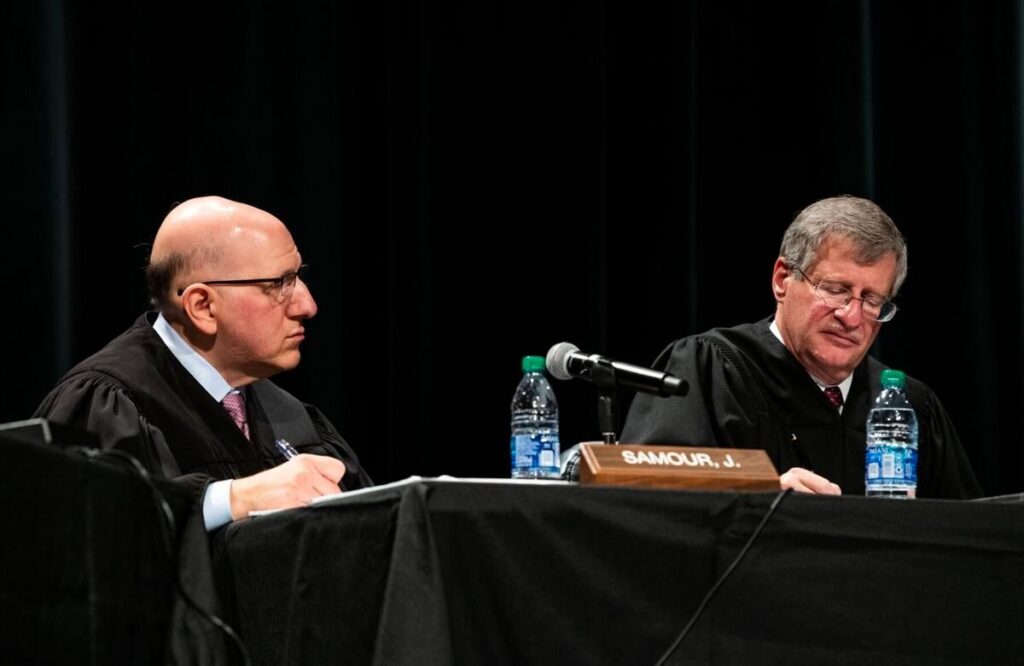
Colorado justices ponder whether insurer should save company from asbestos suits
Michael Karlik
michael.karlik@coloradopolitics.com
Updated 4 days ago
Some members of the Colorado Supreme Court appeared skeptical last week that an insurance policy that reaches beyond the limits and coverage of a company’s other policies must “step down into the shoes” of those policies after they become insolvent....
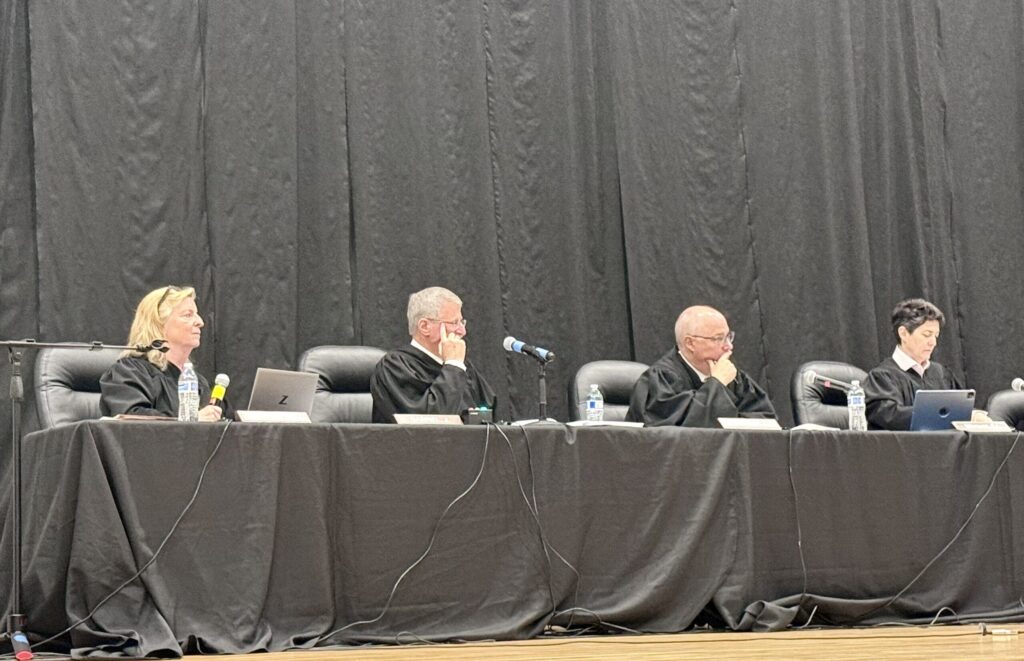
Colorado justices weigh ‘extreme’ proposals for civil jury trial requests
Michael Karlik
michael.karlik@coloradopolitics.com
Updated 5 days ago
Members of the Colorado Supreme Court grappled last week with two vastly different proposals for evaluating when it is appropriate for a civil litigant to ask for a jury trial, as opposed to a bench trial before a judge. The...
Colorado justices weigh ‘extreme’ proposals for civil jury trial requests
Michael Karlik
michael.karlik@coloradopolitics.com
Updated 1 day ago
Members of the Colorado Supreme Court grappled last week with two vastly different proposals for evaluating when it is appropriate for a civil litigant to ask for a jury trial, as opposed to a bench trial before a judge. The...

10th Circuit reverses perjury conviction, warns prosecutors to watch their questioning
Michael Karlik
michael.karlik@coloradopolitics.com
Updated 5 days ago
The Denver-based federal appeals court reversed a defendant’s perjury conviction last week, warning prosecutors that it is better to follow up on imprecise or unclear answers than to criminally charge a witness for their response. A jury convicted Lori Milliron...
10th Circuit rebuffs government, rules against shift to mandatory immigration detention
Michael Karlik
michael.karlik@coloradopolitics.com
Updated 5 days ago
The Denver-based federal appeals court ruled on Tuesday against the government’s broad assertion of authority to keep people in immigration custody without the opportunity to demonstrate their suitability for release on bond. Although the regional appeals courts have reached different...