

10th Circuit rebuffs government, rules against shift to mandatory immigration detention
The Denver-based federal appeals court ruled on Tuesday against the government’s broad assertion of authority to keep people in immigration custody without the opportunity to demonstrate their suitability for release on bond.
Although the regional appeals courts have reached different conclusions on the subject, the U.S. Court of Appeals for the 10th Circuit decided the government was improperly claiming a power to detain people without bond that only applies “at the border.”
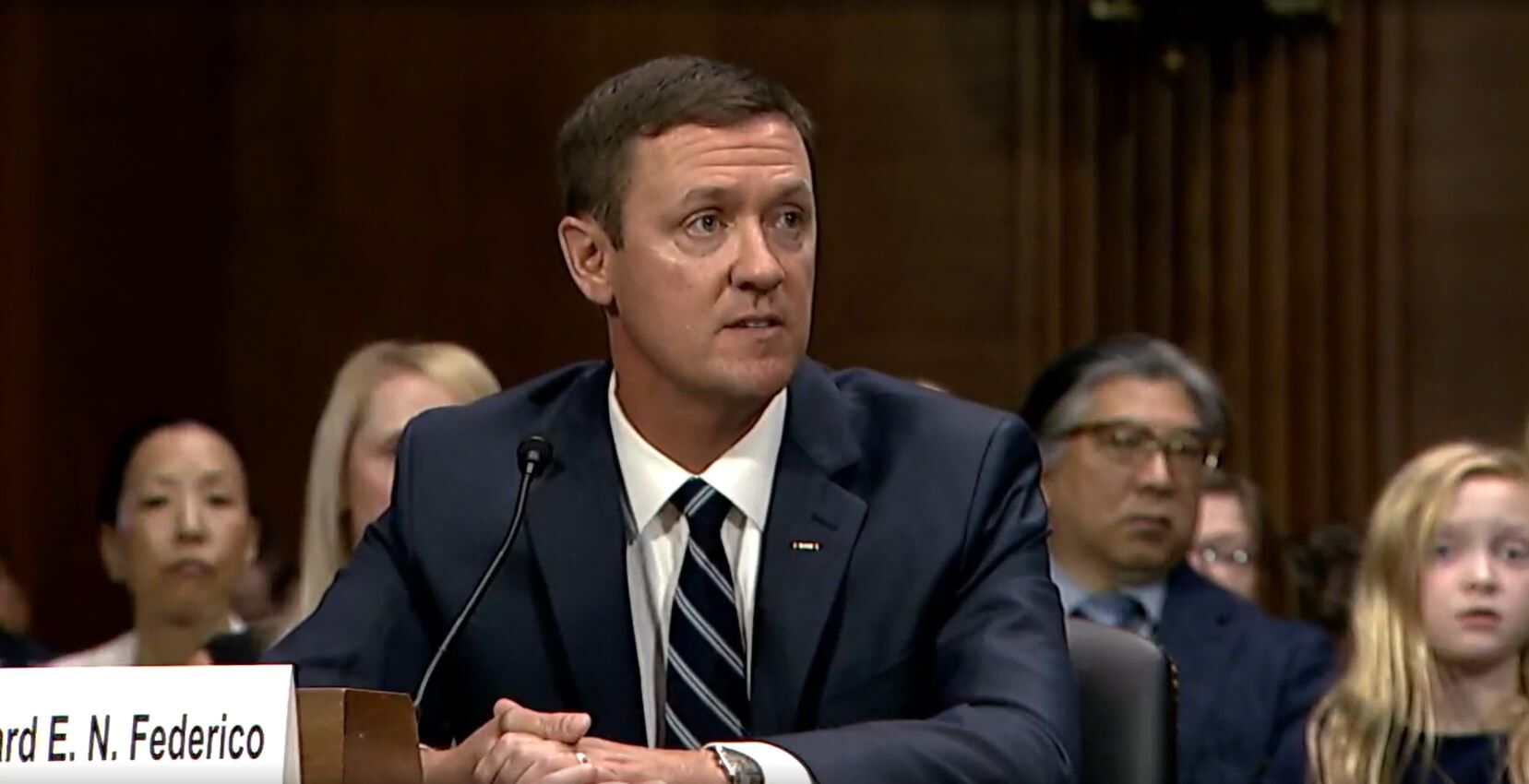
“Congress may simply have concluded that detention in the interior wasn’t necessary: the usual purpose of civil immigration detention is to prevent noncitizens from absconding to avoid removal, but those with strong connections to the community are less likely to do so. Or Congress may have had constitutional concerns because due process protections are far stronger for noncitizens inside the country than at the border,” wrote Judge Richard E.N. Federico in the panel’s June 30 opinion.
“Perhaps some of these reasons motivated Congress. Perhaps none did,” he continued. “In any case, the role of the court is not to impose its views of optimal immigration policy. Its job is simply to apply the law as written.”
Case: Santillan Quiroz v. Mullin
Decided: June 30, 2026
Jurisdiction: U.S. District Court for the Western District of Oklahoma
Ruling: 3-0
Judges: Richard E.N. Federico (author)
Robert E. Bacharach
David M. Ebel
The precedent-setting decision will have major ramifications in Colorado, where the state’s federal trial court has faced a flood of “habeas corpus” petitions from those in immigration custody. The most common allegation is that the government is improperly denying bond hearings to people who are eligible by law. Colorado’s judges, like the vast majority of their peers nationwide, have almost uniformly agreed that the government is improperly detaining people without the opportunity for release.
Last week, the U.S. Attorney’s Office, which defends against the habeas petitions, began to file responses that declined to advance arguments in opposition.
“Habeas petitions will diminish if government officials adhere to the ruling by providing detention hearings. It is difficult to see how the current administration will react, especially in light of the circuit split and the inevitability of an eventual Supreme Court decision,” said retired U.S. Magistrate Judge Kristen L. Mix. Colorado’s federal judges “will undoubtedly follow the circuit’s decision and mandate detention hearings for habeas petitioners in the circumstances addressed here.”
The 10th Circuit’s decision arose out of Oklahoma, after a judge determined Rigoberto Santillan Quiroz was not eligible for a bond hearing following his November 2025 detention. His confinement came two months after the appellate body for immigration cases, which is part of the executive branch, agreed that the mandatory detentions authorized for those “seeking admission” to the country applied to those who have been present in the United States for an extended period.
Federico, a Joe Biden appointee, wrote that Santillan Quiroz was not “seeking admission” after having lived in the United States for 20 years.
“The only time a noncitizen can be said to be seeking admission is when he is seeking to enter the United States at the border,” Federico wrote. “Noncitizens in Santillan Quiroz’s position — that is, those who entered the United States without admission and who have lived here since — are categorically unable to seek admission while they remain in the country. Part of the reason is a matter of logic and common sense. A person cannot make a present request for permission to enter the United States, lawfully or otherwise, once he or she has already entered.”
A spokesperson for the U.S. Attorney’s Office in Colorado did not immediately respond to a request for comment. Multiple immigration attorneys contacted by Colorado Politics also did not provide an immediate reaction.

Federico added that, while the panel was not deciding whether the government’s decision violated the due process clause of the U.S. Constitution, “the mandatory detention of potentially millions of noncitizens without the potential for bond raises exactly such serious concerns.”
“Due process requires that, whenever the Government detains somebody, it must have a good reason for doing so,” he wrote. The U.S. Supreme Court “has never said that due process protections fall away completely in the immigration context. Quite the opposite.”
While large numbers of cases in Colorado have been resolved solely on the question of mandatory detention versus the opportunity for bond, judges have also addressed the due process argument. U.S. District Court Chief Judge Daniel D. Domenico, who has adopted the government’s view on bond eligibility, has also authored orders stating that the Constitution does not provide people whose immigration cases are being adjudicated “a liberty interest in being released from immigration detention as a matter of procedural due process.”
Domenico, who is President Donald Trump’s nominee to an upcoming vacancy on the 10th Circuit, also told the Senate Judiciary Committee last week that the constitutional due process guarantee is “mostly for citizens.”
Advancing a different view, Chief U.S. Magistrate Judge Scott T. Varholak authored an order on Monday concluding that even people subject to mandatory immigration detention have a right to due process.
“If the Court is wrong, let another court declare that a noncitizen with no criminal history, no history of flight, and an adjudicated right to asylum may be detained indefinitely without running afoul of the Due Process Clause,” he wrote.
The case is Santillan Quiroz v. Mullin et al.

Federal judge green-lights excessive force, retaliation claims for trial against Fort Collins officers
Michael Karlik
michael.karlik@coloradopolitics.com
Updated 11 hours ago
A federal judge green-lit a jury trial last week against multiple Fort Collins police officers on claims that they used excessive force on one man who was standing unarmed in his underwear, and retaliated against another man for exercising his...

10th Circuit revives wage violation lawsuit against Papa John’s operator
Michael Karlik
michael.karlik@coloradopolitics.com
Updated 6 hours ago
The Denver-based federal appeals court on Tuesday reinstated a former Papa John’s delivery driver’s lawsuit alleging violations of federal and state wage law. Steve Mighell worked for one month at a Denver Papa John’s location in summer 2023. He alleged...
Colorado appeals judge’s delays in releasing opinions noted by performance commission
Michael Karlik
michael.karlik@coloradopolitics.com
Updated 21 hours ago
The citizen-led performance commission that provides guidance to voters about whether to retain members of Colorado’s second-highest court raised concerns by judges and attorneys that Judge Elizabeth L. Harris sometimes struggles with releasing opinions promptly. Harris, who joined the Court...

Colorado judge explores sanctions against DOJ, ICE for rearresting man 4 days after release on bond
Michael Karlik
michael.karlik@coloradopolitics.com
Updated 11 hours ago
A federal judge in Colorado is considering sanctions against the government after immigration agents rearrested a man four days after an immigration judge found him suitable for release on bond. On July 28, U.S. Magistrate Judge N. Reid Neureiter ordered...

Divided disciplinary panel censures Montezuma County judge after agreement reached
Michael Karlik
michael.karlik@coloradopolitics.com
Updated 9 hours ago
A disciplinary panel formally imposed a public censure, suspension, and further training on Montezuma County Court Judge Ian J. MacLaren on Tuesday by a 2-1 vote. Under constitutional Amendment H, which voters adopted in November 2024, MacLaren was set to...

Colorado’s Western Slope magistrate judges describe unique role in federal judiciary
Michael Karlik
michael.karlik@coloradopolitics.com
Updated 2 days ago
Two of Colorado’s federal judges stationed on the Western Slope spoke to lawyers on Wednesday about their unique roles, the ways their workloads differ, and the need for more criminal defense lawyers to take cases outside the Front Range. “Here...

Denver sues Philip Morris, other tobacco companies over cigarette butt litter
Deborah Grigsby
deborah.smith@denvergazette.com
Updated 17 hours ago
Denver is demanding that some of the biggest tobacco companies in the world pay for the cleanup of discarded cigarette butts on its streets, following a similar campaign that cities in other states have pursued. Denver’s lawsuit, filed this week...
Federal judge rules that request for bond hearing not necessary to challenge immigration detention
Michael Karlik
michael.karlik@coloradopolitics.com
Updated 9 hours ago
A federal judge in Colorado ruled last week that it is not mandatory for a person to seek a bond hearing with an immigration judge before they challenge the lawfulness of their detention in federal court. For the past year,...

Boulder Valley School District introduces new policies following antisemitism lawsuit
Marissa Ventrelli
marissa.ventrelli@coloradopolitics.com
Updated 10 hours ago
The chief of Boulder Valley School unveiled new policies for the 2026-2027 school year following a lawsuit filed on behalf of a student alleging antisemitic harassment. In June, the Anti-Defamation League filed a federal civil rights complaint against the school...

Colorado NRA chapter seeks injunction against new gun‑training requirement
Marissa Ventrelli
marissa.ventrelli@coloradopolitics.com
Updated 2 days ago
The Colorado chapter of the National Rifle Association is seeking an injunction to stop the state from enforcing a new law that took effect earlier this month. The new law requires anyone buying or selling certain firearms to first complete...
PREV
PREVIOUS

Appeals court revives tenants' lawsuit over landlords' illegal fee demands
Colorado’s second-highest court revived a proposed class-action lawsuit against landlords and other entities last month, concluding that state law did not permit the practice of demanding that tenants pay attorney fees in certain eviction proceedings. In 2021, lawmakers enacted a process by which tenants facing eviction can “cure” their delinquent payments. After a landlord has […]

Colorado primary election results: Melat Kiros leads Dianne DeGette in congressional race; Phil Weiser leads Michael Bennet for governor
Here are the early, unofficial results as of 7 p.m. • In the governor’s race, Phil Weiser, the current attorney general, is leading U.S. Sen. Michael Bennet in the Democratic primary, while Barbara Kirkmeyer, a state senator, is ahead of her Republican rivals • In the 1st Congressional District, challenger Melat Kiros is leading U.S. […]