Divided disciplinary panel censures Montezuma County judge after agreement reached
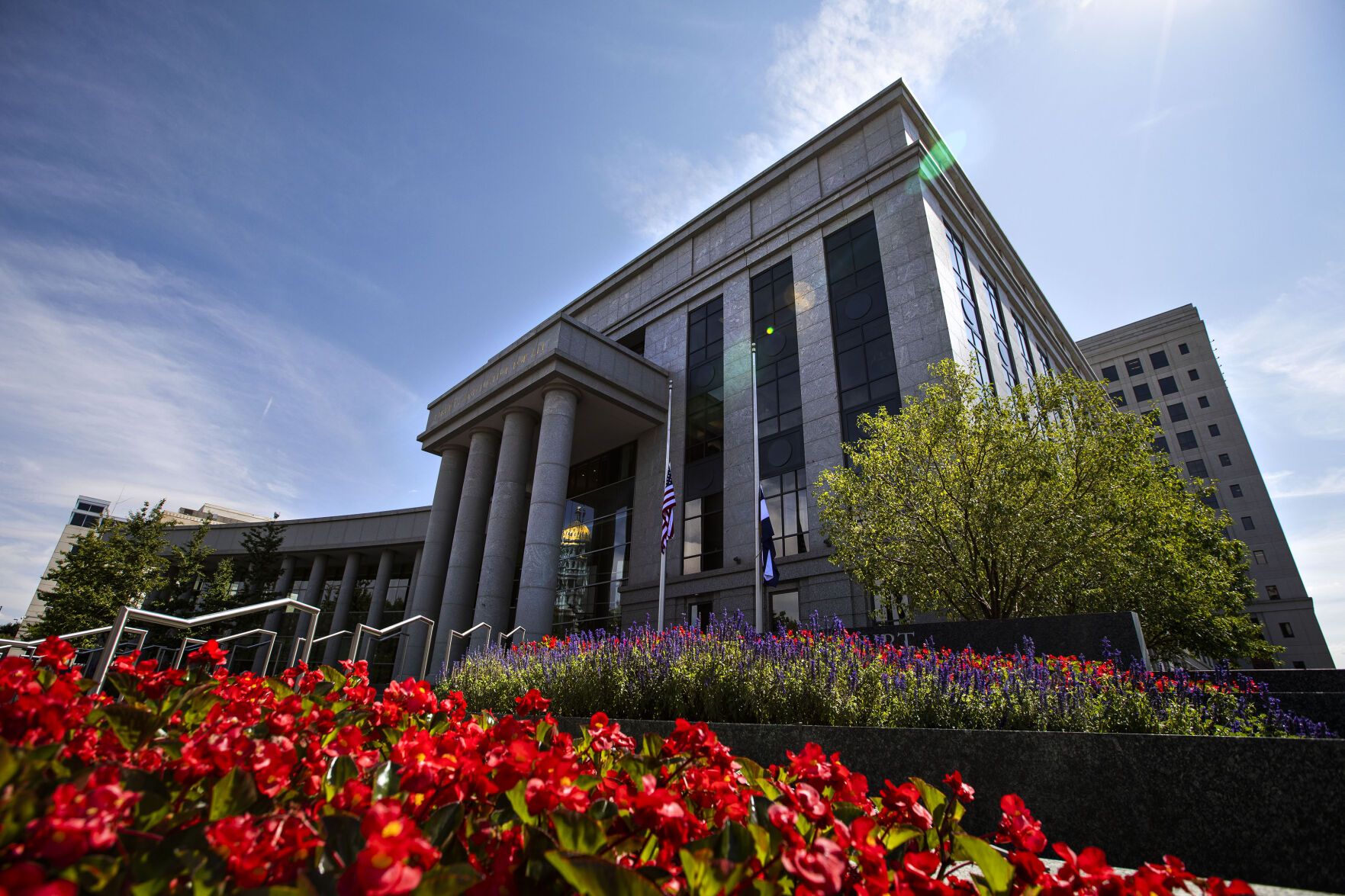
A disciplinary panel formally imposed a public censure, suspension, and further training on Montezuma County Court Judge Ian J. MacLaren on Tuesday by a 2-1 vote.
Under constitutional Amendment H, which voters adopted in November 2024, MacLaren was set to be the first judge to face an adjudicative trial this month under the revamped framework for judicial discipline. But after he and disciplinary authorities jointly requested that the adjudicators accept their agreed-upon resolution and MacLaren’s admissions of misconduct, the panel vacated the trial in a July 20 order.
The panel — consisting of Weld County District Court Judge Vincente G. Vigil, former Pueblo County District Attorney Jeff Chostner, and non-attorney Jeannie Valliere — indicated it would issue a formal disciplinary decision by the end of August. Notably, Vigil, who authored the order, signed it “on behalf of majority concurrence of the Adjudicative Panel,” which suggested the decision to accept the parties’ resolution was not unanimous.
The follow-up order on Aug. 11 revealed that Vigil and Valliere voted to accept the resolution, while Chostner would have rejected it and held the trial.

The Colorado Commission on Judicial Discipline originally sought MacLaren’s removal from the bench. The allegations included that MacLaren invoked his title when facing a citation from state officials and exhibited bias against a criminal defendant. The complaint against MacLaren also alleged that he “made several material false representations” regarding his conduct in response to the commission’s inquiries.
On July 11, however, the parties told the panel that a combination of public censure, 90-day unpaid suspension, and additional education were appropriate for MacLaren’s misconduct. They suggested the voters of Montezuma County should ultimately decide in 2028 whether to remove him from the bench during his retention election.
The parties’ agreement on the facts and the punishments did not address the allegations of MacLaren’s lying, despite documentation suggesting that MacLaren’s explanations of his behavior were inconsistent with contemporary text messages and court records.
“Ultimately, the Majority Concurrence chooses to accept the stipulation between the parties out of respect for the general preference for litigants to resolve their own disputes,” wrote Vigil and Valliere, “that Judge MacLaren was a relatively new judicial officer at the time of the incidents at issue, as well as out of respect for the ability of the voters of Montezuma County to determine whether Judge MacLaren should remain a judge in their community. However, there was much reasoned debate between the Panel members as to the appropriateness of the stipulation.”
The panel’s majority added that it had “special concern” about MacLaren’s invocation of his judicial status as Colorado Parks and Wildlife officials confronted him for the second time in two days about his expired boat registration.
“Our system of justice is only as strong as the public’s faith in our system, and it is especially damaging to that faith when there is a perception that our public officials, including our judges, receive special advantages by virtue of their role that an ordinary citizen does not enjoy,” the majority wrote. “It is also harmful to our law enforcement officers if they believe they must treat judges differently than other citizens for fear of recrimination.”
Chostner, writing in dissent, believed an adjudicative trial was appropriate to determine if MacLaren lied to the discipline commission.
The commission “alleged that Judge MacLaren had been dishonest with them in five specific areas,” he wrote. “I would have liked to have held a hearing to receive evidence and testimony on these allegations and hence fashion a more comprehensive decision by our panel. These are serious allegations against any judge.”
Chostner added that concern about one judge’s truthfulness “affects the entire judiciary.”
“It is my view, that our panel should have aired this issue to determine the accuracy of it. Additionally, members of the community have been severely affected as noted in the facts and circumstances of the case,” he wrote. “It seems to me that the panel should have held a hearing to determine if Judge MacLaren had lied to the Commission; and based on that evidence, issue a determination that encompasses all of the circumstances of this inquiry.”

Colorado’s Western Slope magistrate judges describe unique role in federal judiciary
Michael Karlik
michael.karlik@coloradopolitics.com
Updated 16 hours ago
Two of Colorado’s federal judges stationed on the Western Slope spoke to lawyers on Wednesday about their unique roles, the ways their workloads differ, and the need for more criminal defense lawyers to take cases outside the Front Range. “Here...
Federal judge rules that request for bond hearing not necessary to challenge immigration detention
Michael Karlik
michael.karlik@coloradopolitics.com
Updated 16 hours ago
A federal judge in Colorado ruled last week that it is not mandatory for a person to seek a bond hearing with an immigration judge before they challenge the lawfulness of their detention in federal court. For the past year,...

Boulder Valley School District introduces new policies following antisemitism lawsuit
Marissa Ventrelli
marissa.ventrelli@coloradopolitics.com
Updated 18 hours ago
The chief of Boulder Valley School unveiled new policies for the 2026-2027 school year following a lawsuit filed on behalf of a student alleging antisemitic harassment. In June, the Anti-Defamation League filed a federal civil rights complaint against the school...

Colorado NRA chapter seeks injunction against new gun‑training requirement
Marissa Ventrelli
marissa.ventrelli@coloradopolitics.com
Updated 17 hours ago
The Colorado chapter of the National Rifle Association is seeking an injunction to stop the state from enforcing a new law that took effect earlier this month. The new law requires anyone buying or selling certain firearms to first complete...
Denver moves to dismiss Trump challenge to ‘assault-style’ weapons ban
Deborah Grigsby
deborah.smith@denvergazette.com
Updated 17 hours ago
Denver has filed a motion to dismiss a lawsuit brought by the Trump administration challenging the city’s ban on “assault-style” weapons and magazines exceeding a 15-round capacity. The U.S. Department of Justice filed a suit in federal court in May,...
Federal judge dismisses ex-Colorado judicial discipline director’s conspiracy lawsuit
Michael Karlik
michael.karlik@coloradopolitics.com
Updated 2 days ago
A federal judge dismissed a lawsuit from Colorado’s former judicial discipline director on Tuesday, finding that he failed to adequately state claims for conspiracy or constitutional violations. Christopher S.P. Gregory, who served as the executive director of the Colorado Commission on Judicial...
Federal judge allows retaliation claims to proceed against prison officials
Michael Karlik
michael.karlik@coloradopolitics.com
Updated 17 hours ago
A federal judge agreed last week that a man incarcerated at Sterling Correctional Facility had credibly alleged that employees retaliated against him for filing grievances, including by taking away his disability accommodations and turning off his electricity. Louis Peoples Jr.,...

U.S. Rep. Lauren Boebert’s son arrested, faces charges of sexual exploitation of minor
Matt Kyle
matt.kyle@denvergazette.com
Updated 3 days ago
U.S. Rep. Lauren Boebert’s son Tyler Jay Boebert has been arrested and accused of recording and sharing a video depicting himself having intercourse with a minor, according to court records. The case originated in Garfield County in Western Colorado and...

Adams County water district may proceed with cost-recovery lawsuit against Denver for contamination
Michael Karlik
michael.karlik@coloradopolitics.com
Updated 2 days ago
A federal judge rejected Denver’s arguments last week for pausing or dismissing a lawsuit brought by an Adams County special district seeking to recover its costs for addressing water contamination as a result of Denver firefighting activities. In January, the...
Federal judge declines to dismiss First Amendment retaliation claim against prison official
Michael Karlik
michael.karlik@coloradopolitics.com
Updated 2 days ago
A federal judge agreed last month that an incarcerated Native American woman may pursue her claim of First Amendment retaliation against a prison official who allegedly interfered with her religious exercise. Yvonne Peterson resided at Buena Vista Correctional Facility for...