Colorado’s Western Slope magistrate judges describe unique role in federal judiciary
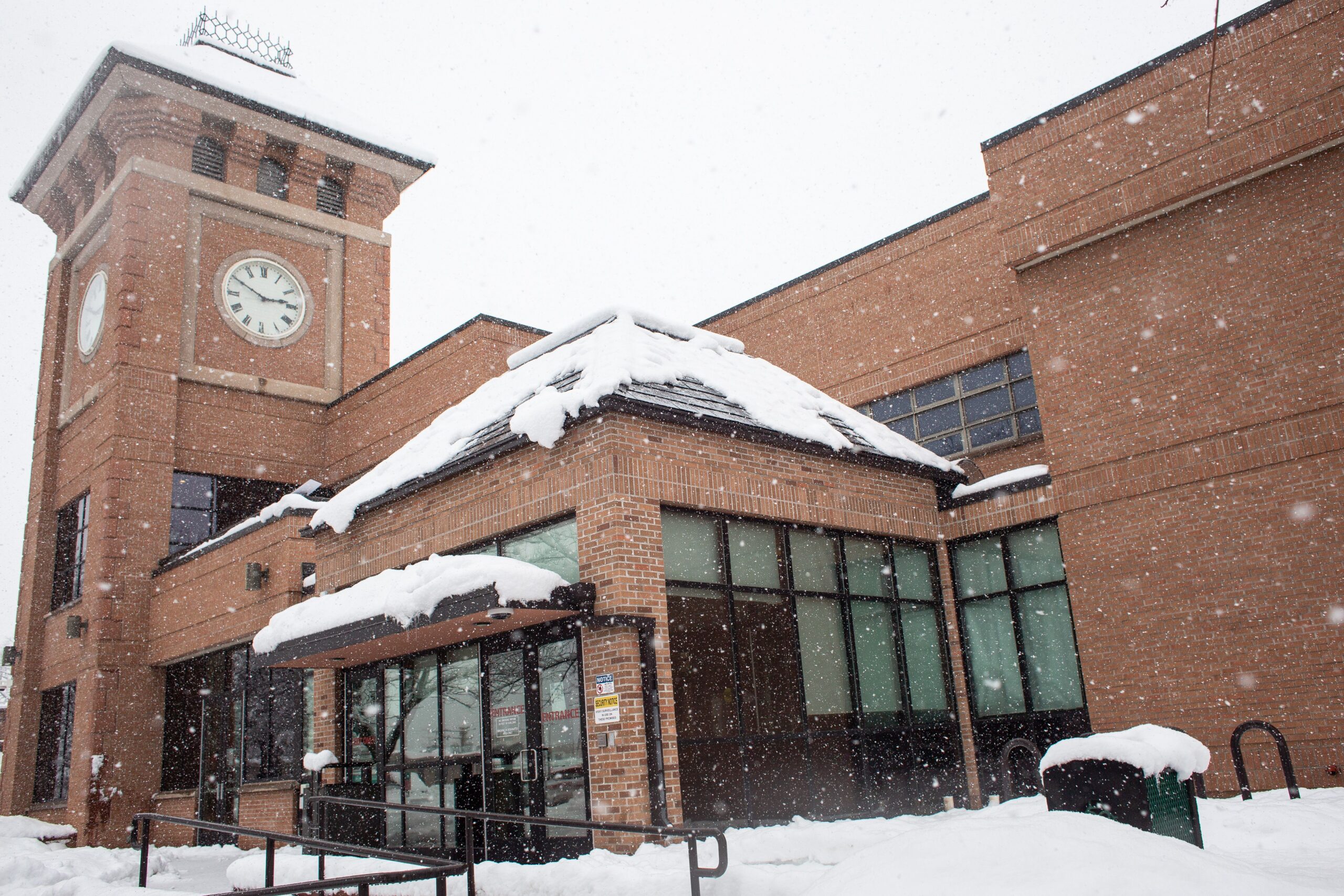
Two of Colorado’s federal judges stationed on the Western Slope spoke to lawyers on Wednesday about their unique roles, the ways their workloads differ, and the need for more criminal defense lawyers to take cases outside the Front Range.
“Here in Durango, in the area that I cover, we have two Indian reservations. And all the jurisdiction for any felony-type crime is federal jurisdiction,” said U.S. Magistrate Judge James M. Candelaria.
Frequently, “the public defender will have a conflict because they either represented somebody — a witness or somebody involved in other cases — then we have to hire or appoint (private) attorneys to take over these cases,” he added. “And honestly, I think we have like three or four down here. And it’s the same three or four people and they’re busy all the time.”
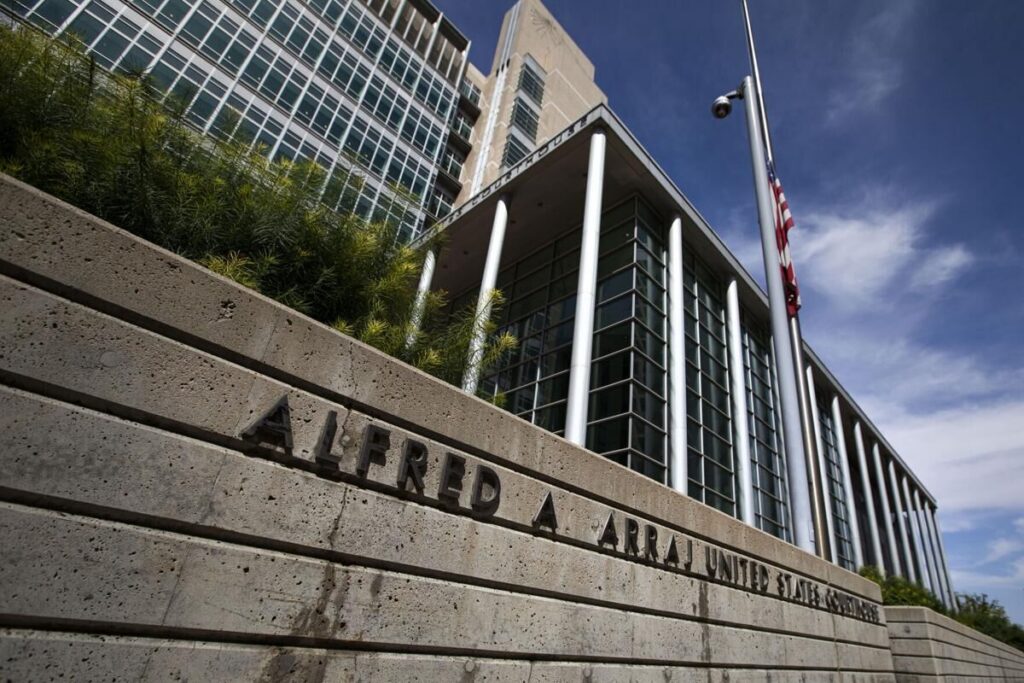
Candelaria, of Durango, and U.S. Magistrate Judge Richard T. Gurley, who sits in Grand Junction, are among the handful of federal judges whose courthouses are outside of Denver. Only U.S. Magistrate Judge Maritza Dominguez Braswell of Colorado Springs and U.S. District Court Judge Gordon P. Gallagher are not stationed in Denver — although Gallagher travels from his home in Grand Junction to Denver to hold hearings on occasion.
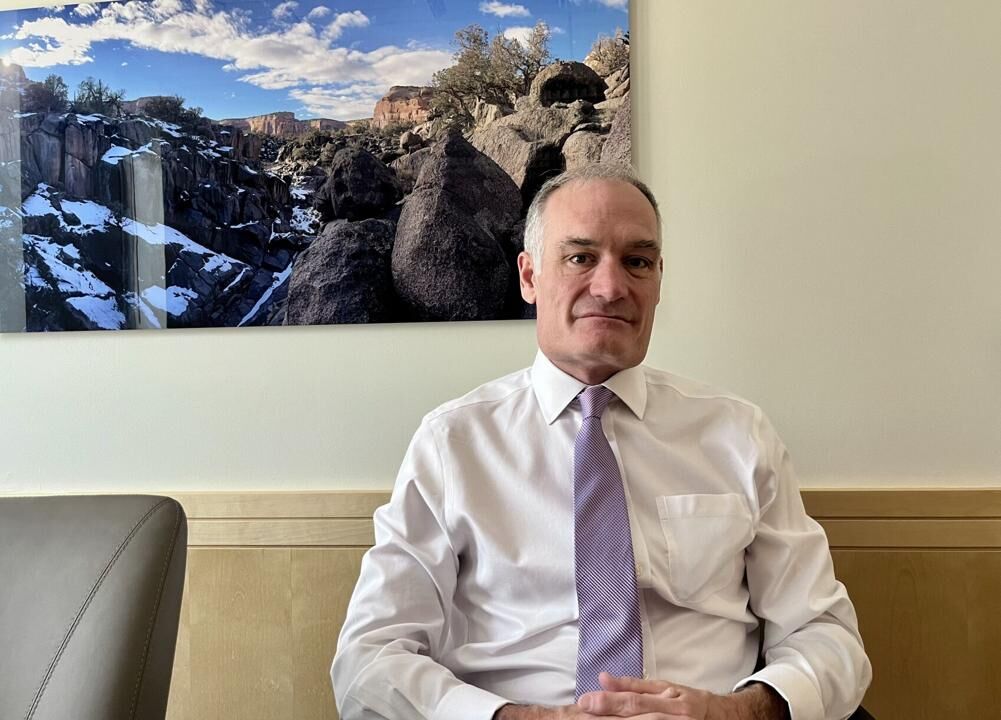
Magistrate judges are hired by the presidentially nominated, U.S. Senate-confirmed district judges to largely handle preliminary and administrative matters in cases. They also preside over federal petty criminal offenses and can handle civil cases through trial so long as the litigants consent. Full-time magistrate judges serve for renewable terms of eight years, but Gurley said that he and Candelaria are among the 24 part-time magistrate judges across the country whose terms are for four years.
Gurley, who was a Mesa County trial judge before he joined the federal bench in 2024, said he handled about 400 trials in his previous job.
“And one of the (federal) judges in the interview asked me, ‘Aren’t you gonna be bored doing this position because you’re used to doing these big heavy trials?'” Gurley recalled. “I said, ‘I’m not gonna miss getting up on a Monday morning and think about doing a sex-assault-on-a-child trial again.’ Those are not fun to do.”
Candelaria, who was a federal prosecutor before his 2019 appointment, estimated that his caseload is 98% criminal, largely stemming from offenses committed on federal lands.
“The thing is that as a part-time magistrate judge, Judge Gurley and I don’t get clerks,” he said. “They don’t assign civil cases to me because, as everyone who’s involved knows, civil cases take a lot more time than criminal cases.”
He added that, “in theory,” his position is one-third that of a full-time magistrate judge. But “given our lack of resources, we’ll spend more time on things that a full-time magistrate wouldn’t in Denver,” Candelaria added.
Gurley said that his docket looks different from Candelaria’s. While he presides over petty offenses and preliminary hearings in felony cases, he also handles civil cases in tandem with district judges. Notably, Gurley works with law clerks to screen civil cases filed by self-represented, “pro se” plaintiffs. His orders will either direct the plaintiffs to revise their complaints or will recommend dismissal of the case.
“I’d say that as a district, we’re pretty — I don’t want to say ‘lenient,’ but we give the litigants an opportunity to try to lay out their claim to where it can get through the initial review process and their issues can be heard,” Gurley said. “I’ll point out, ‘This is what the rule requires, here’s what you need to do,’ and give another opportunity to file your complaint. I’ve done that as many as four times. … But it gets to a point because we can’t be advocates for the parties.”
He added that the number of pro se cases has increased significantly in recent years, including challenges to the lawfulness of immigration detention. Those “habeas corpus” cases, which include petitions from those in immigration custody and those serving prison sentences, numbered 371 through July, he said — more than in all of 2024.

Both judges said they could use more private defense lawyers to handle criminal cases. Candelaria said public defenders all come to Durango from the Denver area, and Gurley said three attorneys who handled cases in Grand Junction have ceased their work in the past year.
“A lot of times, it’s difficult on counsel, especially defense counsel, to have to investigate their cases. To go to the reservations to try to round people up, given the geographical constraints,” said Candelaria. “So, we’re limited a lot by our geography out here and our lack of resources. … And we do with what we have, but boy, I’d sure like to see the district be more of a district of Colorado instead of a district of the Front Range. But that’s a reality I’ve been dealing with my entire career.”
Both judges have employment outside of their part-time judicial roles. Candelaria is also an attorney for a financial management company in Durango and Gurley runs an arbitration firm. However, Gurley said it is difficult to maintain private employment. When he first joined the federal bench, he asked then-Chief Judge Philip A. Brimmer if he could continue as a part-time contract judge for the state judiciary.
“Although he didn’t see a problem with that, Washington did,” said Gurley. “So, I’m not able to do even a small state judge contract.”
Gurley added that he is still available five days per week to review criminal warrants, although he lets the on-duty magistrate judge in Denver handle weekend requests.
“I’ve had them in the middle of the night, doing search warrants. You basically are on call because you’re the only judge,” said Candelaria. “Interestingly enough, I don’t rely on the weekend duty magistrate judge. I have never utilized that. But that’s something I’m gonna look into.”
The virtual discussion was sponsored by the Faculty of Federal Advocates.

Federal judge rules that request for bond hearing not necessary to challenge immigration detention
Michael Karlik
michael.karlik@coloradopolitics.com
Updated 1 hour ago
A federal judge in Colorado ruled last week that it is not mandatory for a person to seek a bond hearing before an immigration judge before they challenge the lawfulness of their detention in federal court. For the past year,...

Boulder Valley School District introduces new policies following antisemitism lawsuit
Marissa Ventrelli
marissa.ventrelli@coloradopolitics.com
Updated 1 hour ago
The chief of Boulder Valley School unveiled new policies for the 2026-2027 school year following a lawsuit filed on behalf of a student alleging antisemitic harassment. In June, the Anti-Defamation League filed a federal civil rights complaint against the school...

Colorado NRA chapter seeks injunction against new gun‑training requirement
Marissa Ventrelli
marissa.ventrelli@coloradopolitics.com
Updated 26 minutes ago
The Colorado chapter of the National Rifle Association is seeking an injunction to stop the state from enforcing a new law that took effect earlier this month. The new law requires anyone buying or selling certain firearms to first complete...
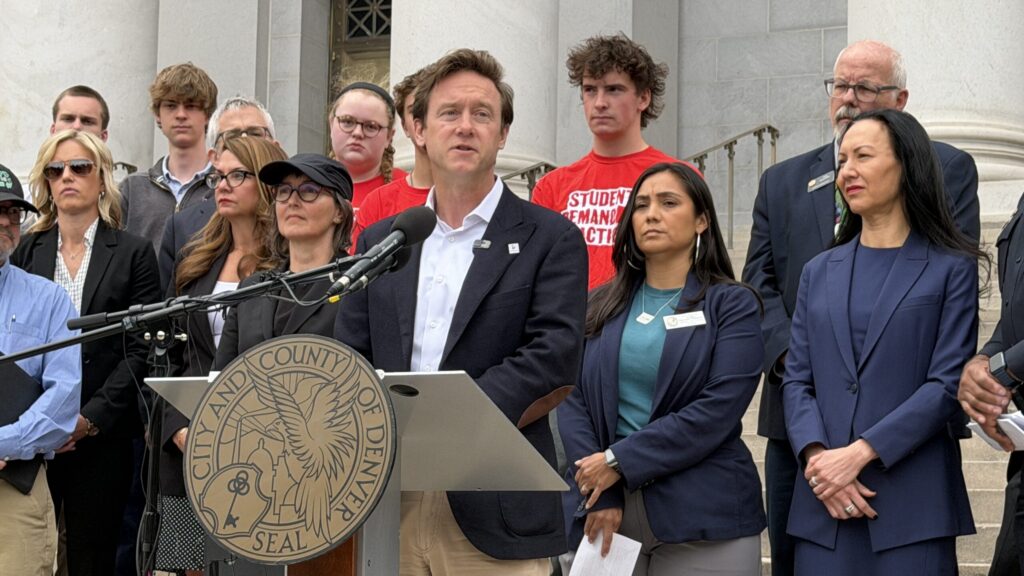
Denver moves to dismiss Trump challenge to ‘assault-style’ weapons ban
Deborah Grigsby
deborah.smith@denvergazette.com
Updated 2 minutes ago
Denver has filed a motion to dismiss a lawsuit brought by the Trump administration challenging the city’s ban on “assault-style” weapons and magazines exceeding a 15-round capacity. The U.S. Department of Justice filed a suit in federal court in May,...
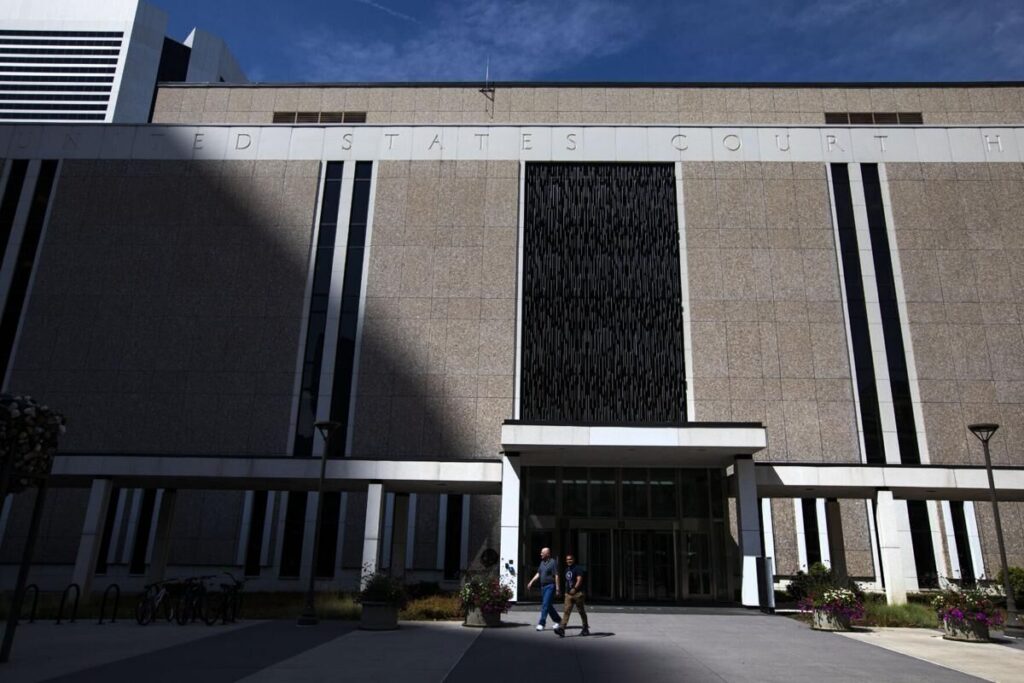
Federal judge dismisses ex-Colorado judicial discipline director’s conspiracy lawsuit
Michael Karlik
michael.karlik@coloradopolitics.com
Updated 1 day ago
A federal judge dismissed a lawsuit from Colorado’s former judicial discipline director on Tuesday, finding that he failed to adequately state claims for conspiracy or constitutional violations. Christopher S.P. Gregory, who served as the executive director of the Colorado Commission on Judicial...
Federal judge allows retaliation claims to proceed against prison officials
Michael Karlik
michael.karlik@coloradopolitics.com
Updated 15 minutes ago
A federal judge agreed last week that a man incarcerated at Sterling Correctional Facility had credibly alleged that employees retaliated against him for filing grievances, including by taking away his disability accommodations and turning off his electricity. Louis Peoples Jr.,...

U.S. Rep. Lauren Boebert’s son arrested, faces charges of sexual exploitation of minor
Matt Kyle
matt.kyle@denvergazette.com
Updated 2 days ago
U.S. Rep. Lauren Boebert’s son Tyler Jay Boebert has been arrested and accused of recording and sharing a video depicting himself having intercourse with a minor, according to court records. The case originated in Garfield County in Western Colorado and...
Adams County water district may proceed with cost-recovery lawsuit against Denver for contamination
Michael Karlik
michael.karlik@coloradopolitics.com
Updated 1 day ago
A federal judge rejected Denver’s arguments last week for pausing or dismissing a lawsuit brought by an Adams County special district seeking to recover its costs for addressing water contamination as a result of Denver firefighting activities. In January, the...
Federal judge declines to dismiss First Amendment retaliation claim against prison official
Michael Karlik
michael.karlik@coloradopolitics.com
Updated 1 day ago
A federal judge agreed last month that an incarcerated Native American woman may pursue her claim of First Amendment retaliation against a prison official who allegedly interfered with her religious exercise. Yvonne Peterson resided at Buena Vista Correctional Facility for...

Colorado’s troubled guardianship office pursues ‘cultural reset’
Marianne Goodland
marianne.goodland@coloradopolitics.com
Updated 2 days ago
Colorado’s guardianship program, long criticized for mismanagement and high staff attrition, is undergoing a “cultural reset,” as its new director works to repair partnerships and prepare for a major expansion under recent legislation. Created by lawmakers in 2017, the Office...