Federal judge dismisses ex-Colorado judicial discipline director’s conspiracy lawsuit
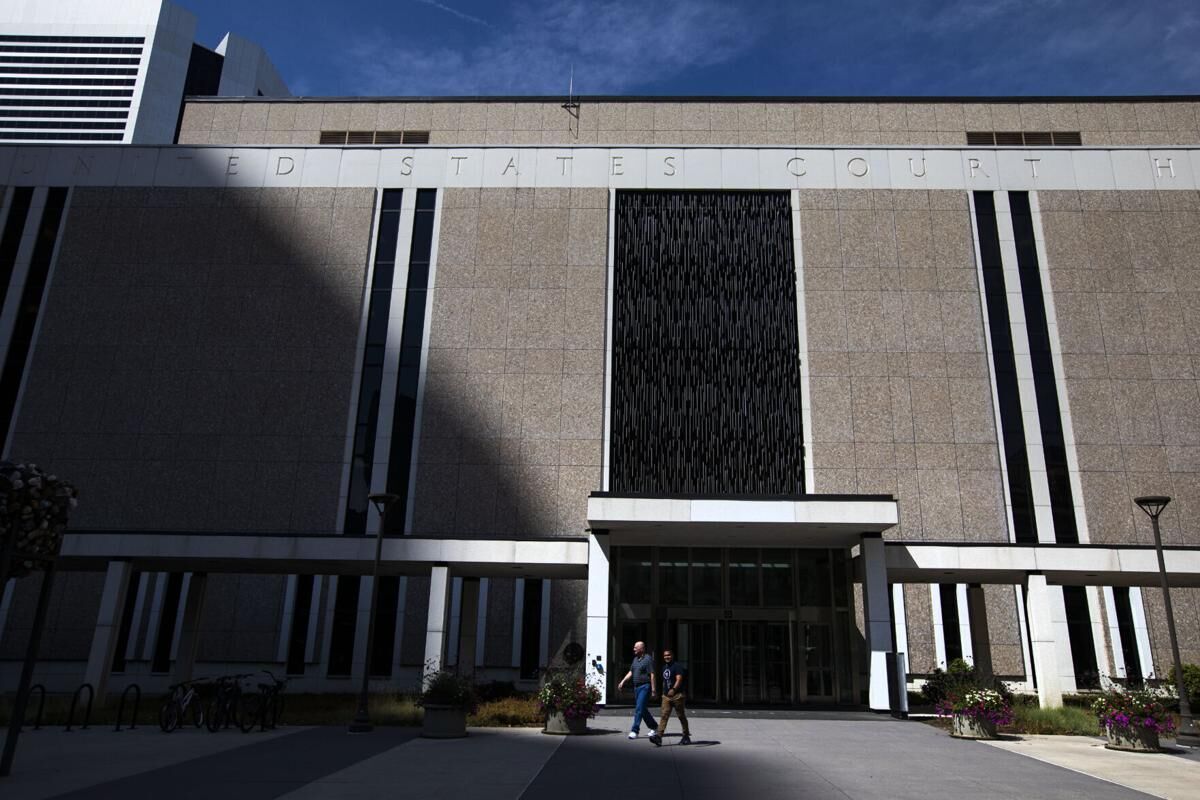
A federal judge dismissed a lawsuit from Colorado’s former judicial discipline director on Tuesday, finding that he failed to adequately state claims for conspiracy or constitutional violations.
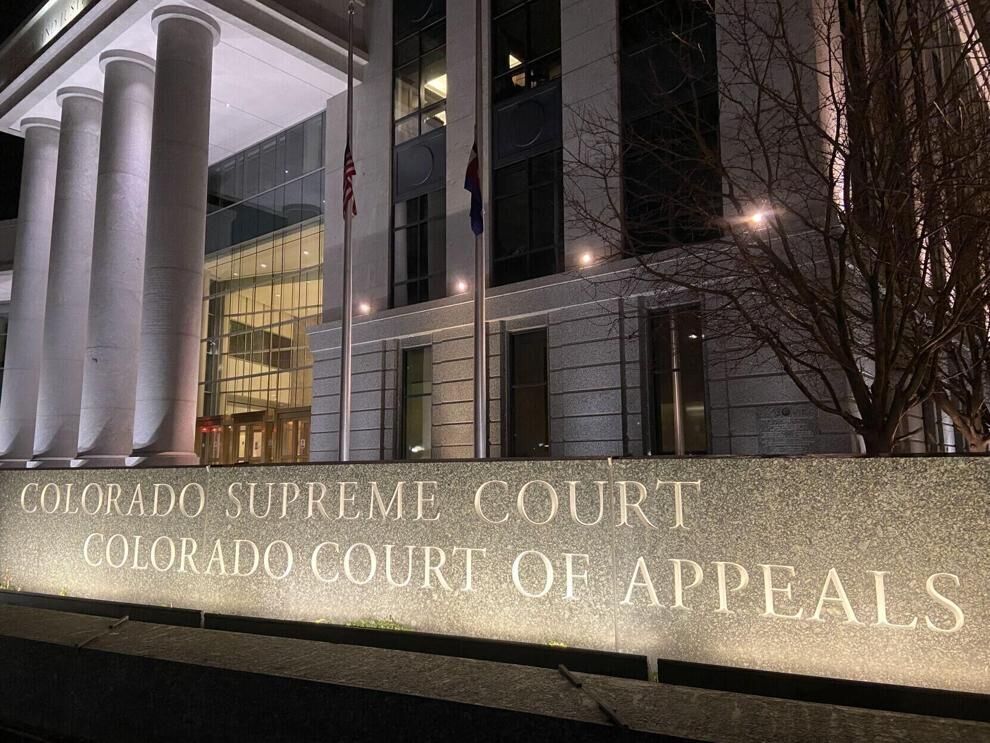
Christopher S.P. Gregory, who served as the executive director of the Colorado Commission on Judicial Discipline between 2022 and 2024, sought reinstatement to his former position, monetary damages, and the complete overhaul of multiple state judicial entities. As defendants, Gregory named the Colorado Supreme Court, Gov. Jared Polis, Attorney General Phil Weiser, and numerous judges and attorneys involved in the judicial discipline process.
In an Aug. 11 order, U.S. District Court Senior Judge Kathryn H. Vratil concluded that none of Gregory’s federal claims was viable. Among other things, Vratil found Gregory’s allegations did not describe a violation of his constitutional rights.
“Several paragraphs in the complaint mention a conspiracy or a scheme, but the complaint is devoid of specific facts which plausibly suggest an agreement and concerted action among defendants to violate plaintiff’s rights,” she wrote. Gregory “argues that internal Judicial Department emails document real-time coordination among the Justices, the Attorney General’s Office and other named defendants. The complaint does not discuss any such emails, however, and … the Court declines to comb through 3,700 pages of attachments digging for facts that support plaintiff’s conclusory conspiracy claims.”
Gregory did not immediately respond to a request for comment.
Vratil, of Kansas, was assigned to Gregory’s case earlier this year under the provision of law allowing the chief judge of the U.S. Court of Appeals for the 10th Circuit to enlist an out-of-state judge when it would be “in the public interest.” Four of Colorado’s U.S. District Court judges recused or otherwise declined to handle Gregory’s case, after which Chief Judge Jerome A. Holmes of the 10th Circuit designated Vratil to preside.
Gregory has filed dozens of highly similar misconduct complaints against Vratil, Holmes, and other judges in the 10th Circuit, all related to his case. Recently, a 10th Circuit judge who reviewed and dismissed two of Gregory’s complaints characterized them as a “litigation tactic.”
Gregory’s lawsuit alleged a conspiracy related to the 2019 decision to award a multimillion-dollar contract to a Colorado judicial employee who was herself facing misconduct allegations. Later reporting revealed that the employee, Mindy Masias, had cataloged alleged instances of judicial misconduct that she was prepared to disclose.
The judiciary later commissioned an investigation and a disciplinary panel of Court of Appeals judges issued an unprecedented censure of former Chief Justice Nathan B. Coats for his role in mismanaging the contract award.
Gregory further alleged that, since his termination, the judicial discipline commission has dismissed his misconduct complaints, declined to “publish (his) public comments into the record,” and obstructed his “fundamental right to be heard.”
The defendants moved to dismiss the lawsuit, arguing it lacked “any actual factual allegations that explain his complaints, what it is that each of forty named Defendants did to Plaintiff, and/or how such facts support any of his claims,” wrote the Colorado Attorney General’s Office. “Indeed, despite using loaded words such as ‘retaliation,’ ‘conspiracy,’ ‘public corruption,’ ‘intimidation,’ ‘harassment,’ and ‘obstruction of justice,’ the Complaint is devoid of well-pleaded allegations supporting such conclusions.”
Gregory countered that his allegations established he was the victim of a retaliatory firing for investigating misconduct, and the defendants “suppressed” his subsequent complaints.
“The relief he seeks: reinstatement, structural reform, and accountability for individual wrongdoers, is precisely what federal courts exist to provide when state officials abuse their authority to shield themselves from scrutiny,” he argued.

Vratil concluded that the Colorado Supreme Court, plus the judicial discipline commission and its rulemaking committee, were immune from being sued under the 11th Amendment’s general prohibition on lawsuits against states.
Although she agreed that Gregory asserted “generalized grievances about the conduct of government,” Vratil did not believe that all of Gregory’s allegations were too vague to be acted upon. Instead, she noted that Gregory’s claim of retaliatory termination was not viable under the well-established limitations on public employees’ speech rights.
“Based on the sparse allegations in the complaint, plaintiff has not plausibly shown that his speech was outside his official duties,” she wrote.
Vratil also saw no First Amendment violation in Gregory’s allegations that his complaints and comments to judicial discipline authorities were largely ignored.
“The First Amendment does not speak in terms of successful petitioning — it speaks simply of the right of the people to petition the government for redress of grievances,” she wrote.
“By his own admission, plaintiff has freely expressed his opinions to the (discipline rulemaking committee), orally and in writing. Plaintiff does not allege that defendants prevented him from submitting comments to the (committee) or other government entities, including the (Colorado Commission on Judicial Discipline),” Vratil continued. “Plaintiff’s true grievance is that defendants have not complied with his requests.”
Finally, she noted that Gregory’s complaint lacked the necessary allegations to show a conspiracy among the defendants.
Vratil declined to address the claims Gregory made under Colorado law, and otherwise did not allow him to amend his federal claims.
“The Court assumes that plaintiff, who is a lawyer, has already alleged his strongest case,” she wrote, “and he offers no clue as to the nature of any proposed amendment.”
The attorney general’s office declined to comment on the order.
The case is Gregory v. The Colorado Judicial Discipline Rulemaking Committee et al.

Federal judge allows retaliation claims to proceed against prison officials
Michael Karlik
michael.karlik@coloradopolitics.com
Updated 3 hours ago
A federal judge agreed last week that a man incarcerated at Sterling Correctional Facility had credibly alleged that employees retaliated against him for filing grievances, including by taking away his disability accommodations and turning off his electricity. Louis Peoples Jr.,...

U.S. Rep. Lauren Boebert’s son arrested, faces charges of sexual exploitation of minor
Matt Kyle
matt.kyle@denvergazette.com
Updated 22 hours ago
U.S. Rep. Lauren Boebert’s son Tyler Jay Boebert has been arrested and accused of recording and sharing a video depicting himself having intercourse with a minor, according to court records. The case originated in Garfield County in Western Colorado and...

Adams County water district may proceed with cost-recovery lawsuit against Denver for contamination
Michael Karlik
michael.karlik@coloradopolitics.com
Updated 9 hours ago
A federal judge rejected Denver’s arguments last week for pausing or dismissing a lawsuit brought by an Adams County special district seeking to recover its costs for addressing water contamination as a result of Denver firefighting activities. In January, the...
Federal judge declines to dismiss First Amendment retaliation claim against prison official
Michael Karlik
michael.karlik@coloradopolitics.com
Updated 8 hours ago
A federal judge agreed last month that an incarcerated Native American woman may pursue her claim of First Amendment retaliation against a prison official who allegedly interfered with her religious exercise. Yvonne Peterson resided at Buena Vista Correctional Facility for...

Colorado’s troubled guardianship office pursues ‘cultural reset’
Marianne Goodland
marianne.goodland@coloradopolitics.com
Updated 21 hours ago
Colorado’s guardianship program, long criticized for mismanagement and high staff attrition, is undergoing a “cultural reset,” as its new director works to repair partnerships and prepare for a major expansion under recent legislation. Created by lawmakers in 2017, the Office...
Local party leaders, incoming judge among members of judicial performance commission that violated law
Michael Karlik
michael.karlik@coloradopolitics.com
Updated 3 days ago
A local Democratic leader and 2024 presidential elector. A legislative aide and leader in the Young Republicans. An incoming county court judge freshly appointed by the governor. They are among the eight members of the northeastern Colorado judicial performance commission...
Judge dismisses lawsuit seeking records from Colorado Democratic group
Marianne Goodland
marianne.goodland@coloradopolitics.com
Updated 4 days ago
A lawsuit seeking to obtain records from Democratic lawmakers affiliated with a caucus has been thrown out by a Denver District Court judge. On July 17, Judge Ericka Englert dismissed the April lawsuit filed by progressive activist Derrick Blanton, who...
Colorado Springs mother Deborah Nicholls’ murder conviction overturned
Nick Smith
nick-smith@coloradopolitics.com
Updated 5 days ago
A Colorado Springs mother convicted in 2008 of murdering her three children in a house fire might get a new trial after a judge ruled that prosecutors withheld key evidence that could have impacted the jury’s verdict. Deborah Nicholls, whose...
Colorado court overturns illegal $7,000 restitution order
Michael Karlik
michael.karlik@coloradopolitics.com
Updated 4 days ago
Colorado’s second-highest court overturned a Weld County defendant’s obligation to pay more than $7,000 in crime victim restitution on Thursday because a trial judge failed to issue a legally compliant restitution order at the time of sentencing. In Colorado, as...

Appeals court rejects former DougCo commissioner’s legal fee claim
Nicholas Fogleman
nicholas.fogleman@denvergazette.com
Updated 4 days ago
The Colorado Court of Appeals rejected a former Douglas County commissioner’s bid for reimbursement of attorney fees she incurred while responding to multiple investigations into her conduct. The dispute stemmed from a 2019 anonymous letter sent to county officials alleging...