

10th Circuit upholds finding of no misconduct against Colorado federal judge

A judicial committee for the Denver-based federal appeals court upheld the chief judge’s finding last week that a federal judge in Colorado did not engage in misconduct by handling a civil case involving other attorneys and judges in the state.
Ordinarily, misconduct proceedings against federal judges provide anonymity to the complaining party and the subject judge. However, attorney Christopher S.P. Gregory, who was the plaintiff in two related civil lawsuits against the Colorado judiciary, publicly disclosed his complaint against U.S. District Court Judge Daniel D. Domenico in his court filings.
Domenico has since recused himself from Gregory’s one ongoing lawsuit. Although Domenico noted that the misconduct complaint itself was not grounds to step aside, he determined, out of “an abundance of caution,” that some of Gregory’s allegations could implicate Domenico’s own state employment before he took the bench in 2019.
Gregory is the former executive director of the Colorado Commission on Judicial Discipline. In October, representing himself, he filed a lawsuit in federal court against the Colorado Supreme Court, the discipline commission, the disciplinary rule-making committee, and others. Generally, he alleged a conspiracy related to the 2019 decision to award a multimillion-dollar contract to a judicial employee who was herself facing misconduct allegations.
Later reporting revealed that the employee, Mindy Masias, had catalogued alleged instances of judicial misconduct that she was prepared to disclose.
Gregory’s lawsuit is seeking his reinstatement as the judicial discipline commission’s director and the removal of those appointed to discipline, judicial performance, and judicial nominating roles.
At the time Gregory filed suit, Domenico had recently dismissed a similar case that was sealed from public view. On Aug. 4, days after the dismissal, Gregory filed a misconduct complaint against Domenico with Chief Judge Jerome A. Holmes of the U.S. Court of Appeals for the 10th Circuit.
“Judge Domenico intentionally inserted himself into the underlying case to achieve an overtly biased outcome favorable to his self-identified friends,” Gregory wrote.
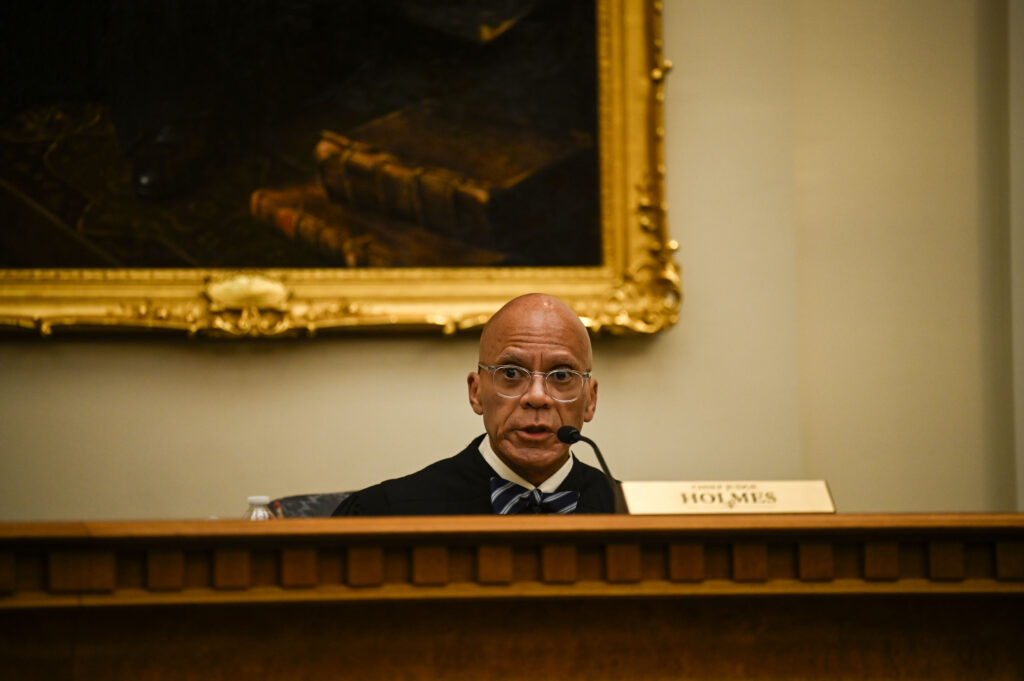
Gregory added that Holmes should recuse himself from the inquiry because he presented an award to Colorado Supreme Court Justice Richard L. Gabriel at the 10th Circuit’s conference the prior year.
On Sept. 22, Holmes issued an order dismissing Gregory’s complaint. He indicated he had undertaken a “limited inquiry” and asked Domenico to respond to the allegations of bias related to his connections with the judges or lawyers Gregory was suing.
“In his response, the judge notes that the ‘personal friendships’ Complainant alleges exist are, instead, professional friendships, such that if he saw one of the parties at a professional event or on the street, he would certainly greet that person, but he does not socialize on a personal level with the individuals,” wrote Holmes. “More specifically, the judge states that he has not worked with or had social interactions with any of the individuals since becoming a judge years ago.”
Holmes added that Domenico was randomly assigned the case and had not “inserted himself” into it.
“A judge’s recusal is not necessarily required merely because a judge previously knew or worked with parties to a case. And, even if a recusal was required here,” Holmes continued, “this Complainant did not support the allegation that the subject judge failed to recuse for illicit purposes with any evidence.”
Gregory sought review of Holmes’ order with the circuit’s judicial council, a body created by law that consists of other appellate and district judges.
“Chief Judge Holmes demonstrated actual bias, dishonesty, and the abuse of his position to protect Judge Domenico,” Gregory wrote.
That same day, Gregory filed a misconduct complaint against Holmes himself.
Around the same time, Gregory sought Domenico’s recusal from his still-pending lawsuit against the Colorado judicial defendants. In January, he filed a document alleging that Domenico, through his work as Colorado’s former solicitor general and an adjunct law professor, was personally connected to various participants in the alleged conspiracy over a period of decades.
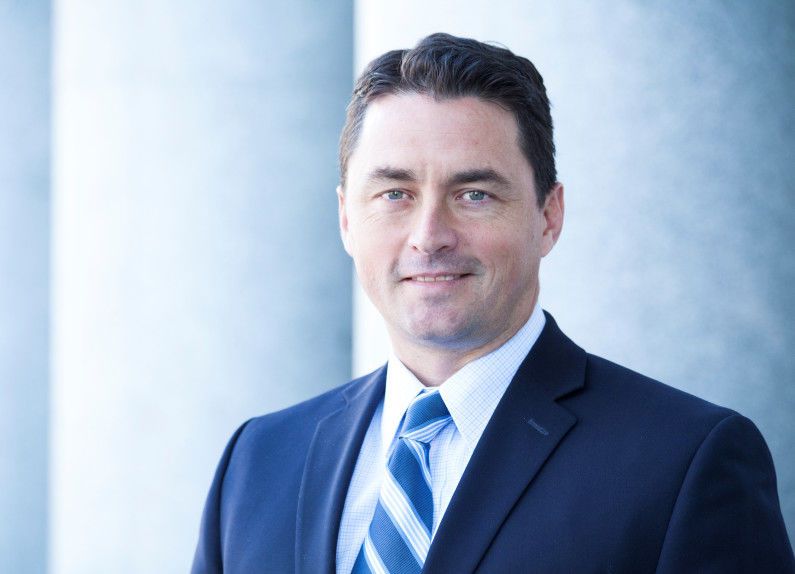
In a Feb. 3 order, Domenico agreed to recuse himself from the case, while defending his professional relationships within the legal community.
“I have worked in a variety of roles in the course of my legal career: in private practice, as a law clerk at the Tenth Circuit Court of Appeals, in the U.S. Department of the Interior, as the Colorado Solicitor General for nine years, as an adjunct law professor at the University of Colorado and the University of Denver, and in my current role as a U.S. District Judge for over six years,” he wrote. “Given the breadth of the allegations Mr. Gregory is making here, it is not surprising that some such individuals are defendants in this case.”
Although Domenico worked professionally with those people and considers some of them to be friends, “none of the individuals who are named as defendants or who otherwise appear to have any meaningful role in the case is someone with whom I have a close personal relationship,” Domenico added.
Despite Gregory’s complaint focusing on events that happened in 2019 or afterward, Domenico determined that Gregory’s recent filings and wider-ranging allegations “include events that took place within the Attorney General’s Office while I was a senior member of that office.” Therefore, Domenico agreed to recuse himself due to “an abundance of caution.”
U.S. District Court Judge Gordon P. Gallagher has since been assigned to the case.
Finally, on Feb. 17, the 10th Circuit’s judicial council issued a brief order upholding Holmes’ finding of no misconduct on Domenico’s part. Gregory’s complaint against Holmes is still pending.


Misconduct complaints from ex-Colorado judicial discipline director dismissed against federal judges
Michael Karlik
michael.karlik@coloradopolitics.com
Updated 3 hours ago
The administrative body for the Denver-based federal appeals court upheld a finding last week that misconduct complaints against Colorado’s chief federal trial judge and the chief appeals judge warranted dismissal and appeared to be a “litigation tactic” by the complaining...

First-ever Red Rocks naturalization ceremony draws most diverse group of new citizens
Michael Karlik
michael.karlik@coloradopolitics.com
Updated 5 hours ago
Colorado’s federal trial court held its first-ever naturalization ceremony for nearly 300 new citizens on Thursday at Red Rocks Park and Amphitheater. “We’re doing it to commemorate the 250th anniversary of the Declaration of Independence and the United States. Red...
10th Circuit finds no fair housing violation by Littleton landlord for worker’s alleged rape of tenant
Michael Karlik
michael.karlik@coloradopolitics.com
Updated 1 day ago
The Denver-based federal appeals court concluded on Monday that Littleton’s housing authority could not be held liable for a maintenance worker’s alleged rape of a tenant, as the worker’s employment did not provide any special access to the victim. A...

Jeffco Public Schools sues Trump administration to protect funding after alleged transgender policies violation
Matt Kyle
matt.kyle@denvergazette.com
Updated 14 hours ago
In the wake of several threats by the Trump administration to revoke federal funding, Jeffco Public Schools filed a lawsuit against the Department of Education seeking to protect that badly needed money. Jeffco has been under investigation by the DOE’s...
Denver detox center did not violate man’s rights with 10-hour hold, 10th Circuit says
Michael Karlik
michael.karlik@coloradopolitics.com
Updated 2 days ago
The Colorado-based federal appeals court concluded on Tuesday that Denver’s detoxification facility did not violate a man’s rights by holding him against his will for 10 hours until his blood alcohol content was projected to reach zero. Unusually, Brian Garrett’s...
Federal judge clarifies ex-GOP treasurer candidate’s burden to prove defamation claims
Michael Karlik
michael.karlik@coloradopolitics.com
Updated 2 days ago
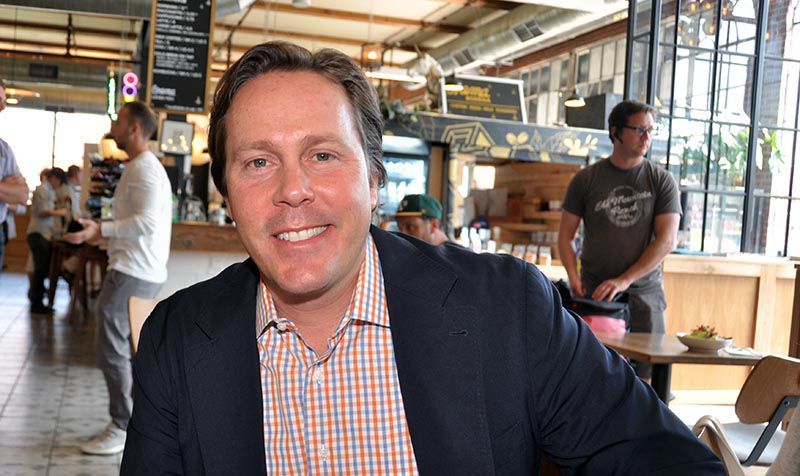
A federal judge clarified last week that businessman and former Republican statewide candidate Brian Watson will need to surmount a higher hurdle in proving his claim that a party guest’s alleged description of him as a “criminal” amounted to defamation....
Colorado board permits state to appeal injunction against arthritis drug price cap
Marissa Ventrelli
marissa.ventrelli@coloradopolitics.com
Updated 3 days ago
A Colorado board voted Friday to allow the Attorney General’s Office to fight an injunction against a price cap on a drug that treats arthritis. A U.S. district court judge had granted the company Amgen a preliminary injunction, temporarily blocking...
Federal judge rejects constitutional claims, ‘expressions of hatred’ by Club Q defendant
Michael Karlik
michael.karlik@coloradopolitics.com
Updated 3 days ago
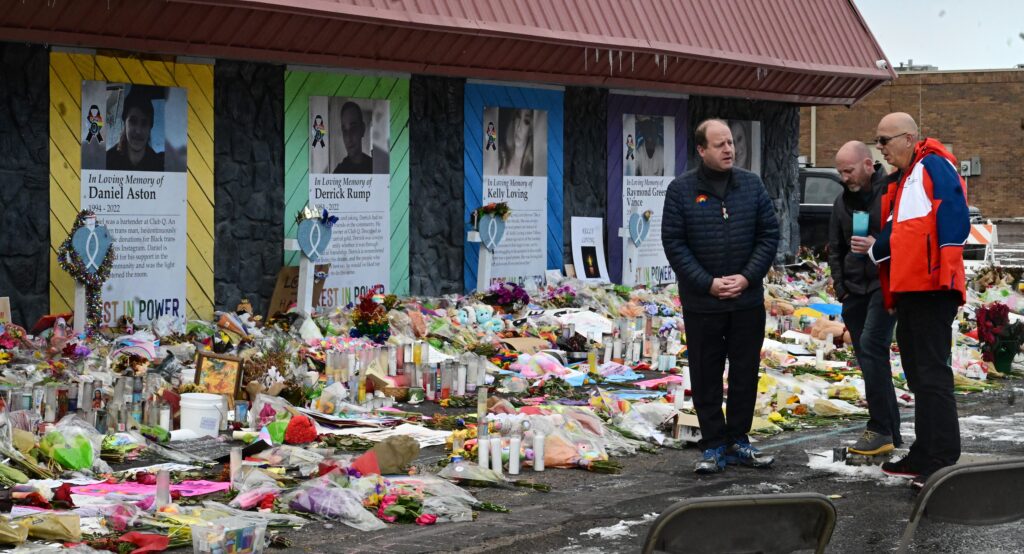
A federal judge rejected a defendant’s claims that he received constitutionally ineffective assistance of counsel while facing federal hate crime and firearms charges for murdering five people at a Colorado Springs LGBTQ nightclub in 2022. Anderson Lee Aldrich is serving...

Divided 10th Circuit upholds Colorado congestion fee on car rentals
Michael Karlik
michael.karlik@coloradopolitics.com
Updated 3 days ago
The Denver-based federal appeals court concluded on Monday that a 2024 “congestion impact fee” that lawmakers imposed on short-term vehicle rentals did not conflict with a federal prohibition on certain airport-related charges. Beginning in the 1970s, Congress began limiting the...
10th Circuit dismisses woman’s lawsuit following 10-year attempt to undo restraining order
Michael Karlik
michael.karlik@coloradopolitics.com
Updated 6 days ago
The Denver-based federal appeals court rejected a woman’s challenge on Friday to a restraining order imposed on her more than a decade ago, finding that she cannot credibly claim she will be prosecuted for violating the restraining order through her...
PREV
PREVIOUS

As measles cases rise nationally, Colorado braces for imported infections
Colorado has had just one measles case this year, but that doesn’t mean Dr. Michelle Barron sleeps well at night. With spring break around the corner, Barron worries out-of-state travelers will bring more than their luggage to the Centennial State. “My big worry right now is DIA (Denver International Airport), said Barron, senior medical director […]

Colorado rape cases rarely result in an arrest and prosecution
Authorities say they are especially difficult cases. In Colorado, most go nowhere. Over the past decade, for every 10 reports of rape, there is only one arrest. Warning: This story contains descriptions of sexual violence. Kiersten May remembered a fuzziness overtake her as Saturday night slid into Sunday morning at the remote Colorado mountain campsite […]