

Colorado rape cases rarely result in an arrest and prosecution
Authorities say they are especially difficult cases. In Colorado, most go nowhere. Over the past decade, for every 10 reports of rape, there is only one arrest.
Warning: This story contains descriptions of sexual violence.
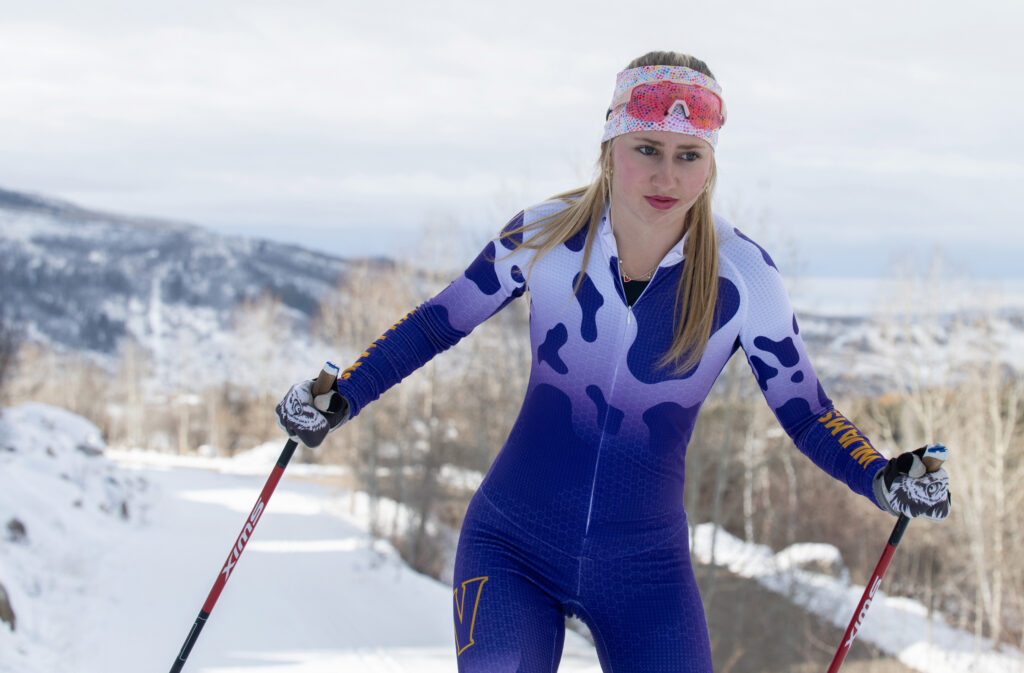
Kiersten May remembered a fuzziness overtake her as Saturday night slid into Sunday morning at the remote Colorado mountain campsite on May 26, 2024.
Her brain seemed to be no longer tracking, her body felt oddly heavy. She stumbled as she tried to walk and struggled to form words. She had been drinking but not enough to be so impaired. It was as if she was watching what was happening from a distance, from outside her body.
She was 18 at the time, at the annual high school graduation camp-out, about an hour outside of Steamboat Springs. A young man, also then-18, whom she knew slightly from competitive skiing, had put a bitter-tasting powder on her tongue, telling her it was a harmless stimulant he often used for an energy boost before workouts.
He urged her to take a drink to wash away the taste. She took a sip of the vodka and fruit juice in the tumbler she had left beside him, noticing it, too, tasted off.
That, she said, is when everything changed.
He had seemed so nice, so attentive — following her around the party, slipping his arm around her waist. As the temperature dropped, he suggested they get in his SUV to stay warm. They kissed and things escalated quickly. He was on top of her, wanting sex, she remembered. She didn’t but said she felt too groggy to stop it.
She asked if he would at least use a condom. She now wonders if prosecutors construed that as permission.
Afterwards, she said she tried to get help, running from his car crying. As she wandered through the campsite, most everyone was drunk or asleep. She found her friend, with whom she had come to the party, and got in her vehicle. But the young man jumped in after her. She would later say she was worried he might hurt her friend, too, so she returned with him to his SUV.
She was drifting in and out of consciousness as he was on top of her again, she said. But this time it was rougher. That is when, she said, he put his hands around her neck and squeezed.
May’s account, like those of the other women highlighted in this story, comes from hours of interviews with The Denver Gazette, as well as their statements to authorities. In total, 10 alleged sexual assault victims were interviewed and while not all were included in the story, they told similar accounts of what happened after they made their report.
In addition, The Denver Gazette analyzed 10 years of crime statistics, reviewed law enforcement investigative files, and obtained police and prosecutor statements, hospital records, forensic results, and toxicology reports related to the cases included.
While typically The Denver Gazette does not name victims of alleged sexual assault, the women in this story agreed to be identified. The suspects in the cases are not named because they were never charged. Their accounts came from law enforcement investigative files.
By the time May got home later that morning, bruises had started to form on her neck. Her underwear was soaked in blood. She went to the hospital and then to the Routt County Sheriff’s Office and said she was raped.
She had been raised to think it was the right thing to do. She was certain there would soon be an arrest.
But it was not to be.
.embed-container { position: relative; padding-bottom: 56.25%; height: 0; overflow: hidden; max-width: 100%; } .embed-container iframe, .embed-container object, .embed-container embed { position: absolute; top: 0; left: 0; width: 100%; height: 100%; }Rape reports rare, arrests rarer
In America, most rape victims never make a report.
Statistics from the National Crime Victimization Survey and the U.S. Department of Justice estimate that up to 80% of alleged sexual assaults go unreported.
Those who work with survivors say reluctance can come from fear of retaliation. Or it is out of shame and the self-blame that they didn’t fight hard enough or somehow brought it on themselves.
And sometimes, advocates say, it is because they fear authorities will not believe them and nothing will happen.
Police and district attorneys strongly dispute that sexual assault survivors are not believed. They say it can be hard to make cases because of the nature of the crimes, often involving murky questions of consent.
Often, they say, there is no legal or ethical choice but to drop a case if they think it cannot be proven beyond a reasonable doubt to a jury.
Still, the numbers are stark.
An investigation by The Denver Gazette into law enforcement and prosecutor response to reported sex crimes showed that, over the past decade, there was only one arrest for every 10 reported rapes in Colorado, based on a data analysis of statewide Colorado Bureau of Investigation crime statistics.
The Denver Gazette looked at a decade of data for thoroughness and to reflect instances where the report and arrest occurred in different years. The data analyzed used CBI terminology of “all rapes,” which includes rape, attempted rape, sodomy and rape with an object. It is the same categorization used by the federal government, CBI said.
The Denver Gazette data analysis revealed marked differences in rates of arrests among jurisdictions. For example, as of Jan. 30, in Arapahoe County, the third most populous county in the state, there were 131 reports of rapes in 2024 but just five arrests, including reports of rapes from a prior year but the arrest happened in 2024.
In Pueblo County there were 166 reports in 2024 yet only 3 arrests, also including reports from prior years and using the same CBI designation.
During the same time and using the same criteria, in Denver County there were 705 reports, compared to 133 arrests, which also includes reports from previous years. That translates to roughly only one arrest for every six reports.
In Boulder County, there were 14 arrests in 2024 compared to 201 reports; in El Paso County, there were 70 arrests for rapes in 2024 and 725 reports; in Adams County, 48 arrests and 684 reports; in Jefferson County, 28 arrests and 250 reports.
And in Routt County, where Kiersten May made her report, there were 14 rape reports made in 2024, but only one arrest, the state data showed.
By comparison, over the past decade, The Denver Gazette found that, statewide, the ratio of arrests to reports for other serious crimes against persons is roughly three times higher than for rapes.
window.addEventListener(“message”,function(a){if(void 0!==a.data[“datawrapper-height”]){var e=document.querySelectorAll(“iframe”);for(var t in a.data[“datawrapper-height”])for(var r,i=0;r=e[i];i++)if(r.contentWindow===a.source){var d=a.data[“datawrapper-height”][t]+”px”;r.style.height=d}}});In some crimes, like murder and manslaughter, the arrest-to-report ratio is six times higher than that of rapes, according to the CBI data.
“That is really horrifying,” said Elizabeth Newman, the director of public policy for the Colorado Coalition Against Sexual Assault, the state’s largest coalition and advocacy group to prevent sexual violence. “I knew it was low but that’s even worse than I thought.”
A person of trust
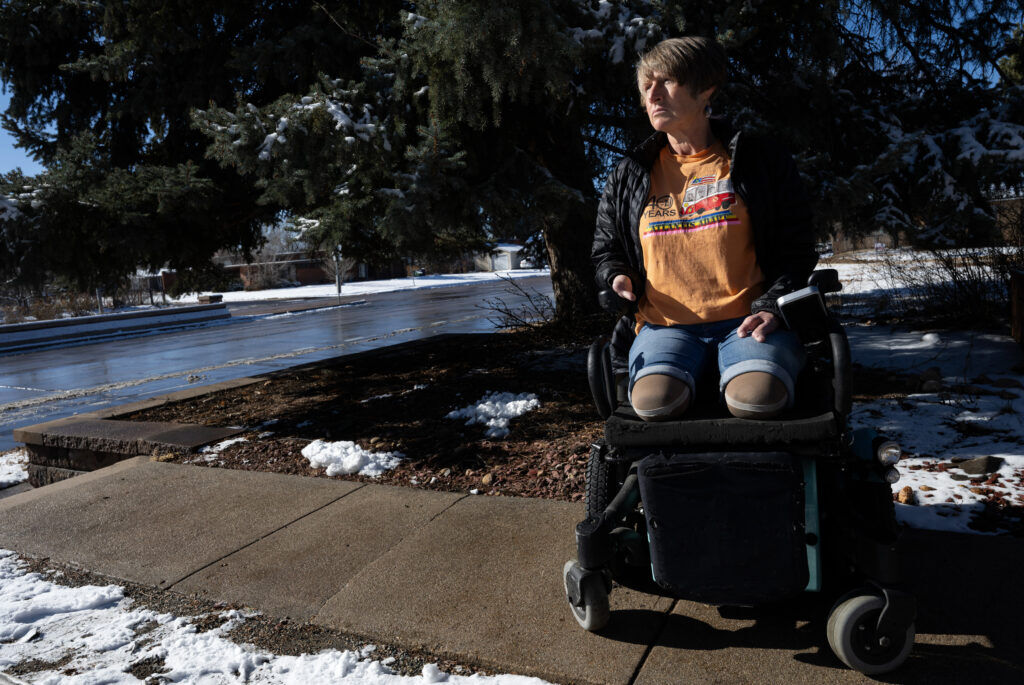
Kelly Tobin is a disabled, at-risk adult. Born with limb anomalies and, after a series of amputations, at age 57, she lives with no lower legs and a total of three fingers. Her mobility is severely limited and she must mostly rely on her motorized wheelchair or the assistance of others.
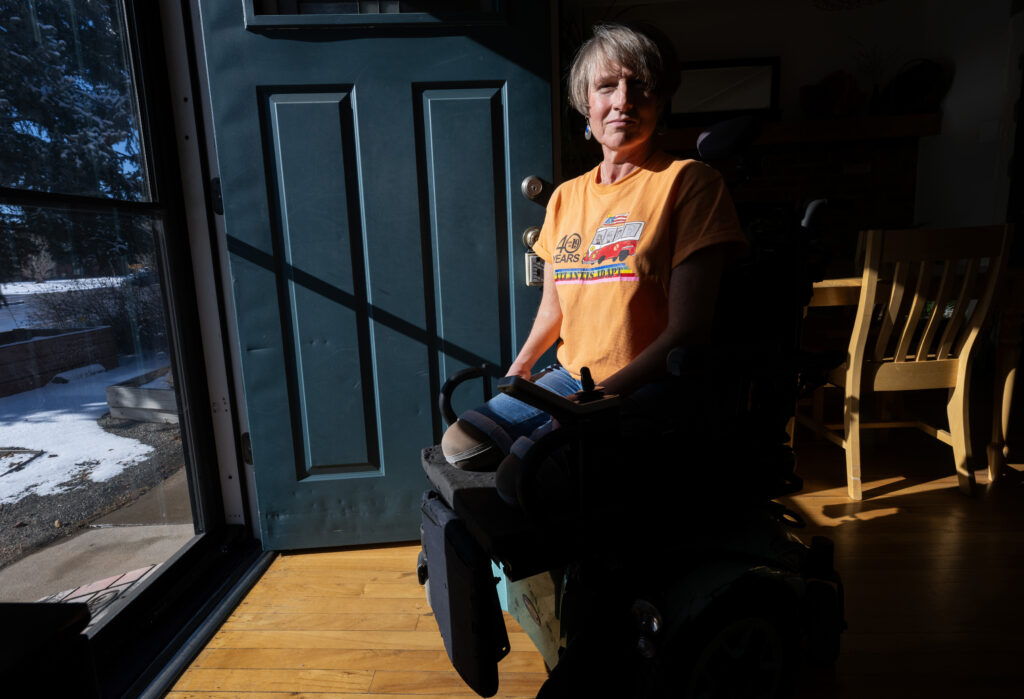
On Feb. 20, 2024, she said her Medicaid-paid driver drove her from a medical appointment and offered to help carry her prosthetic legs into her home. He had been driving her for more than a year, she said, and while they had a friendly relationship, there was never anything more between them.
On this day he followed her inside. She said she told him to just leave her prosthetic legs by the door and go. He didn’t.
Once in the kitchen, she said he forcibly lifted her out of her motorized wheelchair.
“What are you doing?” she asked, alarm rising in her voice.
He carried her into a guest bedroom and raped her, she said.
Afterward, he left her stranded on the bed as he returned to his still-idling vehicle and drove away, she said. She was in shock. She said she was able to maneuver herself to the manual wheelchair in the room and then slowly and painfully propel herself to her motorized one still in the kitchen.
On Feb. 23, at the urging of friends and family, she went to UCHealth in Aurora for a rape exam and made a report with the Denver police.
Her medical records show injuries. The responding Denver police officer at the hospital said he was confident of an arrest, she said.
The investigating detective was less sure.
“You didn’t give us much to go on,” she said he told her.
Also, she said the detective predicted it would be hard to prosecute because technically she did not say no.
The suspect in the case first denied any sexual contact and refused a DNA swab without first consulting his lawyer, according to the police investigative report furnished to The Denver Gazette by Tobin.
The next day, however, the suspect’s lawyer acknowledged his client had lied, contending he did not want his wife to know. The driver now admitted having sex with Tobin but said it was consensual, according to the police report.
The suspect also said, through his lawyer, that Tobin had wanted him to leave his wife, but he had refused, the police report said.
Tobin scoffed at the claim, telling The Denver Gazette by email, “I appreciate his creativity.”
The detective contacted the suspect’s company and was told the driver had been fired, the police report said.
The lawyer identified in the police report declined to comment.
Julie Reiskin, co-executive director of Colorado Cross-Disability, is familiar with the case and troubled by it. Beyond the alleged rape, she said there was also a violation of statute where an at-risk adult was abused by a person of trust.
“Not only did he sexually assault a disabled woman after he rendered her immobile, but he abandoned her in a position where she could not easily move or even call for help,” Reiskin said.
There was no arrest. Tobin said she was told by the Denver District Attorney’s office that, although she is disabled, the concept of an at-risk person and a person in the position of trust was too nuanced for a jury to understand. The case was declined.
“I thought the law was my recourse,” Tobin said, “but I found out otherwise.”
The Denver police and the Denver District Attorney’s office both declined to comment on the case.
‘These are complex cases’
The Denver Police Department and the Denver District Attorney’s Office said in emailed statements they strive to provide justice for survivors.
“The Denver Police Department is committed to solving sexual assault cases and has a dedicated team of specialized investigators and victims’ assistants who work with survivors,” the police statement said.
The police statement added “these are complex cases” and the department works with survivor advocacy groups, rape exam specialists and the Denver District Attorney’s Office to make sure “best practices are followed.”
Denver officers are required to watch a 10-minute training video that is part of the national “Start by Believing” campaign, the police said.
In the video, officers are told to show sympathy and put aside any pre-conceived ideas about rape, acknowledging past issues of survivors not being believed. The video further says that one failed response to a sexual assault could lead to more victims — since attackers typically repeat.
“It doesn’t have to be this way. It shouldn’t be this way,” viewers are told.
And in Denver, sexual assault survivors are offered a gym membership “while they work on their physical and mental health,” the police statement said.
So far, none has accepted.
The Denver District Attorney’s Office said in its statement it “takes every allegation of sexual assault with the utmost seriousness, which is why every case presented to us is independently reviewed by two of our most experienced sexual assault prosecutors before deciding whether to proceed.”
“We file charges whenever we can prove a defendant’s guilt beyond a reasonable doubt,” the district attorney’s office statement said.
Societal myths surrounding rape
Between 2023 and 2024, about 45% of the 447 total sex crime cases referred to the Denver District Attorney’s Office from law enforcement for prosecution were not pursued.
The office accepted 243 cases and declined 202, with another two others rejected for needing more investigation, said a district attorney spokesperson in response to questions from The Denver Gazette, adding that cases can be reopened later.
That does not include cases reported to law enforcement that stalled or were dropped and never referred to district attorneys.
Sometimes cases end if the victim no longer wants to proceed, is deemed uncooperative, or if law enforcement anticipates that the case will later be declined by the district attorney.
One of the challenges, both in Colorado and nationally, is a lack of consistency in how the crimes are defined, as well as compiled. CBI said lags in reporting times by law enforcement means numbers remain fluid and prosecutors say their definitions of how crimes are classified and tallied differs from CBI.
Without standardized data collection there is no through line from report to outcome, making it hard to know at what stage cases are falling apart and why, researchers and criminal data experts say.
“These are the most complicated crimes,” said Jessica Dotter, senior chief for legislative policy and special victims prosecutor for the Colorado District Attorneys’ Council, adding that traditional forensic evidence, such as DNA, can be irrelevant if the suspect acknowledges sex but says it was consensual.
Another obstacle, experts in sexual assault cases say, is the persistence of societal myths surrounding rape.
It is often thought that attackers must be strangers and armed for it to be a so-called “true” rape. But typically, neither scenario is true. An overwhelming number of cases involve suspects known to the victim, even if casually. And, often, survivors will not fight back out of fear, experts who study sexual violence say.
Survivors can be, or at least feel, blamed or disbelieved by authorities if they did not resist or were drinking, using drugs, or supposedly acting provocatively, decades of research surrounding sexual violence has shown.
Under Colorado law, consent must be voluntary and mutual. Further, it cannot be assumed or implied based on silence, past behavior, or prior relationships, according to legal experts. If the accuser is intoxicated, consent can occur, but it depends on the level of impairment.
Sometimes days, weeks, or years can pass before an incident is reported and memories can be inconsistent — both common reactions to trauma, experts say, but reactions that can be misunderstood by investigators.
‘Ethical Obligation‘
“It is a prosecutor’s ethical obligation to only file cases where it is likely that it can be proven to a jury beyond a reasonable doubt,” said Dotter of the District Attorneys’ Council.
Still, she acknowledges the decision by prosecutors on whether to take a case is “completely a judgment call” and that they have “complete discretion to end the case.”
Sandi Johnson, a former prosecutor in Utah for more than two decades who is now senior legislative counsel for RAINN (Rape, Abuse, and Incest National Network), calls sexual assault “one of the most underreported crimes and when reported it is one of the most under prosecuted.”
Myths also persist around the supposed prevalence of false reports, experts say.
“Investigators often find it easier to think it was just a misunderstanding or that the victim was a liar,” Johnson said.
According to a 2010 study for the National Institute of Justice, some police officers surveyed believed that half or more of rape reports are false.
And, in fact, false reports do happen.
For instance, the Duke University lacrosse team rape hoax or the now debunked Rolling Stone article about a fraternity gang rape, were widely reported in the news media. But outsized coverage creates a distorted sense of their prevalence, experts say.
The truer number of false reports is estimated to be between 2% and 10%, according to a compilation of 10 years of studies published by the American Psychological Association.
“You cannot investigate these cases like an armed robbery,” Johnson said, “I do understand that these cases are hard — if you investigate them incorrectly.”
This ‘could ruin his life’
When Denver police arrived at Reilly Braun’s apartment on March 18, 2019, she was shaking and bloodied. Just before, a man she had known for about three years and with whom she had a casual sexual relationship had turned violent and raped her, she told them.
Braun, 27 at the time, said the suspect had come over and what began as a consensual encounter quickly changed when he threw her to the floor and while pinned, raped her, even as she screamed for him to stop and tried to get away, according to the police file.
While on the phone with 911, she said the suspect texted her and apologized. Police found blood on the bedroom floor. The medical report from her rape exam showed multiple bruises and lacerations on her shoulders, neck, breast and upper thigh.
Yet even before she was taken to the hospital by police, she said the lead responding officer asked, “Are you sure about this?”
Then, she said, the next day, the investigating detective asked, “Aren’t you friends? He could go to jail,” adding this “could ruin his life.”
Braun considered dropping the report because she thought police seemed uninterested.
“I felt like I had done something wrong. That this was my fault,” she said.
When she later decided to press ahead anyway, she called the detective, who, she said, sounded annoyed.
The suspect was never interviewed by police because he retained a lawyer, the detective told Braun in an email. The Denver District Attorney’s Office declined the case. In an email to Braun, shared with The Denver Gazette, the senior deputy district attorney acknowledged that the apology text could imply a confession but was open to interpretation.
The Denver police and District Attorney’s office declined to comment on this case.
The end of hope
Kiersten May had hope for almost exactly a year.
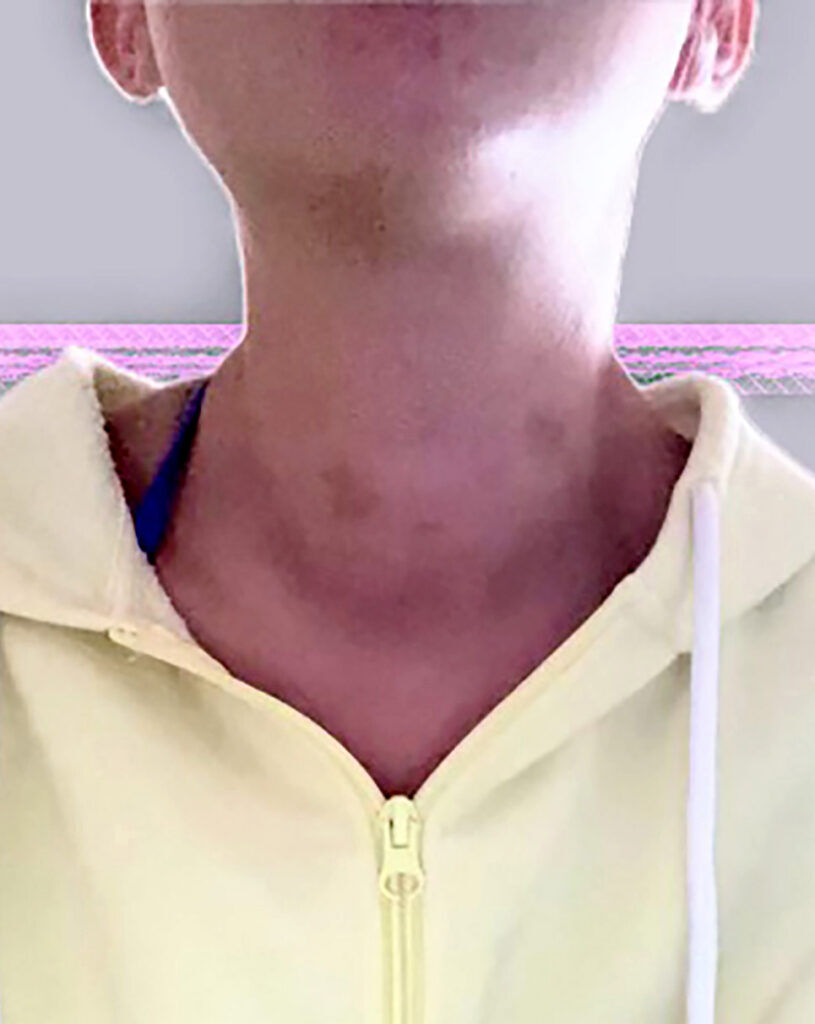
By the spring of 2025, she was in college in Massachusetts on a ski scholarship. Sleep was fitful, nightmares frequent, migraines came in waves
Still, she clung to the belief her case was strong based on the extensive investigative file compiled by the Routt County Sheriff’s Office. That file, obtained by The Denver Gazette, contained the following:
- UCHealth medical records described a one-inch gash on her labia and distinct signs of strangulation.
- A toxicology report from NMS Labs in Pennsylvania showed the presence of Cyclobenaprine, a muscle relaxant, which depresses the central nervous system. The drug is known for a bitter taste.
- A forensic analysis by the Colorado Bureau of Investigation found a single source of male DNA that matched the suspect on her external genitalia.
- The suspect’s cell phone was subpoenaed by the Routt County Sheriff’s Office. On it an internet search was found asking “Can you give consent while drunk?” and “Will research chemicals show on a blood test?”
- Also on that phone, according to the sheriff deputy’s investigative report, was a text exchange between the suspect and his mother, in which she asked what happened. The suspect texted his mother back that there was no intercourse because he could not sustain an erection and any sexual activity was consensual. He also texted that May was not impaired because they were “having full conversations.”
- The suspect’s mother then texted: “I swear to God we have discussed choking” and “Are you telling me you get a thrill from it? Taking someone close to death?” reminding her son that her cousin had been murdered by choking. Her son responded: “I’m sorry.”
The case was forwarded to the Routt County District Attorney in April 2025. On May 2, 2025, May was in a meeting at school when her cellphone signaled an incoming call from the district attorney’s office. She ran outside to take it.
Deputy District Attorney Joseph Bucci told her his office decided not to proceed with the case and there would be no arrest, she said.
In the five-page declination decision, Bucci wrote his office was bound by prosecution standards set by the National District Attorneys Association, which said cases should not be pursued if there is “doubt of the accused’s guilt” or “insufficiency of admissible evidence to support a conviction.”
“There is no good faith basis to believe that this Office can prove beyond a reasonable doubt that the suspect knew the victim was incapable of appraising the nature of her conduct,” Bucci wrote.
The suspect in the case was never questioned by law enforcement, invoking his right to counsel and the right to remain silent, said Matt Karzen, 14th Judicial District Attorney, in an email to The Denver Gazette.
Instead, 11 months after the graduation party, the suspect offered, through his lawyer, an 11-page statement, shared with The Denver Gazette by the May family. The lawyer representing the suspect did not respond to a request for comment.
The suspect’s statement read, in part, there was only one sexual encounter, and it was consensual and mutual. He said he gave May DMAA, a bitter-tasting dietary supplement but said nothing about the muscle relaxant found in her toxicology report.
He also acknowledged putting his hand on her neck and applying pressure “for all of three seconds” and stopped when he sensed her “tense up.”
After the call from the district attorney’s office, May stood motionless on the sidewalk. She then threw up and collapsed to the ground, weeping in the rain.
A mother’s fight
On Dec. 19, 2025, the Victim Rights Act Subcommittee, part of the Crime Victim Service Advisory Board for the Colorado Division of Criminal Justice, found that the May family “was not treated with fairness, respect and dignity” by the Routt County District Attorney’s Office.
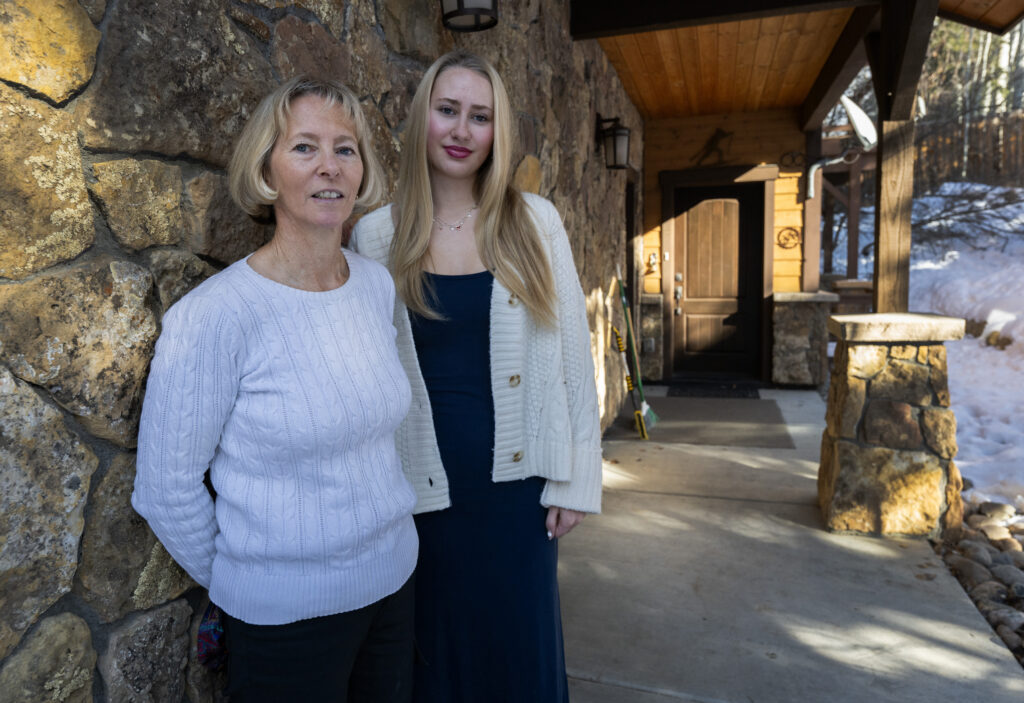
And while the subcommittee does not have the power over charging decisions, it did cite the district attorney’s office for not relaying the information about the case in a “trauma-informed manner.”
The subcommittee recommended the staff at the district attorney’s office receive mandatory trauma-informed training from a Victim Rights Act specialist and a member of the Colorado District Attorney’s Council.
The Colorado Victim Rights Act, passed in 1992, requires that victims of crimes are treated fairly and with respect and dignity, and that they are free from harassment or intimidation. It also requires they are informed about progress in their case.
“The VRA compliance process is not punitive and is based on system change,” a spokesperson for the Colorado Division of Criminal Justice said in an email.
There is, however, a process that, if an agency remains non-compliant, it can be subject to action by the state attorney general. That has only happened once in 34 years, the spokesperson said.
Karzen, the district attorney, told The Denver Gazette by email his office will not appeal the subcommittee decision. He said prolonging the process would “inflict more stress and anxiety” on Kiersten May.
He said he stands by his office’s decision not to charge the suspect.
Karzen said he did a second review of the case to be sure. Under Colorado law, he said, there is a requirement of proof beyond reasonable doubt not only that there was a lack of consent but that the accused knew the victim did not consent.
“The decision is and must be objective and it cannot be driven by what a prosecutor, may, in their own mind, believe occurred,” Karzen said, adding it is “first and foremost a product of legal analysis.”
The total number of sex crimes referred from law enforcement to his office, which includes Routt, Grand and Moffat counties in 2022 through 2024, was 182, of which about half, or 95, were accepted and 87 were declined, he said.
Karzen acknowledged there is a “substantial” difference in how his office defines and counts sex crimes and the criteria CBI uses.
Of the 95 cases accepted for prosecution, just one in three resulted in jail or prison time, he said.
In January, the Colorado Supreme Court’s Office of Attorney Regulation Counsel said it, too, was reviewing actions by Bucci for alleged misconduct in the May case. That complaint, like the one under the VRA, was filed by Kiersten May’s mother, Ramona May.
Karzen told The Denver Gazette that May’s complaint has “no legitimate basis in law or fact.”
Ramona May said she simply wants justice for her daughter: “All along she was told to come forward, to tell her story, that she was doing the right thing, only to be treated that she did something wrong.”
“I wish I had never told anyone,” Kiersten May said. “It destroyed not just my life but my family’s life.
“I have absolutely no faith in the justice system anymore,” she added.
On Jan. 3, she turned 20.

2 Colorado State troopers shot near Woodland Park; suspect killed
DEBBIE KELLEY
debbie-kelley@coloradopolitics.com
Updated 10 hours ago
Two Colorado State Patrol troopers were hospitalized, and a suspect is dead after a shooting during a traffic stop Tuesday. The initial incident happened at about 7:15 a.m., when a resident reported suspicious activity in the area near milepost 286...
Aurora moves forward with data center regulations
Kyla Pearce
kyla.pearce@gazette.com
Updated 11 hours ago
The Aurora City Council approved moving forward with two new regulations on data centers and directed staff to come back at the next study session with others. At a council meeting in early August, council members directed city management to...

Aurora City Council considers stricter food truck regulations
Kyla Pearce
kyla.pearce@gazette.com
Updated 11 hours ago
The Aurora City Council is considering passing laws to limit the number of food trucks on properties in the city and how and when they operate. Councilmember Angela Lawson, who sponsored the ordinance, said she understands the importance of food...
Colorado lawmaker, House leaders named in workplace-retaliation lawsuit
Marianne Goodland
marianne.goodland@coloradopolitics.com
Updated 11 hours ago
A former legislative aide has filed a lawsuit alleging she was mistreated, illegally directed to perform campaign work and harmed by a House leadership structure she charged was fragmented, politicized and ineffective at protecting employees. The lawsuit, filed by Jennifer...
Denver auditor finds oversight failures in $175.6M 16th Street project
Nico Brambila
nico.brambila@denvergazette.com
Updated 11 hours ago
Surprise historic sewer discovery delayed completion a year, cost $18M The Denver Auditor recently found significant oversight and contracting problems with the $175.6 million 16th Street Improvement Project, including an $18 million contract increase and a nearly one-year extension that...

Denver Public Schools welcomes 89,000 students back to the classroom
Elizabeth Pond
elizabeth.pond@denvergazette.com
Updated 11 hours ago
A swarm of students — some happily greeting teachers and reuniting with friends, others nervously clinging to their parents’ legs and rubbing bleary eyes — kicked off the first day of the new school year on Monday at Newlon Elementary...

Healthcare Freefall: Longer drives, fewer options for maternity care in Colorado
Thelma Grimes
thelma.grimes@coloradopolitics.com
Updated 2 days ago
Editor’s Note: Colorado’s healthcare system is entering a period of accelerating instability — a “tsunami,” as multiple leaders describe it — driven by collapsing hospital finances, shrinking Medicaid reimbursements, disappearing services and a political fight over who is responsible for...
Polis requests federal disaster declaration for Colorado wildfires and floods
9News
9news@coloradopolitics.com
Updated 1 day ago
On Sunday, Gov. Jared Polis officially requested a Major Disaster Declaration from President Donald Trump and the Federal Emergency Management Agency to support recovery from two wildfires and the subsequent flooding and debris flows on both burn scars. Polis requested a declaration...
Operation Foster helps ensure troops can return home to their pets
Mary Shinn
mary-shinn@coloradopolitics.com
Updated 2 days ago
As more troops have been sent overseas, more pets are in need of temporary care while they await their owner’s return home. Operation Foster, a nationwide nonprofit, helps provide some of that care by connecting service members with volunteers willing...
Operation Foster helps ensure troops can return home to their pets
Mary Shinn
mary-shinn@coloradopolitics.com
Updated 2 days ago
As more troops have been sent overseas, more pets are in need of temporary care while they await their owner’s return home. Operation Foster, a nationwide nonprofit, helps provide some of that care by connecting service members with volunteers willing...
PREV
PREVIOUS
10th Circuit upholds finding of no misconduct against Colorado federal judge
A judicial committee for the Denver-based federal appeals court upheld the chief judge’s finding last week that a federal judge in Colorado did not engage in misconduct by handling a civil case involving other attorneys and judges in the state. Ordinarily, misconduct proceedings against federal judges provide anonymity to the complaining party and the subject […]

Toll to sexual assault survivors rises if they feel blamed and disbelieved
Natalie, a single mother, dropped off her son at daycare, went to therapy and then returned home. She swallowed a fistful of pills, washing them down with a six-pack of beer. She was ready to end her life. “I just wanted the pain to go away,” she said. Brittney Smith, an artist living in Colorado […]