

Denver auditor finds oversight failures in $175.6M 16th Street project

Surprise historic sewer discovery delayed completion a year, cost $18M
The Denver Auditor recently found significant oversight and contracting problems with the $175.6 million 16th Street Improvement Project, including an $18 million contract increase and a nearly one-year extension that bypassed City Council review.
The report also found that inadequate planning for historic brick sewers contributed to the overruns, even after one of the three qualified contractors withdrew from bidding because of utility risks. The city proceeded without fully investigating those risks, which later contributed to the $18 million increase and nearly yearlong delay.

“Because the city did not consider the sewer while planning the 16th Street Improvement Project, businesses on 16th Street had construction lingering outside their doors for nearly a year longer than expected,” Auditor Timothy O’Brien said in a statement.
Denver City Council approved $149 million in 16th Street renovation costs in 2021 and the brick sewer was discovered the following year, which halted construction. PCL Construction was tabbed as the lead contractor.
A brick sewer is an underground drainage or wastewater conduit built with specialized bricks, commonly dating back to the early 19th and 20th centuries. Officials do not know the location of every brick sewer in Denver.
Brick sewers typically sit beneath streets and other infrastructure, limiting access. Their age, deterioration and irregular shapes can complicate repairs and upgrades.
Denver’s Department of Transportation & Infrastructure agreed with most, but not all of the auditor’s 10 recommendations.
Officials even let PCL slide on more than $1,000,000 in fines.
“Contract terms were not always followed,” according to the news release. “Department leaders said they waived damages for missed completion due dates to support the city’s relationship with PCL. This meant the city did not collect $1.03 million in damages for delays.”
DOTI “disagreed with our recommendation to strengthen its documentation ability to trace quality oversight processes and ensure contract compliance.”
Among the audit findings:
- DOTI did not ensure a transparent competitive bidding process.
- DOTI provided little oversight of PCL’s subcontractors because it assumed the lump-sum contract prevented the city from reviewing subcontracting records, leaving the department with little documentation to verify how subcontractors were selected and managed.
- The contract terms were not always followed.
With a “construction-focused scope,” the audit did not include a review of the economic impact on businesses along 16th Street.
DOTI agreed with the following recommendations and has since implemented them: Update general contract guidance; Use a formal project delivery selection methodology; Strengthen the department’s internally developed project delivery selection methodology
The $175 million project overhauling Denver’s main corridor wrapped in October, with the official reopening exactly 43 years after its inaugural in 1982. The project, which began in 2022 and was expected to be completed by late 2024, was to address the deteriorating infrastructure, particularly drainage problems.
More than 200 trees were planted to provide a larger canopy for visitors to escape from the intense Colorado sun and included new art installations and children’s play areas.
Denver Gazette reporters Bernadette Berdychowski and Stephen Barr contributed to this report.


Colorado to get $615M from Meta child safety settlement
Thelma Grimes
thelma.grimes@coloradopolitics.com
Updated 1 hour ago
The parent company of Facebook and Instagram will pay hundreds of millions of dollars to Colorado, part of an $18 billion multistate deal, in which the company also agreed to adopt extensive child-safety changes to its operations. The settlement ended...

Counties warn CPW that new comment limits sideline local governments
Marianne Goodland
marianne.goodland@coloradopolitics.com
Updated 2 hours ago
The September meeting of the Colorado Parks and Wildlife Commission will feature newly revised public‑comment rules — changes introduced by chair Jay Tutchton of Bent County, who announced them without first discussing the revisions publicly with the rest of the...

Controversial two-bag furbearer limit heads to CPW meeting under legal threat
Marianne Goodland
marianne.goodland@coloradopolitics.com
Updated 2 hours ago
Next week’s Colorado Parks and Wildlife Commission meeting in La Junta is likely to open under the cloud of threatened legal action. Safari Club International and the Sportsmen’s Alliance Foundation warned the commission this month that its July vote imposing...

Golden to pay $155,000 to fired city manager
Matt Kyle
matt.kyle@denvergazette.com
Updated 4 hours ago
The Golden City Council on Tuesday approved a roughly $155,000 severance payout to former city manager Scott Vargo, who was fired earlier this month following a “racist incident” at a city fire station. The payout is part of a separation...

Aurora councilmembers apologize after passing police, firefighter raises on anniversary of McClain killing
Kyla Pearce
kyla.pearce@gazette.com
Updated 5 hours ago
Several Aurora City Councilmembers apologized to the public at the end of Monday night’s meeting after approving pay raises for police and firefighters on the anniversary of Elijah McClain’s death. McClain, 23, was killed in 2019 while walking home from...
Colorado lawmaker, House leaders named in workplace-retaliation lawsuit
Marianne Goodland
marianne.goodland@coloradopolitics.com
Updated 1 day ago
A former legislative aide has filed a lawsuit alleging she was mistreated, illegally directed to perform campaign work and harmed by a House leadership structure she charged was fragmented, politicized and ineffective at protecting employees. The lawsuit, filed by Jennifer...
Nevada sues Trump administration over Colorado River cuts
Marianne Goodland
marianne.goodland@coloradopolitics.com
Updated 2 days ago
On Monday, the state of Nevada filed a lawsuit against the Trump administration and Interior Secretary Doug Burgum, seeking to block the Colorado River management plan. On Friday, Burgum released a “record of decision” that would reduce water allocations to...
Polis requests federal disaster declaration for Colorado wildfires and floods
9News
9news@coloradopolitics.com
Updated 2 days ago
On Sunday, Gov. Jared Polis officially requested a Major Disaster Declaration from President Donald Trump and the Federal Emergency Management Agency to support recovery from two wildfires and the subsequent flooding and debris flows on both burn scars. Polis requested a declaration...
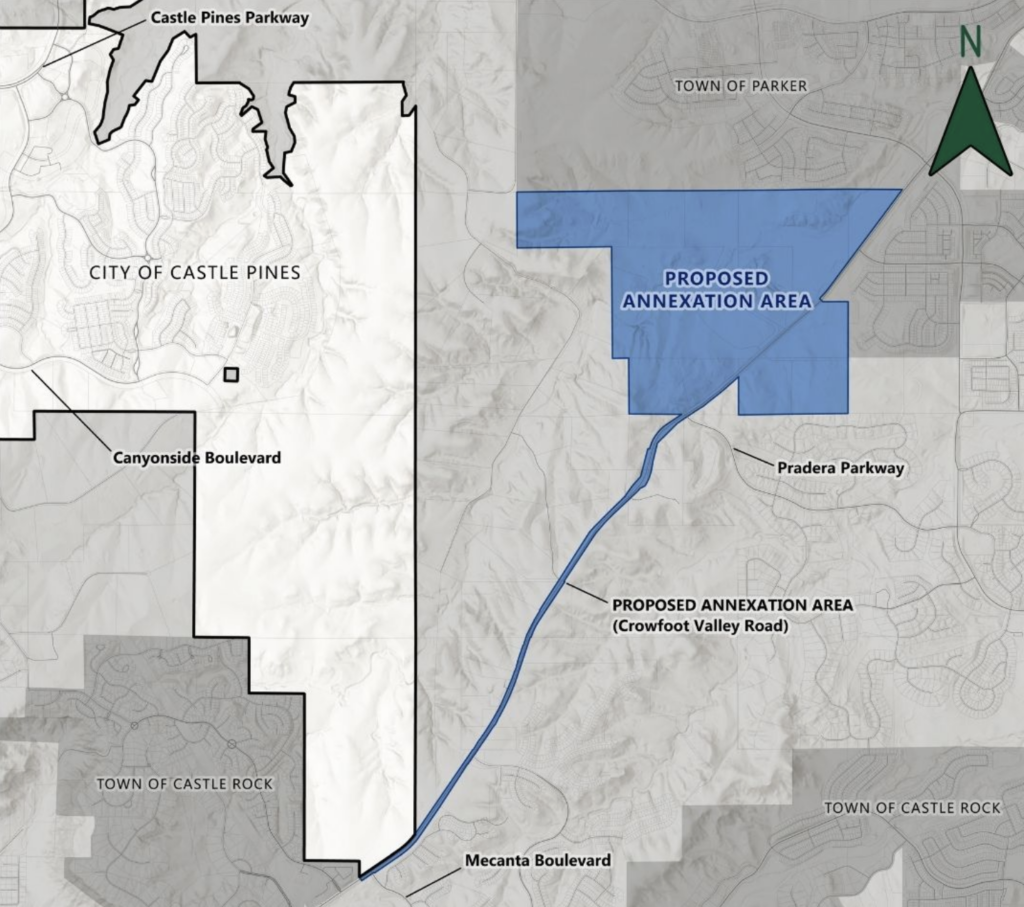
Castle Pines to hear annexation policy following moratorium on new requests
Nicholas Fogleman
nicholas.fogleman@denvergazette.com
Updated 2 days ago
The Castle Pines City Council is set to consider a proposed annexation policy Tuesday that would establish the city’s first formal framework for reviewing future annexation requests. The policy emerged after the Crowsnest annexation proposal prompted significant public debate and...
Aurora lawmakers to discuss first of new data center regulations
Kyla Pearce
kyla.pearce@gazette.com
Updated 2 days ago
Aurora’s lawmakers will discuss the specifics of data center regulations Monday night, specifically focusing on an evaporative cooling ban and zoning changes. At the last council meeting, council members approved a resolution directing city management to update data center development...
PREV
PREVIOUS

US set for largest mass visa revocation in history targeting up to 200,000 foreigners, officials say
WASHINGTON (AP) — The Trump administration is preparing to revoke the business and tourism visas of up to 200,000 foreigners who have applied for or are currently seeking asylum status in the United States. If it happens, the move would be the largest single mass revocation of visas in U.S. history and would likely face […]

Federal judge hears arguments about Colorado's 3-day gun purchase waiting period
A federal judge heard arguments on Monday about the constitutionality of a 2023 Colorado law that generally imposes a three-day waiting period on firearm purchases after the initiation of a background check. The test that the U.S. Supreme Court created in 2022 for assessing firearm regulations’ compliance with the Second Amendment occurs in two phases. […]