

Castle Pines to hear annexation policy following moratorium on new requests
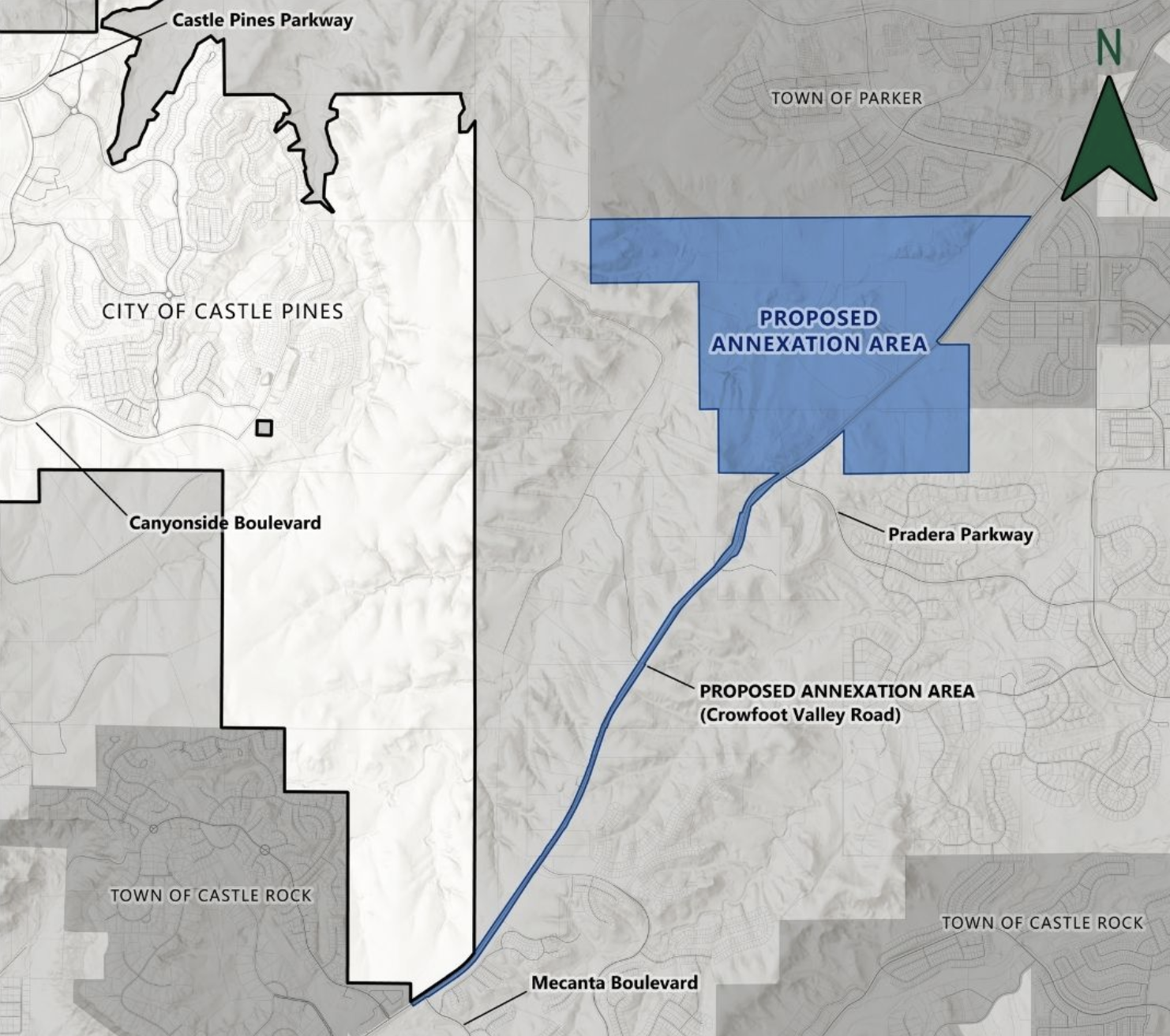
The Castle Pines City Council is set to consider a proposed annexation policy Tuesday that would establish the city’s first formal framework for reviewing future annexation requests.
The policy emerged after the Crowsnest annexation proposal prompted significant public debate and led council to pause annexation requests until formal standards could be developed.
The proposal would not annex any land. Instead, it would create standards for evaluating future requests, replacing a process that historically relied on case-by-case decisions.
The policy calls for a cautious approach to growth and would require applicants to demonstrate clear public benefits, according to city documents. Annexations would be evaluated on factors including preservation of community character and open space, fiscal sustainability and consistency with the city’s long-term plans.
Preference would be given to proposals that are contiguous with city limits and are not solely residential.
A key provision would require an applicant-funded 20-year fiscal impact analysis. Projects showing negative long-term financial impacts would not be approved.
The policy would also require annexation proposals to preserve at least 30% of a site’s gross area as open space unless unique circumstances justify a different amount. Applicants would need to demonstrate adequate capacity for water, transportation, police, fire protection, schools, parks and other public services.
Public engagement requirements would include neighborhood meetings before applications are submitted, additional meetings during the review process, a project website and summaries of public feedback.
The proposal was shaped through surveys, open houses, online comments and council study sessions. A city survey conducted between May and June collected 614 responses and found residents generally favor a slow approach to growth.
During the Aug. 11 hearing, speakers generally supported the policy while suggesting refinements. Chamber of Commerce Executive Director Whitney Shank said the framework would provide clear expectations for applicants and help protect the city’s character. Another resident supported the proposal and suggested strengthening outreach requirements by requiring neighborhood meetings before an application is filed.
As the annexation policy moves toward a final decision, a separate citizen-led ballot measure is moving toward the November election. Organizers announced in August that the petition qualified for the ballot.
The initiative would require voter approval for annexations larger than 20 acres in addition to council approval. The council will vote on a resolution officially opposing the measure at their next meeting, arguing the proposed annexation policy already provides stringent review standards.

Polis officially requests federal disaster declaration for Colorado wildfires and floods
9News
9news@coloradopolitics.com
Updated 2 hours ago
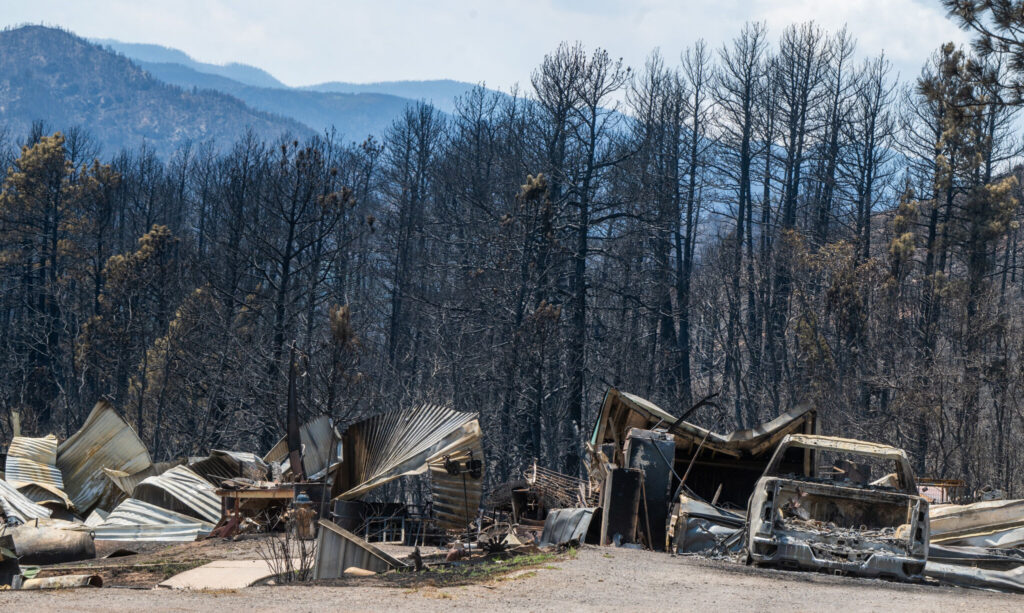
Gov. Jared Polis has requested a Major Disaster Declaration to aid recovery from the Aspen Acres and Gold Mountain fires and subsequent flooding in the burn scars. COLORADO, USA — On Sunday, Gov. Jared Polis officially requested a Major Disaster Declaration from...

Aurora lawmakers to discuss first of new data center regulations
Kyla Pearce
kyla.pearce@gazette.com
Updated 38 minutes ago
Aurora’s lawmakers will discuss the specifics of data center regulations Monday night, specifically focusing on an evaporative cooling ban and zoning changes. At the last council meeting, council members approved a resolution directing city management to update data center development...

Why local police departments are left to grapple with electric vehicle trends
Nicholas Fogleman
nicholas.fogleman@denvergazette.com
Updated 46 minutes ago
Littleton officials are weighing new regulations for electric bicycles as cities and counties across the metro Denver area increasingly grapple with safety concerns involving e-bikes, electric motorcycles and other motorized vehicles that often fall into gray areas of Colorado law....
Democratic candidate in Colorado’s 4th CD urges long-term water planning
Marianne Goodland
marianne.goodland@coloradopolitics.com
Updated 1 day ago
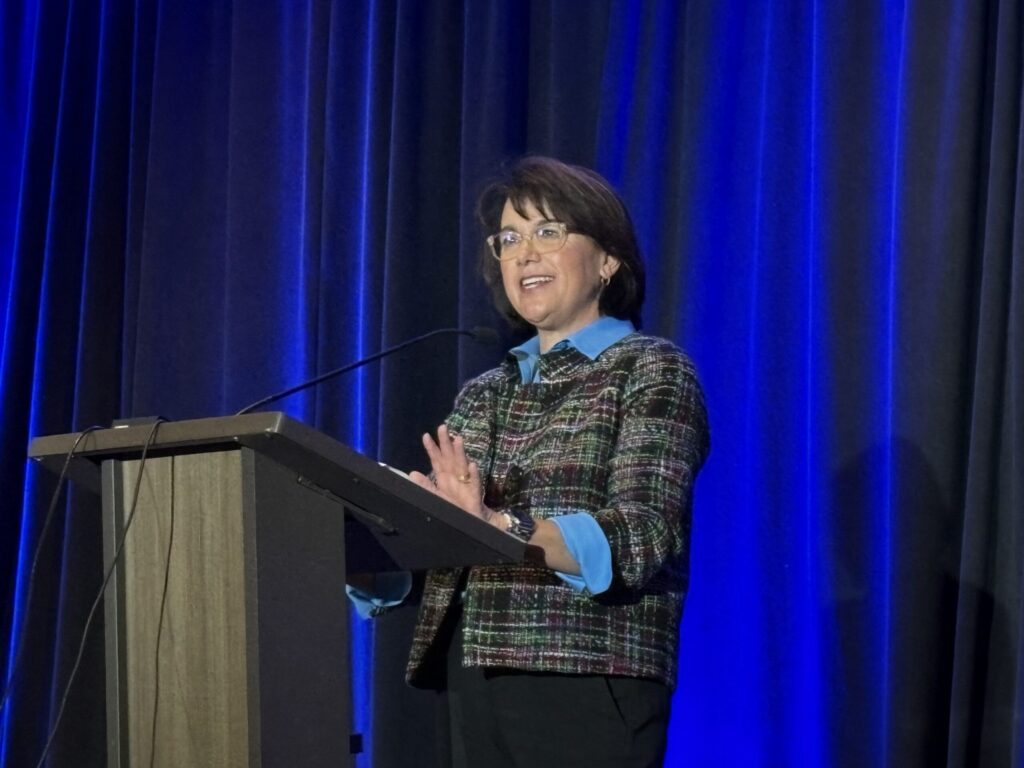
The Democrat hoping to become the next representative of Colorado’s 4th Congressional District on Thursday made her case on the final day of Colorado Water Congress in Steamboat Springs. Eileen Laubacher, who spent 34 years in the U.S. Navy and...

Castle Rock council declines to censure member accused of misconduct
Nicholas Fogleman
nicholas.fogleman@denvergazette.com
Updated 3 days ago
A Castle Rock Town Council meeting Tuesday became consumed by allegations that a councilmember attempted to trade a town policy decision for the withdrawal of a recall effort against him. The allegations against Councilmember Mark Davis surfaced during public comment...

Judge grants partial injunction to GEO in fight against state health inspection law
Kyla Pearce
kyla.pearce@gazette.com
Updated 4 days ago
A judge ruled Thursday that The GEO Group does not have to follow parts of a new state law requiring more frequent health and safety inspections at the U.S. Immigration and Customs Enforcement processing center in Aurora. Under the order...
State Patrol reports 316 commercial vehicle distracted crashes in 2025
Scott Weiser
scott.weiser@gazette.com
Updated 31 minutes ago
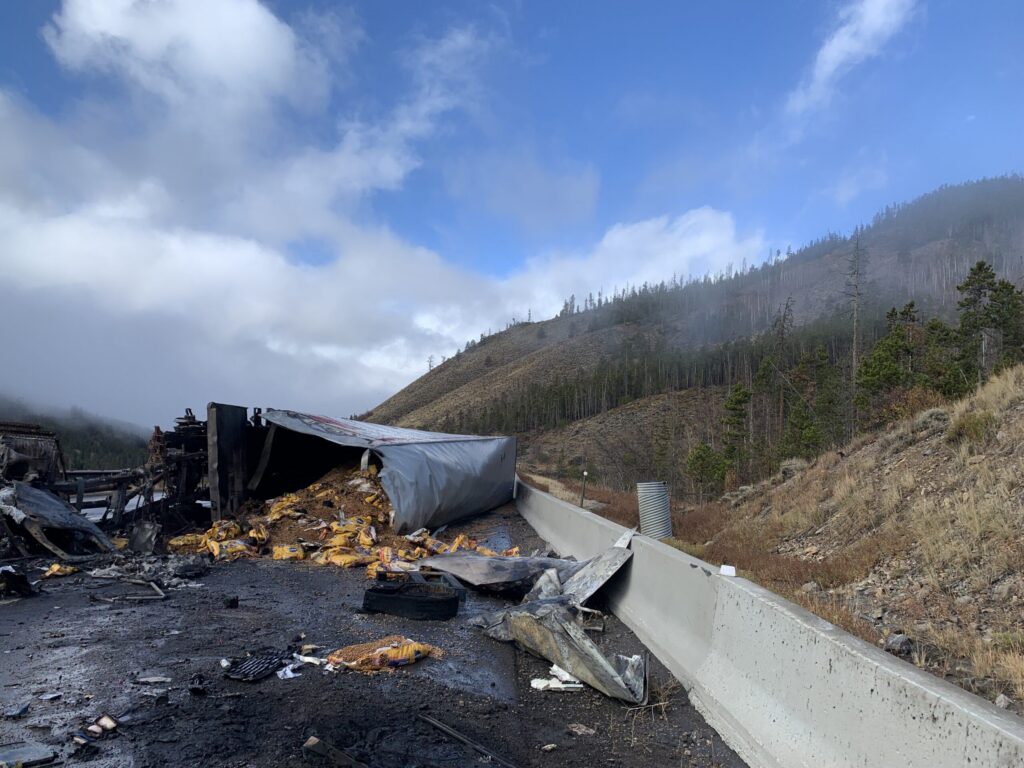
Colorado State Patrol troopers investigated 316 commercial motor vehicle crashes involving distracted driving in 2025, the agency said Thursday. CSP said that crashes involving commercial motor vehicles, whether the truck is at fault or not, often produce devastating high-fatality and...

Democratic gubernatorial candidate Phil Weiser promises to appoint rural outreach director, water adviser
Marianne Goodland
marianne.goodland@coloradopolitics.com
Updated 3 days ago
Democratic gubernatorial candidate and current Attorney General Phil Weiser told the Colorado Water Congress Thursday he intends to appoint a rural outreach director and a water policy adviser should he win the election in November. Weiser’s speech at the Steamboat...

Attorney general candidates present priorities at Colorado Water Congress
Marianne Goodland
marianne.goodland@coloradopolitics.com
Updated 3 days ago
The two major-party candidates for attorney general — Republican Michael Allen, the district attorney for Teller and El Paso counties, and Democratic Secretary of State Jena Griswold — on Thursday outlined their priorities at the Colorado Water Congress. Griswold attended...
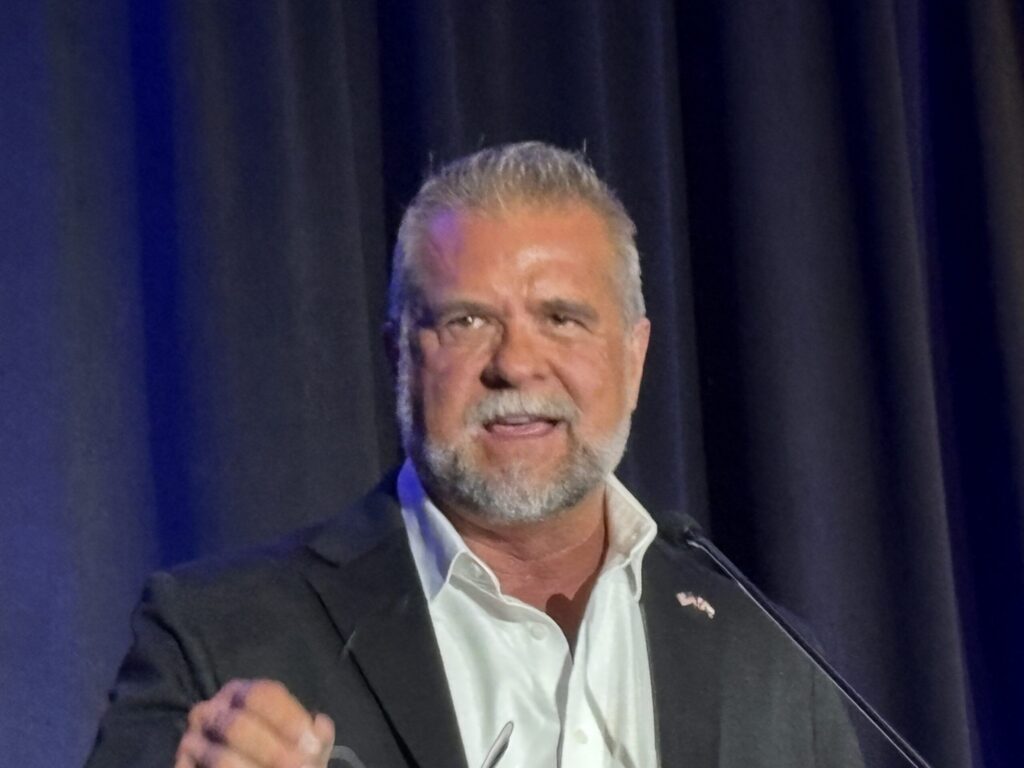
GOP gubernatorial candidate Victor Marx pushes aggressive water-storage expansion at Colorado Water Congress
Marianne Goodland
marianne.goodland@coloradopolitics.com
Updated 4 days ago
Victor Marx, the Republican nominee for governor, took the spotlight Wednesday during the opening day of the Colorado Water Congress, laying out how he says the state should approach its water future. Marx told the standing-room-only audience in Steamboat Springs...
PREV
PREVIOUS

Aurora lawmakers to discuss first of new data center regulations
Aurora’s lawmakers will discuss the specifics of data center regulations Monday night, specifically focusing on an evaporative cooling ban and zoning changes. At the last council meeting, council members approved a resolution directing city management to update data center development standards in Aurora. Now, some of those standards are coming to the council for initial […]

Operation Foster helps ensure troops can return home to their pets
As more troops have been sent overseas, more pets are in need of temporary care while they await their owner’s return home. Operation Foster, a nationwide nonprofit, helps provide some of that care by connecting service members with volunteers willing to foster dogs, cats and other pets. “We’ve definitely seen a drastic increase in requests […]