

Why local police departments are left to grapple with electric vehicle trends

Littleton officials are weighing new regulations for electric bicycles as cities and counties across the metro Denver area increasingly grapple with safety concerns involving e-bikes, electric motorcycles and other motorized vehicles that often fall into gray areas of Colorado law.
The proposal comes as a growing number of communities, including Centennial, Aurora and Douglas County, have adopted local ordinances aimed at addressing what officials describe as “gaps” and “loopholes” in state law that have failed to keep pace with the growing trend.
Under Colorado law, e-bikes are divided into three classes based on speed and function. All legally recognized e-bikes must have operational pedals and are subject to specific rules governing where they can be ridden, applicable age restrictions and safety requirements.
Local governments retain authority to adopt additional traffic regulations.
However, officials across the metro area say the vehicles generating the most complaints and safety concerns are often not traditional e-bikes at all.
When Centennial adopted stricter regulations this week, town officials emphasized that many problematic vehicles are legally classified under other categories, including off-highway vehicles and low-powered scooters, rather than e-bikes.
“It’s not necessarily the Class 1, 2 or 3 bikes that are the issue,” Centennial Assistant City Manager Eric Eddy told the council when presenting the ordinance. “It is the things that are not included in the state’s three-category system or regulated in other ways.”
Off-highway vehicles include vehicles such as all-terrain vehicles, dirt bikes and dune buggies, although officials note today’s concerns increasingly revolve around electric versions of those vehicles.
Douglas County officials said those gaps became evident during a recent traffic case involving a teenager operating an off-road vehicle.
“We had a specific incident where a young teen on one of the off-road vehicles was in an accident here in Douglas County,” Douglas County Sheriff’s Cmdr. Alan Stanton told commissioners in June when discussing their ordinance. “We found out through that charging that there was a loophole where the state law does not recognize an OHV under careless driving.”
According to Stanton, current penalties often do little to deter unsafe behavior.
“Off-highway vehicles are not allowed on the roadway at all, ever. They’re off-road only,” Stanton said. “But if you were on the roadway, it is a $50 fine only. That doesn’t change behavior.”
Officials throughout the region have stated that Colorado’s statutory framework has struggled to keep up with a rapidly expanding marketplace where increasingly powerful electric vehicles can be purchased online and operated in neighborhoods, on trails and sometimes on public roadways.
“I think the important factor to push out again is that the law right now in the Colorado state law does not adequately cover the changes in society,” Stanton told commissioners in June. “It is very easy for anyone to pick up items off Amazon and other places and the regulations just have not kept up with the items that are on the roadway.”
In response, local governments have increasingly adopted ordinances intended to supplement state law. These ordinances often feature larger penalties and allow police to hold parents culpable.
Aurora enacted regulations last year that prohibit dirt bikes and off-highway vehicles throughout the city, including on public property, trails, sidewalks, roadways and parks. The ordinance also allows fines against parents or guardians who knowingly permit minors to operate those vehicles in violation of city rules.
Douglas County adopted similar provisions this year, establishing penalties for careless and reckless driving involving those vehicles. Under county regulations, parents or guardians who allow minors to unlawfully operate low-powered scooters or off-highway vehicles can face fines ranging from $250 to $1,000.
Littleton’s proposal is more narrowly focused on e-bikes, but, according to city documents, the proposal similarly attempts to address gaps in state law.
If approved, the ordinance would create a new section of city traffic regulations specifically governing electrically assisted bicycles.
Among the most significant changes is a requirement that all e-bike operators, riders and passengers under age 18 wear a helmet meeting certain standards. Helmets would be required to be properly fastened whenever the bicycle is in motion.
Current Colorado law only requires helmets for riders younger than 18 operating Class 3 e-bikes, which can provide pedal assistance up to 28 mph. No statewide helmet requirement currently exists for Class 1 or Class 2 e-bikes, according to Littleton documents.
In addition, parents or legal guardians could be cited if they knowingly allow a minor under 18 to operate an e-bike on public property in violation of city regulations.
The Littleton City Council is expected to review the proposal during next week’s study session. Any ordinance would still require formal introduction, a public hearing and final council approval before taking effect.


Colorado to get $615M from Meta child safety settlement
Thelma Grimes
thelma.grimes@coloradopolitics.com
Updated 20 minutes ago
The parent company of Facebook and Instagram will pay hundreds of millions of dollars to Colorado, part of an $18 billion multistate deal, in which the company also agreed to adopt extensive child-safety changes to its operations. The settlement ended...

Counties warn CPW that new comment limits sideline local governments
Marianne Goodland
marianne.goodland@coloradopolitics.com
Updated 56 minutes ago
The September meeting of the Colorado Parks and Wildlife Commission will feature newly revised public‑comment rules — changes introduced by chair Jay Tutchton of Bent County, who announced them without first discussing the revisions publicly with the rest of the...

Controversial two-bag furbearer limit heads to CPW meeting under legal threat
Marianne Goodland
marianne.goodland@coloradopolitics.com
Updated 58 minutes ago
Next week’s Colorado Parks and Wildlife Commission meeting in La Junta is likely to open under the cloud of threatened legal action. Safari Club International and the Sportsmen’s Alliance Foundation warned the commission this month that its July vote imposing...

Golden to pay $155,000 to fired city manager
Matt Kyle
matt.kyle@denvergazette.com
Updated 3 hours ago
The Golden City Council on Tuesday approved a roughly $155,000 severance payout to former city manager Scott Vargo, who was fired earlier this month following a “racist incident” at a city fire station. The payout is part of a separation...

Aurora councilmembers apologize after passing police, firefighter raises on anniversary of McClain killing
Kyla Pearce
kyla.pearce@gazette.com
Updated 4 hours ago
Several Aurora City Councilmembers apologized to the public at the end of Monday night’s meeting after approving pay raises for police and firefighters on the anniversary of Elijah McClain’s death. McClain, 23, was killed in 2019 while walking home from...
Colorado lawmaker, House leaders named in workplace-retaliation lawsuit
Marianne Goodland
marianne.goodland@coloradopolitics.com
Updated 1 day ago
A former legislative aide has filed a lawsuit alleging she was mistreated, illegally directed to perform campaign work and harmed by a House leadership structure she charged was fragmented, politicized and ineffective at protecting employees. The lawsuit, filed by Jennifer...
Denver auditor finds oversight failures in $175.6M 16th Street project
Nico Brambila
nico.brambila@denvergazette.com
Updated 1 day ago
Surprise historic sewer discovery delayed completion a year, cost $18M The Denver Auditor recently found significant oversight and contracting problems with the $175.6 million 16th Street Improvement Project, including an $18 million contract increase and a nearly one-year extension that...
Nevada sues Trump administration over Colorado River cuts
Marianne Goodland
marianne.goodland@coloradopolitics.com
Updated 2 days ago
On Monday, the state of Nevada filed a lawsuit against the Trump administration and Interior Secretary Doug Burgum, seeking to block the Colorado River management plan. On Friday, Burgum released a “record of decision” that would reduce water allocations to...
Polis requests federal disaster declaration for Colorado wildfires and floods
9News
9news@coloradopolitics.com
Updated 2 days ago
On Sunday, Gov. Jared Polis officially requested a Major Disaster Declaration from President Donald Trump and the Federal Emergency Management Agency to support recovery from two wildfires and the subsequent flooding and debris flows on both burn scars. Polis requested a declaration...
Castle Pines to hear annexation policy following moratorium on new requests
Nicholas Fogleman
nicholas.fogleman@denvergazette.com
Updated 2 days ago
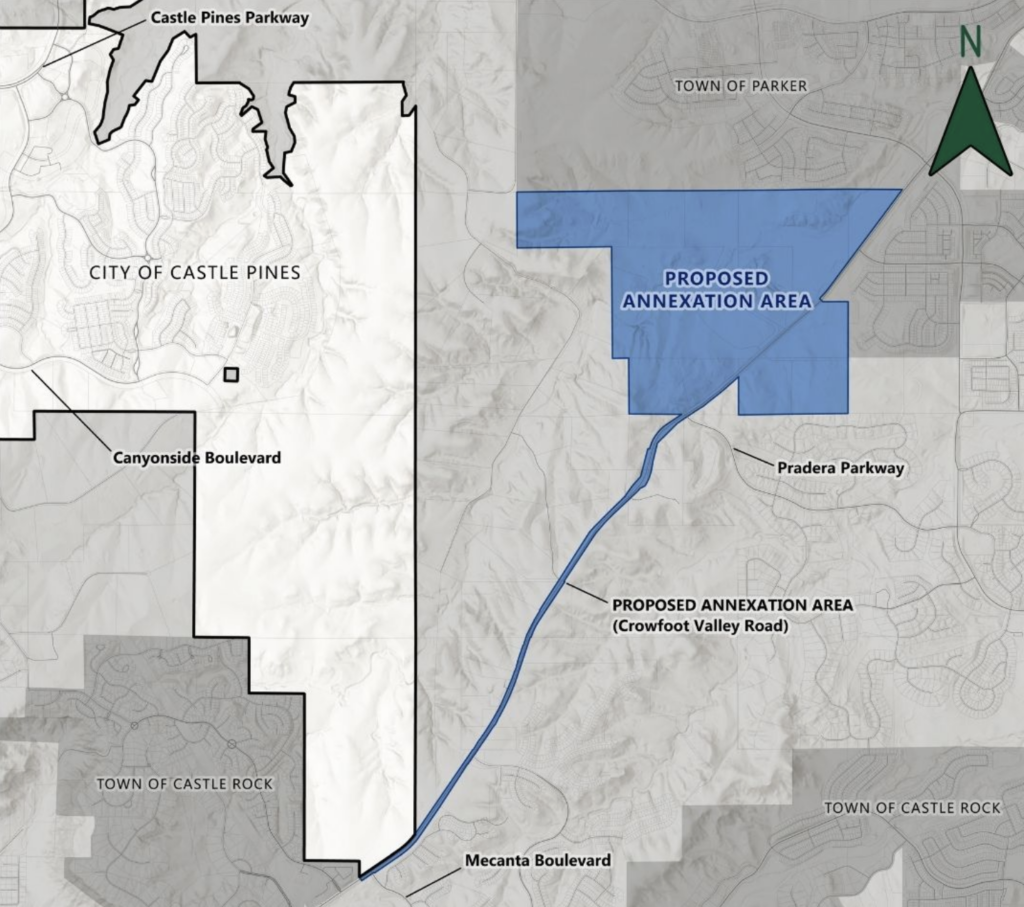
The Castle Pines City Council is set to consider a proposed annexation policy Tuesday that would establish the city’s first formal framework for reviewing future annexation requests. The policy emerged after the Crowsnest annexation proposal prompted significant public debate and...
PREV
PREVIOUS

Colorado schools reopen with measles vaccination rates below protective threshold
Colorado is entering the new school year without active measles transmission, but health officials remain concerned as kindergarten MMR coverage sits at just 87.8% and most counties fall below the 95% threshold considered protective against outbreaks. “These declining vaccination rates, both nationally and here in Colorado, directly increase the risk of outbreaks of measles and […]

Schoolchildren’s presence at child sex-related trial did not harm Arapahoe County defendant, appeals court says
Colorado’s second-highest court decided on Thursday that the presence of a group of schoolchildren on the first day of a child sexual exploitation trial did not violate an Arapahoe County defendant’s constitutional right to a fair trial. Prosecutors charged Jerry Lee Stinnett with two counts related to the possession of sexually abusive material involving children. […]