

Schoolchildren’s presence at child sex-related trial did not harm Arapahoe County defendant, appeals court says
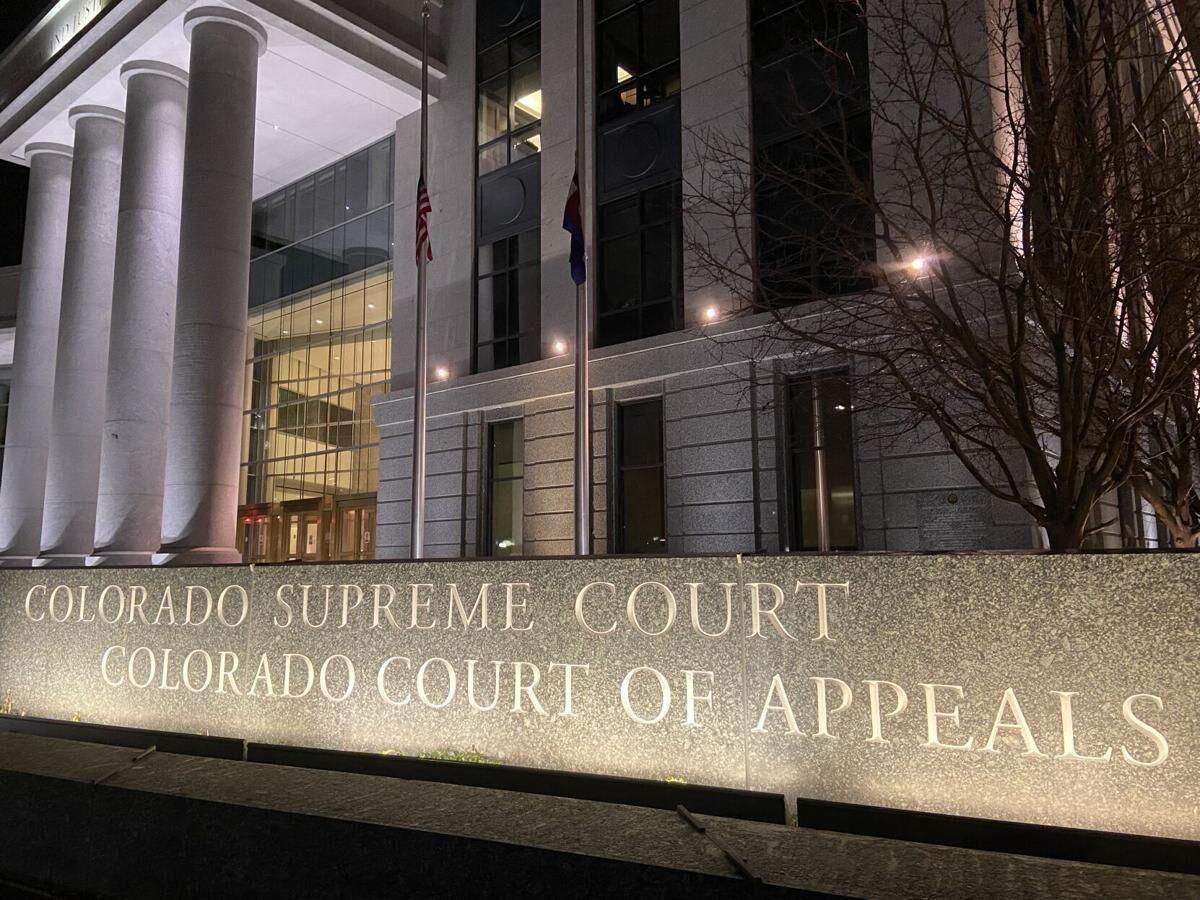
Colorado’s second-highest court decided on Thursday that the presence of a group of schoolchildren on the first day of a child sexual exploitation trial did not violate an Arapahoe County defendant’s constitutional right to a fair trial.
Prosecutors charged Jerry Lee Stinnett with two counts related to the possession of sexually abusive material involving children. Before jury selection began, Stinnett’s attorney called attention to the “large contingency of school-aged children” in the gallery, numbering around a dozen.
While the attorney acknowledged that the courtroom was public, “this case involves an allegation that impacts and affects children.” He wondered whether the presence of children “was happenstance or whether this was contrived. Whether the teacher or the school was given notice. Whether this is a theatrical endeavor on the part of the prosecution.”
He concluded by arguing that, given the nature of the case, the presence of children “will impact and affect the jurors.”
The defense cited a 2014 decision from a Florida appellate court, which reversed a defendant’s molestation convictions based on the presence of “burly” men wearing “Bikers Against Child Abuse” jackets in the audience. The appeals court’s majority concluded the bikers improperly “sought to send an implied message to the jury that (the defendant) should be found guilty.”
The prosecutor denied knowing in advance about the field trip, adding that he had spoken to the teacher, who was comfortable given the subject matter of the case.
District Court Judge Joseph R. Whitfield Jr. said he knew about the school group, and noted that the children would not be in the courtroom “for much longer than the morning and probably part of the afternoon. So, they won’t be hearing much about your evidence.”
He declined to eject the children from the courtroom, finding their presence did not harm Stinnett.
In comparison to the Florida case, “these children are all wearing their own individual clothes. They didn’t come here as a band or a team wearing clothing that speaks to the rights of young people or children or certainly nothing along the lines of topics that we have in this case,” Whitfield said.
Case: People v. Stinnett
Decided: August 20, 2026
Jurisdiction: Arapahoe County
Ruling: 3-0
Judges: Alex J. Martinez (author)
Ted C. Tow III
Lino S. Lipinsky de Orlov
Following his conviction, Stinnett argued that the children’s presence during jury selection potentially influenced jurors.
“The jury was essentially seated next to the types of victims alleged in the charged conduct,” wrote attorney Elizabeth A. McClintock.
The Colorado Attorney General’s Office pointed to the U.S. Supreme Court’s instruction in a 1986 case that judges, when looking at courtroom circumstances, must determine whether the scenario “was so inherently prejudicial as to pose an unacceptable threat to defendant’s right to a fair trial.”
The children’s “quiet presence alone was not so inherently prejudicial that it could not be overcome through jury instructions to consider only the evidence presented and to afford Stinnett the presumption of innocence,” wrote Senior Assistant Attorney General Brittany Limes Zehner.
A three-judge Court of Appeals panel disagreed with Stinnett in an Aug. 20 opinion, noting he “does not have a constitutional right to close his trial from the public.”
“We are not convinced that Stinnett was inherently prejudiced by the trial court’s decision to allow the children to remain in the courtroom,” wrote retired Supreme Court Justice Alex J. Martinez, who sat on the panel as a semi-retired senior judge. “The presence of children in the courtroom did not necessarily imply that Stinnett should be found guilty of the charges against him. Rather, different people could draw different inferences, or none at all, from the presence of schoolchildren. It is not clear why any of the possible inferences would speak to Stinnett’s guilt or innocence or otherwise interfere with his right to a fair trial.”
The case is People v. Stinnett.

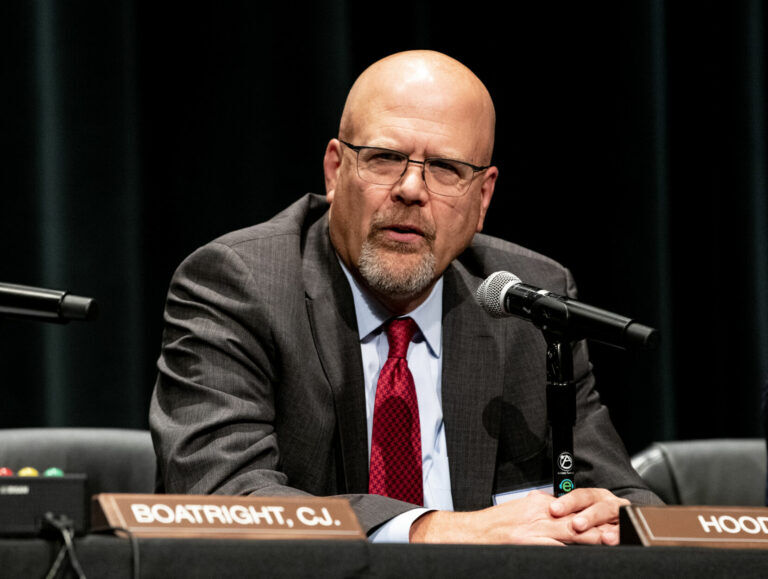
Colorado Supreme Court names William Hood as next chief justice
Michael Karlik
michael.karlik@coloradopolitics.com
Updated 1 hour ago
The Colorado Supreme Court has selected Justice William W. Hood III to be the next chief justice, the judicial branch announced on Friday. Hood will succeed Chief Justice Monica M. Márquez, who took over the role in July 2024. “I...

Appeals court upholds Park County trophy hunting conviction
Michael Karlik
michael.karlik@coloradopolitics.com
Updated 4 hours ago
Colorado’s second-highest court clarified on Thursday that a defendant may stand convicted under the state’s trophy hunting laws if he abandons a bear carcass but returns later to remove the meat. Under Colorado law, it is a felony to detach...

Judge grants partial injunction to GEO in fight against state health inspection law
Kyla Pearce
kyla.pearce@gazette.com
Updated 19 hours ago
A judge ruled Thursday that The GEO Group does not have to follow parts of a new state law requiring more frequent health and safety inspections at the U.S. Immigration and Customs Enforcement processing center in Aurora. Under the order...

Parker man faces 20 years to life for serial sexual assaults
Nicholas Fogleman
nicholas.fogleman@denvergazette.com
Updated 21 hours ago
A 25-year-old Parker man who sexually assaulted three women in 2025 pleaded guilty Wednesday and will serve 20 years to life in prison. Javier Rodriguez-Andrade pleaded guilty to charges stemming from three sexual assaults involving women ages 19 to 24. ...
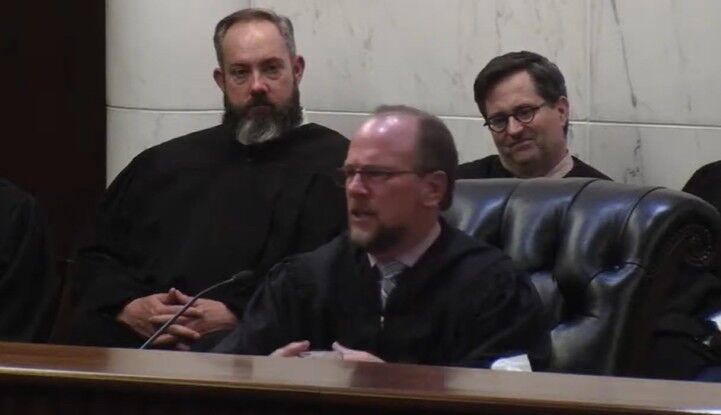
Divided appeals court upholds warrantless DNA collection in Colorado cold case, cautions of government overreach
Michael Karlik
michael.karlik@coloradopolitics.com
Updated 20 hours ago
Colorado’s second-highest court upheld the warrantless collection of a suspect’s DNA from a discarded soda can as constitutional on Thursday, while warning about potential abuse of DNA privacy in the absence of further guardrails. By 2-1, a three-judge Court of...
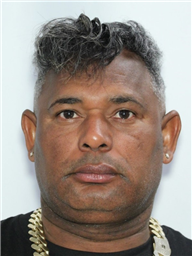
Man charged in Northglenn homicide of wife
Matt Kyle
matt.kyle@denvergazette.com
Updated 21 hours ago
A man has been formally charged with murder and burglary relating to a homicide last week in Northglenn. Alexei Munive-Rodriguez, 48, was arrested Sunday after he was at large following the homicide, which occurred Friday. Police were dispatched around 10:30...
10th Circuit grants immunity to officers for fatal Manitou Springs shooting
Michael Karlik
michael.karlik@coloradopolitics.com
Updated 4 hours ago
The Denver-based federal appeals court ruled on Wednesday that responding officers from Manitou Springs and El Paso County cannot be held constitutionally liable for shooting and killing a man after a 20-minute standoff. Wilford Deweese allegedly pulled out a gun...
10th Circuit rejects invitation for full-court review of tax-avoidance case
Michael Karlik
michael.karlik@coloradopolitics.com
Updated 2 days ago
The Denver-based federal appeals court declined to reconsider the standards for holding entities liable for their tax-avoidance schemes, with a majority of judges voting against full-court review on Monday. In April, a three-judge panel of the U.S. Court of Appeals...
Colorado judge blasts state forensics lab in dismissing child sex case
Jenny Deam
jenny.deam@gazette.com
Updated 2 days ago
In a potentially widely consequential action, a Weld County district judge dismissed a child sexual assault case, citing the ongoing scandal at the Colorado Bureau of Investigation’s forensic lab that “has left a dark mark on the history of Colorado...
10th Circuit sympathetic to Colorado consumer protection law governing interest rates
Michael Karlik
michael.karlik@coloradopolitics.com
Updated 3 days ago
Members of the Denver-based federal appeals court appeared sympathetic on Tuesday to Colorado’s assertion that it can lawfully require certain out-of-state banks to abide by the state’s own ceilings on interest rates when they lend to consumers in Colorado. The...
PREV
PREVIOUS

Colorado Supreme Court names William Hood as next chief justice
The Colorado Supreme Court has selected Justice William W. Hood III to be the next chief justice, the judicial branch announced on Friday. Hood will succeed Chief Justice Monica M. Márquez, who took over the role in July 2024. “I am honored by the confidence my colleagues have placed in me. Our judicial branch is […]

Proposal to cap Colorado income tax rate qualifies for November ballot
Election officials on Thursday confirmed that the proposal to cap the state’s income tax at the current rate submitted signatures and voters will consequently decide its fate this November. The fight over tax rates is part of the tug and pull in Colorado between opposing political forces feuding over state revenue. One side of that […]