

10th Circuit rejects invitation for full-court review of tax-avoidance case
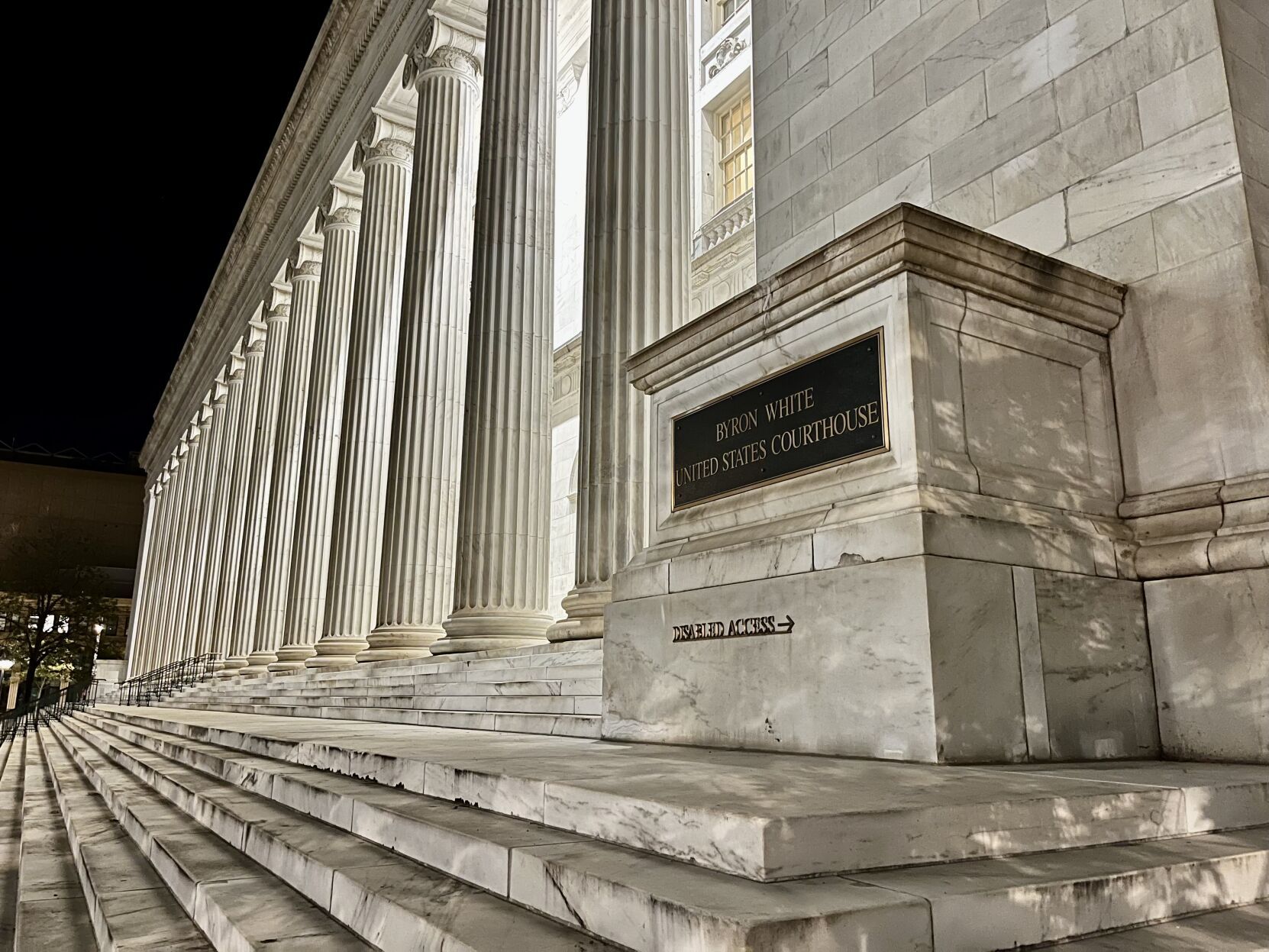
The Denver-based federal appeals court declined to reconsider the standards for holding entities liable for their tax-avoidance schemes, with a majority of judges voting against full-court review on Monday.
In April, a three-judge panel of the U.S. Court of Appeals for the 10th Circuit upheld a trial judge’s finding that Liberty Global, Inc. was not entitled to a nearly $110 million tax refund it sought through a multistep transaction to exploit a legal loophole. By 2-1, the panel determined that LGI’s actions fell under the longstanding doctrine that prevents entities from technically complying with tax provisions to obtain a benefit not intended by Congress.
LGI sought “en banc” review by the entire 10th Circuit, a rarely used procedure that allows the full court to review panel opinions and potentially overturn the court’s past precedents.
In an Aug. 17 order, the court announced that only three of the 12 full-time judges wished to hear the case en banc, meaning LGI’s request had failed. All three interested judges are Republican appointees: Harris L Hartz, Timothy M. Tymkovich, and Allison H. Eid.
Eid, who sat on the original panel and dissented, also wrote a brief dissent reiterating her disagreement with the panel’s majority.
Case: Liberty Global, Inc. v. United States en banc poll
Date: August 17, 2026
Jurisdiction: U.S. District Court for Colorado
Vote to deny rehearing: 9-3
Judges voting to deny: Jerome A. Holmes (G.W. Bush)
Scott M. Matheson Jr. (Obama)
Robert E. Bacharach (Obama)
Gregory A. Phillips (Obama)
Carolyn B. McHugh (Obama)
Nancy L. Moritz (Obama)
Joel M. Carson III (Trump)
Veronica S. Rossman (Biden)
Richard E.N. Federico (Biden)
Judges voting to grant: Harris L Hartz (G.W. Bush)
Timothy M. Tymkovich (G.W. Bush)
Allison H. Eid (Trump)
The case revolved around the “economic substance doctrine,” and when taxpaying entities are forbidden from taking advantage of favorable provisions even if they technically comply with the law.
In 1935, the U.S. Supreme Court disallowed a tax benefit following a corporate reorganization because it amounted to “an elaborate and devious form of conveyance masquerading as a corporate reorganization, and nothing else.” Courts subsequently applied the technique of examining the substance of transactions, rather than their technical compliance, to determine their validity for tax purposes.
Congress then formally enshrined the economic substance doctrine in 2010, applying to transactions that change the taxpaying entity’s economic position “in a meaningful way” and where the entity has a “substantial purpose” for the transaction beyond its federal tax implications.
Following the Tax Cuts and Jobs Act of 2017, Denver-based LGI relied on consulting company Deloitte to structure a four-step transaction named “Project Soy” that would take advantage of a loophole in the law and allow LGI to avoid paying taxes on billions of dollars in artificial earnings.
After LGI sought a federal tax refund and the Internal Revenue Service notified LGI of penalties for failing to pay its full tax amount, LGI sued for the refund.
U.S. District Court Senior Judge R. Brooke Jackson sided with the government and rejected LGI’s argument that the economic substance doctrine did not apply.
There is no economic substance under the 2010 law “when a taxpayer intentionally enters a transaction that serves no purpose other than tax evasion with the sole purpose of evading taxes,” he wrote in October 2023. “LGI has not created a genuine issue as to whether the entire multi-step transaction took place for any substantial reason other than tax evasion. The direct and circumstantial evidence establish only the tax-avoidant purpose for the scheme.”
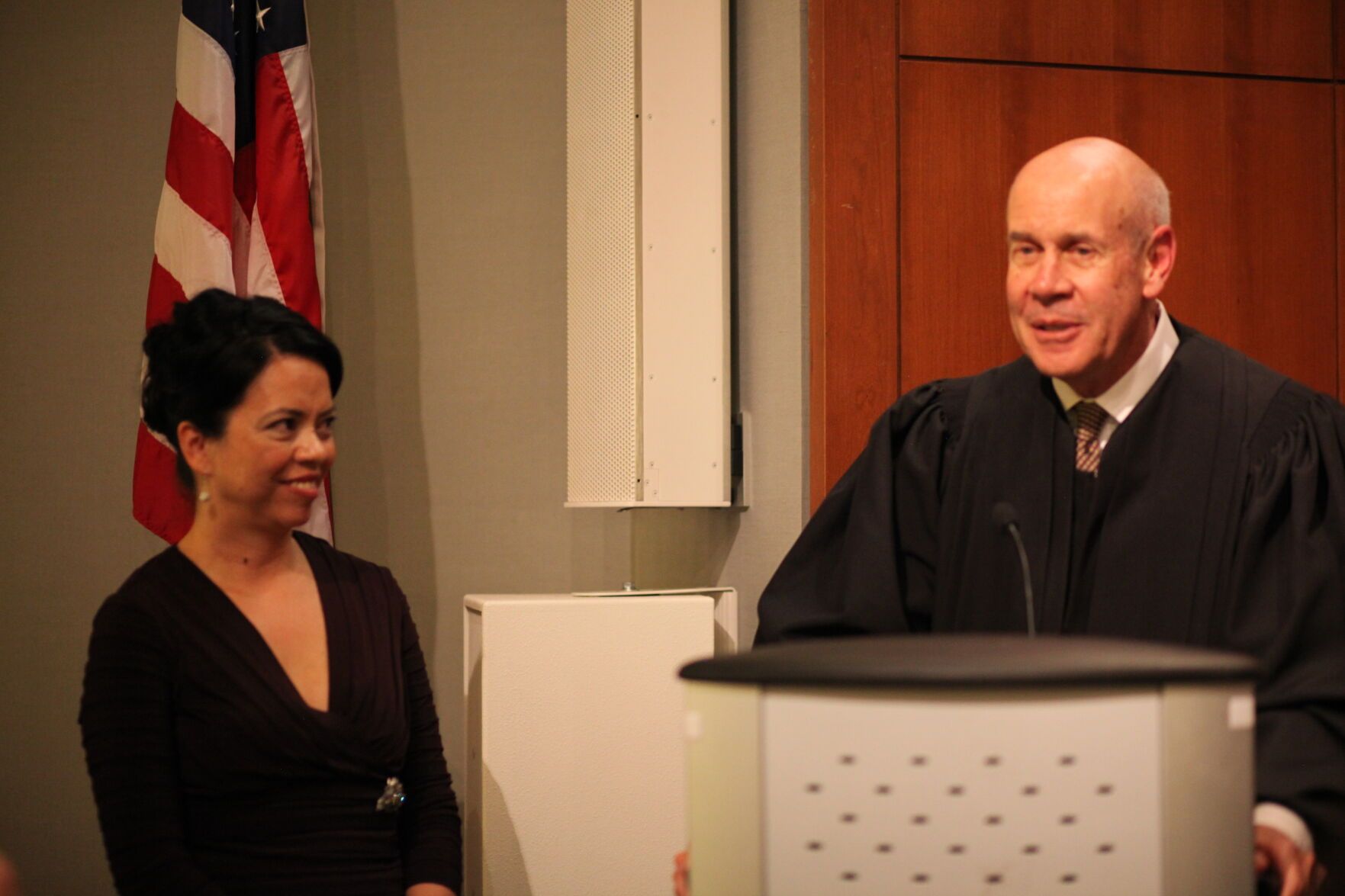
Jackson added that there was no independent obligation to determine at the outset if the doctrine was “relevant,” as Congress already outlined the circumstances that trigger it.
A 10th Circuit panel upheld Jackson’s decision. Senior Judge Michael R. Murphy, a Bill Clinton appointee, reiterated that the economic substance doctrine was relevant to Project Soy based on Congress’ instructions.
“For decades, transactions that ‘comply with the literal terms of the tax code’ have been disregarded for tax purposes under federal common law if they have no economic substance but are, instead, mere tax-avoidance schemes,” Murphy wrote for himself and Judge Nancy L. Moritz, a Barack Obama appointee. “Thus, this court is bound to reject LGI’s assertion that the codified economic substance doctrine is irrelevant to transactions that mechanically comply with the Tax Code.”
Eid, a first-term appointee of President Donald Trump, believed there was an obligation to determine whether the economic substance doctrine was relevant to LGI at the outset. She argued that Congress never intended to make transactions subject to the principle if they benefit the taxpaying entity in a way Congress envisioned.
“The Tax Code is replete with provisions that permit or even encourage taxpayers to engage in, or select the form of, a transaction for no reason other than its tax consequences,” Eid wrote. “In enacting these provisions, Congress has made a deliberate legislative choice to provide predictability and certainty in the taxation of routine transactions and to incentivize certain behavior through the Tax Code. The economic substance doctrine does not alter those legislative choices.”

Because LGI’s multipart plan to create gains for itself based on the timing of the 2017 loophole generated a real benefit for the company, Eid would have determined that the tax-avoidance doctrine did not invalidate LGI’s entitlement to a refund.
LGI leaned heavily on Eid’s dissent in asking the full 10th Circuit to review the case, writing that the IRS “simply doesn’t like how the tax laws apply to Project Soy.” The Chamber of Commerce and other industry groups weighed in on LGI’s behalf, arguing businesses are operating “under the specter of significant tax consequences for large categories of otherwise routine transactions.”
University of Houston Prof. Bret Wells, who is an expert in taxation, countered that Project Soy “is devoid of economic consequence except for its potential to glitch the tax system,” and should not result in tax benefits for LGI.
After the full 10th Circuit turned down LGI’s request for review, Eid reemphasized her desire to narrow the scope of the tax-avoidance doctrine.
“I believe the panel majority’s holding that the economic substance doctrine is relevant when taxpayers attempt ‘to obtain a benefit not intended by Congress’ gives too much deference to courts and the government to provide necessary clarity to taxpayers,” she wrote for herself, Hartz, and Tymkovich.
The case is Liberty Global, Inc. v. United States.

Judge grants partial injunction to GEO in fight against state health inspection law
Kyla Pearce
kyla.pearce@gazette.com
Updated 7 hours ago
A judge ruled Thursday that The GEO Group does not have to follow parts of a new state law requiring more frequent health and safety inspections at the U.S. Immigration and Customs Enforcement processing center in Aurora. Under the order...

Parker man faces 20 years to life for serial sexual assaults
Nicholas Fogleman
nicholas.fogleman@denvergazette.com
Updated 9 hours ago
A 25-year-old Parker man who sexually assaulted three women in 2025 pleaded guilty Wednesday and will serve 20 years to life in prison. Javier Rodriguez-Andrade pleaded guilty to charges stemming from three sexual assaults involving women ages 19 to 24. ...
Divided appeals court upholds warrantless DNA collection in Colorado cold case, cautions of government overreach
Michael Karlik
michael.karlik@coloradopolitics.com
Updated 8 hours ago
Colorado’s second-highest court upheld the warrantless collection of a suspect’s DNA from a discarded soda can as constitutional on Thursday, while warning about potential abuse of DNA privacy in the absence of further guardrails. By 2-1, a three-judge Court of...

Man charged in Northglenn homicide of wife
Matt Kyle
matt.kyle@denvergazette.com
Updated 9 hours ago
A man has been formally charged with murder and burglary relating to a homicide last week in Northglenn. Alexei Munive-Rodriguez, 48, was arrested Sunday after he was at large following the homicide, which occurred Friday. Police were dispatched around 10:30...

10th Circuit grants immunity to officers for fatal Manitou Springs shooting
Michael Karlik
michael.karlik@coloradopolitics.com
Updated 11 hours ago
The Denver-based federal appeals court ruled on Wednesday that responding officers from Manitou Springs and El Paso County cannot be held constitutionally liable for shooting and killing a man after a 20-minute standoff. Wilford Deweese allegedly pulled out a gun...

Colorado judge blasts state forensics lab in dismissing child sex case
Jenny Deam
jenny.deam@gazette.com
Updated 1 day ago
In a potentially widely consequential action, a Weld County district judge dismissed a child sexual assault case, citing the ongoing scandal at the Colorado Bureau of Investigation’s forensic lab that “has left a dark mark on the history of Colorado...
10th Circuit sympathetic to Colorado consumer protection law governing interest rates
Michael Karlik
michael.karlik@coloradopolitics.com
Updated 2 days ago
Members of the Denver-based federal appeals court appeared sympathetic on Tuesday to Colorado’s assertion that it can lawfully require certain out-of-state banks to abide by the state’s own ceilings on interest rates when they lend to consumers in Colorado. The...
Colorado justices to decide insurance companies’ obligation to disclose relevant policies
Michael Karlik
michael.karlik@coloradopolitics.com
Updated 1 day ago
The Colorado Supreme Court announced on Monday that it will decide whether an insurance company violated state law by withholding an at-fault driver’s policy for nearly a year when there was no dispute that the policy was not in effect...

Judicial performance evaluations released, Montezuma County judge disciplined | COURT CRAWL
Michael Karlik
michael.karlik@coloradopolitics.com
Updated 3 days ago
Welcome to Court Crawl, Colorado Politics’ roundup of news from the third branch of government. Colorado’s citizen-led judicial performance commissions released their voter narratives for the judges standing for retention in November, plus a disciplinary panel imposed consequences on a...

DA justifies CSPD officers in fatally shooting man at McDonald’s
Cleo Westin
cleo-westin@coloradopolitics.com
Updated 2 days ago
The deadly shooting of a man by Colorado Springs police officers at a McDonald’s was ruled justified by the 4th Judicial District Attorney’s Office on Monday, the office announced in a news release. The ruling determined officers Daniel White, Mitchell...
PREV
PREVIOUS

GOP gubernatorial candidate Victor Marx pushes aggressive water-storage expansion at Colorado Water Congress
Victor Marx, the Republican nominee for governor, took the spotlight Wednesday during the opening day of the Colorado Water Congress, laying out how he says the state should approach its water future. Marx told the standing-room-only audience in Steamboat Springs that he holds water rights himself, giving him a personal stake in Colorado’s water challenges. […]

10th Circuit grants immunity to officers for fatal Manitou Springs shooting
The Denver-based federal appeals court ruled on Wednesday that responding officers from Manitou Springs and El Paso County cannot be held constitutionally liable for shooting and killing a man after a 20-minute standoff. Wilford Deweese allegedly pulled out a gun in self-defense at a Manitou Springs bar, prompting a call to 911. Officers cornered him […]