Colorado justices to decide insurance companies’ obligation to disclose relevant policies
The Colorado Supreme Court announced on Monday that it will decide whether an insurance company violated state law by withholding an at-fault driver’s policy for nearly a year when there was no dispute that the policy was not in effect at the time of the accident.
At least three of the court’s seven members must agree to hear a case on appeal.
In 2019, Colorado lawmakers enacted a measure to help motorists determine which insurance coverage is available in the event of an injury. To facilitate “accurate and reliable information,” the law mandates that auto insurance companies disclose policies within 30 days of a request from a claimant, so long as the policy “is or may be relevant” to the claim. There is a $100-per-day penalty for companies that withhold information beyond the deadline.
On Aug. 31, 2022, a driver crashed into Reesa Bohanan and injured her. Her attorney requested the at-fault driver’s insurance policy one week later from Esurance Property & Casualty Insurance Company.
Someone else had purchased the policy on behalf of the at-fault driver within hours of the accident, and it was not immediately clear whether the policy applied to the crash. On Oct. 13, Esurance informed Bohanan’s attorney that it had confirmed the policy came into effect “after the time of the loss.”
Nearly one year later, after Bohanan followed up, Esurance disclosed the policy for the first time. Bohanan then filed suit, alleging that Esurance owed her 356 days’ worth of penalties for its delayed disclosure.
Denver District Court Judge Kandace C. Gerdes sided with Bohanan, determining that the legislature intended to provide transparency and Esurance’s position would allow insurers to unilaterally determine whether disclosure is warranted. She found that Esurance owed only $600 in penalties, measured from the end of the 30-day window until the date when Esurance told Bohanan that the at-fault driver’s policy did not apply.
A three-judge Court of Appeals panel reached a slightly different conclusion. By 2-1, it upheld Gerdes’ understanding of the law, while finding Esurance owed penalties for all 356 days.
“Esurance’s proposed interpretation would allow insurers to deny — or, at best, delay — the production of potentially relevant policy information and sow doubt rather than promote clarity,” wrote Judge Timothy J. Schutz for himself and Judge Matthew D. Grove. “It would also perpetuate uncertainty and misunderstanding, which are the fertile breeding grounds of litigation. Such outcomes are directly at odds with the General Assembly’s stated purposes.”

Judge Jerry N. Jones dissented, arguing there is no “real world harm” to injured drivers from not receiving a policy that is not in effect.
“To hold otherwise, as the majority does, imposes virtually boundless obligations on insurance companies to disclose policies that have no conceivable possibility of providing coverage,” he wrote.
Esurance appealed to the Supreme Court, contending that the majority’s opinion was unclear about the level of effort insurance companies must dedicate to evaluating whether a policy may be relevant to a claim.
Bohanan’s attorney countered that Esurance’s position would give insurers the unilateral authority to determine relevance. Further, Esurance took time to investigate the accident, suggesting it initially thought the at-fault driver’s policy may be relevant.
The Supreme Court will review the Court of Appeals’ decision.
The case is Esurance Property and Casualty Insurance Company v. Bohanan.
The court also fell one vote short of taking a second case.
In 2020, the Supreme Court decided that Colorado’s drunk driving law, which elevates a person’s fourth impaired driving conviction from a misdemeanor to a felony, requires juries to determine beyond a reasonable doubt whether the defendant had three prior DUI convictions.
More than two years later, the court addressed the next question that flowed from its decision: Should felony DUI trials be bifurcated, such that jurors first hear evidence about the current drunk driving offense, and only hear about a defendant’s prior convictions once they find him guilty of the current offense?
No, the court’s majority decided. The evidence must be part of the same trial.
“We readily recognize that today’s outcome isn’t ideal,” wrote Justice Carlos A. Samour Jr. for the majority. “Unfortunately, however, our hands are tied by the legislature’s intent.”
“Although I have great faith in juries in our system of justice, it belies reality to suggest that a person charged with a felony DUI will receive a fair trial when the jury hears about their three (or more) prior convictions of the same charge,” countered Justice Richard L. Gabriel in dissent.
John Lee Gonzales attempted to have his felony DUI trial bifurcated in Pueblo County, to no avail. The Court of Appeals rejected his argument on appeal, noting the Supreme Court had already spoken on the subject.
Gonzales then argued that the court’s prohibition on bifurcation violated his constitutional right to due process by compromising the fairness of his trial.
During jury selection, “numerous jurors described significant issues with setting aside the facts of prior convictions,” wrote public defender Daniel J. Sequeira. “The only jury questions asked by the seated panel at trial were about the prior convictions.”
Gabriel and Justice Susan Blanco would have heard Gonzales’ constitutional argument on appeal.
The case is Gonzales v. People.


Judicial performance evaluations released, Montezuma County judge disciplined | COURT CRAWL
Michael Karlik
michael.karlik@coloradopolitics.com
Updated 21 hours ago
Welcome to Court Crawl, Colorado Politics’ roundup of news from the third branch of government. Colorado’s citizen-led judicial performance commissions released their voter narratives for the judges standing for retention in November, plus a disciplinary panel imposed consequences on a...

DA justifies CSPD officers in fatally shooting man at McDonald’s
Cleo Westin
cleo-westin@coloradopolitics.com
Updated 56 minutes ago
The deadly shooting of a man by Colorado Springs police officers at a McDonald’s was ruled justified by the 4th Judicial District Attorney’s Office on Monday, the office announced in a news release. The ruling determined officers Daniel White, Mitchell...
Federal judge holds off on dismissing formerly bankrupt medical contractor from Jeffco jail death lawsuit
Michael Karlik
michael.karlik@coloradopolitics.com
Updated 24 hours ago
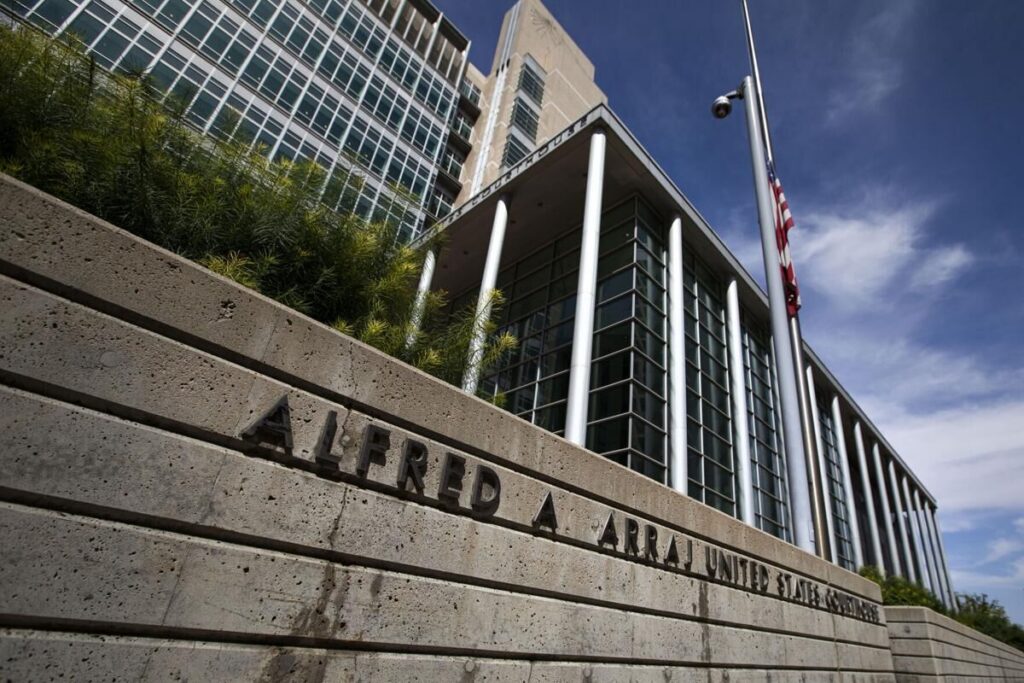
A federal judge declined on Monday to dismiss the formerly bankrupt medical contractor from a lawsuit over a detainee’s death in Jefferson County jail, but indicated she would do so if the plaintiffs’ attorneys go through the process to ensure...
Castle Rock caregiver sentenced after stealing more than $110,000 in jewelry from family
Nicholas Fogleman
nicholas.fogleman@denvergazette.com
Updated 3 hours ago
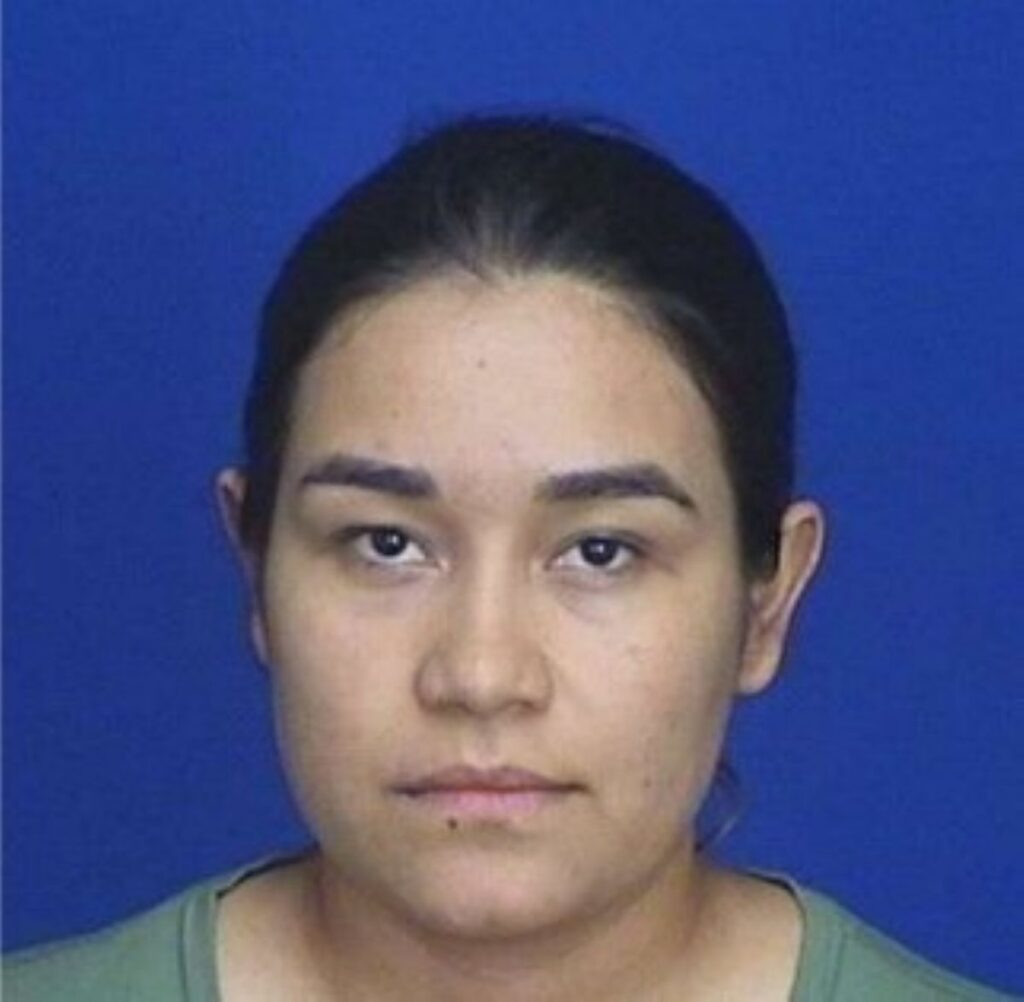
A judge sentenced a Castle Rock caregiver to 90 days in jail after she pleaded guilty to stealing more than $110,000 worth of jewelry from the family of a disabled son under her care. Elsa Montejo-Fuentes, 32, had worked for...
Federal judge green-lights excessive force, retaliation claims for trial against Fort Collins officers
Michael Karlik
michael.karlik@coloradopolitics.com
Updated 3 days ago
A federal judge green-lit a jury trial last week against multiple Fort Collins police officers on claims that they used excessive force on one man who was standing unarmed in his underwear, and retaliated against another man for exercising his...
10th Circuit revives wage violation lawsuit against Papa John’s operator
Michael Karlik
michael.karlik@coloradopolitics.com
Updated 4 days ago
The Denver-based federal appeals court on Tuesday reinstated a former Papa John’s delivery driver’s lawsuit alleging violations of federal and state wage law. Steve Mighell worked for one month at a Denver Papa John’s location in summer 2023. He alleged...
Colorado appeals judge’s delays in releasing opinions noted by performance commission
Michael Karlik
michael.karlik@coloradopolitics.com
Updated 3 days ago
The citizen-led performance commission that provides guidance to voters about whether to retain members of Colorado’s second-highest court raised concerns by judges and attorneys that Judge Elizabeth L. Harris sometimes struggles with releasing opinions promptly. Harris, who joined the Court...
Colorado judge explores sanctions against DOJ, ICE for rearresting man 4 days after release on bond
Michael Karlik
michael.karlik@coloradopolitics.com
Updated 4 days ago
A federal judge in Colorado is considering sanctions against the government after immigration agents rearrested a man four days after an immigration judge found him suitable for release on bond. On July 28, U.S. Magistrate Judge N. Reid Neureiter ordered...
Divided disciplinary panel censures Montezuma County judge after agreement reached
Michael Karlik
michael.karlik@coloradopolitics.com
Updated 4 days ago
A disciplinary panel formally imposed a public censure, suspension, and further training on Montezuma County Court Judge Ian J. MacLaren on Tuesday by a 2-1 vote. Under constitutional Amendment H, which voters adopted in November 2024, MacLaren was set to...
Colorado’s Western Slope magistrate judges describe unique role in federal judiciary
Michael Karlik
michael.karlik@coloradopolitics.com
Updated 6 days ago
Two of Colorado’s federal judges stationed on the Western Slope spoke to lawyers on Wednesday about their unique roles, the ways their workloads differ, and the need for more criminal defense lawyers to take cases outside the Front Range. “Here...