

Colorado Supreme Court names William Hood as next chief justice
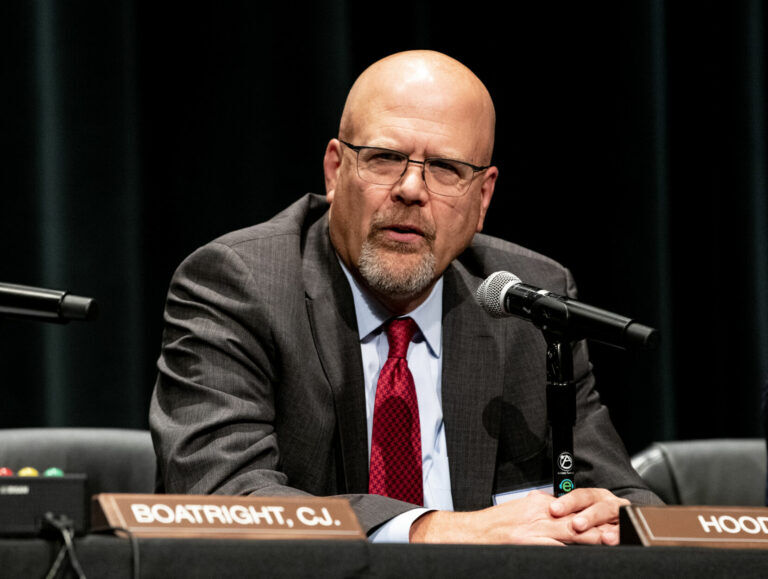
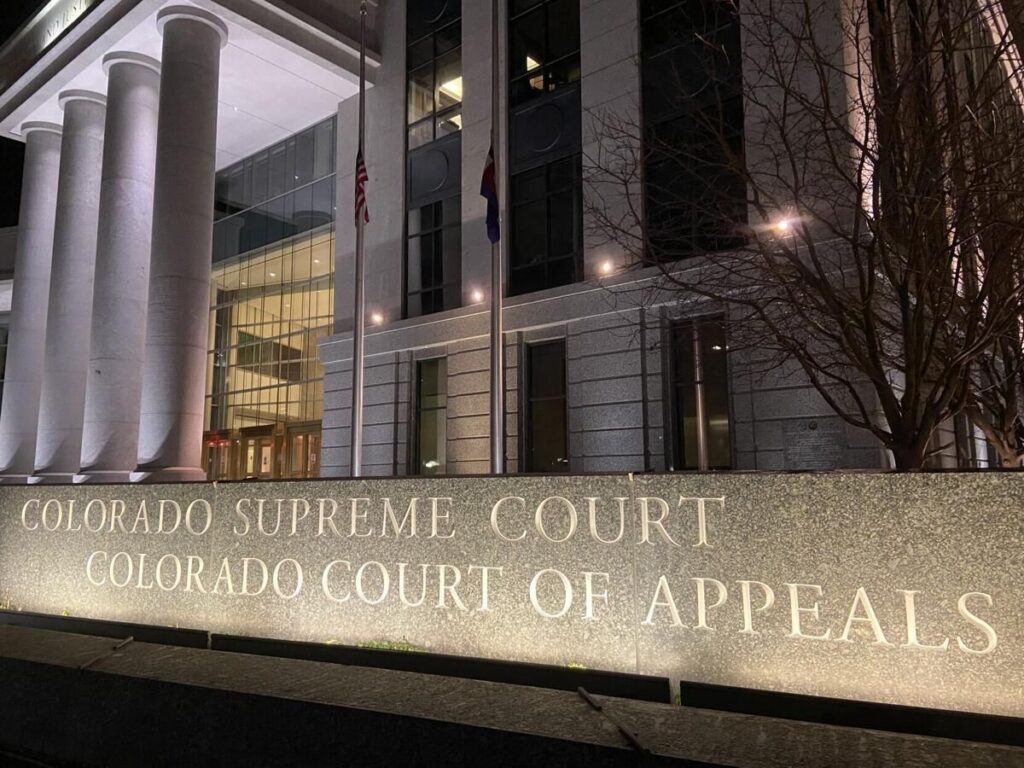
The Colorado Supreme Court has selected Justice William W. Hood III to be the next chief justice, the judicial branch announced on Friday.
Hood will succeed Chief Justice Monica M. Márquez, who took over the role in July 2024.
“I am honored by the confidence my colleagues have placed in me. Our judicial branch is filled with dedicated professionals who work every day to deliver justice for the people of Colorado, and I’m grateful for the opportunity to support that work in this new role,” said Hood in a statement. “I appreciate Chief Justice Márquez’s leadership and her willingness to guide me through the year ahead as I prepare for this transition.”
Hood, an appointee of then-Gov. John Hickenlooper, joined the Supreme Court in 2014. Before his appointment, Hood was a Denver trial judge and a prosecutor in the previously configured 18th Judicial District in suburban Denver.
On the Supreme Court, Hood is the third-most-senior member. He is also facing a retention election this year, and the citizen-led performance commission for statewide judges unanimously found that he “meets performance standards.”
“Justice Hood brings deep experience, steady judgment, and a genuine commitment to the people we serve,” said Márquez. “I’ve had the privilege of working alongside him for many years, and I know he will approach this role with the integrity and thoughtfulness it demands.”
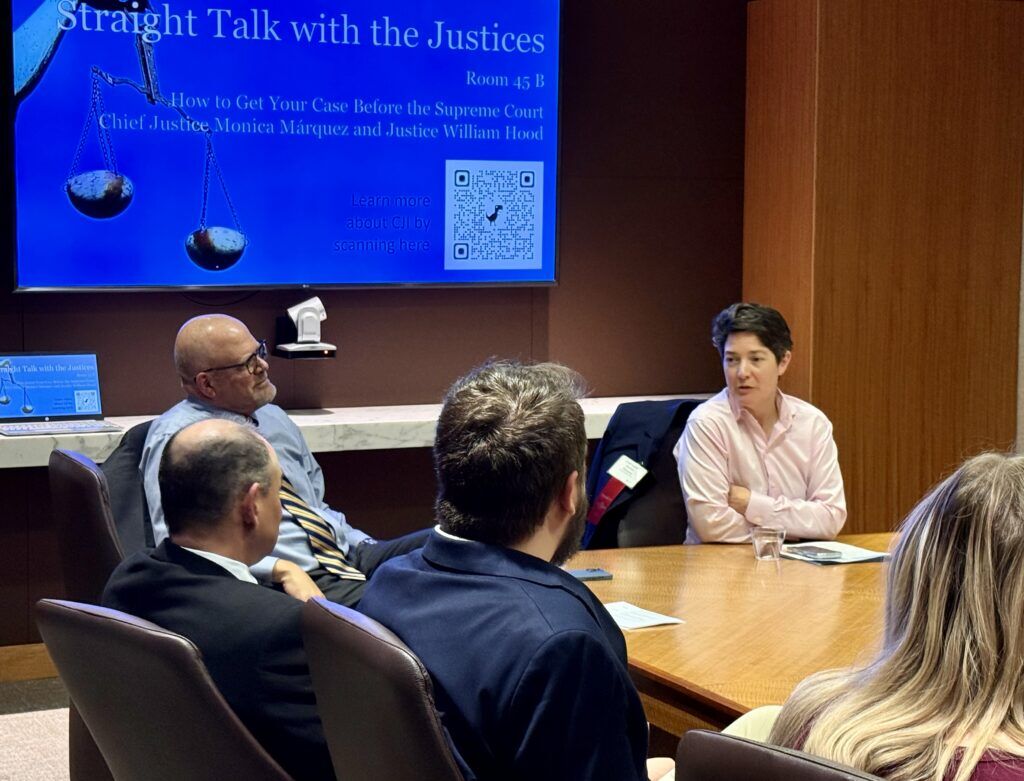
The Supreme Court’s earlier practice allowed the chief justice to remain in that role until retirement. That method enabled the late Chief Justice Mary Mullarkey to serve for 12 years — the longest in history — until stepping down in 2010.
But following Chief Justice Nathan B. Coats’s 2020 retirement announcement, the court instituted a rotational system to fill the top spot, with a three-year term.
“After Chief Justice Coats left, we looked around the room and realized we were all basically the same age,” Márquez said on the “Our Voices” podcast in 2021. “We decided we didn’t want to be in a position where the next chief would be the chief for 15 or 20 years, maybe.”
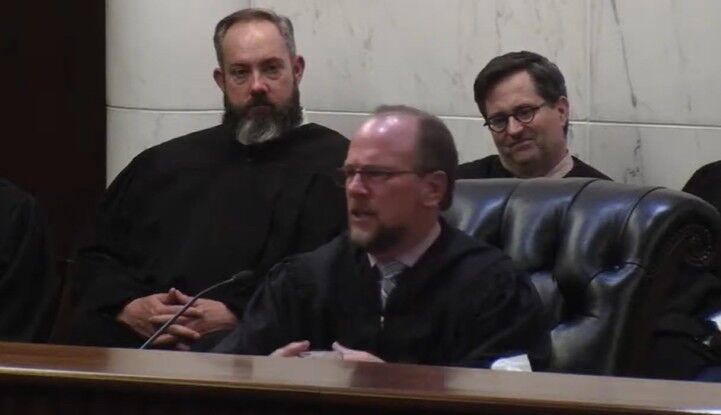
During the term of then-Chief Justice Brian D. Boatright, who was the first under the rotational system, the court developed a unique onboarding plan that outlines tasks before the incoming chief begins their term, and continues to list the obligations through the chief’s first two years.
As it existed prior to Márquez’s term, the plan envisioned that three to four months before taking over, the incoming chief would receive human resources training, attend committee and chief judges’ meetings, and receive tutoring about the judiciary’s budget. The person would also meet with the governor’s office, attorney general’s office and various bar associations.
After being sworn in, the new chief justice would schedule discussions with the leaders of each of Colorado’s 23 judicial districts and communicate priorities to the entire department. During the first two years, the chief would meet annually with every chief judge and receive a “360 evaluation” of the chief’s own performance.
Chief justices participate in cases and author opinions, as do the six other members of the Supreme Court. But chiefs also preside at oral arguments, assign authorship of all opinions — even if the chief is not in the majority — and lead the 4,000-person judicial branch.
Márquez has spoken in public appearances about the large portion of her day that is dedicated to management and administrative tasks. During a 2025 interview at Metropolitan State University of Denver, she said chief justice duties take up 10-12 hours per day, “and then I go home and start my ‘day job’ after dinner.”
“My wife likes to joke that usually around 5:00 in the morning when I’m standing in the kitchen with my hair sticking out, cup of coffee in one hand and I’m squinting at my e-mail on my phone, I’d say, ‘Gosh, I wish the world would just see how glamorous it is to be chief justice,’ Márquez said at a judicial awards ceremony in October.

Schoolchildren’s presence at child sex-related trial did not harm Arapahoe County defendant, appeals court says
Michael Karlik
michael.karlik@coloradopolitics.com
Updated 23 minutes ago
Colorado’s second-highest court decided on Thursday that the presence of a group of schoolchildren on the first day of a child sexual exploitation trial did not violate an Arapahoe County defendant’s constitutional right to a fair trial. Prosecutors charged Jerry...

Appeals court upholds Park County trophy hunting conviction
Michael Karlik
michael.karlik@coloradopolitics.com
Updated 3 hours ago
Colorado’s second-highest court clarified on Thursday that a defendant may stand convicted under the state’s trophy hunting laws if he abandons a bear carcass but returns later to remove the meat. Under Colorado law, it is a felony to detach...

Judge grants partial injunction to GEO in fight against state health inspection law
Kyla Pearce
kyla.pearce@gazette.com
Updated 18 hours ago
A judge ruled Thursday that The GEO Group does not have to follow parts of a new state law requiring more frequent health and safety inspections at the U.S. Immigration and Customs Enforcement processing center in Aurora. Under the order...

Parker man faces 20 years to life for serial sexual assaults
Nicholas Fogleman
nicholas.fogleman@denvergazette.com
Updated 21 hours ago
A 25-year-old Parker man who sexually assaulted three women in 2025 pleaded guilty Wednesday and will serve 20 years to life in prison. Javier Rodriguez-Andrade pleaded guilty to charges stemming from three sexual assaults involving women ages 19 to 24. ...
Divided appeals court upholds warrantless DNA collection in Colorado cold case, cautions of government overreach
Michael Karlik
michael.karlik@coloradopolitics.com
Updated 19 hours ago
Colorado’s second-highest court upheld the warrantless collection of a suspect’s DNA from a discarded soda can as constitutional on Thursday, while warning about potential abuse of DNA privacy in the absence of further guardrails. By 2-1, a three-judge Court of...
Man charged in Northglenn homicide of wife
Matt Kyle
matt.kyle@denvergazette.com
Updated 20 hours ago
A man has been formally charged with murder and burglary relating to a homicide last week in Northglenn. Alexei Munive-Rodriguez, 48, was arrested Sunday after he was at large following the homicide, which occurred Friday. Police were dispatched around 10:30...

10th Circuit grants immunity to officers for fatal Manitou Springs shooting
Michael Karlik
michael.karlik@coloradopolitics.com
Updated 3 hours ago
The Denver-based federal appeals court ruled on Wednesday that responding officers from Manitou Springs and El Paso County cannot be held constitutionally liable for shooting and killing a man after a 20-minute standoff. Wilford Deweese allegedly pulled out a gun...

10th Circuit rejects invitation for full-court review of tax-avoidance case
Michael Karlik
michael.karlik@coloradopolitics.com
Updated 2 days ago
The Denver-based federal appeals court declined to reconsider the standards for holding entities liable for their tax-avoidance schemes, with a majority of judges voting against full-court review on Monday. In April, a three-judge panel of the U.S. Court of Appeals...

Colorado judge blasts state forensics lab in dismissing child sex case
Jenny Deam
jenny.deam@gazette.com
Updated 2 days ago
In a potentially widely consequential action, a Weld County district judge dismissed a child sexual assault case, citing the ongoing scandal at the Colorado Bureau of Investigation’s forensic lab that “has left a dark mark on the history of Colorado...
10th Circuit sympathetic to Colorado consumer protection law governing interest rates
Michael Karlik
michael.karlik@coloradopolitics.com
Updated 3 days ago
Members of the Denver-based federal appeals court appeared sympathetic on Tuesday to Colorado’s assertion that it can lawfully require certain out-of-state banks to abide by the state’s own ceilings on interest rates when they lend to consumers in Colorado. The...
PREV
PREVIOUS

Colorado voters will decide fate of 'right to hunt' proposal
Colorado’s election office said Thursday that a proposal to add a constitutional right to hunting and fishing has qualified for the November ballot. Backed by the International Order of T. Roosevelt, a group dedicated to preserving the North American Model of Wildlife Conservation, Initiative No. 302 would amend the Colorado Constitution to include language establishing […]
Schoolchildren’s presence at child sex-related trial did not harm Arapahoe County defendant, appeals court says
Colorado’s second-highest court decided on Thursday that the presence of a group of schoolchildren on the first day of a child sexual exploitation trial did not violate an Arapahoe County defendant’s constitutional right to a fair trial. Prosecutors charged Jerry Lee Stinnett with two counts related to the possession of sexually abusive material involving children. […]