

Divided Colorado Supreme Court finds parental anonymity in ‘safe haven’ law

Parents who surrender their newborns under Colorado’s “safe haven” law are entitled to anonymity and confidentiality in any subsequent adoptive proceedings involving the child, the state Supreme Court ruled on June 8.
Colorado’s law, like its counterparts across the country, is intended to provide new parents with an alternative to abandoning an infant in potentially life-threatening conditions. A parent has 30 days after the child’s birth to deliver the child to a firefighter or to certain medical personnel. The recipients of the child must notify law enforcement and the county’s department of human services within 24 hours. A parent who follows the legal process will not be responsible for child abuse or neglect.
However, after a mother surrendered her child pursuant to the safe haven law, the Morgan County Department of Human Services began looking into her family to see if it could place the child for adoption. A trial judge learned of the investigation and shut it down, reasoning that birth parents have “a right to privacy and anonymity” under the law.
The Supreme Court acknowledged that the safe haven law did not say anything about anonymity for parents. But by a 5-2 vote, the justices believed parental anonymity was consistent with the law’s design and intent.
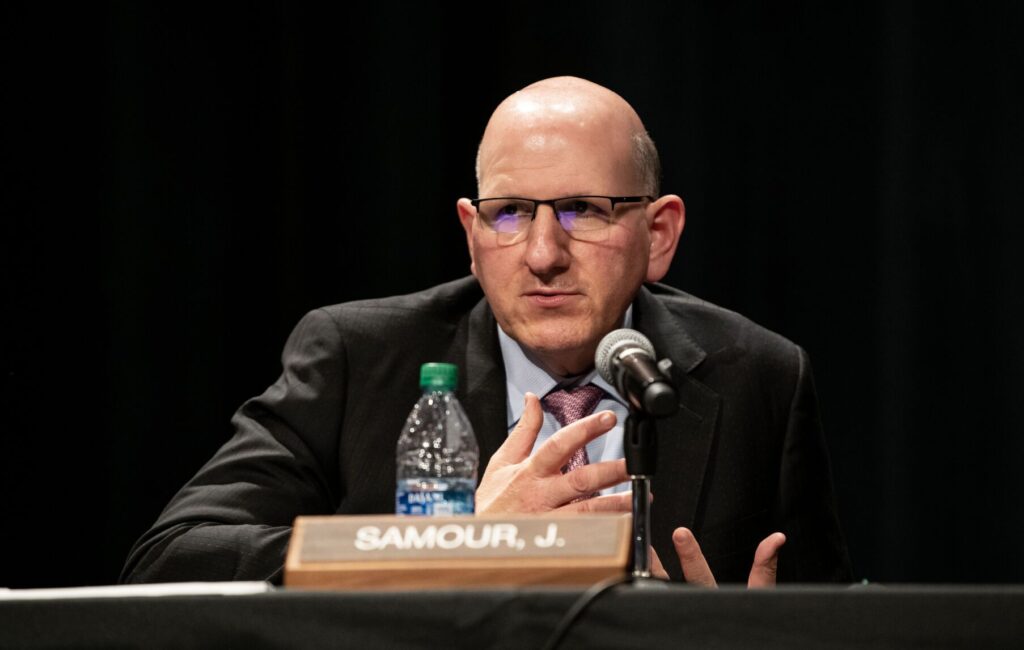
“The legislature intended the Safe Haven Law to serve as a lawful passage for transferring custody outside ordinary proceedings and, correspondingly, without requiring the disclosure of a parent’s identity to a county department or the court,” wrote Justice Carlos A. Samour Jr. in the June 8 opinion. “To strip the Safe Haven Law of anonymity and confidentiality would frustrate its purpose.”
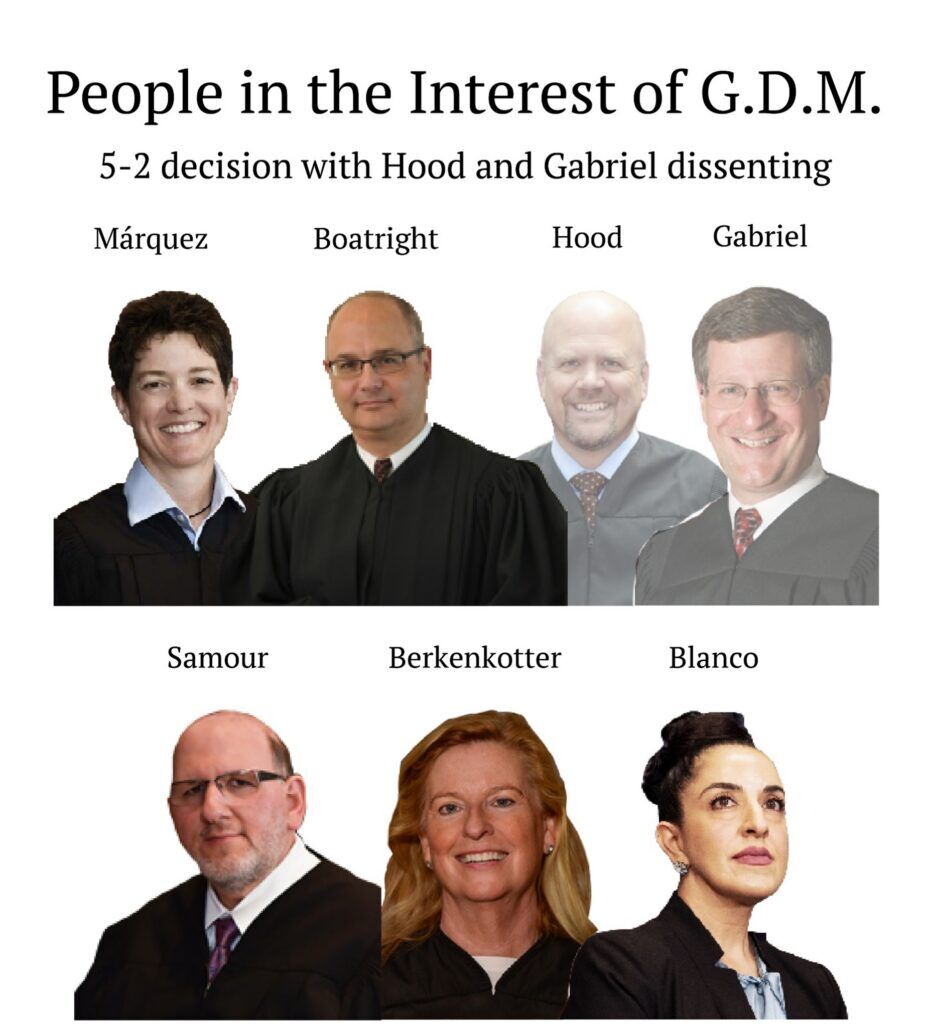
Justice William W. Hood III dissented, arguing the “well-intentioned” finding of anonymity did not change the fact that the safe haven law contained no anonymity provision.
“I would rather see us stick to what courts do best and respect the legislature’s choice of language without adding or subtracting words from the statute,” he wrote for himself and Justice Richard L. Gabriel. “I simply submit that the task of weighing the competing considerations is better left to the legislature.”
In the underlying case, a mother gave birth in an ambulance and told medical personnel that she did not want, nor could she care for, the child. She confirmed she wanted to give the newborn up for adoption.
The county took custody of the baby, who was then placed in a foster home. At the same time, a child neglect case proceeded in court.
The county, meanwhile, obtained the child’s birth certificate and learned the mother’s identity. It provided her with notice of the child neglect case and used Google and social media to identify members of her family. The county wrote to at least four family members to explore adoption placements. One of the mother’s relatives indicated she would like to adopt the child.
The county also explored the mother’s potential tribal lineage and it indicated in a court filing that it had a potential adoptive mother through the family.
At that point, District Court Judge Dina M. Christiansen stopped Morgan County in its tracks. She was concerned that the human services department had used confidential medical records to obtain information about the birth mother. Christiansen then took steps to shield the mother’s identity in the case.
Finally, after the county asked that the birth mother receive an appointed attorney, Christiansen denied the request. Not only did the safe haven law lack a provision for appointed counsel, she reasoned, but the law’s framework suggested anonymity and confidentiality were key features for birth parents.
Morgan County appealed directly to the Supreme Court, which agreed to answer for the first time whether parents operating under the safe haven law have the right to anonymity.
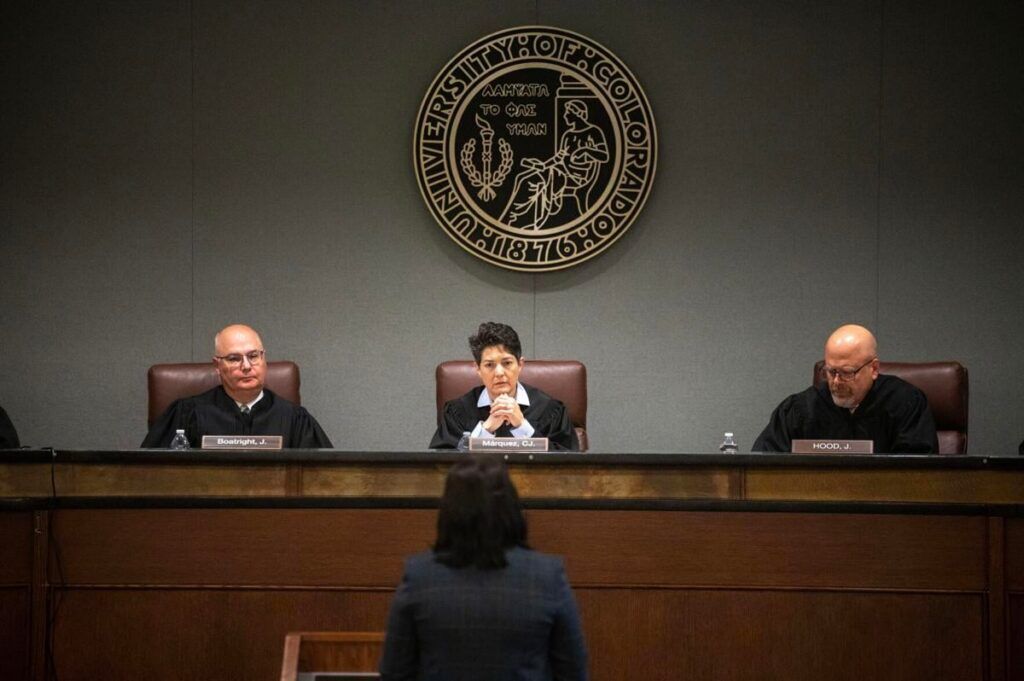
Samour, in the majority opinion, noted the law contains “a deliberate buffer” around the parent. The firefighter or medical employee receives the child, who is then turned over to law enforcement before the county finally gets involved. Further, it is possible that a parent might not even have direct contact with the firefighter or medical employee in the first place.
The Morgan County Department of Human Services “seeks to treat this Safe Haven case like all other abandonment proceedings,” Samour wrote. “But the extended months-long timeline inherent in MCDHS’s proposed approach cannot be squared with the legislature’s command for expediency in the Safe Haven Law.”
“Forcing the parent back into the picture” after they have chosen to abandon their child through the state-sanctioned path, he continued, was at odds with the law.
Therefore, “we infer that a parent who properly seeks shelter under the Safe Haven Law’s protective aegis is entitled to anonymity and confidentiality,” Samour concluded.
Hood, in dissent, noted that the safe haven law mentions the confidentiality of certain records but lacks any indication of anonymity for parents. He would have allowed lawmakers to insert such a requirement, should they wish.
Rep. Gretchen Rydin, D-Littleton, who sponsored a bill this year modifying portions of the safe haven law that were not implicated by the appeal, said she did not intend to alter the majority’s finding of anonymity.
“In my reading of the safe haven law, confidentiality and anonymity are foundational to the process, and the ruling reinforces that understanding,” she said. “The upcoming Colorado Department of Human Services rulemaking process will allow stakeholders to consider this ruling alongside other practical concerns and develop clear guidance. If that process identifies a need for additional clarity in statute, I’m open to that.”
Jacque Frenier, director of the Morgan County Department of Human Services, said her office “respects the law and the process and will abide by any and all laws. MCDHS believes the dissent correctly analyzed and applied the law in this case.”
The case is People in the Interest of G.D.M.

Colorado justices say insurers may access policyholders’ medical info in denied-benefits litigation
Michael Karlik
michael.karlik@coloradopolitics.com
Updated 1 day ago
The Colorado Supreme Court declined on Monday to expand its narrow prohibition on insurance companies accessing policyholders’ medical information, clarifying that a dispute over an insurer’s bad-faith decision to deny benefits is the only situation where a company is limited...

Colorado Supreme Court declines to loosen requirements for insurance company defendants
Michael Karlik
michael.karlik@coloradopolitics.com
Updated 10 hours ago
The Colorado Supreme Court declined last week to reconsider its longstanding expectations for insurance company defendants, and agreed that an insurer failed to properly raise its defenses against a policyholder’s breach-of-contract lawsuit. When an insured driver has an accident with...

Teen defendant properly transferred from youth detention to jail, Colorado justices conclude
Michael Karlik
michael.karlik@coloradopolitics.com
Updated 2 days ago
Colorado law required the transfer of a teenage murder suspect from youth detention to the county jail when he turned 18, the state Supreme Court ruled last week. Prosecutors have accused Issac James Lawrence of killing a younger boy and attempting to...
Safe2Tell tip, corroborated details provided grounds to search backpack, Colorado justices rule
Michael Karlik
michael.karlik@coloradopolitics.com
Updated 8 hours ago
The Colorado Supreme Court decided this month that a tip submitted through the state’s confidential school safety system, plus a Douglas County administrator’s corroboration of some details, provided reasonable suspicion to search a student’s backpack for drugs. Someone submitted a...
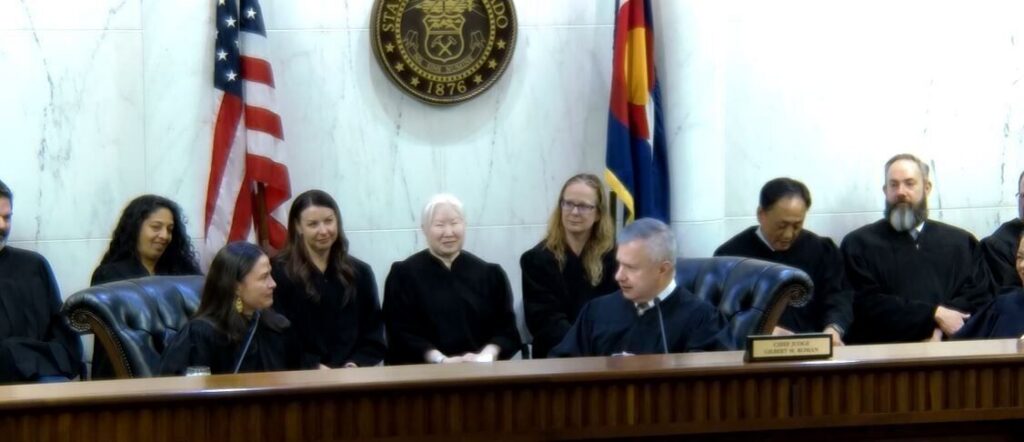
Appeals court finds opening in Colorado Supreme Court’s framework for child neglect cases
Michael Karlik
michael.karlik@coloradopolitics.com
Updated 2 days ago
Colorado’s second-highest court squeezed through an opening last week in a controversial state Supreme Court decision from 2025, concluding that the justices had not prohibited a child’s legal representative from being the one to request termination of parental rights in...
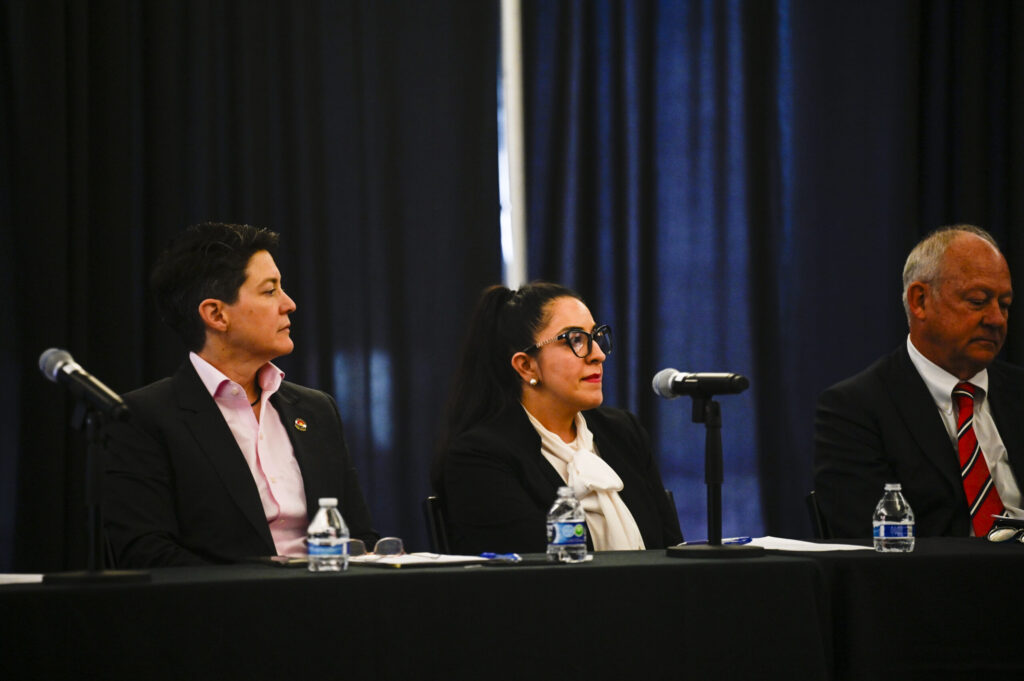
Colorado Supreme Court upholds police search of car based on arm movements
Michael Karlik
michael.karlik@coloradopolitics.com
Updated 10 hours ago
The Colorado Supreme Court decided last week that Denver officers’ search of a vehicle was constitutional, based on their perception of the occupants’ arm movements that a trial judge found to not be credible. Officers Keegan Grubb and Richard Eberharter...

10th Circuit tosses Pueblo County sheriff defendants’ appeal in fatal shooting lawsuit
Michael Karlik
michael.karlik@coloradopolitics.com
Updated 8 hours ago
The Denver-based federal appeals court rejected an attempt from Pueblo County sheriff’s employees on Wednesday to rely on their own version of the facts to escape liability for fatally shooting an unarmed man outside a middle school. A trial judge...
Colorado justices uphold strict interpretation of consumer protection law against debt collector
Michael Karlik
michael.karlik@coloradopolitics.com
Updated 10 hours ago
The Colorado Supreme Court concluded last month that a debt collector failed to comply with state law by suing a woman for an unpaid credit card debt without documentation that it owned her account. Portfolio Recovery Associates LLC filed a...
Colorado justices say judges can nearly eliminate parenting time without it being a ‘restriction’
Michael Karlik
michael.karlik@coloradopolitics.com
Updated 10 hours ago
The Colorado Supreme Court concluded last month that judges can reduce the number of days a parent spends with their child post-divorce to just above zero without it rising to the level of a “restriction” that requires more rigorous justification...

Colorado Springs may be sued for faulty intersection, state Supreme Court rules
Michael Karlik
michael.karlik@coloradopolitics.com
Updated 1 day ago
The Colorado Supreme Court decided last month that Colorado Springs can be sued over a collision that occurred as a result of traffic lights that were functioning normally in one direction, but were inoperative in the perpendicular direction. The question...
PREV
PREVIOUS

As number of unaffiliated voters grow in Colorado, experts note patterns, behavior
For the first time in Colorado’s history, more primary ballots are going to voters without a party affiliation than to registered Democrats or Republicans. As such, political experts said, candidates today need to appeal to a new block of people — unaffiliated voters are not monolithic in their political views — who have begun to […]

Douglas County moves to tighten rules on electric scooters, off-road vehicles
Douglas County commissioners advanced an ordinance Tuesday that would significantly expand regulation of electric scooters and off-highway vehicles, citing safety concerns and gaps in state law. The proposed measure, introduced by the Douglas County Sheriff’s Office, would raise fines for violations from the current $50 under state law to a range of $250 to $1,000. […]