

Colorado justices say judges can nearly eliminate parenting time without it being a ‘restriction’

The Colorado Supreme Court concluded last month that judges can reduce the number of days a parent spends with their child post-divorce to just above zero without it rising to the level of a “restriction” that requires more rigorous justification under the law.
While all members of the court agreed that a judge’s decision to reduce a father’s overnight visits by 28% was justified, the justices split 5-2 on the test for determining the reasonableness of a reduction in parenting time.
The majority distinguished the concepts of a parenting time “modification” and a “restriction” by reasoning that a restriction amounts to either the complete elimination of all visitation or the imposition of various conditions affecting the parenting time. Under those circumstances, a restriction would need to be justified by either physical endangerment or emotional impairment to the child.
Otherwise, wrote Justice Carlos A. Samour Jr. in the May 26 opinion, a reduction in parenting time is simply a modification to be granted if it is in the child’s best interest.
“We now hold that a restriction materializes only when a court either brings parenting time to a full stop or installs qualitative constraints,” he wrote, “including requiring supervised parenting time, bans on overnight visits, or limits on where parenting time may occur.”
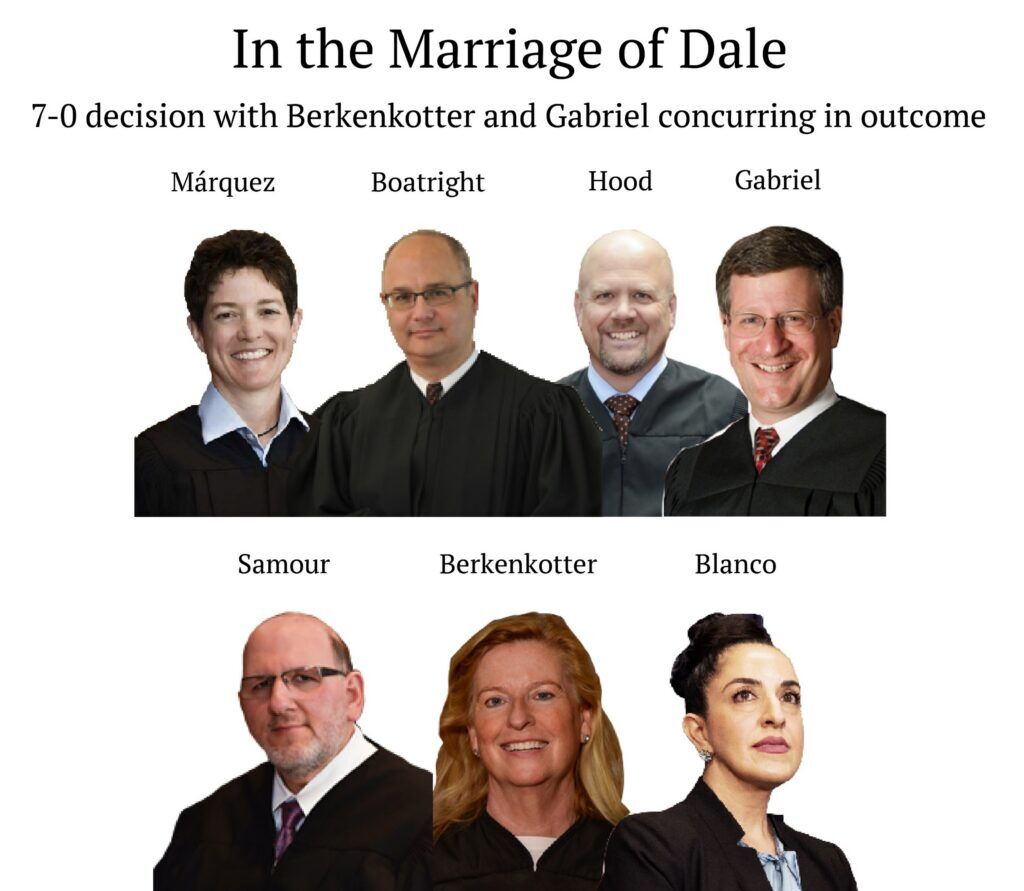
Justice Maria E. Berkenkotter wrote separately to argue that a holistic consideration of all circumstances was a preferable approach to deciding which standard to apply in a request for changes in parenting time. She found it “absurd” that a drastic reduction in parenting time can never be classified as a “restriction,” so long as the number remains greater than zero.
“What if a father seeks to modify the parties’ existing parenting plan so the mother’s parenting time with the parties’ 11-month-old son, who is still nursing, is reduced from 270 overnights to one overnight. According to the majority, the father is not seeking to restrict the mother’s parenting time. But if he asks the court to reduce her parenting time to zero overnights, the trial court must treat his motion to modify as a motion to restrict,” Berkenkotter wrote for herself and Justice Richard L. Gabriel. “On the face of it, the majority’s math isn’t mathing.”
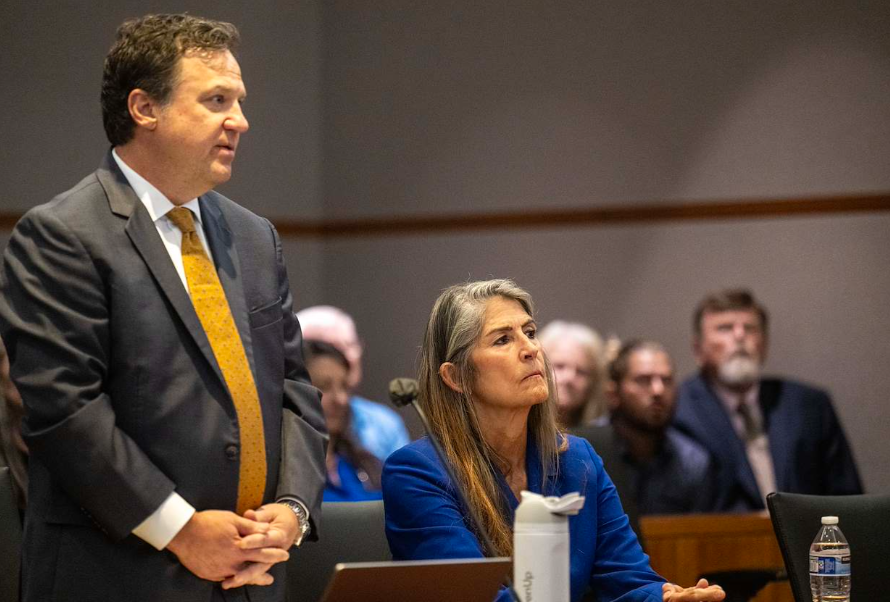
Nicholas Dale, who is also the elected district attorney for Las Animas and Huerfano counties, appealed a 2024 order that addressed his request for a modified parenting time schedule with his son in El Paso County. Originally, pursuant to the termination of his marriage, Dale was permitted 160 overnight visits per year. However, following changes to his work schedule, he sought to reschedule the visitations to accommodate his employment.
District Court Judge William Moller initially stated he would permit Dale 142 overnight visits under a revised schedule, but his order ultimately afforded Dale approximately 115 overnights instead. Dale then appealed, arguing that Moller had restricted his parenting time and, under Colorado law, such restrictions require judges to first find that the child is endangered.
A three-judge Court of Appeals panel acknowledged neither parent in Dale’s case had requested a “reduction of this magnitude.” However, Judge Ted C. Tow III wrote that restrictions on parenting time address how parents interact with their child — for example, limits on location or supervision — rather than the number of days alone.
Because Moller did not impose qualitative conditions on how Dale exercised his parenting time and instead reduced the quantity of overnight visits, “the endangerment standard was inapplicable. Instead, the court was required to consider the best interests of the child, which it did,” Tow concluded.
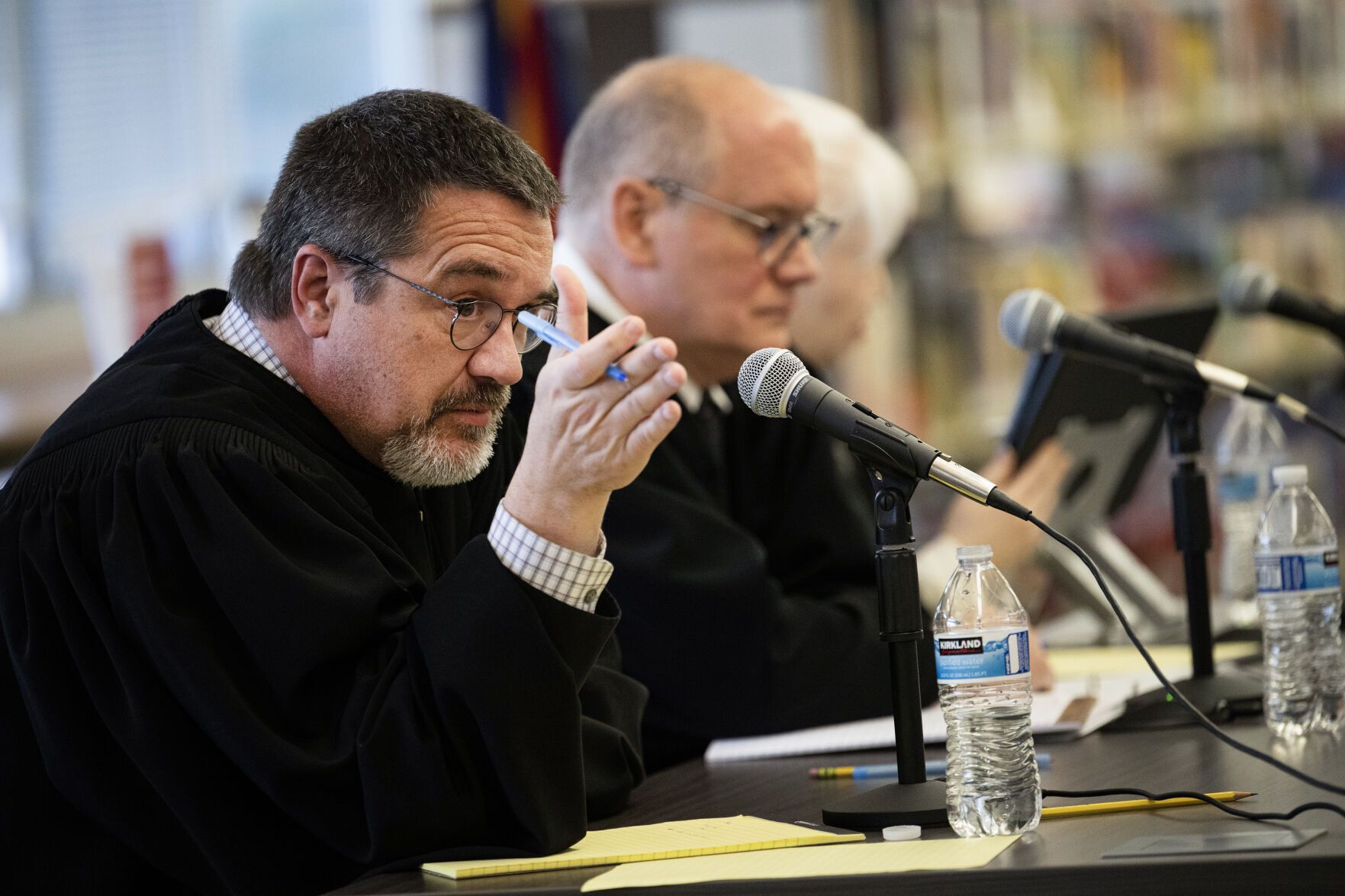
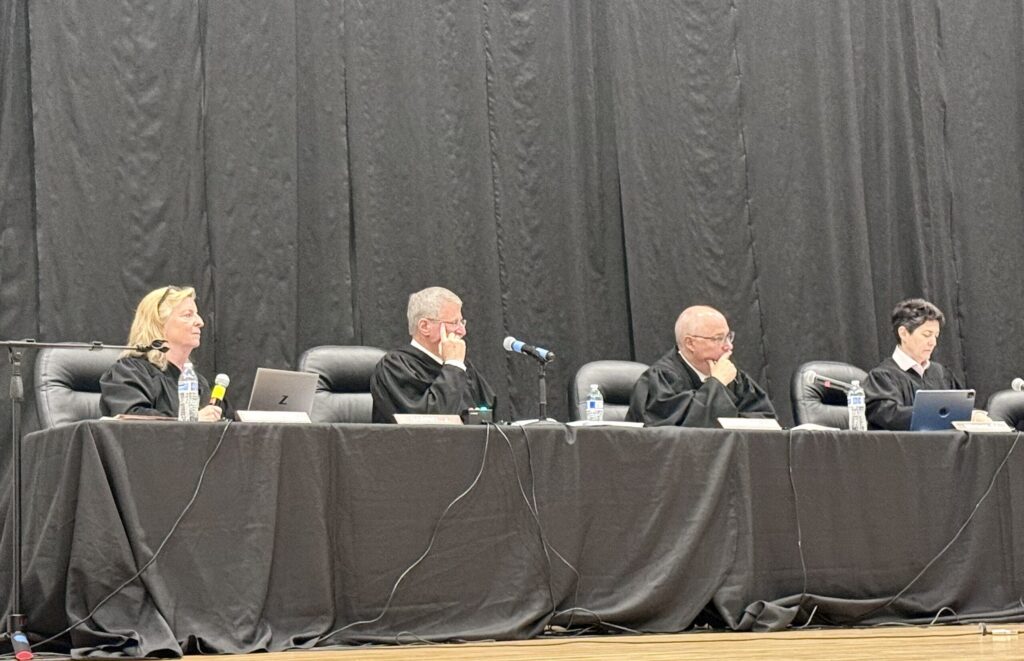
During oral arguments in January, some Supreme Court justices seemed uncomfortable with that reasoning.
“Can you imagine a scenario in which the trial court eliminates parenting time altogether,” without finding the child is endangered, wondered Justice William W. Hood III.
Multiple justices suggested they were interested in a framework from a 2004 Court of Appeals opinion, In the Marriage of West. Relying on decisions from other states, the court determined judges should examine “both the quantitative and the qualitative aspects of the proposed change to parenting time, as well as the reason or reasons advanced for the change,” when deciding which standard to use.
Ultimately, however, the court’s majority settled on a straightforward rule: reductions in the number of parenting days constitute modifications that account for a child’s best interests. Only if parenting time is eliminated, or if there are conditions attached to the exercise of that time, does the endangerment standard come into play.
“If the legislature had meant to collapse all substantial reductions in the quantity of parenting time from the domain of modifications to that of restrictions, as Father urges, it would have drafted the statute accordingly. It did not,” wrote Samour. “Moreover, had the legislature intended a substantial reduction in parenting time to automatically harden from a modification into a restriction, it presumably would have provided a clear benchmark indicating where that shift occurs.”
He acknowledged that judges could theoretically slash parenting time to one night without it amounting to a restriction, but it was “difficult to conceive of circumstances” where that would be in the child’s best interest, Samour added.

Berkenkotter, in her concurrence, would have adopted the more flexible test from the West decision when determining if a change is a restriction on parenting time. Even considering all factors, Berkenkotter still concluded the reduction to Dale’s overnight visits did not amount to a restriction.
However, she warned that the majority “doesn’t consider or explain how its new rule will work going forward in the real world.”
“Because the factual circumstances underlying every parenting time decision are unique and must be decided on a case-by-case basis, the reasons advanced by parties for changes to parenting time — not math — should also guide the court’s analysis,” Berkenkotter wrote.
Referring to her example of a judge reducing a parent’s overnight visits from 270 to one without it being a “restriction,” Berkenkotter asked: “Who wouldn’t describe a 99.6% reduction in parenting time as a restriction?”
The case is In the Marriage of Dale.

Colorado justices to hear appeal in Kendrick Castillo death lawsuit, ‘fugitive’ rule
Michael Karlik
michael.karlik@coloradopolitics.com
Updated 6 hours ago
The Colorado Supreme Court announced on Tuesday that it will decide whether it was proper to dismiss a lawsuit over the 2019 shooting death of Kendrick Castillo after the defendants paid the maximum amount of damages available to Castillo’s parents,...

Arapahoe County judge’s frustration with defense lawyer not grounds for new trial
Michael Karlik
michael.karlik@coloradopolitics.com
Updated 8 hours ago
Colorado’s second-highest court decided last week that an Arapahoe County judge’s repeated rebukes of a defense attorney and orders to “be quiet” did not rise to the level of bias or a violation of the defendant’s due process rights. A...

Divided appeals court upholds vehicle theft conviction despite unclear origin of car’s value
Michael Karlik
michael.karlik@coloradopolitics.com
Updated 4 hours ago
Colorado’s second-highest court upheld a defendant’s conviction for aggravated motor vehicle theft last week, even though it was unclear how the Thornton Police Department estimated the value of the stolen car. Officer Marc Faivre encountered Ashley Shelee Gibbens-Martinez in a...
Disgraced ex-CBI analyst Missy Woods sentenced to prison in DNA scandal
Jenny Deam
jenny.deam@gazette.com
Updated 8 hours ago
A Jefferson County district court judge on Tuesday sentenced a disgraced former Colorado Bureau of Investigation DNA analyst to a decade in prison for altering and deleting data in scores of criminal cases over several years. Jefferson County District Judge...

Parenting from prison: Inmates hope to be present in their children’s lives, while physically absent
Marianne Goodland
marianne.goodland@coloradopolitics.com
Updated 13 hours ago
The room was decorated with balloons, the tables sparking bright with colors as the smell of pizza and cake wafted through the air. As did music. This was, after all, a father-daughter dance. Except this was not a typical father-daughter...
Appeals court confirms Colorado judges can compel electronic records from out of state
Michael Karlik
michael.karlik@coloradopolitics.com
Updated 3 days ago
Colorado’s second-highest court clarified on Thursday that judges are empowered to compel out-of-state companies to produce electronic records under state law. El Paso County jurors convicted Mischa Jargowsky on three counts of money laundering and one violation of Colorado’s organized...

10th Circuit upholds finding of no racial discrimination against family at Denver Chili’s
Michael Karlik
michael.karlik@coloradopolitics.com
Updated 4 days ago
The Denver-based federal appeals court agreed on Wednesday that a Black plaintiff failed to show that a Chili’s manager’s request for her family to provide valid payment at the outset of their meal amounted to racial discrimination. Markesha Futrell-Smith filed...

Appeals court reinstates Mesa County defendant’s request for DNA testing under new Colorado law
Michael Karlik
michael.karlik@coloradopolitics.com
Updated 5 days ago
Colorado’s second-highest court revived a Mesa County defendant’s petition for DNA testing in his three-decade-old attempted murder case on Thursday, concluding that a trial judge wrongly interpreted a recent Colorado law in dismissing the request outright. Jurors convicted Billy Joe...

Appeals court reverses Denver juvenile’s conviction due to improper expert testimony
Michael Karlik
michael.karlik@coloradopolitics.com
Updated 3 days ago
Colorado’s second-highest court reversed a juvenile defendant’s conviction for unlawful sexual contact on Thursday after an expert witness’s testimony improperly suggested the child victim was telling the truth. The defendant, identified as S.H-S., was around 16 years old when he...

Judge orders home confinement for Barry Morphew
Dennis Huspeni
dennis.huspeni@gazette.com
Updated 5 days ago
An Alamosa County district judge has ordered home confinement for Barry Morphew, who is accused of murdering his wife. Barry Morphew, 59, faces a first-degree murder charge in the death of his wife, Suzanne Morphew, who disappeared Mother’s Day weekend...
PREV
PREVIOUS

Geo Group sues Colorado over new immigration detention facility inspection law
The private prison company that operates the U.S. Immigration and Customs Enforcement center in Aurora has filed a lawsuit against Colorado to stop the enforcement of a new law requiring additional health and safety inspections of immigration detention facilities. The lawsuit from Geo Group, filed Monday in Denver District Court, lists Colorado Attorney General Phil […]

Mental Health Colorado names 2026 legislators of the year
Six state lawmakers have received recognition from the advocacy organization Mental Health Colorado for their work during the 2026 legislative session. “Mental Health Colorado’s work to pass laws, change practices, and build a movement depends on courageous advocates and bipartisan leaders who are willing to champion this work,” said Mental Health Colorado president and CEO Vincent […]