

Colorado Supreme Court struggles with rubric for significant reductions in parenting time
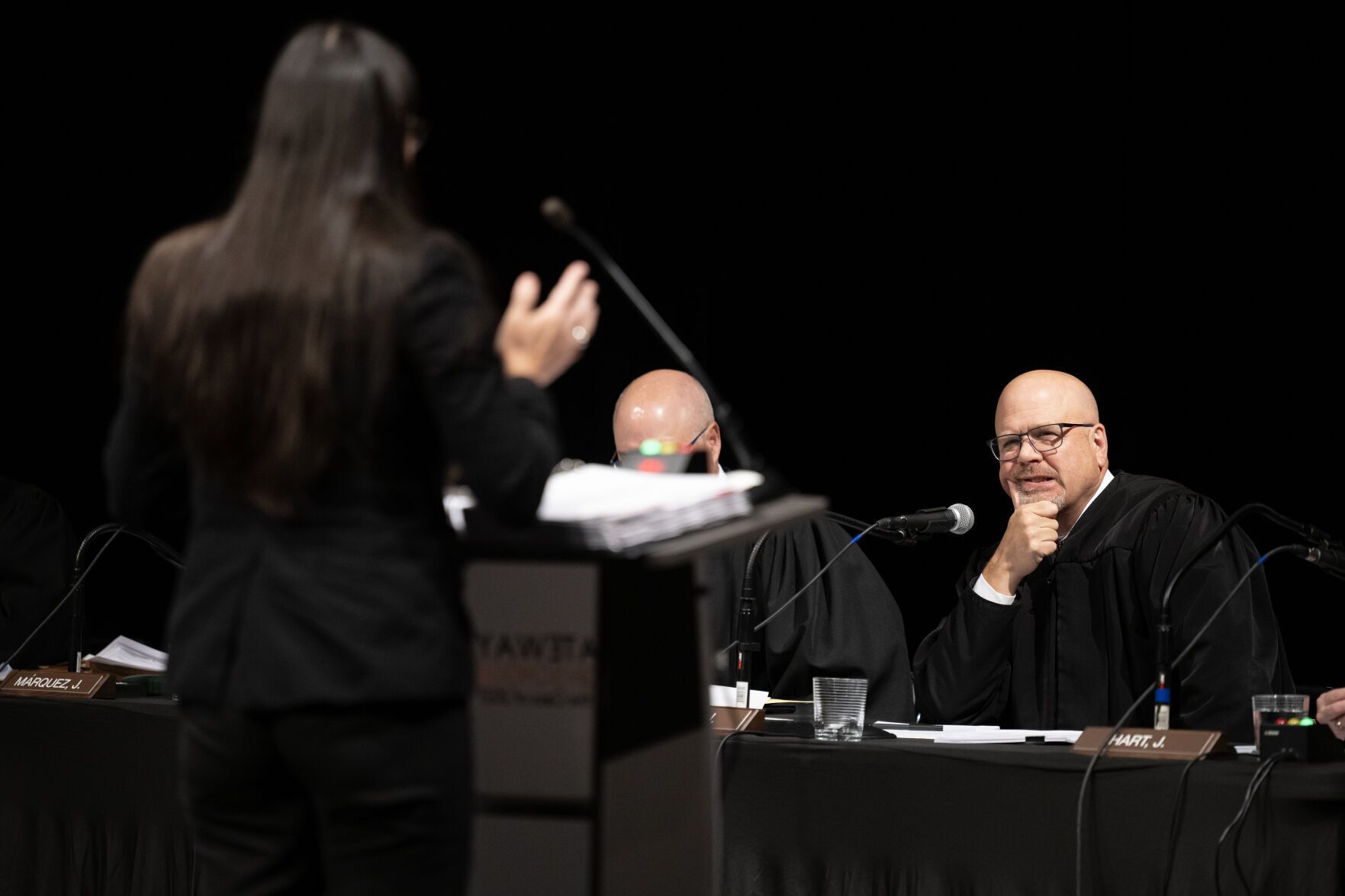
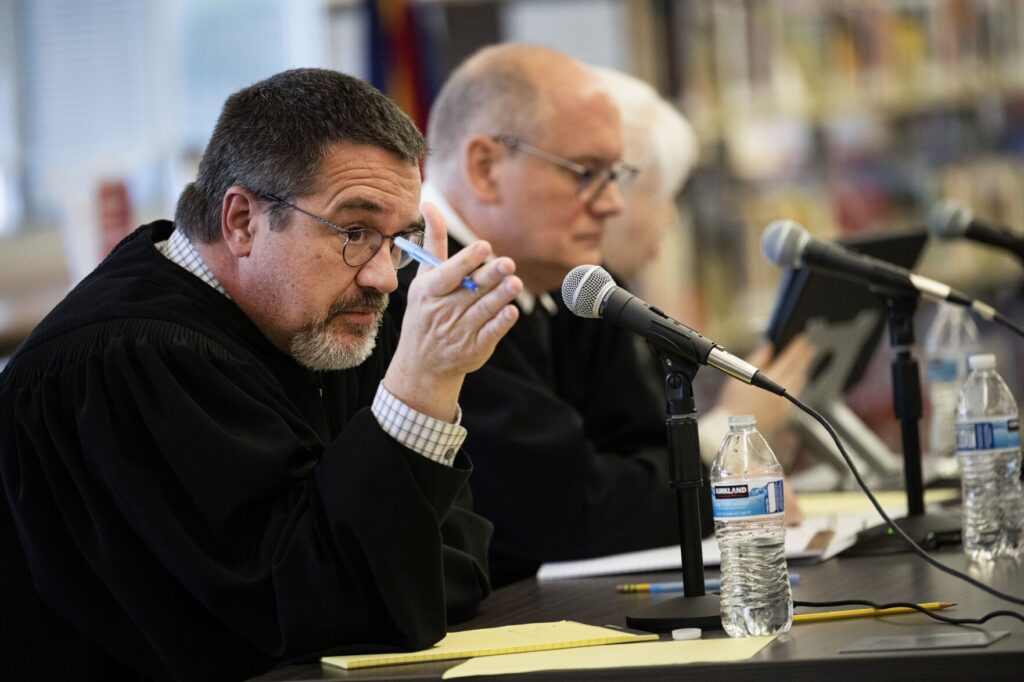
The Colorado Supreme Court attempted to identify on Wednesday the circumstances under which judges may reduce the number of days a parent spends with their child post-divorce without it rising to the level of a “restriction” that requires more rigorous justification under the law.
During oral arguments, some members expressed discomfort with a recent Court of Appeals opinion holding that a reduction in the number of days, even an extreme one, is not a “restriction of parenting time rights.”
“My struggle with the Court of Appeals,” said Justice Richard L. Gabriel, “is it basically said, ‘Never. You never look at quantitative (reductions) at all, period.’ I have a problem with that. How is it not a restriction if you reduce a father’s parenting time from 140 days to one? That has to be a restriction, doesn’t it?”
Nicholas Dale, who is also the elected district attorney for Las Animas and Huerfano counties, appealed a 2024 order that addressed his request for a modified parenting time schedule with his son in El Paso County. Originally, pursuant to the termination of his marriage, Dale was permitted 160 overnight visits per year. However, following changes to his work schedule, he sought to reschedule the visitations to accommodate his employment.
District Court Judge William Moller initially stated he would permit Dale 142 overnight visits under a revised schedule, but his order ultimately afforded Dale approximately 115 overnights instead. Dale then appealed, arguing that Moller had restricted his parenting time and, under Colorado law, such restrictions require judges to first find that the child is endangered.
“The statute neither defines ‘restrict’ nor offers a test to distinguish an order that restricts parenting time from an order that merely modifies a prior order granting parenting time,” wrote Dale, representing himself. But going from “approximately 160 overnights to 115 overnights (a 28.1% reduction in parenting time – roughly 45 overnights per year) amounts to a ‘restriction.'”
A three-judge Court of Appeals panel acknowledged neither parent in Dale’s case had requested a “reduction of this magnitude.” However, Judge Ted C. Tow III wrote that restrictions in parenting time address how parents interact with their child — for example, limits on location or supervision — and not the number of days alone.
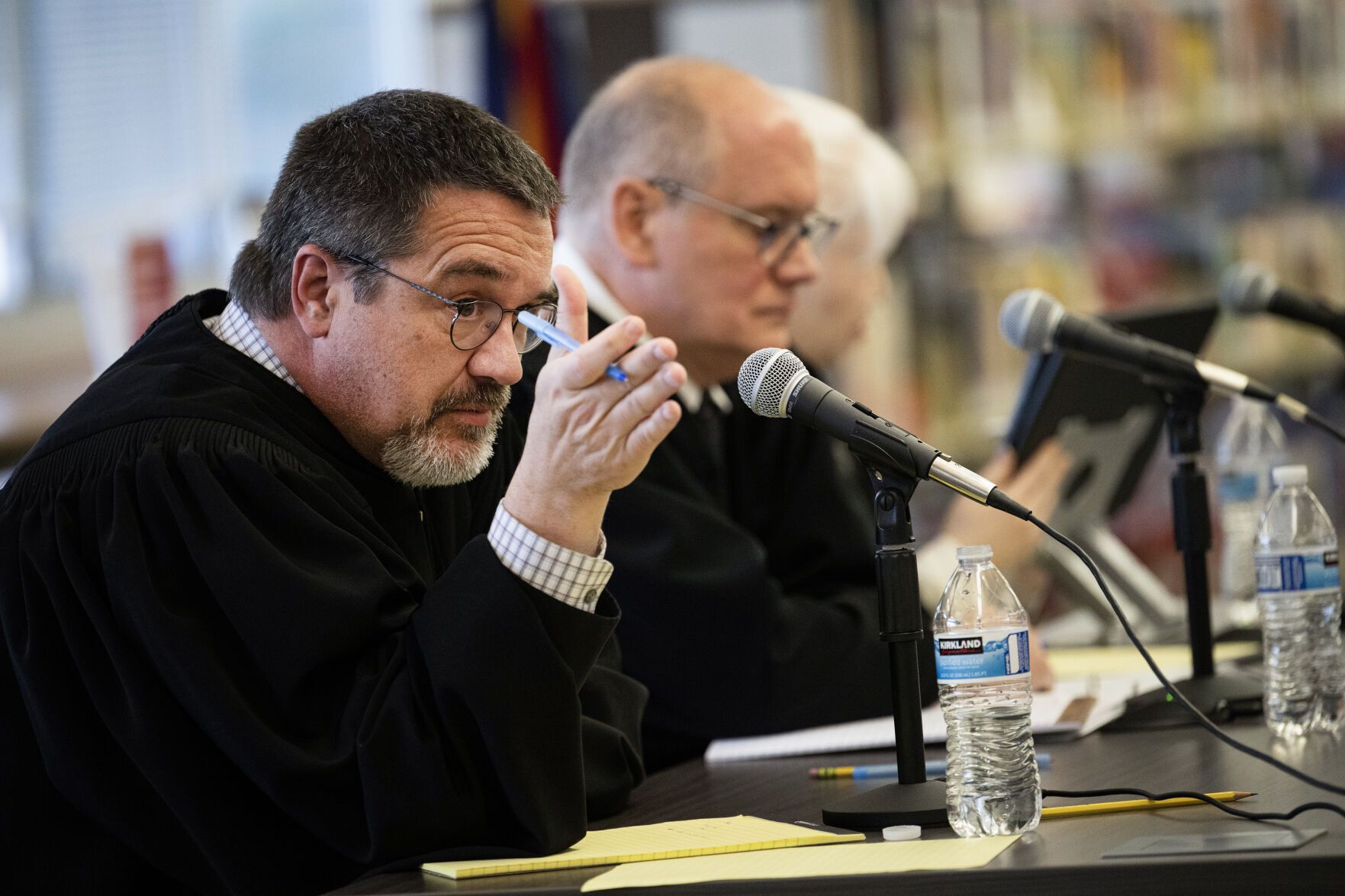
Because Moller did not impose qualitative conditions on how Dale exercised his parenting time and instead just reduced the quantity of overnight visits, “the endangerment standard was inapplicable. Instead, the court was required to consider the best interests of the child, which it did,” Tow concluded.
Dale appealed to the Supreme Court, proposing several factors that judges should consider when “no actual or practical circumstances” support the status quo regarding parenting time.
“Can you reduce the time by one day and not get into the ‘restriction’ camp?” asked Justice Carlos A. Samour Jr.
“It really depends on the reason why the restriction of one day is necessary,” responded attorney Henry L. Solano.
At least three of the justices suggested they were interested in a framework contained in a 2004 Court of Appeals opinion, In the Marriage of West. Relying on decisions from other states, the court determined judges should examine “both the quantitative and the qualitative aspects of the proposed change to parenting time, as well as the reason or reasons advanced for the change.”
Neither Dale nor his ex-spouse, however, was completely sold on that proposal.
“Although a very bright line, Judge Tow’s opinion is the better version compared to West,” said attorney Alexander Masterson, representing Nicole Jehlicka Dale. A framework that looks at all of the circumstances “is going to continually invite the question of, ‘How much is enough?'”
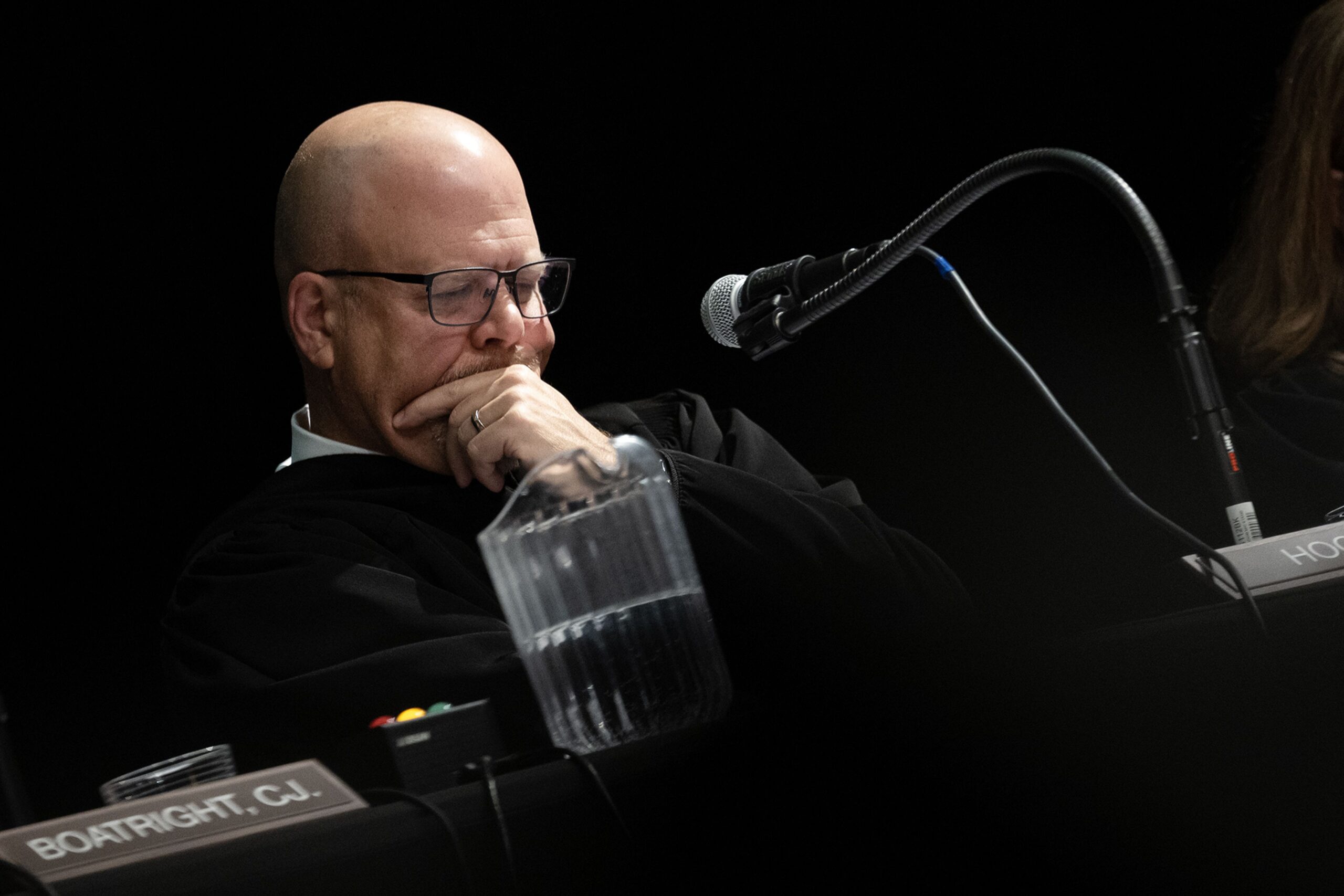
“Can you imagine a scenario in which the trial court eliminates parenting time altogether,” without finding the child is endangered, asked Justice William W. Hood III.
“It’s very difficult to even fathom a scenario” where that happens, replied Masterson.
“It’s an extreme example to test whether the rule you’re suggesting is principled, right? That’s what I’m struggling with,” said Hood. “How do you just ignore quantitative altogether?”
Responding to Masterson’s suggestion that judges look at whether a change stems from logistical concerns or concerns about a parent’s behavior, Justice Maria E. Berkenkotter did not see that as workable, either.
“I’m just concerned that it’s a bright line that makes sense here, but I’m not sure it’s a bright line that makes sense in the real world,” she said, adding that the vast majority of family law cases involve at least one self-represented litigant. “Trial court judges all the time receive motions that are handwritten, that go on for multiple pages about all sorts of things — some of which may be logistical, some of which might be behavioral.”
And yet, the justices also struggled with the framework Solano was suggesting.
“Mr. Solano, respectfully, what I hear you suggesting is sort of a my-client-wins rule,” said Hood. The upshot is that “even very routine modification cases that we see at the trial court level all the time, there would have to be an endangerment evaluation. And that just doesn’t seem workable to me.”
The case is In the Marriage of Dale.

Divided appeals court upholds vehicle theft conviction despite unclear origin of car’s value
Michael Karlik
michael.karlik@coloradopolitics.com
Updated 7 minutes ago
Colorado’s second-highest court upheld a defendant’s conviction for aggravated motor vehicle theft last week, even though it was unclear how the Thorton Police Department estimated the value of the stolen car. Officer Marc Faivre encountered Ashley Shelee Gibbens-Martinez in a...
Disgraced ex CBI analyst Missy Woods sentenced to prison in DNA scandal
Jenny Deam
jenny.deam@gazette.com
Updated 14 minutes ago
A Jefferson County district court judge on Tuesday sentenced a disgraced former Colorado Bureau of Investigation DNA analyst to a decade in prison. Jefferson County District Judge Andrew Poland sentenced Yvonne “Missy” Woods to 10 years on the most serious...

Parenting from prison: Inmates hope to be present in their children’s lives, while physically absent
Marianne Goodland
marianne.goodland@coloradopolitics.com
Updated 36 minutes ago
The room was decorated with balloons, the tables sparking bright with colors as the smell of pizza and cake wafted through the air. As did music. This was, after all, a father-daughter dance. Except this was not a typical father-daughter...
Appeals court confirms Colorado judges can compel electronic records from out of state
Michael Karlik
michael.karlik@coloradopolitics.com
Updated 2 days ago
Colorado’s second-highest court clarified on Thursday that judges are empowered to compel out-of-state companies to produce electronic records under state law. El Paso County jurors convicted Mischa Jargowsky on three counts of money laundering and one violation of Colorado’s organized...
10th Circuit upholds finding of no racial discrimination against family at Denver Chili’s
Michael Karlik
michael.karlik@coloradopolitics.com
Updated 4 days ago
The Denver-based federal appeals court agreed on Wednesday that a Black plaintiff failed to show that a Chili’s manager’s request for her family to provide valid payment at the outset of their meal amounted to racial discrimination. Markesha Futrell-Smith filed...

Appeals court reinstates Mesa County defendant’s request for DNA testing under new Colorado law
Michael Karlik
michael.karlik@coloradopolitics.com
Updated 5 days ago
Colorado’s second-highest court revived a Mesa County defendant’s petition for DNA testing in his three-decade-old attempted murder case on Thursday, concluding that a trial judge wrongly interpreted a recent Colorado law in dismissing the request outright. Jurors convicted Billy Joe...
Appeals court reverses Denver juvenile’s conviction due to improper expert testimony
Michael Karlik
michael.karlik@coloradopolitics.com
Updated 3 days ago
Colorado’s second-highest court reversed a juvenile defendant’s conviction for unlawful sexual contact on Thursday after an expert witness’s testimony improperly suggested the child victim was telling the truth. The defendant, identified as S.H-S., was around 16 years old when he...

Judge orders home confinement for Barry Morphew
Dennis Huspeni
dennis.huspeni@gazette.com
Updated 5 days ago
An Alamosa County district judge has ordered home confinement for Barry Morphew, who is accused of murdering his wife. Barry Morphew, 59, faces a first-degree murder charge in the death of his wife, Suzanne Morphew, who disappeared Mother’s Day weekend...
Appeals court says jury does not need to view porn to determine if it’s ‘obscene’
Michael Karlik
michael.karlik@coloradopolitics.com
Updated 3 days ago
Colorado’s second-highest court ruled for the first time on Thursday that a jury does not always need to view pornographic material to determine if it meets the criteria for obscenity. Mesa County jurors found Shayla Ann Simpson guilty of child...
10th Circuit disagrees Sterling officer had no basis to arrest motorist who lacked insurance details
Michael Karlik
michael.karlik@coloradopolitics.com
Updated 6 days ago
The Denver-based federal appeals court disagreed on Tuesday with a trial judge’s decision to bar evidence from a pat-down search from being used against a defendant. Federal prosecutors obtained an indictment of Jorge Sigala-Baray for being a felon in possession of a...
PREV
PREVIOUS

Douglas County Sheriff, DA sue Polis administration over immigration policy
Douglas County Sheriff Darren Weekly and District Attorney George Brauchler filed a lawsuit against Colorado Gov. Jared Polis, challenging the constitutionality of a state statute on immigration visas. Filed on Wednesday, the suit also named Colorado Attorney General Phil Weiser, Director of Public Safety Stan Hilkey, and Division of Criminal Justice Director Matt Luan as […]

Polis delivers final state address to Colorado legislature
Gov. Jared Polis delivered his final State of the State address to the Colorado General Assembly this morning and outlined his agenda for this year’s legislative session, with a focus on housing, early childhood development, and the economy. He expectedly touted his accomplishments in the last seven years, as well as spelled out the challenges […]