

10th Circuit dismisses woman’s lawsuit following 10-year attempt to undo restraining order
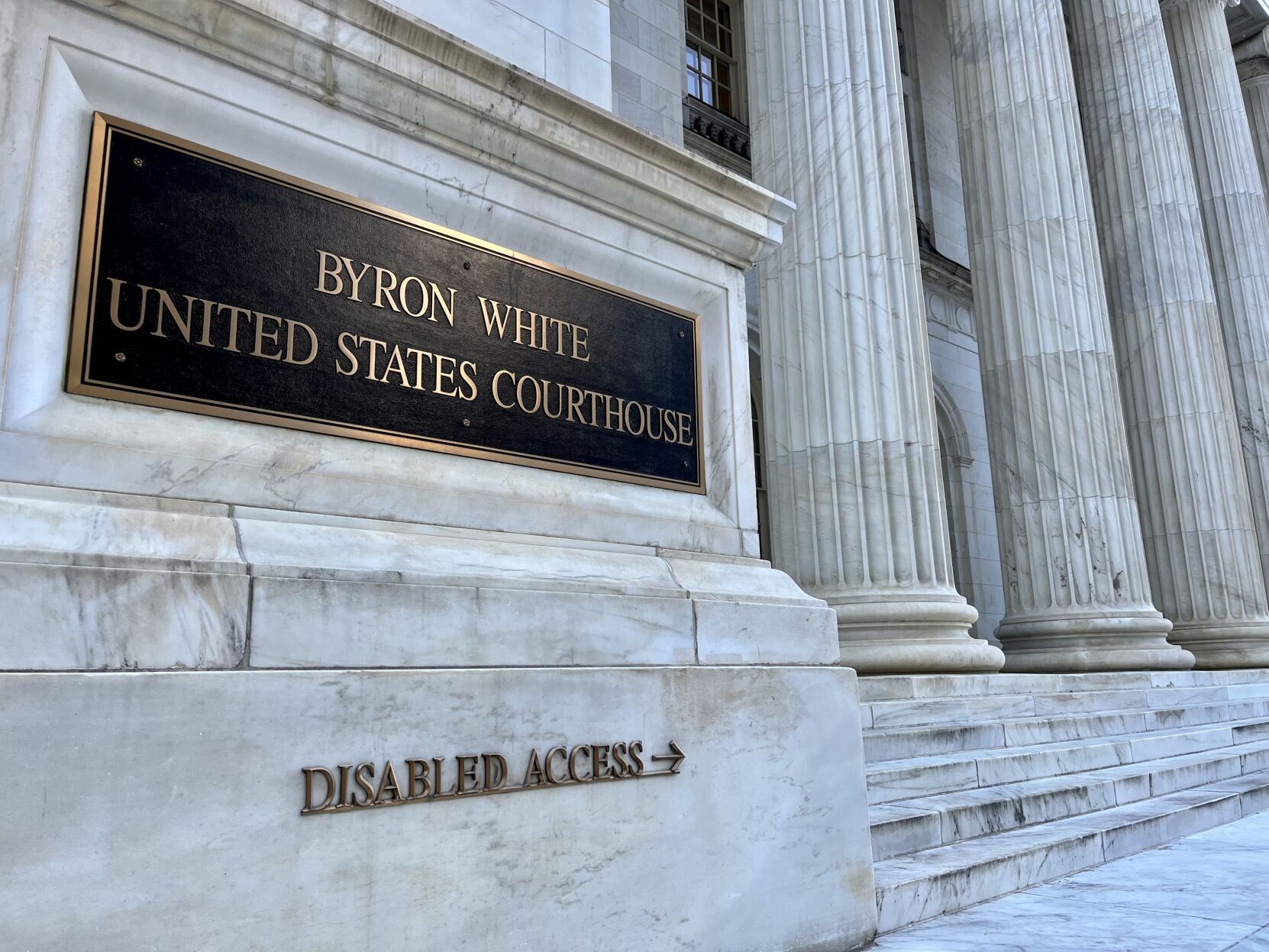
The Denver-based federal appeals court rejected a woman’s challenge on Friday to a restraining order imposed on her more than a decade ago, finding that she cannot credibly claim she will be prosecuted for violating the restraining order through her First Amendment-protected activity.
The U.S. Court of Appeals for the 10th Circuit already concluded in 2022 that the restraining order, also known as a protection order, did not prohibit Regina T. Drexler from publishing her written work, despite her belief that it did. Almost four years later, in a July 24 order, a three-judge panel reiterated that judges across state and federal courts have expressed that view.
“Given that the protection order by its own terms doesn’t restrict Drexler’s First Amendment rights — and that two courts have expressly said as much — her fear of being criminally prosecuted for violating the protection order in a way that chills her First Amendment rights is not objectively reasonable,” wrote Judge Nancy L. Moritz.
Case: Drexler v. Weiser
Decided: July 24, 2026
Jurisdiction: U.S. District Court for Colorado
Ruling: 3-0
Judges: Nancy L. Moritz (author)
Robert E. Bacharach
Robert J. Shelby* (district judge from Utah)
Drexler and a friend, identified as R.B., had an intimate relationship that ended poorly. In 2015, both women filed for civil protection orders against each other and then-Denver County Court Presiding Judge Theresa Spahn ended up granting a restraining order protecting R.B. from Drexler. Spahn pointed to Drexler showing up at places where R.B. would be and Drexler’s writing and performance of essays that touched on R.B. Spahn noted that Drexler read one such essay at their children’s shared school, which “supports that you have an obsession with her.”
“I really feel like you used this court and this process to once again have some sort of dysfunctional access to (R.B.) and stir up that flurry of activity so you could be around her in a very dysfunctional way,” she said.
Drexler appealed the permanent protection order to a district court judge, who largely upheld the order. Drexler further appealed to the Colorado Supreme Court and the U.S. Supreme Court, to no avail.
A few years later, Drexler moved to dismiss the protection order. In response, County Court Judge Chelsea Malone refused to rescind it.
“Judge Spahn noted a pattern of filing and litigation used by Drexler to terrorize (R.B.), a pattern which continues to this day,” Malone wrote. “Drexler stalked (R.B.) from 2008 until 2015, and has continued to seek unhealthy access to (R.B.) through litigation of these cases.”
Once again, a district judge and the Colorado Supreme Court declined Drexler’s attempts to be released from the terms of the protection order, which prohibits contact, harassment, stalking, and intimidation, among other activities. The reviewing district judge also noted that the order did not prohibit Drexler from continuing to publish her literary writing.
Drexler then filed a federal case seeking to get out from under the protection order. A 10th Circuit panel permitted her to challenge various state laws that govern protection orders, but disagreed that the restraining order imposed restrictions on her future essay-writing.
“The protection order itself didn’t say anything that would restrict Ms. Drexler’s right to speech,” wrote Judge Robert E. Bacharach. The clarifications in state court about the scope of the restrictions “eliminates any conceivable characterization of the protection order as a restriction on Ms. Drexler’s speech.”
After Drexler’s case returned to the federal trial court, she filed an amended complaint that named new defendants and added claims. The case still centered on the 2015 restraining order and Drexler’s beliefs about its effects on her First Amendment rights.
“Taking the facts as alleged to be true, it is hard not to sympathize with Ms. Drexler. If, indeed, merely writing and telling stories based on a past relationship resulted in a protection order and forgone opportunities to publish or otherwise engage in literary endeavors, that would be lamentable,” wrote U.S. District Court Judge Daniel D. Domenico in March 2025. “But, for the most part, the paths to challenge the specifics of those actions have been driven, without success.”
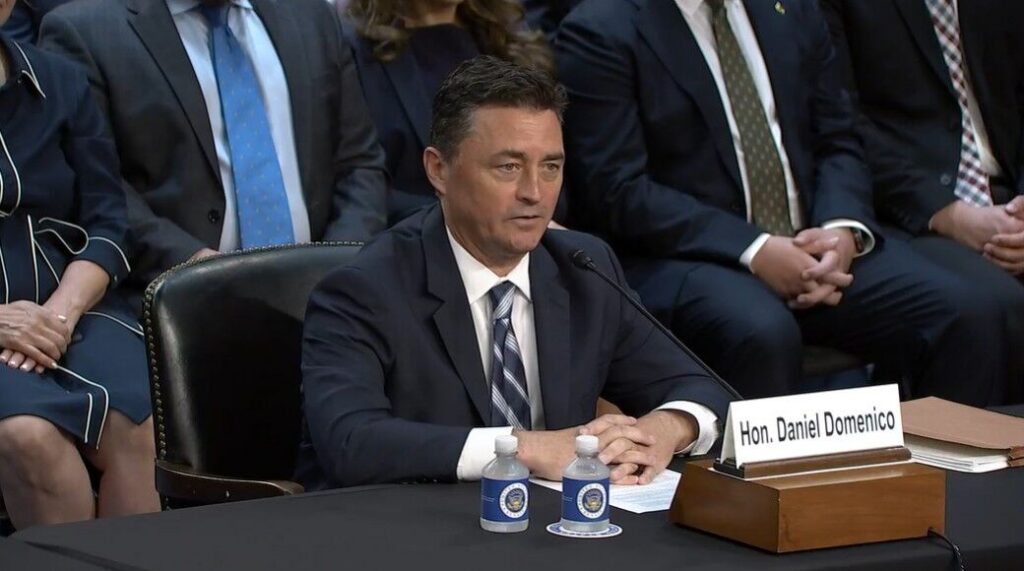
He dismissed Drexler’s claims against various state officials because they played no role in enforcing the challenged laws. As for the only defendant who did have that role, the Denver district attorney, Domenico noted that then-elected District Attorney Beth McCann had submitted a statement confirming Drexler could not be prosecuted for constitutionally protected speech.
“If Ms. Drexler simply published a written work or read from a written work at a location where (R.B.) and the other protected parties were not present, those actions standing alone would not constitute a protection order violation or stalking in violation of Colorado law in my view. My Office would not prosecute Ms. Drexler solely for those actions,” McCann wrote.
Given those assurances, “it is not reasonable to fear such a prosecution,” wrote Domenico in dismissing the entirety of Drexler’s case.
Drexler once again appealed to the 10th Circuit, noting current District Attorney John Walsh did not make a similar statement, and McCann’s statement did not assuage her fear of prosecution.
“This Court has already ruled the protection order in this case does not restrict Ms. Drexler’s First Amendment rights,” wrote attorneys for Walsh. “Ms. Drexler has no legal basis to continue arguing she has a credible fear of prosecution. Ms. Drexler should return to her clearly successful literary endeavors. A decade of fighting about the protection order is long enough. It’s time to move on.”
The 10th Circuit panel once again rejected Drexler’s First Amendment arguments, saying her “attempts to find fault” with the district attorney’s position were unpersuasive.
Drexler “can’t establish a credible threat that the criminal protection-order and stalking statutes will be enforced against her in a manner that chills her First Amendment rights,” wrote Moritz.
The case is Drexler v. Weiser et al.

10th Circuit dismisses woman’s lawsuit following 10-year attempt to undo restraining order
Michael Karlik
michael.karlik@coloradopolitics.com
Updated 1 hour ago
The Denver-based federal appeals court rejected a woman’s challenge on Friday to a restraining order imposed on her more than a decade ago, finding that she cannot credibly claim she will be prosecuted for violating the restraining order through her...
Colorado equal pay law does not require plaintiffs to allege gender-based retaliation, appeals court finds
Michael Karlik
michael.karlik@coloradopolitics.com
Updated 2 hours ago
The 2019 Colorado law aimed at rooting out pay discrimination on the basis of sex does not require a plaintiff to allege their employer retaliated against them for sex- or gender-related reasons, the state’s second-highest court decided on Thursday. Lawmakers...
Hudson faces lawsuit over ICE detention facility
Nicole C. Brambila
nicole-c-brambila@coloradopolitics.com
Updated 8 hours ago
A nonprofit organization filed a lawsuit against the Town of Hudson Wednesday, challenging plans to reopen a former federal prison in the town as a U.S. Immigration and Customs Enforcement detention facility. Together Colorado, along with Janet E. Carlson, filed...
Senate committee advances Trump’s 10th Circuit nominee, as Domenico responds to questions about delays
Michael Karlik
michael.karlik@coloradopolitics.com
Updated 7 hours ago
The U.S. Senate Judiciary Committee advanced President Donald Trump’s nominee to the Denver-based federal appeals court on Thursday by a party-line vote of 12-10. U.S. District Court Judge Daniel D. Domenico, who was Trump’s first-term appointee to Colorado’s federal trial...
Colorado justices to hear embryonic donation dispute
Michael Karlik
michael.karlik@coloradopolitics.com
Updated 22 hours ago
The Colorado Supreme Court announced on Monday that it will decide whether lower court judges properly applied its framework for adjudicating disputes over the fate of pre-embryos, in which one person wants to use them to become a parent and...
Isolation, emotion, persona: Colorado judicial programming prepares people for life on the bench
Michael Karlik
michael.karlik@coloradopolitics.com
Updated 24 hours ago
As a trial judge and now as a member of the Colorado Supreme Court, Justice Carlos A. Samour Jr. has heard the view that being a judge is isolating. “In neither court have I felt isolated. I’ve always interacted a...

Federal judge dismisses Colorado county sheriff’s challenge to law limiting immigration cooperation
Michael Karlik
michael.karlik@coloradopolitics.com
Updated 2 days ago
A federal judge dismissed a challenge from Mesa County Sheriff’s Office leaders last week to a Colorado law limiting public employees’ cooperation with immigration authorities, concluding that the plaintiffs did not allege they engage in any conduct that the law...
10th Circuit raises bar for fraud victims to sue debt collectors over inaccurate information
Michael Karlik
michael.karlik@coloradopolitics.com
Updated 2 days ago
The Denver-based federal appeals court wiped away a jury’s $500,000 award to a fraud victim on Monday and made it more difficult for consumers to hold companies liable for disseminating inaccurate credit information. The Fair Credit Reporting Act regulates credit...
Montezuma County judge’s censure, suspension approved by discipline panel
Michael Karlik
michael.karlik@coloradopolitics.com
Updated 2 days ago
A three-member disciplinary panel accepted, on Monday, an agreement between a Montezuma County judge and the Colorado Commission on Judicial Discipline that specifies he will receive a censure, a suspension, and additional education for his admitted instances of misconduct. Under...

Operators of Aurora assisted-living home charged with mistreating patients
Kyla Pearce
kyla.pearce@gazette.com
Updated 3 days ago
The owners of a home for at-risk adults in Aurora were indicted by a grand jury Thursday after an investigation of mistreatment of patients. James Russell Vogel and Angelica Vogel, the operators of All Saints Home Care, were each charged...
PREV
PREVIOUS

Surprise candidate Shimon Blau cleared to face off against Melat Kiros in November
Unaffiliated congressional candidate Shimon Blau, a Denver doctor, has qualified by petition for the general election in Colorado’s 1st District, where Democrat Melat Kiros defeated 15-term U.S. Rep. Diana DeGette in last month’s primary, the Colorado Secretary of State’s Office said Friday. Blau, a newcomer to politics, submitted just shy of 2,000 valid signatures on […]

10th Circuit dismisses woman’s lawsuit following 10-year attempt to undo restraining order
The Denver-based federal appeals court rejected a woman’s challenge on Friday to a restraining order imposed on her more than a decade ago, finding that she cannot credibly claim she will be prosecuted for violating the restraining order through her First Amendment-protected activity. The U.S. Court of Appeals for the 10th Circuit already concluded in […]