

Appeals court finds opening in Colorado Supreme Court’s framework for child neglect cases
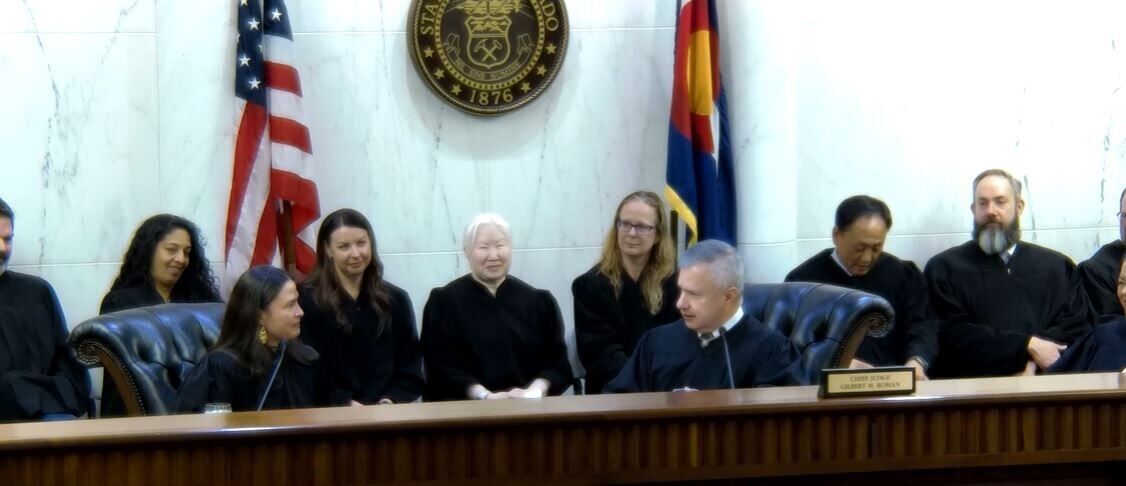
Colorado’s second-highest court squeezed through an opening last week in a controversial state Supreme Court decision from 2025, concluding that the justices had not prohibited a child’s legal representative from being the one to request termination of parental rights in child welfare cases.
Whether the government alone is empowered to pursue child neglect cases became a high-profile issue in the past year after the Supreme Court addressed what should happen if a county moves to dismiss the neglect allegations against a parent.
In People in the Interest of R.M.P., the Supreme Court concluded that judges could not allow a child’s legal representative to continue the case without the county. Chief Justice Monica M. Márquez wrote that the government alone is authorized to pursue child welfare cases, and permitting individual parties to litigate cases would result in a “weaponized family court system.”
“Allowing a child (or any non-state party) to override the State’s determination that a petition should be dismissed would be analogous to allowing the victim of a crime to prevent the district attorney from dismissing a criminal case,” she wrote. “Colorado law does not confer such a right.”
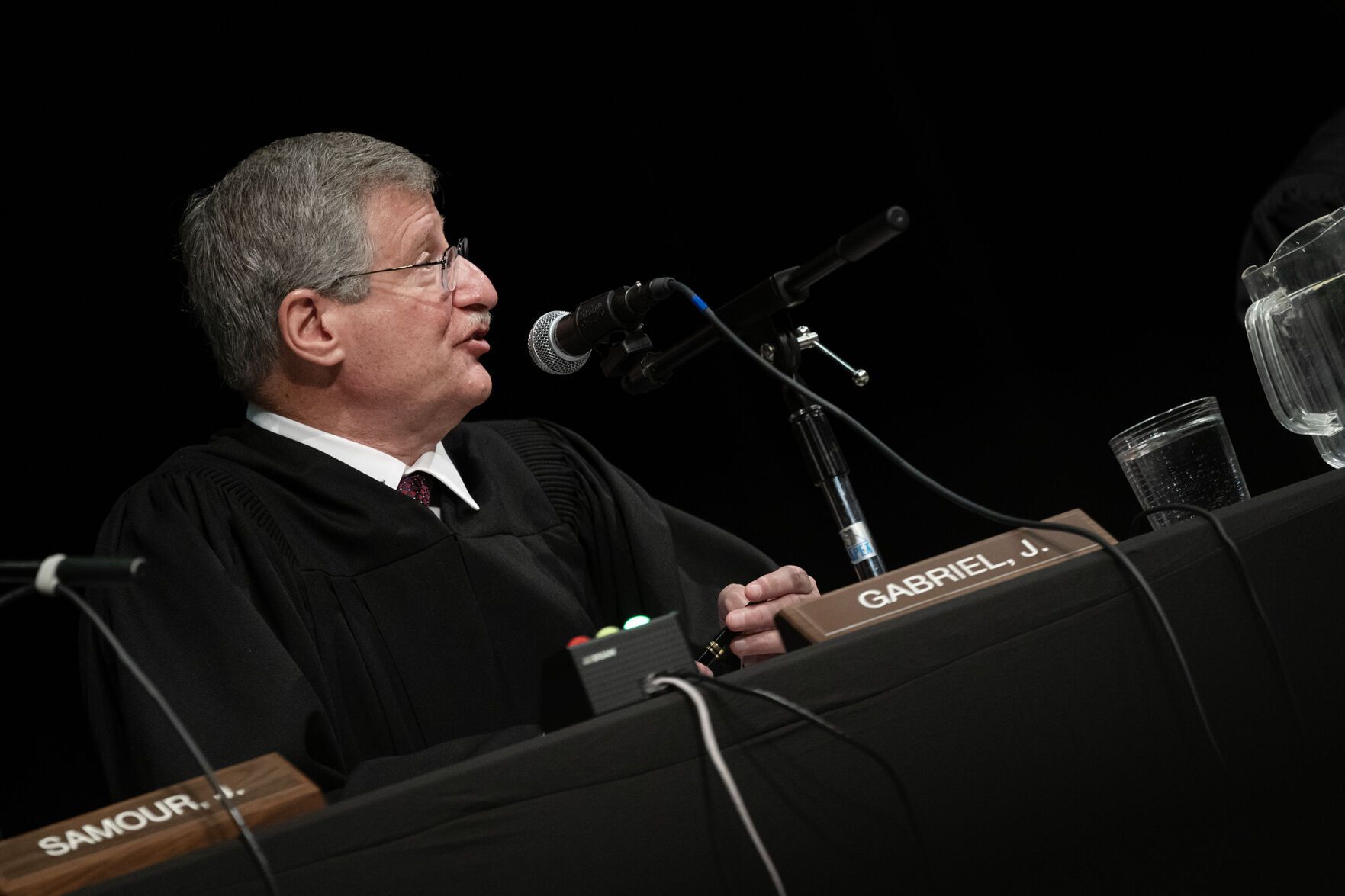
Justice Richard L. Gabriel was the lone dissenter, arguing that the question was whether the government may “unilaterally” dismiss a child welfare case without a judge providing oversight about the correctness of that decision. He believed the answer was no and felt that trial judges can appropriately decide if there is evidence supporting the initial allegations.
This year, the legislature overruled the Supreme Court and adopted Gabriel’s dissenting view. The governor signed the bill into law earlier this month.
However, days after the bill signing, a three-judge Court of Appeals panel addressed a question not explicitly covered by the new law, and potentially not covered in the R.M.P. decision: Does a child’s legal representative have the ability on their own to seek termination of a parent’s legal rights after a child has been deemed neglected?
The Chaffee County Department of Human Services filed a neglect petition against a mother and father. A judge found the child to be neglected and imposed a treatment plan for the parents that included substance use and domestic violence components.
In February 2025, the child’s “guardian ad litem” moved to terminate the parents’ legal rights, to which the county did not object. The judge granted the motion after a hearing.
The appellate panel compared the case to the Supreme Court’s R.M.P. decision and found a key difference. Whereas the Supreme Court focused on a child’s representative’s ability to pursue a case before a formal neglect finding, the Chaffee County appeal involved the phase between the neglect finding and the termination of rights.
Case: People in the Interest of C.N.T.
Decided: June 4, 2026
Jurisdiction: Chaffee County
Ruling: 3-0
Judges: Melissa C. Meirink (author)
Katharine E. Lum
Jerry N. Jones (concurring dubitante)
“To begin, we recognize that in R.M.P. the supreme court used the word ‘proceeding’ on a few occasions when describing the State’s role in prosecuting a dependency or neglect petition,” wrote Judge Melissa C. Meirink in the June 4 opinion. But “in context, we conclude that the opinion only applies to the first phase of a dependency or neglect proceeding.”
She noted that the Supreme Court had discussed the state’s right to intervene in family relationships to protect children’s welfare. As a result, Meirink reasoned that R.M.P. applied to the government’s historical role of initiating a child neglect case and pursuing it until a formal neglect decision is issued.
“R.M.P. doesn’t apply to this matter,” she concluded for herself and Judge Katharine E. Lum, upholding the decision to allow the child’s legal representative to pursue termination.
Judge Jerry N. Jones wrote separately, indicating that he harbored doubts about the majority’s discovery of a seeming loophole in the Supreme Court’s decision.
“But because the majority’s conclusion is plausible and I’m not able to conclude with sufficient certainty that the majority is wrong, I concur in the result,” he wrote.
Jones added that there were reasons to believe the Supreme Court had intended to block non-governmental parties from pursuing child neglect proceedings more broadly.
“But in light of the uncertainty R.M.P. has engendered, I would urge the supreme court to clarify the reach of R.M.P.,” he wrote.
Chris Henderson, executive director of the Office of the Child’s Representative, said his office was relieved to see the Court of Appeals recognize that children, as parties to neglect cases, retain the right to “basic process.”
“The language in R.M.P. combined with the timing of that decision,” he said, “led to challenges to youth standing in all aspects of these proceedings and our attorneys have had to litigate basic rights and standing issues at a truly alarming rate in the trial courts.”
The Office of Respondent Parents’ Counsel, which represents parents in neglect cases, declined to comment.
The case is People in the Interest of C.N.T.

Federal judge green-lights civil trial against ex-Fort Collins DUI officer
Michael Karlik
michael.karlik@coloradopolitics.com
Updated 2 days ago
A federal judge ruled on Thursday that Fort Collins’ former “DUI officer” will face a civil trial for allegedly investigating a motorist for impaired driving without any reasonable suspicion to do so. In recent years, several people arrested by Officer...

Colorado Supreme Court suspends Mesa County judge pending misconduct investigation
Michael Karlik
michael.karlik@coloradopolitics.com
Updated 1 day ago
The Colorado Supreme Court suspended Mesa County Court Judge Michael J. Grattan on Thursday amid a misconduct investigation. The court’s Sept. 10 order gave Grattan 21 days to explain why his paid suspension should not continue through the end of...
Colorado Supreme Court changes course, dismisses case about special district bonds
Michael Karlik
michael.karlik@coloradopolitics.com
Updated 1 day ago
The Colorado Supreme Court declined on Friday to decide a dispute between a large-scale Commerce City development and the various districts financing it, after initially showing interest in the ongoing case. Colorado has roughly 2,800 special districts, which are local...
10th Circuit tosses GEO Group’s pretrial appeal in human trafficking lawsuit
Michael Karlik
michael.karlik@coloradopolitics.com
Updated 3 days ago
The Denver-based federal appeals court dismissed an attempt by The GEO Group on Wednesday to appeal a trial judge’s non-existent decision two months before the company is scheduled to face a civil trial over alleged trafficking violations at the Aurora...

Denver sues Trump to block armed ICE agents from polling sites
Deborah Grigsby
deborah.smith@denvergazette.com
Updated 3 days ago
The city of Denver, along with several groups, sued the Trump administration Thursday, seeking to block U.S. Immigration and Customs Enforcement officers who are armed from polling sites during the upcoming midterm elections. In fact, there are no official orders...

Federal judge takes no action against ICE in Colorado after hearing about mistakes, not ‘blatant violations’
Michael Karlik
michael.karlik@coloradopolitics.com
Updated 1 day ago
A federal judge declined to take action against U.S. Immigration and Customs Enforcement on Thursday after hearing that a pattern of alleged lawbreaking amounted to mistakes and a misunderstanding of the government’s position in court. For nearly a year, Colorado’s...
Colorado doctors, dentists challenge state law on gender‑transition services in new federal lawsuit
Marissa Ventrelli
marissa.ventrelli@coloradopolitics.com
Updated 23 hours ago
A group of Christian doctors and dentists has filed a federal lawsuit challenging a Colorado law they say requires them to provide gender‑transition services that conflict with their religious and ethical beliefs. The lawsuit, filed by the Christian Medical and...
Federal judge directs plaintiff to revise complaint alleging Denver officers’ constitutional violations
Michael Karlik
michael.karlik@coloradopolitics.com
Updated 1 day ago
A federal judge directed a plaintiff to revise his allegations on Wednesday to more precisely state what two Denver officers and the city itself allegedly did to violate his constitutional rights by facilitating his prosecution for murder until prosecutors dropped...

Lawsuit challenges Douglas County commissioners’ ballot actions
Nicholas Fogleman
nicholas.fogleman@denvergazette.com
Updated 3 days ago
A new lawsuit against Douglas County commissioners seeks to invalidate the board’s intervention in efforts to expand the commission from three members to five and restore the original ballot language approved by more than 20,000 petition signers. The suit marks...
Federal judge explores new sanctions against ex-Colorado judicial discipline director
Michael Karlik
michael.karlik@coloradopolitics.com
Updated 1 day ago
A federal judge on Wednesday directed Colorado’s former judicial discipline director, for the third time this year, to explain why she should not sanction him for his latest conduct in his litigation against the state’s judiciary. Christopher S.P. Gregory, who served...
PREV
PREVIOUS

Aurora voters to decide on sales tax hike to fund projects
Aurora voters will decide in November whether to raise sales taxes for the first time since 1993 to help pay for infrastructure, transportation and public safety improvements. If voters approved the tax increase, the money will go toward “Build Up Aurora” to fund projects that include construction of Gun Club Road, updates to police and […]

Bennet campaign finance case delayed again as Colorado Elections Division amends complaint
A campaign‑finance complaint alleging that U.S. Sen. Michael Bennet’s Senate committee improperly paid for travel tied to his gubernatorial bid won’t get a public hearing until after the June 30 primary. The latest development followed months of delays and a late‑May amended filing by a state election office. Four complaints have been filed against the […]