

Federal judge clarifies ex-GOP treasurer candidate’s burden to prove defamation claims
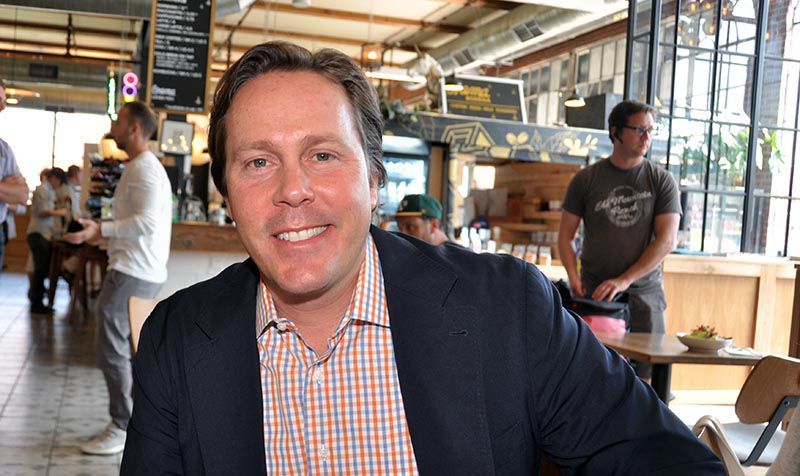
A federal judge clarified last week that businessman and former Republican statewide candidate Brian Watson will need to surmount a higher hurdle in proving his claim that a party guest’s alleged description of him as a “criminal” amounted to defamation.
Watson was the GOP nominee for Colorado treasurer in 2018 and a 2012 candidate for the state House of Representatives. He was unsuccessful in his runs for office.
In 2024, Watson sued Laura Elsaden for defamation. He alleged that Elsaden, at a July 2024 dance party at the luxury C Lazy U Ranch in Granby, stated that Watson was a “criminal” who had relations with prostitutes. Elsaden also allegedly called Watson’s wife, Tiffany Mai, a prostitute. Mai separately sued Elsaden for defamation and the parties settled earlier this year.
Watson’s defamation claim required him to show that Elsaden made a false and damaging statement to a third party. However, if Watson qualified as a “public figure,” he would also need to demonstrate that Elsaden spoke with “actual malice” — meaning without regard to whether her comments were false.
In May 2025, Chief U.S. Magistrate Judge Scott T. Varholak allowed Elsaden to seek a ruling about Watson’s status as a public figure. The evidence showed that:
- Watson founded a large real estate, development, investment, and asset management company.
- He called the company an “empire,” with more than $1.3 billion in assets.
- Watson started a foundation and had a YouTube channel with more than 400 videos.
- He ran for office twice in Colorado.
- He authored two books.
- Watson appeared in TV interviews and as a commentator.
- The FBI searched Watson’s home in 2020 and the U.S. Securities and Exchange Commission sued him for alleged securities fraud, which both received media attention.
- Watson broadcast statements about the FBI search.
- In February, a federal jury in Denver found Watson civilly liable for securities fraud.
“The undisputed evidence shows that, for decades, he has deliberately cultivated a highly visible persona across business, social, philanthropic, political, and media arenas, elevating himself into a hyper-Public Figure, both in Colorado and nationally,” wrote T. Markus Funk, an attorney for Elsaden. “The exceptional volume of media coverage and self-promotion spanning over a decade conclusively seal Mr. Watson’s Public Figure fate.”
“Since 2020, Watson has shunned the spotlight, turning away from the publicity that characterized the previous decade to focus instead on his family, personal pursuits, and rebuilding his real estate business,” countered Watson’s attorneys. “Long gone are the days of talk show appearances and promotional events. Watson has not appeared on any podcast or news or entertainment program since early 2020. Watson ceased writing, both in longform and shortform, by the end of 2020.”
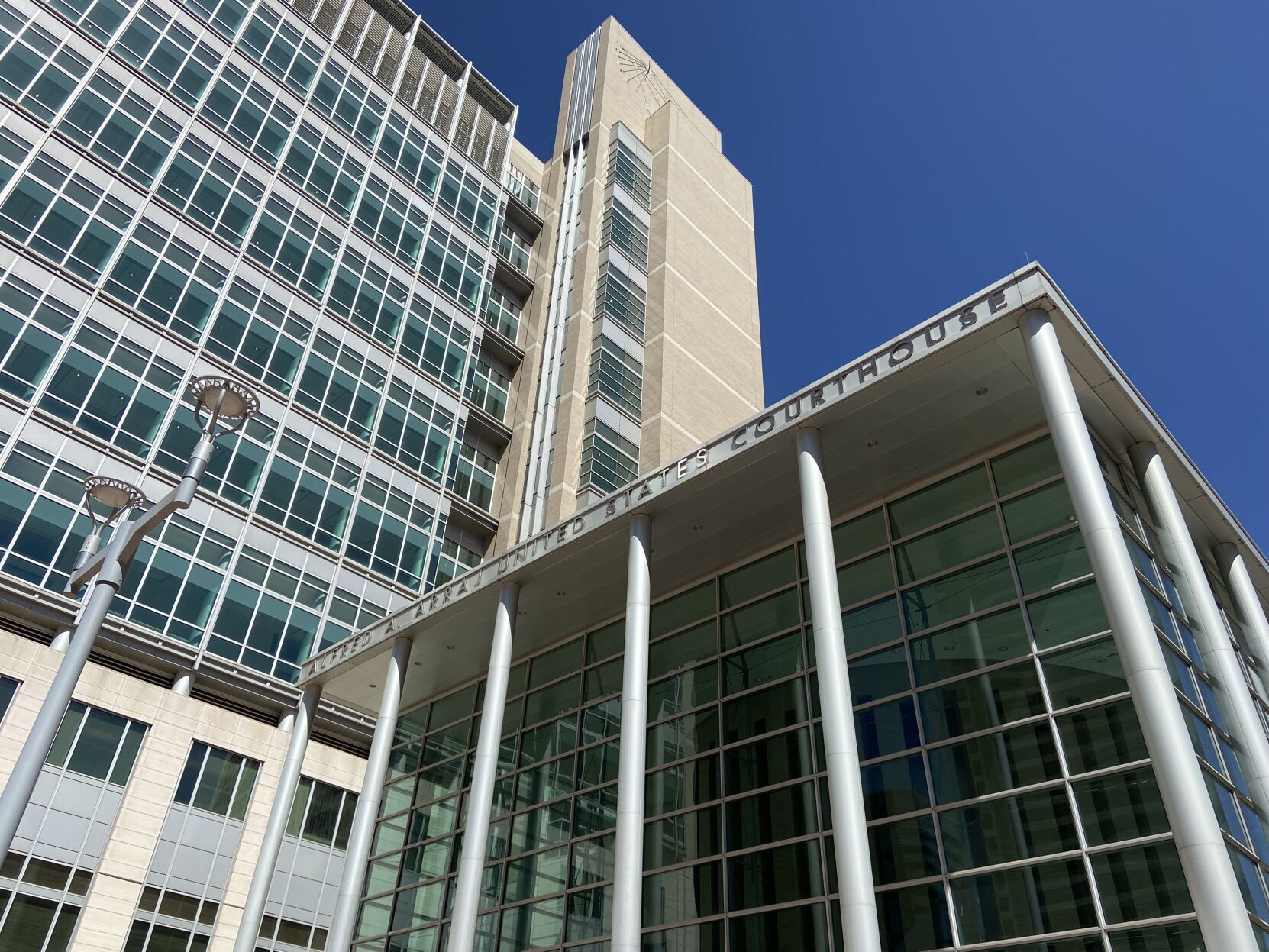
Varholak, in a July 20 order, first examined whether Watson was an “all-purpose” public figure, meaning a person with “pervasive fame or notoriety” that made him a public figure in all aspects of his life. Watson was well known, acknowledged Varholak, but his fame was not all-purpose.
“While Plaintiff was undoubtedly prominent, prominence alone is not synonymous with the celebrity-like or ubiquitous public stature that renders virtually every aspect of an individual’s life a matter of public concern,” Varholak wrote.
However, he concluded Watson became a “limited-purpose” public figure on the question of his alleged criminality by broadcasting his thoughts about the FBI’s investigation before and after the Granby dance party.
“By continuing to engage publicly with the media and through public statements concerning the litigation and investigations, Plaintiff voluntarily assumed a position of prominence within that controversy,” Varholak wrote.
As a result of his public-figure status, Watson would need to prove Elsaden acted with actual malice when she allegedly labeled him a criminal. Watson would not need to satisfy that higher standard for Elsaden’s alleged comment about prostitutes, Varholak added.
The case is Watson v. Elsaden.

Federal judge green-lights civil trial against ex-Fort Collins DUI officer
Michael Karlik
michael.karlik@coloradopolitics.com
Updated 1 day ago
A federal judge ruled on Thursday that Fort Collins’ former “DUI officer” will face a civil trial for allegedly investigating a motorist for impaired driving without any reasonable suspicion to do so. In recent years, several people arrested by Officer...

Colorado Supreme Court suspends Mesa County judge pending misconduct investigation
Michael Karlik
michael.karlik@coloradopolitics.com
Updated 9 hours ago
The Colorado Supreme Court suspended Mesa County Court Judge Michael J. Grattan on Thursday amid a misconduct investigation. The court’s Sept. 10 order gave Grattan 21 days to explain why his paid suspension should not continue through the end of...
Colorado Supreme Court changes course, dismisses case about special district bonds
Michael Karlik
michael.karlik@coloradopolitics.com
Updated 9 hours ago
The Colorado Supreme Court declined on Friday to decide a dispute between a large-scale Commerce City development and the various districts financing it, after initially showing interest in the ongoing case. Colorado has roughly 2,800 special districts, which are local...

10th Circuit tosses GEO Group’s pretrial appeal in human trafficking lawsuit
Michael Karlik
michael.karlik@coloradopolitics.com
Updated 2 days ago
The Denver-based federal appeals court dismissed an attempt by The GEO Group on Wednesday to appeal a trial judge’s non-existent decision two months before the company is scheduled to face a civil trial over alleged trafficking violations at the Aurora...
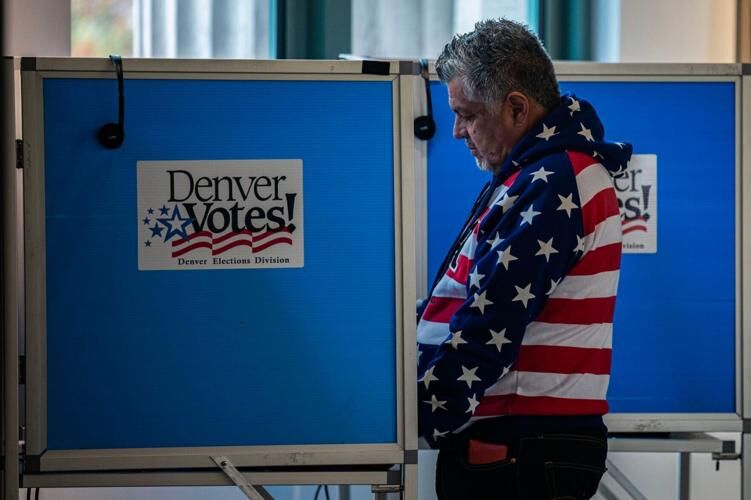
Denver sues Trump to block armed ICE agents from polling sites
Deborah Grigsby
deborah.smith@denvergazette.com
Updated 2 days ago
The city of Denver, along with several groups, sued the Trump administration Thursday, seeking to block U.S. Immigration and Customs Enforcement officers who are armed from polling sites during the upcoming midterm elections. In fact, there are no official orders...
Federal judge takes no action against ICE in Colorado after hearing about mistakes, not ‘blatant violations’
Michael Karlik
michael.karlik@coloradopolitics.com
Updated 7 hours ago
A federal judge declined to take action against U.S. Immigration and Customs Enforcement on Thursday after hearing that a pattern of alleged lawbreaking amounted to mistakes and a misunderstanding of the government’s position in court. For nearly a year, Colorado’s...
Colorado doctors, dentists challenge state law on gender‑transition services in new federal lawsuit
Marissa Ventrelli
marissa.ventrelli@coloradopolitics.com
Updated 4 hours ago
A group of Christian doctors and dentists has filed a federal lawsuit challenging a Colorado law they say requires them to provide gender‑transition services that conflict with their religious and ethical beliefs. The lawsuit, filed by the Christian Medical and...
Federal judge directs plaintiff to revise complaint alleging Denver officers’ constitutional violations
Michael Karlik
michael.karlik@coloradopolitics.com
Updated 7 hours ago
A federal judge directed a plaintiff to revise his allegations on Wednesday to more precisely state what two Denver officers and the city itself allegedly did to violate his constitutional rights by facilitating his prosecution for murder until prosecutors dropped...

Lawsuit challenges Douglas County commissioners’ ballot actions
Nicholas Fogleman
nicholas.fogleman@denvergazette.com
Updated 3 days ago
A new lawsuit against Douglas County commissioners seeks to invalidate the board’s intervention in efforts to expand the commission from three members to five and restore the original ballot language approved by more than 20,000 petition signers. The suit marks...
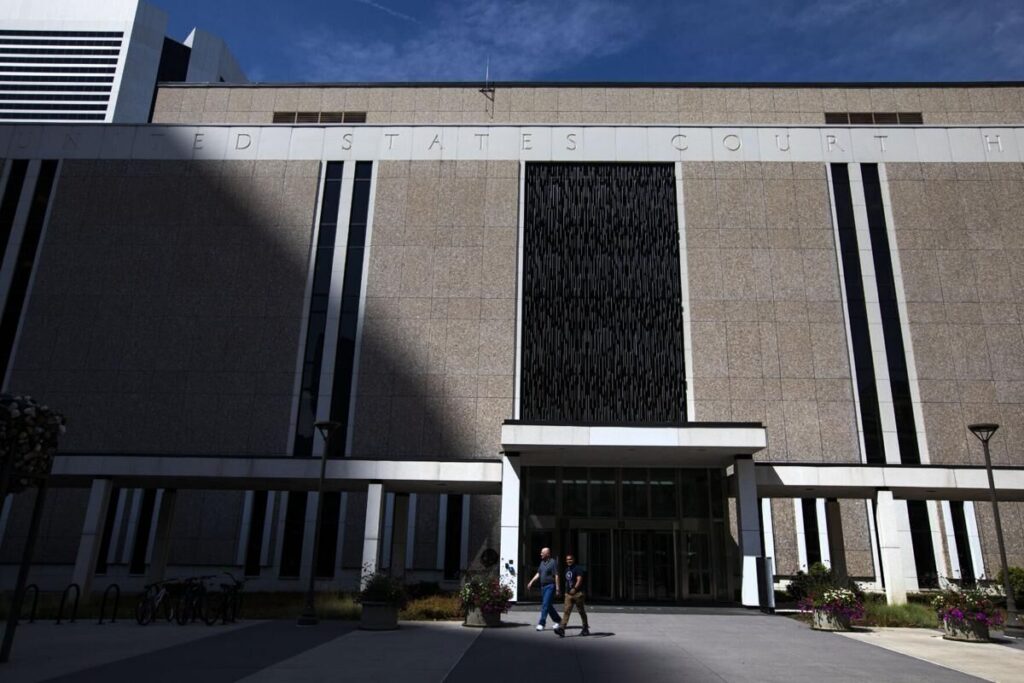
Federal judge explores new sanctions against ex-Colorado judicial discipline director
Michael Karlik
michael.karlik@coloradopolitics.com
Updated 9 hours ago
A federal judge on Wednesday directed Colorado’s former judicial discipline director, for the third time this year, to explain why she should not sanction him for his latest conduct in his litigation against the state’s judiciary. Christopher S.P. Gregory, who served...
PREV
PREVIOUS
Independent gubernatorial candidate Greg Lopez, a former GOP congressman, qualifies for Colorado ballot
Unaffiliated gubernatorial candidate Greg Lopez, a former Republican congressman from Elizabeth who left the GOP to run as an independent, has qualified for the ballot by submitting enough petition signatures, the Colorado Secretary of State’s Office said Tuesday. He’ll face Democratic nominee Phil Weiser, the state’s two-term attorney general, and Republican Victor Marx, a first-time […]
Denver detox center did not violate man’s rights with 10-hour hold, 10th Circuit says
The Colorado-based federal appeals court concluded on Tuesday that Denver’s detoxification facility did not violate a man’s rights by holding him against his will for 10 hours until his blood alcohol content was projected to reach zero. Unusually, Brian Garrett’s lawsuit against Denver CARES unfolded as a federal jury concluded the organization violated the constitutional […]