

Federal judge explores new sanctions against ex-Colorado judicial discipline director
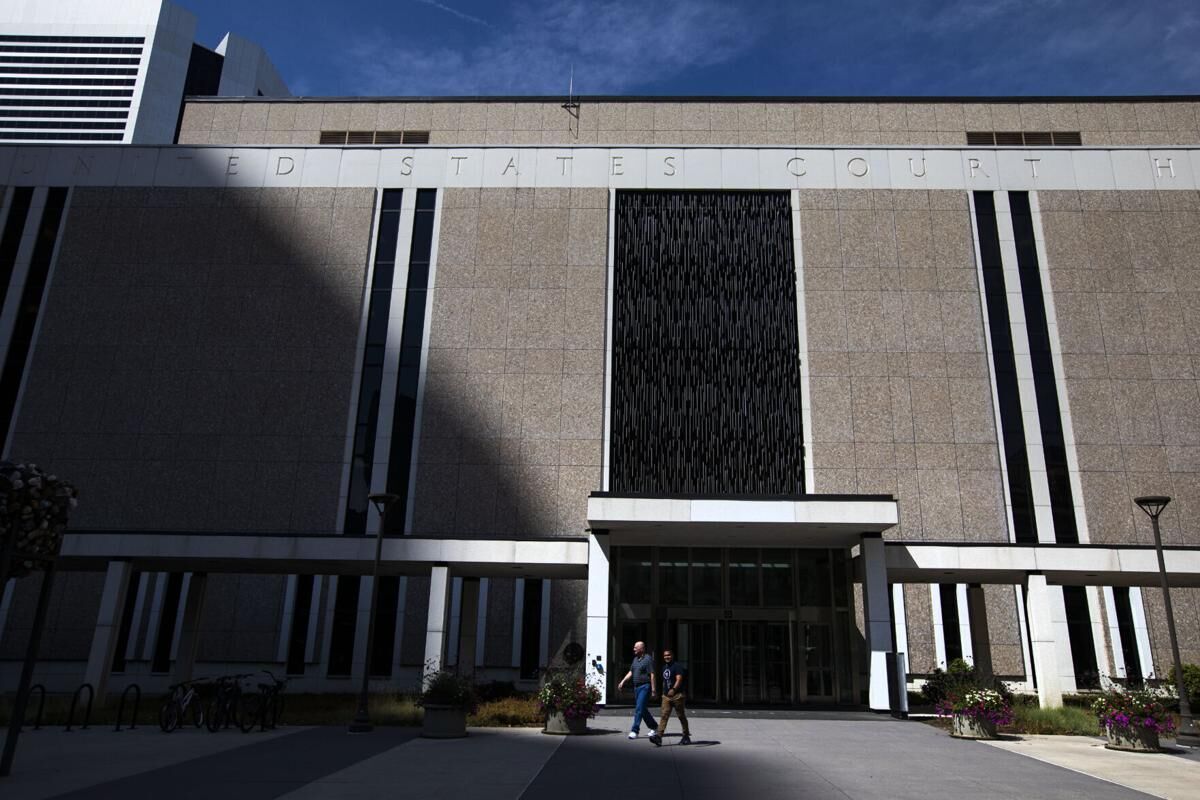
A federal judge on Wednesday directed Colorado’s former judicial discipline director, for the third time this year, to explain why she should not sanction him for his latest conduct in his litigation against the state’s judiciary.
Christopher S.P. Gregory, who served as the executive director of the Colorado Commission on Judicial Discipline between 2022 and 2024, raised claims of conspiracy and constitutional violations against the Colorado Supreme Court, numerous judges and attorneys involved in the judicial discipline process, plus the governor and attorney general. He sought reinstatement to his former position, monetary damages, and the complete overhaul of multiple state judicial entities.
Last month, U.S. District Court Senior Judge Kathryn H. Vratil dismissed Gregory’s lawsuit, finding he failed to adequately state claims under federal law.
After Gregory sought to vacate her decision and, in the process, publicly filed multiple documents that he was required to place under restricted view, Vratil gave Gregory roughly 48 hours to explain why he should not be held in contempt and sanctioned for violating the filing requirement.
The Sept. 9 order was the third time Vratil mulled sanctions against Gregory since March.
Vratil, of Kansas, was assigned to Gregory’s case earlier this year under the provision of law allowing the chief judge of the U.S. Court of Appeals for the 10th Circuit to enlist an out-of-state judge when it would be “in the public interest.” Four of Colorado’s U.S. District Court judges recused or otherwise declined to handle Gregory’s case, after which Chief Judge Jerome A. Holmes of the 10th Circuit designated Vratil to preside.
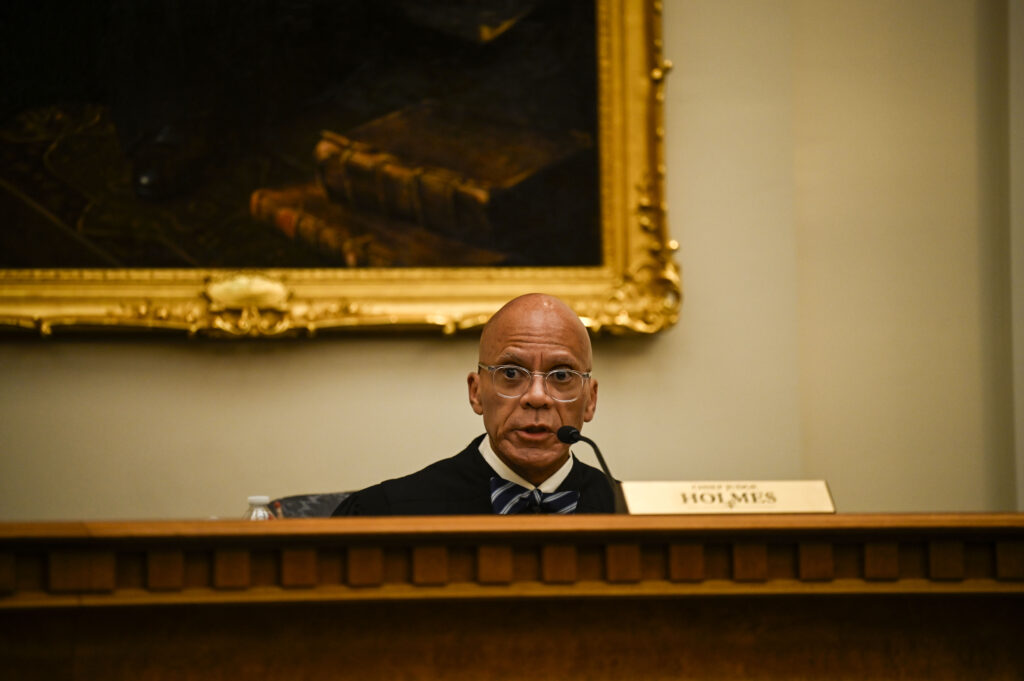
Gregory has filed dozens of highly similar misconduct complaints against Vratil, Holmes, and other judges in the 10th Circuit, all related to his case. Recently, a 10th Circuit judge who reviewed and dismissed two of Gregory’s complaints characterized them as a “litigation tactic.”
Gregory’s lawsuit alleged a conspiracy related to the 2019 decision to award a multimillion-dollar contract to a Colorado judicial employee who was herself facing misconduct allegations. Later reporting revealed that the employee, Mindy Masias, had cataloged alleged instances of judicial misconduct that she was prepared to disclose.
The state judiciary later commissioned an investigation and a disciplinary panel of Court of Appeals judges issued an unprecedented censure of former Chief Justice Nathan B. Coats for his role in mismanaging the contract award.
Gregory further alleged that, since his termination, the judicial discipline commission has dismissed his misconduct complaints, declined to “publish (his) public comments into the record,” and obstructed his “fundamental right to be heard.”
On March 18, Vratil directed Gregory to explain why she should not sanction him for violating the federal rule prohibiting improper or frivolous representations, after he allegedly mischaracterized the defendants’ actions in the case. One week later, she again asked Gregory to describe why his attempt to seek her recusal did not violate the prohibition on court filings that are made “for an improper purpose, such as to harass, cause unnecessary delay, or needlessly increase the costs of litigation in this case.”
Since the dismissal of Gregory’s case on Aug. 11, Vratil has not followed up with any consequences.
However, Gregory requested on Tuesday that Vratil vacate her order because it was the product of her “personal bias and prejudice” against him. Gregory alleged that the dismissal amounted to retaliation, that Vratil was “openly hostile” toward him, and that she committed federal crimes.
“Because Judge Vratil knowingly and willfully concealed being directly assigned to Plaintiff’s cases by Chief Judge Holmes (over Plaintiff’s express objections), probable cause exists to suspect that Judge Vratil has violated” the criminal prohibition on false statements, Gregory wrote.
In reality, Holmes’ assignment of the case to Vratil was publicly disclosed on the docket at the time.

The state defendants quickly filed a motion to restrict Gregory’s 1,650-page packet of exhibits from public view. They pointed to Vratil’s previous ruling that future filings in which Gregory mentions a state or federal judge must be restricted pending further review for relevance and confidential information.
“At some point, Plaintiff’s repeated public filings of papers that he knows contain confidential information must be put to a stop,” wrote the Colorado Attorney General’s Office. “This Court should hold Plaintiff in civil contempt for violating the Restriction Order to prevent Plaintiff from further wasting both the Court’s and Defendants’ resources in correcting Plaintiff’s violations of Court orders and his own obligations to the (judicial discipline) Commission.”
Vratil quickly placed the exhibits with potentially confidential information under restriction and gave Gregory until the end of Friday to address whether she should hold him in contempt or sanction him.
The case is Gregory v. The Colorado Judicial Discipline Rulemaking Committee et al.

Federal judge directs plaintiff to revise complaint alleging Denver officers’ constitutional violations
Michael Karlik
michael.karlik@coloradopolitics.com
Updated 1 hour ago
A federal judge directed a defendant to revise his allegations on Wednesday to more precisely state what two Denver officers and the city itself allegedly did to violate his constitutional rights by facilitating his prosecution for murder until prosecutors dropped...
Colorado joins lawsuit challenging changes to Endangered Species Act
Marissa Ventrelli
marissa.ventrelli@coloradopolitics.com
Updated 2 hours ago
Colorado once more joined a coalition of states challenging the Trump administration — this time on proposed rules regarding the Endangered Species Act. The pair of lawsuits challenge new rules made under Interior Secretary Doug Burgum, who earlier said the...
10th Circuit orders second look at immunity for Kiowa County deputy over fatal vehicle crash
Michael Karlik
michael.karlik@coloradopolitics.com
Updated 1 minute ago
The Denver-based federal appeals court directed a trial judge on Tuesday to further analyze whether a Kiowa County deputy and the sheriff’s office may be sued for a fatal vehicle collision. The Colorado Governmental Immunity Act generally shields government entities and public...
Colorado justices to hear appeal in Kendrick Castillo death lawsuit, ‘fugitive’ rule
Michael Karlik
michael.karlik@coloradopolitics.com
Updated 3 minutes ago
The Colorado Supreme Court announced on Tuesday that it will decide whether it was proper to dismiss a lawsuit over the 2019 shooting death of Kendrick Castillo after the defendants paid the maximum amount of damages available to Castillo’s parents,...

Federal judge dismisses Douglas County’s challenge to collective bargaining law
Nicholas Fogleman
nicholas.fogleman@denvergazette.com
Updated 9 hours ago
A federal judge dismissed claims brought by the Douglas County Board of Commissioners alleging that a state law granting county employees the right to organize and join labor unions violates free speech protections and conflicts with federal labor law. Douglas...

Arapahoe County judge’s frustration with defense lawyer not grounds for new trial
Michael Karlik
michael.karlik@coloradopolitics.com
Updated 1 day ago
Colorado’s second-highest court decided last week that an Arapahoe County judge’s repeated rebukes of a defense attorney and orders to “be quiet” did not rise to the level of bias or a violation of the defendant’s due process rights. A...

Divided appeals court upholds vehicle theft conviction despite unclear origin of car’s value
Michael Karlik
michael.karlik@coloradopolitics.com
Updated 22 hours ago
Colorado’s second-highest court upheld a defendant’s conviction for aggravated motor vehicle theft last week, even though it was unclear how the Thornton Police Department estimated the value of the stolen car. Officer Marc Faivre encountered Ashley Shelee Gibbens-Martinez in a...
Disgraced ex-CBI analyst Missy Woods sentenced to prison in DNA scandal
Jenny Deam
jenny.deam@gazette.com
Updated 1 day ago
A Jefferson County district court judge on Tuesday sentenced a disgraced former Colorado Bureau of Investigation DNA analyst to a decade in prison for altering and deleting data in scores of criminal cases over several years. Jefferson County District Judge...

Parenting from prison: Inmates hope to be present in their children’s lives, while physically absent
Marianne Goodland
marianne.goodland@coloradopolitics.com
Updated 1 day ago
The room was decorated with balloons, the tables sparking bright with colors as the smell of pizza and cake wafted through the air. As did music. This was, after all, a father-daughter dance. Except this was not a typical father-daughter...
Appeals court confirms Colorado judges can compel electronic records from out of state
Michael Karlik
michael.karlik@coloradopolitics.com
Updated 3 days ago
Colorado’s second-highest court clarified on Thursday that judges are empowered to compel out-of-state companies to produce electronic records under state law. El Paso County jurors convicted Mischa Jargowsky on three counts of money laundering and one violation of Colorado’s organized...
PREV
PREVIOUS

Colorado joins lawsuit challenging changes to Endangered Species Act
Colorado once more joined a coalition of states challenging the Trump administration — this time on proposed rules regarding the Endangered Species Act. The pair of lawsuits challenge new rules made under Interior Secretary Doug Burgum, who earlier said the endangered species law has been abused by federal agencies for years in order to “obstruct […]

Federal judge directs plaintiff to revise complaint alleging Denver officers’ constitutional violations
A federal judge directed a defendant to revise his allegations on Wednesday to more precisely state what two Denver officers and the city itself allegedly did to violate his constitutional rights by facilitating his prosecution for murder until prosecutors dropped the charges. Stephan Long faced two counts of murder after he fatally shot two men […]