10th Circuit orders second look at immunity for Kiowa County deputy over fatal vehicle crash
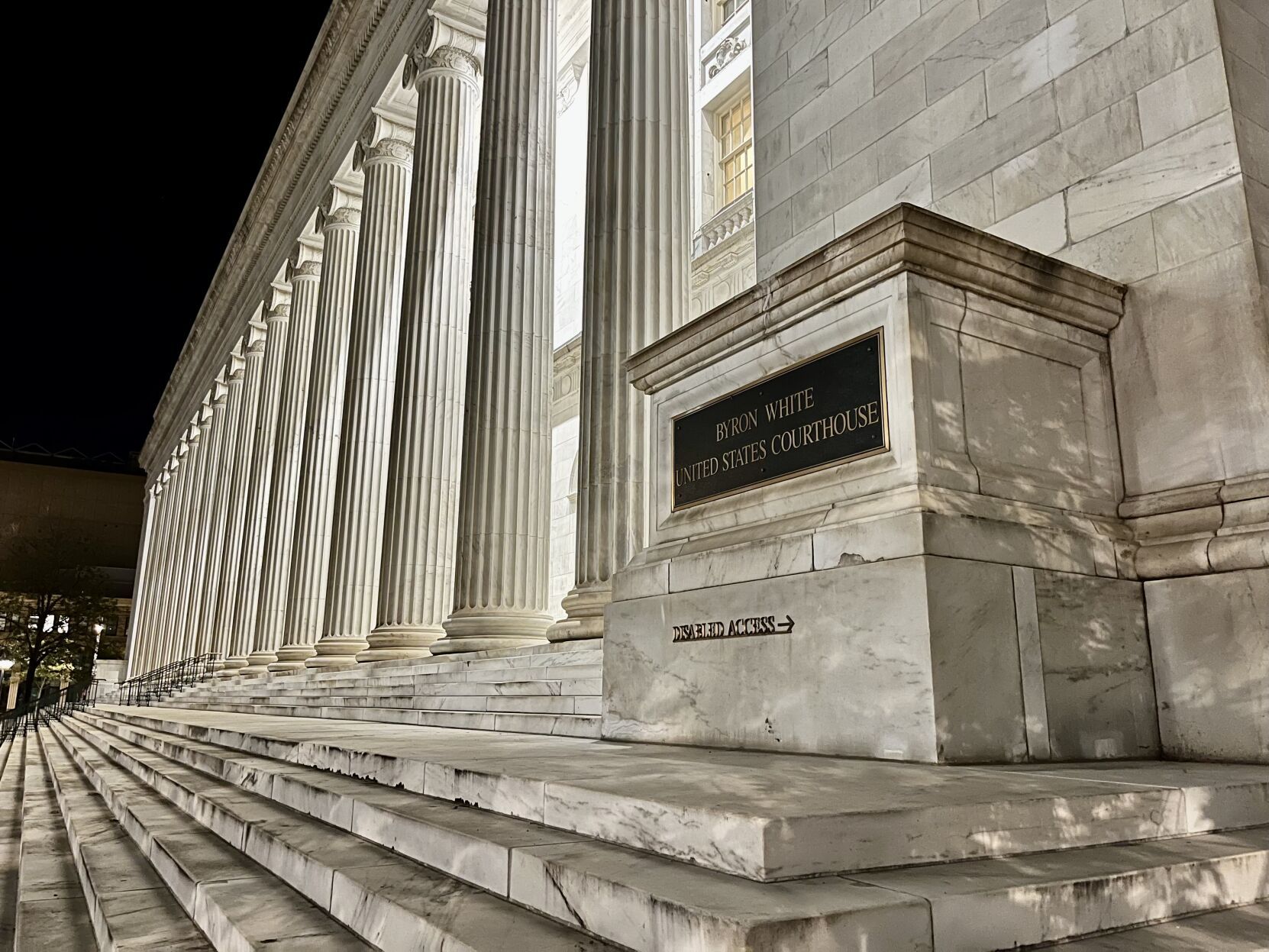
The Denver-based federal appeals court directed a trial judge on Tuesday to further analyze whether a Kiowa County deputy and the sheriff’s office may be sued for a fatal vehicle collision.
The Colorado Governmental Immunity Act generally shields government entities and public employees from lawsuits for their actions, but there is an exception for injuries caused by emergency vehicles. Immunity applies when they exceed the speed limit during a pursuit, but only if the driver is “making use of audible or visual signals.”
Emergency drivers may still lose their immunity if they “endanger life or property” and if their warning equipment does not include certain features, including a light “mounted as high as practicable” on the vehicle.
Last year, U.S. District Court Judge Charlotte N. Sweeney concluded that the plaintiffs who were injured in a 2022 vehicle crash outside of Lamar had alleged Deputy Jacob Marlow was driving a vehicle that did not comply with those conditions. Therefore, governmental immunity did not shield him or his employer from being sued.
However, a three-judge panel of the U.S. Court of Appeals for the 10th Circuit determined that Sweeney had cut the analysis short. While she looked at whether the lights on Marlow’s vehicle were compliant, she neglected to address his use of a siren.
Based upon the language of state law, “we agree the Colorado Supreme Court construes the statute to permit a responder to use either lights or siren,” wrote Judge Carolyn B. McHugh in the Sept. 8 order. “Because the district court made no findings as to whether Marlow activated his siren, we remand for it to do so.”
Case: Murphy v. Marlow
Decided: September 8, 2026
Jurisdiction: U.S. District Court for Colorado
Ruling: 3-0
Judges: Carolyn B. McHugh (author)
Timothy M. Tymkovich
Richard E.N. Federico
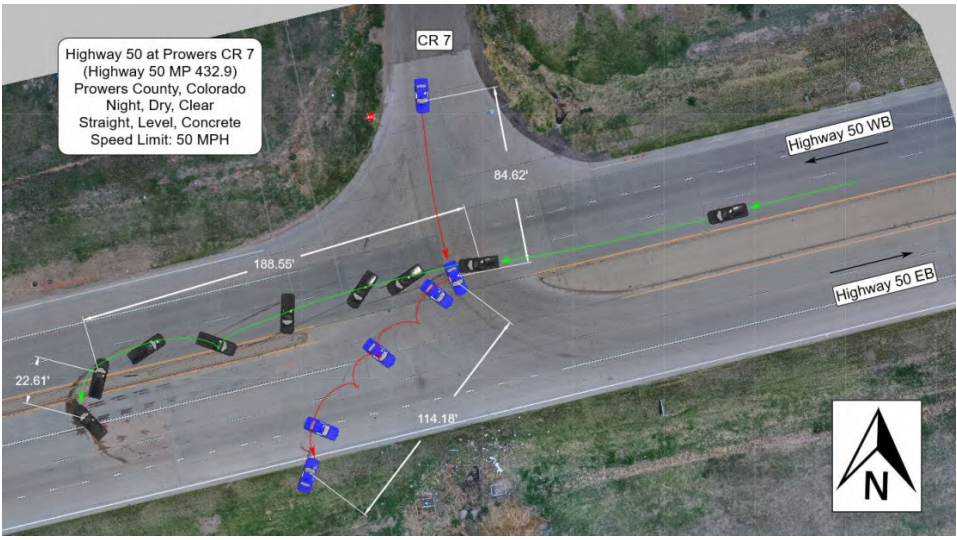
Dale and Anna Murphy of Oklahoma filed suit on behalf of themselves and Dale’s mother, Donna Murphy, who was the only vehicle occupant killed in the May 29, 2022, crash. That night, around 9:10 p.m., the Murphys alleged they were turning left from Powers County Road 7 onto Highway 50, a divided, multi-lane roadway with a 50 mph speed limit.
Simultaneously, Marlow, who lived in Prowers County but was on-call as a deputy in Kiowa County, was speeding to assist with a vehicle-on-deer collision about one hour away. He was driving close to 95 mph and hit the Murphys’ car at around 76 mph. The only warning lights were allegedly flashing just above his license plate.
The Murphys sued Marlow and the sheriff’s office for negligence, alleging Marlow drove at a “grossly excessive speed” and lacked “appropriate lights and siren.” The defendants moved to dismiss based on governmental immunity.
“Plaintiffs have failed to demonstrate that Deputy Marlow did not use his lights or siren and have not shown that he was driving in a manner that endangered life or property,” wrote the defendants’ lawyers.
Sweeney decided Marlow had forfeited his immunity because the warning lights on his truck were not mounted at the highest possible place on his vehicle as the law required. Moreover, the oversight could have made a difference.
“While Plaintiffs acknowledged seeing Deputy Marlow’s lights moments before the collision, the inadequate emergency lighting package on the black truck could have contributed to the accident,” she wrote. “The Court finds that the Plaintiffs sufficiently ‘demonstrated a possibility’ that Deputy Marlow’s actions could have caused their injuries.”
The defendants appealed to the 10th Circuit, arguing that Marlow was still immune so long as he was operating his siren. They also disputed Sweeney’s findings about the lights, contending she referenced a photograph that was “neither reliable nor sufficient.”
The 10th Circuit panel agreed in part. Because immunity is available when an emergency responder uses lights or sirens, wrote McHugh, Sweeney needed to also determine whether Marlow operated his siren. If not, he would lose immunity under Sweeney’s analysis for the lights.
The panel otherwise found Sweeney’s evaluation of the lights contained no errors warranting reversal.
“The district court properly considered the post-collision photos of the Ram,” wrote McHugh. “Based on those photos, the district court found there were no lights installed on the Ram as high as practicable.”
The case is Murphy et al. v. Marlow et al.

Colorado justices to hear appeal in Kendrick Castillo death lawsuit, ‘fugitive’ rule
Michael Karlik
michael.karlik@coloradopolitics.com
Updated 21 hours ago
The Colorado Supreme Court announced on Tuesday that it will decide whether it was proper to dismiss a lawsuit over the 2019 shooting death of Kendrick Castillo after the defendants paid the maximum amount of damages available to Castillo’s parents,...
Federal judge dismisses Douglas County’s challenge to collective bargaining law
Nicholas Fogleman
nicholas.fogleman@denvergazette.com
Updated 6 hours ago
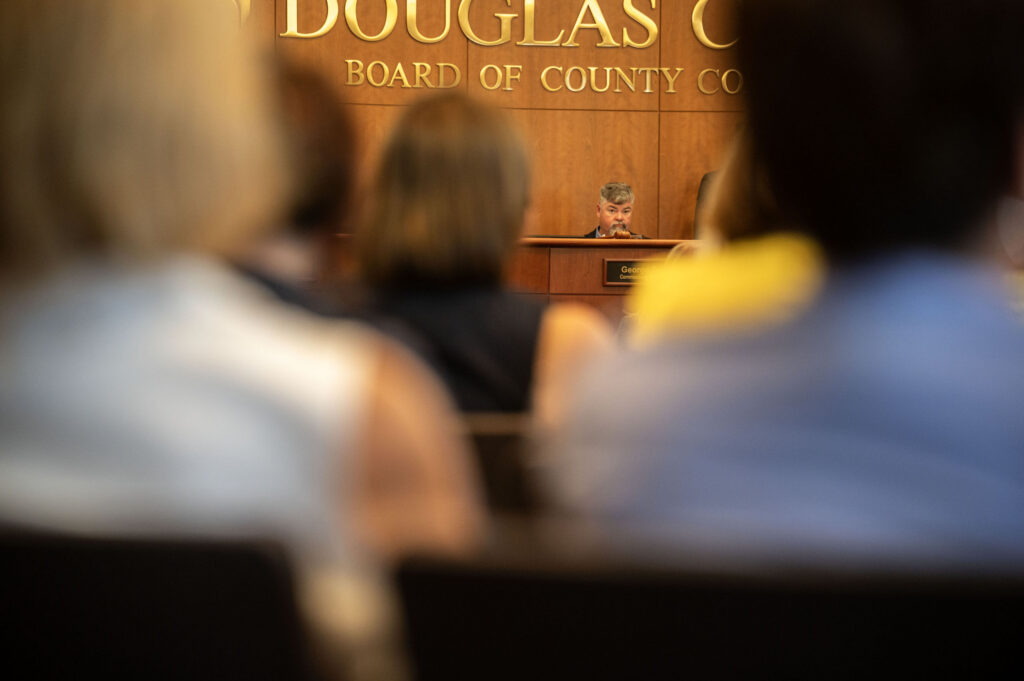
A federal judge dismissed claims brought by the Douglas County Board of Commissioners alleging that a state law granting county employees the right to organize and join labor unions violates free speech protections and conflicts with federal labor law. Douglas...

Arapahoe County judge’s frustration with defense lawyer not grounds for new trial
Michael Karlik
michael.karlik@coloradopolitics.com
Updated 22 hours ago
Colorado’s second-highest court decided last week that an Arapahoe County judge’s repeated rebukes of a defense attorney and orders to “be quiet” did not rise to the level of bias or a violation of the defendant’s due process rights. A...
Divided appeals court upholds vehicle theft conviction despite unclear origin of car’s value
Michael Karlik
michael.karlik@coloradopolitics.com
Updated 19 hours ago
Colorado’s second-highest court upheld a defendant’s conviction for aggravated motor vehicle theft last week, even though it was unclear how the Thornton Police Department estimated the value of the stolen car. Officer Marc Faivre encountered Ashley Shelee Gibbens-Martinez in a...
Disgraced ex-CBI analyst Missy Woods sentenced to prison in DNA scandal
Jenny Deam
jenny.deam@gazette.com
Updated 22 hours ago
A Jefferson County district court judge on Tuesday sentenced a disgraced former Colorado Bureau of Investigation DNA analyst to a decade in prison for altering and deleting data in scores of criminal cases over several years. Jefferson County District Judge...

Parenting from prison: Inmates hope to be present in their children’s lives, while physically absent
Marianne Goodland
marianne.goodland@coloradopolitics.com
Updated 1 day ago
The room was decorated with balloons, the tables sparking bright with colors as the smell of pizza and cake wafted through the air. As did music. This was, after all, a father-daughter dance. Except this was not a typical father-daughter...
Appeals court confirms Colorado judges can compel electronic records from out of state
Michael Karlik
michael.karlik@coloradopolitics.com
Updated 3 days ago
Colorado’s second-highest court clarified on Thursday that judges are empowered to compel out-of-state companies to produce electronic records under state law. El Paso County jurors convicted Mischa Jargowsky on three counts of money laundering and one violation of Colorado’s organized...
10th Circuit upholds finding of no racial discrimination against family at Denver Chili’s
Michael Karlik
michael.karlik@coloradopolitics.com
Updated 5 days ago
The Denver-based federal appeals court agreed on Wednesday that a Black plaintiff failed to show that a Chili’s manager’s request for her family to provide valid payment at the outset of their meal amounted to racial discrimination. Markesha Futrell-Smith filed...
Appeals court reinstates Mesa County defendant’s request for DNA testing under new Colorado law
Michael Karlik
michael.karlik@coloradopolitics.com
Updated 6 days ago
Colorado’s second-highest court revived a Mesa County defendant’s petition for DNA testing in his three-decade-old attempted murder case on Thursday, concluding that a trial judge wrongly interpreted a recent Colorado law in dismissing the request outright. Jurors convicted Billy Joe...
Appeals court reverses Denver juvenile’s conviction due to improper expert testimony
Michael Karlik
michael.karlik@coloradopolitics.com
Updated 4 days ago
Colorado’s second-highest court reversed a juvenile defendant’s conviction for unlawful sexual contact on Thursday after an expert witness’s testimony improperly suggested the child victim was telling the truth. The defendant, identified as S.H-S., was around 16 years old when he...