General election season is here. Where does mail-in voting stand?
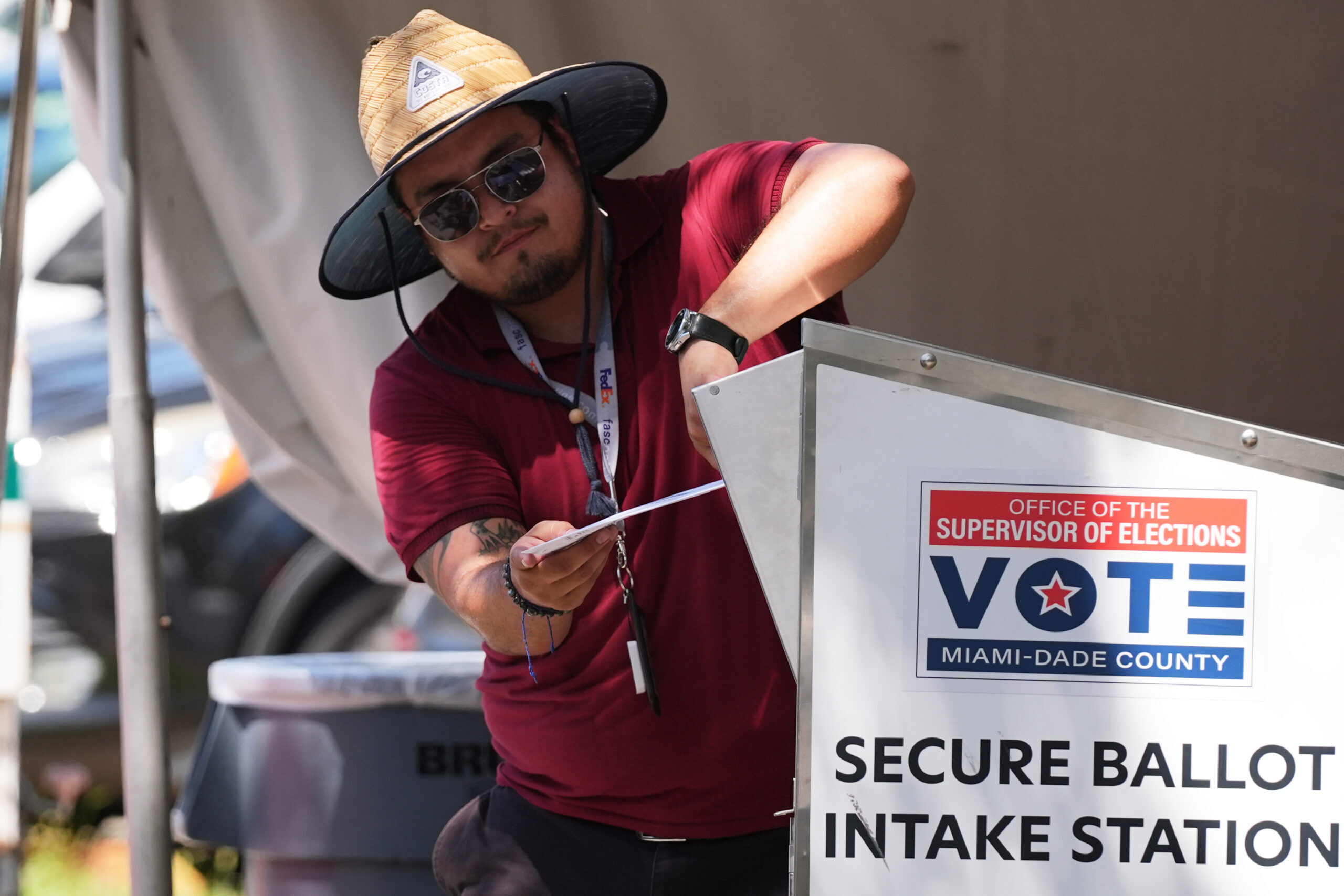
As the general election season approaches, the legal question surrounding the new U.S. Postal Service mail-in ballot requirements remains up in the air.
With the case playing out in the courts, mail-in voting has not been changed substantially despite President Donald Trump’s wishes. Earlier this year, he signed an executive order to set up a system to verify the citizenship of voters taking part in mail-in voting for future federal elections.
USPS followed suit last month with a final rule that establishes stringent standards for voting by mail, but the rule remains blocked by a federal judge. The Trump administration is actively appealing the case.
So, where does mail-in voting stand at this point in time?
What is the administration asking of USPS?
The administration is directing USPS to deliver mail ballots to vetted U.S. citizens permitted to vote in the midterm elections.
The rule would require mail-in ballots to be stamped with USPS markings and sent inside automation-compatible envelopes with unique barcodes. To verify the citizenship status of voters, state election officials would submit voters’ names, addresses, and corresponding barcode information through a portal operated by the federal government. The policy is intended to help USPS track mail-in ballots more effectively and to ensure ballots are sent only to eligible voters.
State officials have expressed concerns that the portal’s current design may result in the rejection of an entire batch of ballots if only one is scanned improperly.
“As presently designed, if even one bar code on one single ballot in a bulk-mailing of 10,000 ballots fails to properly scan during the verification process, the entire batch is rejected and sent back to the state — effectively stopping the ballots from being mailed to voters,” an anonymous whistleblower complaint says. “Even under ordinary circumstances this would be problematic because of predictable errors in any barcode scanning process.”
Trump has made election integrity a key issue of his second term, with other actions besides the USPS ballot rule. For instance, the Department of Justice is suing several states that refuse to hand over their voter rolls.
Mail-in voting remains available to all eligible voters in their states, and the federal mailing agency is expected to deliver mail-in ballots for the general election without any changes. North Carolina is the first state to start sending absentee ballots ahead of Nov. 3.
What have the courts said?
An Obama-appointed federal judge in Massachusetts blocked the new mail-in ballot requirements from taking effect. U.S. District Judge Indira Talwani first issued a 14-day temporary restraining order last month and later replaced the ruling with a preliminary injunction.
Talwani concluded that the plaintiffs challenging the rule are likely to succeed on the merits because the Constitution says that states have authority over federal elections, while Congress has the ultimate power to override them. As part of the executive branch, USPS does not have the authority to regulate how states handle their federal elections, according to Talwani.
She also found that implementing the rule less than two months away from the election could cause significant disruptions to the mail-in voting process. Many states have already printed ballots and envelopes.
The DOJ quickly appealed the judge’s latest decision to the Supreme Court, arguing the rule should proceed without any further delay.
What will the Supreme Court do?
The Supreme Court previously sided with the Trump administration, allowing the USPS ballot rule to proceed without ruling on its legality. The majority of justices determined that it was too early for courts to consider the challenge because the executive order had not yet been carried out.
It’s possible the high court could rule in favor of the administration again, but an argument to the contrary could be made based on the fact that the president has no constitutional authority over the administration of federal elections.
There are two lawsuits over this issue playing out. One was filed by a group of states led by California, and the other was brought by the League of Women Voters. The Supreme Court’s aforementioned ruling applied to the states’ lawsuit.
A ruling in favor of the administration would let the USPS rule take effect this fall, but it may be some time before the justices decide on the constitutionality of the executive order underpinning the ballot rule. Such a ruling may come after the general election, following a thorough review of the case with oral arguments.
The administration is asking the Supreme Court to grant a stay that would override Talwani’s preliminary injunction pending its appeal to the U.S. Court of Appeals for the 1st Circuit. That way, the rule can be in effect for the 2026 elections through Nov. 3.
The Supreme Court is expected to issue a ruling on the administration’s emergency appeal sometime after 4 p.m. on Wednesday, the deadline for legal briefs from the plaintiffs.
What did a USPS whistleblower say?
An anonymous whistleblower who worked at the federal agency recently alleged that USPS rushed to implement a technical ballot-verification system, drawing the attention of congressional Democrats.
The whistleblower disclosure, sent to Sen. Richard Blumenthal (D-CT), warned that the midterm elections could be derailed because of the federal plan to process mail ballots.
The USPS whistleblower also claimed the agency violated Talwani’s June 25 injunction by continuing to work on the federal portal while the rule’s implementation was paused.
“USPS should have ceased all work on the Portal on June 25, 2026, with the earliest conceivable date to resume being August 26, 2026,” when a prior court order was lifted, Blumenthal wrote in a letter to Postmaster General David Steiner. “The whistleblower allegations demonstrate that was not the case, with USPS directing work to continue on the Portal after the first court order to cease work and prior to the recent court decisions allowing USPS to proceed.”
The whistleblower argued that the system’s “sloppy” and rushed implementation “poses significant risk” to the administration of the midterm elections.
“Potentially millions of American voters may not receive their mail-in ballot this election cycle in a timely manner, or at all,” the document states. “The Whistleblower’s assessment and recitation of the facts around the risky and haphazard development of the project is a compelling warning of catastrophic failure which could derail the midterm elections.”

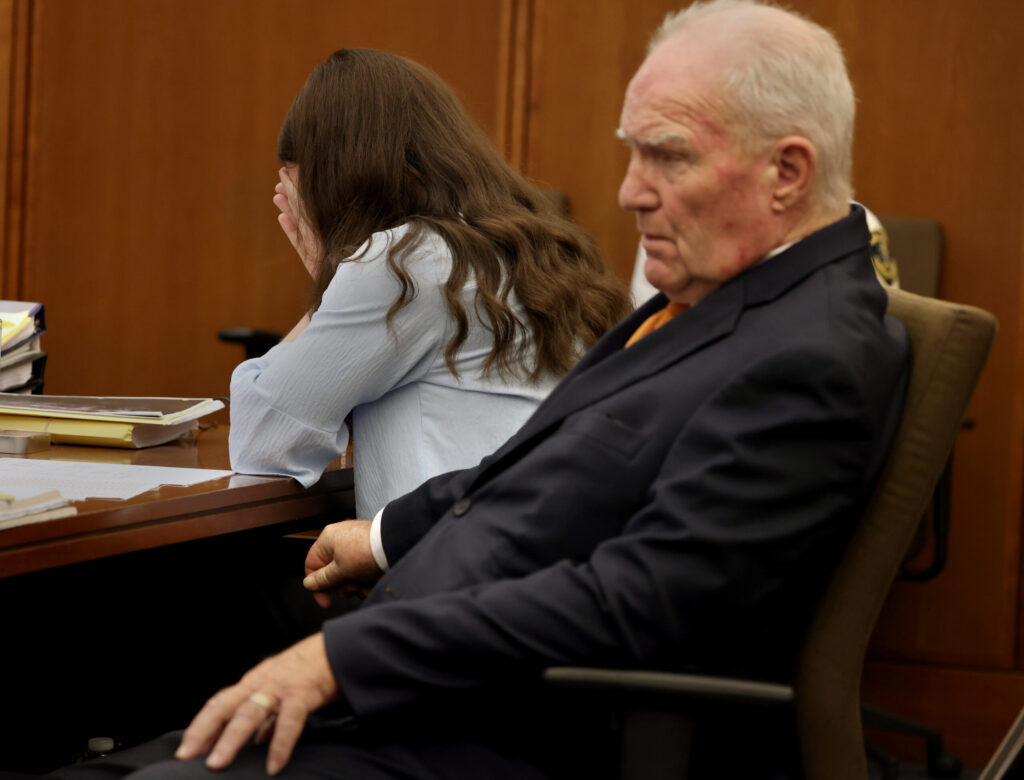
Lindsay Clancy’s attorney makes plea for pardon from Trump
Emily Hallas
emily-hallas@coloradopolitics.com
Updated 1 day ago
Lindsay Clancy’s attorney urged President Donald Trump on Tuesday to give her a pardon before her murder case could head for another trial. Clancy is a Massachusetts woman who admitted to strangling her three young children in 2023 but argued...

Russia launches massive, deadly, and ‘complex’ attack against Ukraine
Washington Examiner Staff
washington-examiner-staff@coloradopolitics.com
Updated 1 day ago
Fighting between Ukraine and Russia commenced after a 72-hour pause for diplomatic visits to both countries by U.S. officials. Russia launched a massive attack on Ukraine on Tuesday, firing dozens of cruise missiles and over 140 drones as the war...
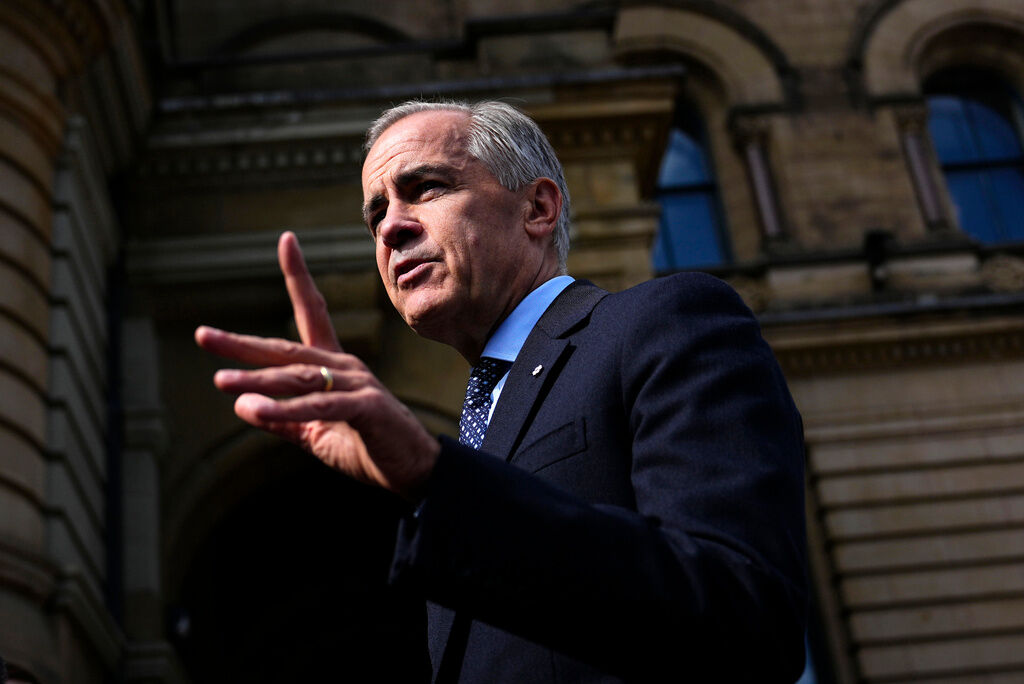
What to know about Canada’s escalating trade war with the US as Carney retaliates with tariffs
The Associated Press
the-associated-press@coloradopolitics.com
Updated 1 day ago
TORONTO (AP) — Canada struck back at U.S. President Donald Trump on Tuesday with tariffs on about $20 billion worth of U.S. goods, in response to the latest round of tariffs on Canada. The outcome could resonate far beyond Canada,...
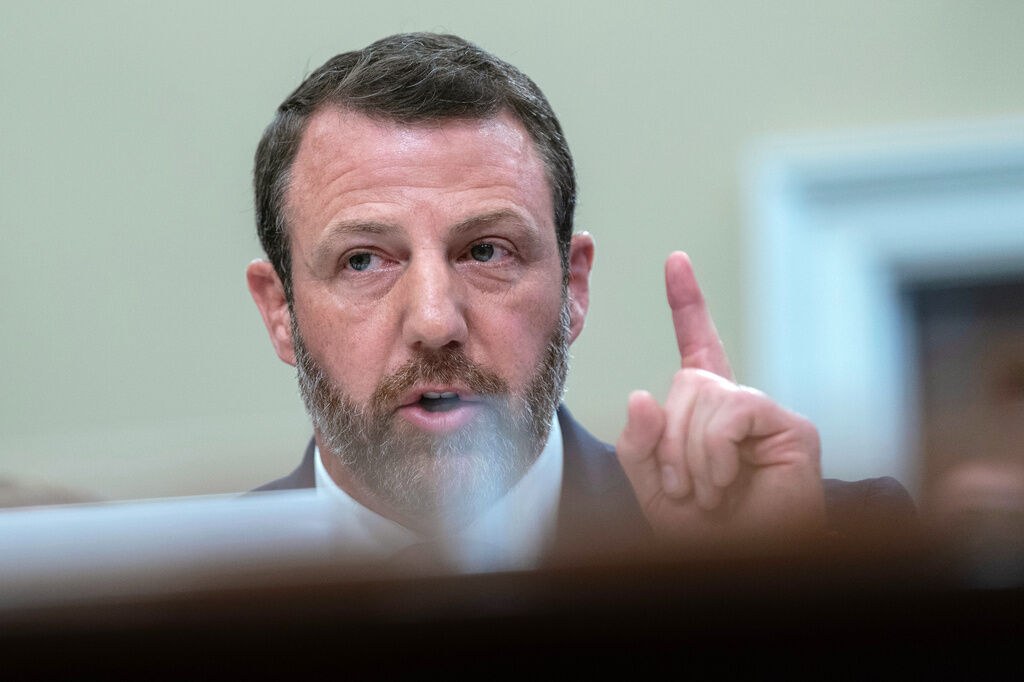
Mullin asks DOJ to review voter data sharing tied to Zuckerberg-funded nonprofit group
The Washington Examiner
the-washington-examiner@coloradopolitics.com
Updated 3 days ago
Washington Examiner Homeland Security Secretary Markwayne Mullin asked the Justice Department this week to review whether election-related nonprofit groups, some with multimillion-dollar backing from a Mark Zuckerberg-linked nonprofit, improperly received sensitive state motor vehicle and voter-registration data. In a letter...
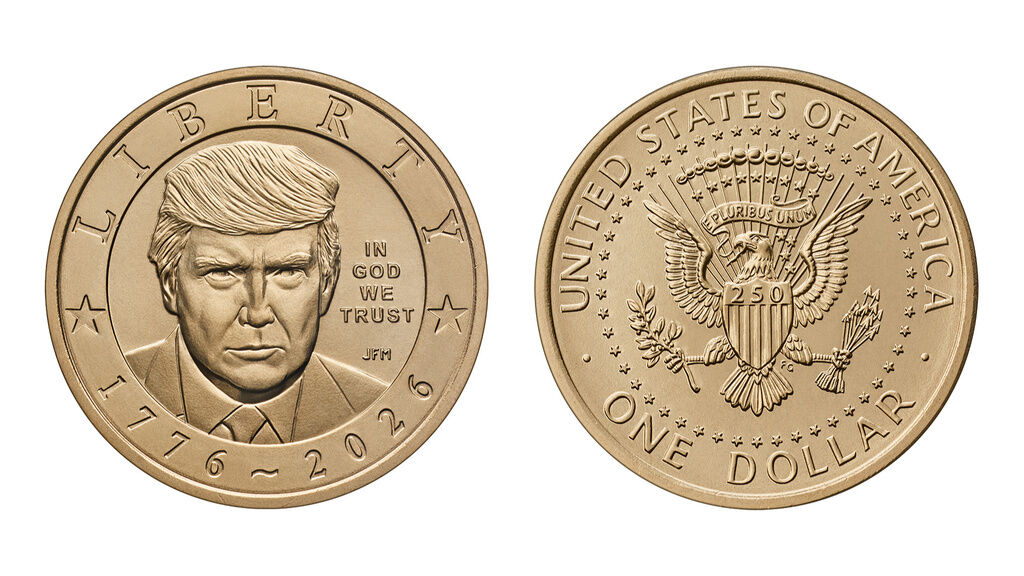
US Mint releases commemorative Trump $1 coin for purchase
Claire Carter
claire.carter@washingtonexaminer.com
Updated 1 week ago
The U.S. Mint released a commemorative $1 coin on Wednesday, celebrating America’s 250th anniversary and bearing President Donald Trump’s face. The coins became available for purchase at noon on the Mint’s website, with 100 coins costing $154.50 or a roll...
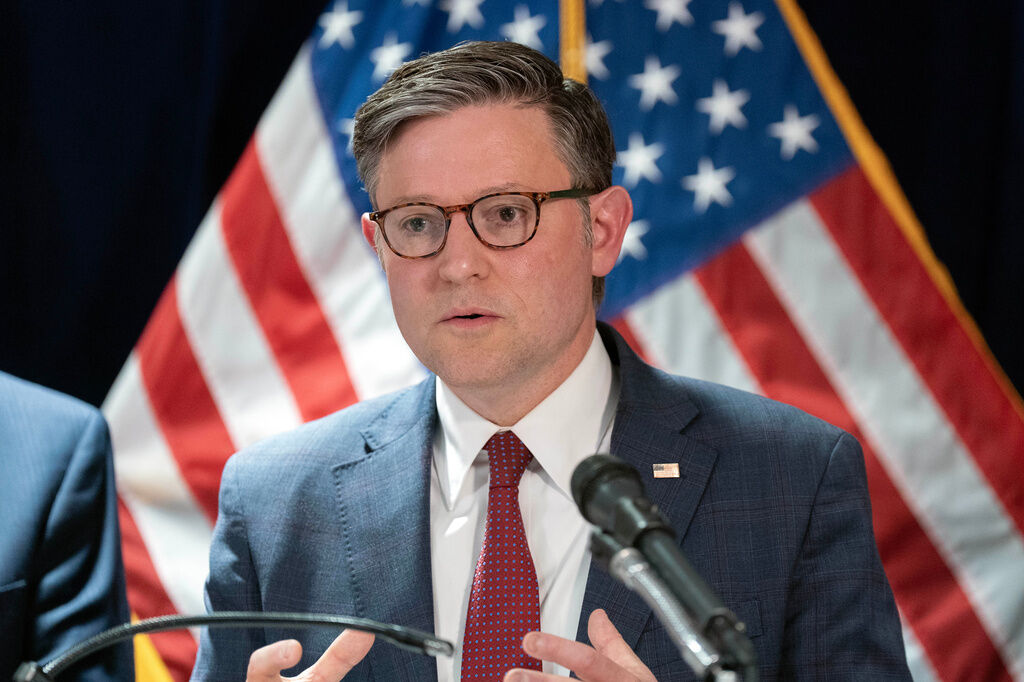
House passes stopgap funding bill with help of 176 Democrats to avoid pre-election shutdown
Hailey Bullis
hailey-bullis@coloradopolitics.com
Updated 1 week ago
House Speaker Mike Johnson (R-LA) got help from the other side of the aisle on Tuesday to pass a stopgap funding bill to head off a government shutdown ahead of the November elections. More than 175 House Democrats supported the...
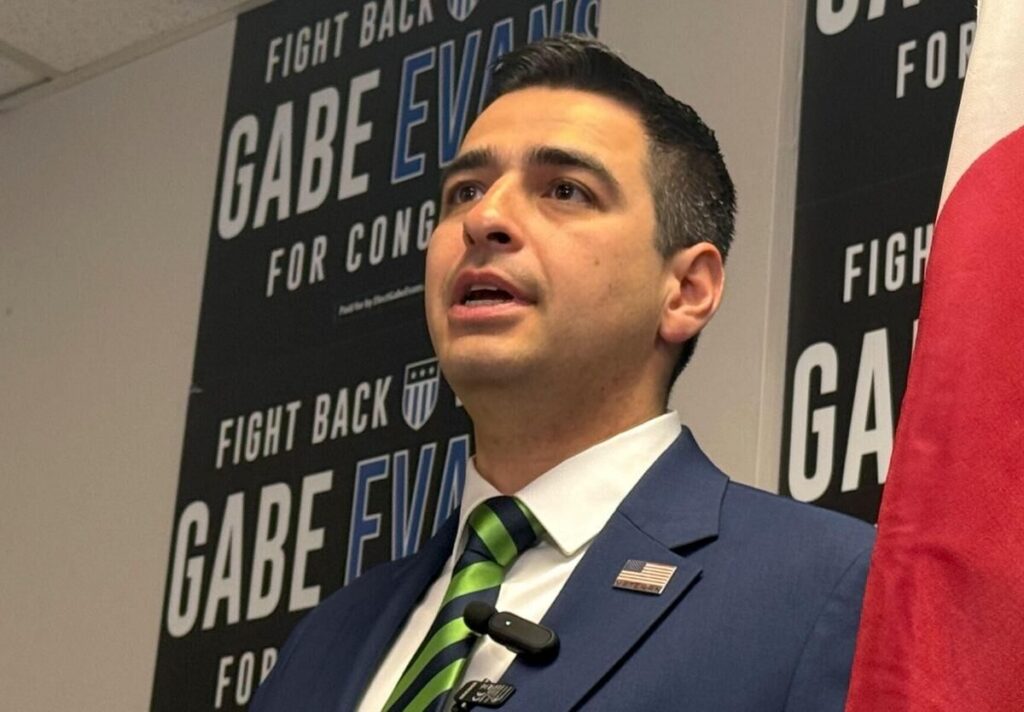
The 21 seats Mike Johnson says will decide the House majority
The Washington Examiner
the-washington-examiner@coloradopolitics.com
Updated 1 week ago
Speaker Mike Johnson, R-La., is eyeing 21 seats that will determine the House majority in the November midterm elections, including Colorado’s Congressional District 8. Johnson pointed to the nonpartisan Cook Political Report’s 21 toss-up seats, before rattling off a list...
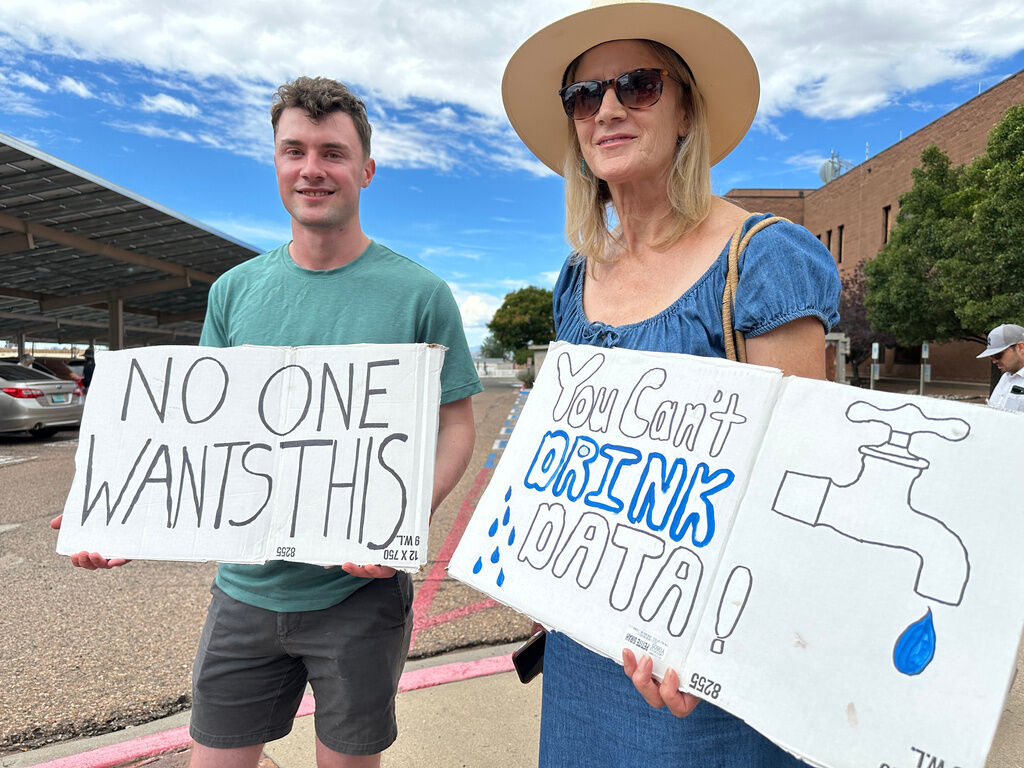
Trump says communities that don’t build data centers will be ‘backwards and poor’
Christian Datoc
christian-datoc@coloradopolitics.com
Updated 1 week ago
President Donald Trump criticized the rising wave of anti-data center sentiment, clashing with his administration’s aggressive efforts to build out the domestic artificial intelligence sector. Trump has placed a concerted focus on making the U.S. the global leader in AI,...

What happens when robotaxis meet motorcades in DC? The mother of all traffic jams, says AI expert
Rob Crilly
rob.crilly@washingtonexaminer.com
Updated 1 week ago
Waymo has Washington, D.C. on its list of targets for self-driving taxis. Just two problems: Can they cope with motorcades? And how would lawmakers feel if every time the vehicles grind to a halt in front of the flashing lights...

Trump promises retaliation for Iran attacks: ‘We’re going to hit them hard’
Rena Rowe
rena.rowe@washingtonexaminer.com
Updated 1 week ago
President Donald Trump on Monday vowed to retaliate against Iran following the latest attack on a U.S. base in Jordan, marking a return to military action after weeks of relative calm. “We’re going to hit them hard. There will be...