10th Circuit upholds finding of no racial discrimination against family at Denver Chili’s
The Denver-based federal appeals court agreed on Wednesday that a Black plaintiff failed to show that a Chili’s manager’s request for her family to provide valid payment at the outset of their meal amounted to racial discrimination.
Markesha Futrell-Smith filed claims under state and federal civil rights law, alleging a Denver Chili’s restaurant treated her differently based on her race by asking Futrell-Smith and her husband for valid payment upfront. Futrell-Smith’s family were allegedly the only Black customers at the time and there was no proof they had previously left without paying, as some staff believed.
Last year, Chief U.S. Magistrate Judge Scott T. Varholak determined the evidence did not show any intentional discrimination on Chili’s part. A three-judge panel of the U.S. Court of Appeals for the 10th Circuit upheld that conclusion, noting Futrell-Smith needed to show Chili’s treated her differently than a non-Black customer who was also suspected of walking out on a check.
“Because Plaintiff identifies no non-Black customers that Defendant also suspected of a prior walkout, the other customers were not similarly situated in all relevant respects,” wrote Judge Joel M. Carson III in the Sept. 2 opinion. “Indeed, the record only identifies a White customer that Defendant suspected of a prior walkout and treated the same way as Plaintiff.”
Case: Futrell-Smith v. Brinker International, Inc.
Decided: September 2, 2026
Jurisdiction: U.S. District Court for Colorado
Ruling: 3-0
Judges: Joel M. Carson III (author)
Timothy M. Tymkovich
Michael R. Murphy
Futrell-Smith, her husband and her children visited the Chili’s one night in April 2022. They had eaten there frequently and Futrell-Smith spoke with the assistant general manager several times before.
However, the Chili’s had experienced recent instances of customers walking out without paying, and a server claimed Futrell-Smith and her husband had previously done so. In response, the assistant manager asked the family for valid payment because they had been “identified as” walkouts.
Futrell-Smith began yelling at the manager and followed her through the restaurant. Eventually, the family left without eating.
Futrell-Smith denied she ever walked out on a check. She also acknowledged her appearance was different than usual that day, and the manager may have made the accusation before recognizing her.
A Chili’s inquiry found the assistant manager’s handling of the situation violated company policies. The Colorado Civil Rights Division, in response to Futrell-Smith’s complaint, determined Chili’s denied Futrell-Smith the “full and equal enjoyment” of a public accommodation due to discrimination.
Futrell-Smith then filed a discrimination lawsuit against the restaurant’s operator, Brinker International, Inc. The defendant moved to end the case in its favor without a trial, arguing a “misunderstanding and a reactionary decision of a restaurant manager” did not equate to intentional racial discrimination.
In his order, Varholak determined that Futrell-Smith’s civil rights claims failed under federal law. Futrell-Smith had to show Chili’s treated her differently from non-Black customers who were also suspected of walking out on a check.
“Ultimately, Plaintiff’s belief that she was singled out because of her race is not supported by specific, admissible evidence,” Varholak wrote. “Indeed, the only other similar comparator was a Caucasian male suspected of previously walking out on a bill and he was likewise questioned about his ability to pay.”
Futrell-Smith appealed to the 10th Circuit, arguing a jury could “easily disbelieve Chili’s asserted justification” and find Futrell-Smith was singled out for her race. She also challenged Varholak’s handling of her request for sanctions against the defendant for accidentally destroying interview notes with the server who claimed Futrell-Smith previously walked out.
The panel disagreed with Futrell-Smith’s argument that Varholak never determined an appropriate sanction before resolving the case in Chili’s favor.
“Here, the district court resolved Plaintiff’s sanctions motion at a December 2, 2024, hearing. It found that Defendants ‘had a duty to preserve’ the (server’s) interview notes but that any prejudice from their loss was speculative. The district court therefore rejected Plaintiff’s requested sanctions,” wrote Carson. “Only after resolving the sanctions motion did the district court grant Defendant summary judgment.”
Carson elaborated that the accuracy of the server’s identification of Futrell-Smith as a walkout was irrelevant, as the assistant manager had acted on the information as if it were correct.
Ultimately, “Plaintiff identified no other customer, similarly situated in all relevant respects, outside her protected class who received more favorable treatment,” which doomed her discrimination claims, Carson wrote.
The case is Futrell-Smith v. Brinker International, Inc.

Appeals court reinstates Mesa County defendant’s request for DNA testing under new Colorado law
Michael Karlik
michael.karlik@coloradopolitics.com
Updated 17 hours ago
Colorado’s second-highest court revived a Mesa County defendant’s petition for DNA testing in his three-decade-old attempted murder case on Thursday, concluding that a trial judge wrongly interpreted a recent Colorado law in dismissing the request outright. Jurors convicted Billy Joe...
Appeals court reverses Denver juvenile’s conviction due to improper expert testimony
Michael Karlik
michael.karlik@coloradopolitics.com
Updated 17 hours ago
Colorado’s second-highest court reversed a juvenile defendant’s conviction for unlawful sexual contact on Thursday after an expert witness’s testimony improperly suggested the child victim was telling the truth. The defendant, identified as S.H-S., was around 16 years old when he...

Judge orders home confinement for Barry Morphew
Dennis Huspeni
dennis.huspeni@gazette.com
Updated 19 hours ago
An Alamosa County district judge has ordered home confinement for Barry Morphew, who is accused of murdering his wife. Barry Morphew, 59, faces a first-degree murder charge in the death of his wife, Suzanne Morphew, who disappeared Mother’s Day weekend...
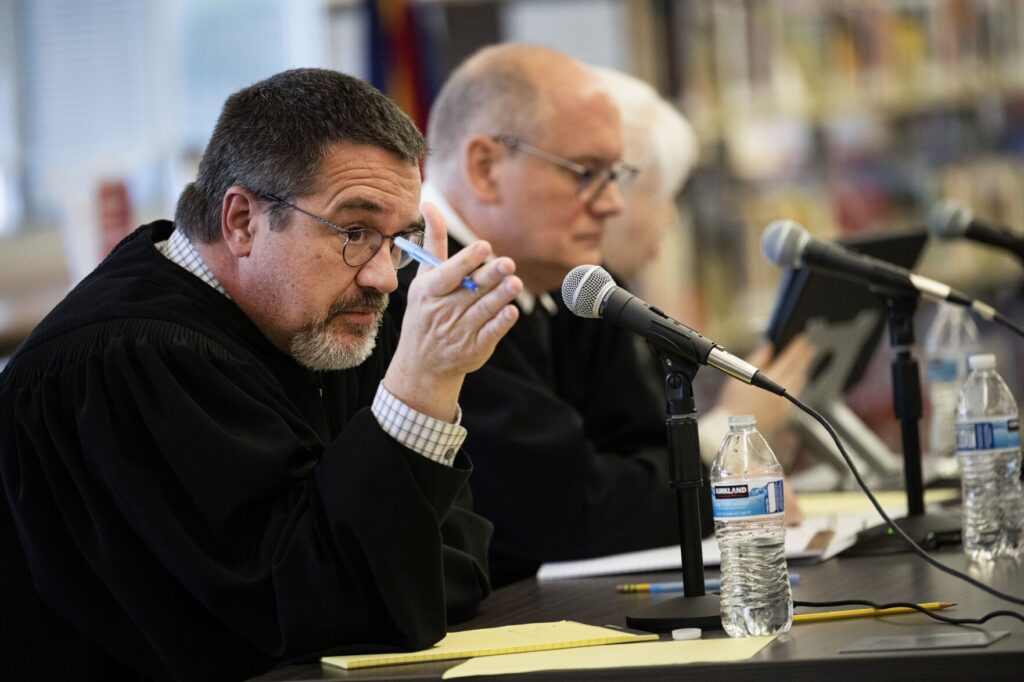
Appeals court says jury does not need to view porn to determine if it ‘obscene’
Michael Karlik
michael.karlik@coloradopolitics.com
Updated 21 hours ago
Colorado’s second-highest court ruled for the first time on Thursday that a jury does not always need to view pornographic material to determine if it meets the criteria for obscenity. Mesa County jurors found Shayla Ann Simpson guilty of child...
10th Circuit disagrees Sterling officer had no basis to arrest motorist who lacked insurance details
Michael Karlik
michael.karlik@coloradopolitics.com
Updated 2 days ago
The Denver-based federal appeals court disagreed on Tuesday with a trial judge’s decision to bar evidence from a pat-down search from being used against a defendant. Federal prosecutors obtained an indictment of Jorge Sigala-Baray for being a felon in possession of a...

Colorado Springs officers’ tasing, threats prompt federal judge to block use of suspect’s statements
Michael Karlik
michael.karlik@coloradopolitics.com
Updated 2 days ago
A federal judge blocked the government last month from using some of a defendant’s statements as evidence, reasoning that the defendant made them involuntarily as Colorado Springs officers tased him five times and one officer threatened to kill him. Officers...

Appeals court rejects CDOT employee’s discrimination, retaliation claims
Michael Karlik
michael.karlik@coloradopolitics.com
Updated 2 days ago
Colorado’s second-highest court agreed last week that a Colorado Department of Transportation employee had not shown that his employer discriminated and retaliated against him due to his religion and national origin. Ayman Salloum, who described himself as a 70-year-old Muslim...
Colorado judges may use professional name in lieu of legal name, ethics panel says
Michael Karlik
michael.karlik@coloradopolitics.com
Updated 19 hours ago
Colorado’s Judicial Ethics Advisory Board concluded on Tuesday that members of the bench may go by a professional name, rather than their legal name, so long as their intent is not to deceive. The board, which consists of judges, attorneys...
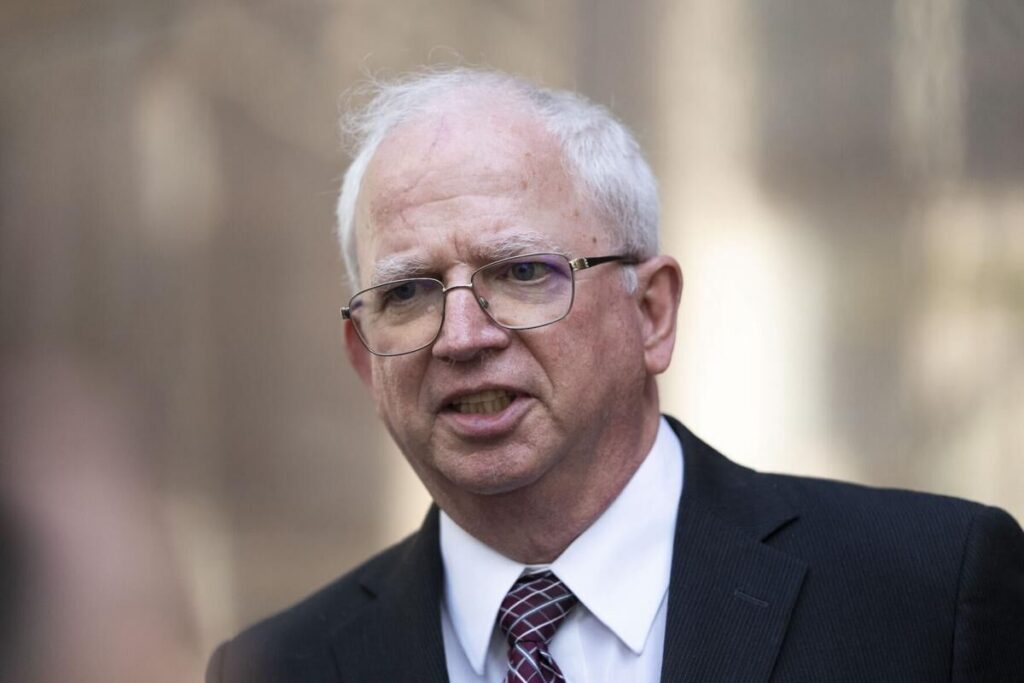
Colorado’s federal court confirms John Eastman cannot practice due to disbarment
Michael Karlik
michael.karlik@coloradopolitics.com
Updated 3 days ago
Colorado’s federal trial court confirmed last week that attorney John C. Eastman, who devised a plan for President Donald Trump to remain in office despite losing the 2020 election, cannot practice in the state’s U.S. District Court due to his...

Federal judge green-lights immediate appeal in challenge to Colorado’s unclaimed property program
Michael Karlik
michael.karlik@coloradopolitics.com
Updated 3 days ago
A federal judge took the unusual step last month of authorizing an immediate appeal of her decision to dismiss key components of a constitutional challenge to Colorado’s program for reuniting people with their unclaimed property. In February, U.S. District Court...