

Colorado’s federal court confirms John Eastman cannot practice due to disbarment
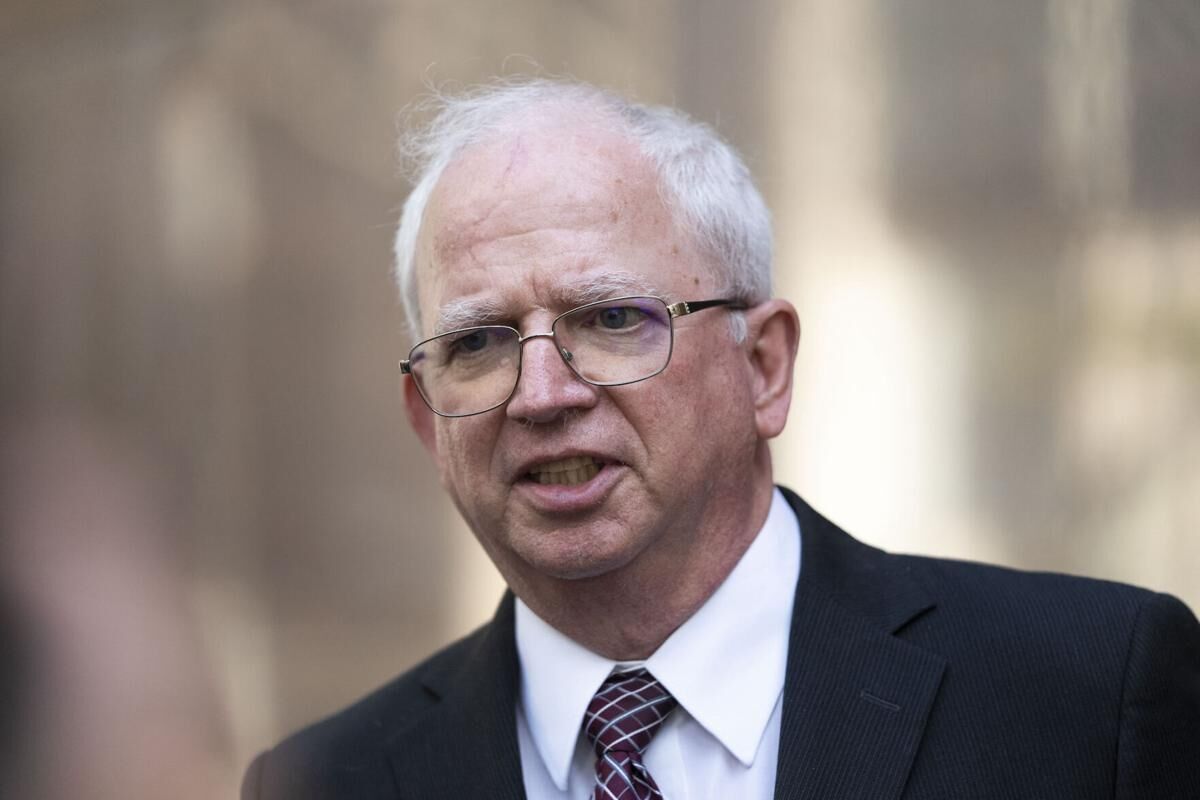
Colorado’s federal trial court confirmed last week that attorney John C. Eastman, who devised a plan for President Donald Trump to remain in office despite losing the 2020 election, cannot practice in the state’s U.S. District Court due to his disbarment in California.
Under the court’s rules, attorneys cannot be in “good standing” to practice if they are not in good standing everywhere else they are admitted to practice.
Acting on a recommendation from the court’s Committee on Conduct that cited Eastman’s recent disbarment, a three-judge panel denied Eastman’s request to practice despite his lack of good standing in California.
However, only Judges Regina M. Rodriguez and Charlotte N. Sweeney, both of whom are appointees of Joe Biden, signed the Aug. 26 order. Chief Judge Daniel D. Domenico, who became the third member of the court’s disciplinary panel earlier this year, did not.
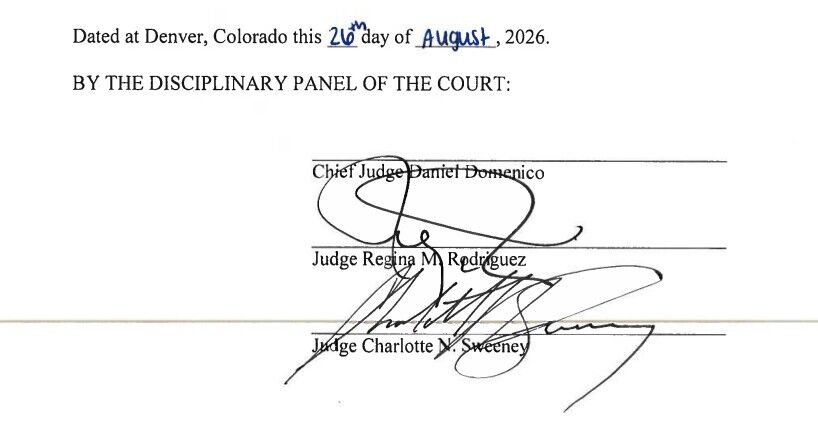
“He had prior knowledge of this matter before being appointed to the disciplinary panel, so he thought it would be prudent not to participate,” the court’s clerk, Jeffrey P. Colwell, told Colorado Politics.
Domenico is a first-term Trump appointee who Trump recently nominated for a seat on the Denver-based federal appeals court.
Eastman was the visiting scholar in conservative thought and policy at the University of Colorado Boulder during the 2020-2021 school year. He also advanced unfounded allegations of voter fraud and election irregularities in multiple swing states after the 2020 presidential election. Eastman drafted memos providing a legal justification for then-Vice President Mike Pence, when presiding over the counting of electoral votes in Congress, to reject swing state votes for Biden and keep Trump in office without a lawful basis.
After a lengthy trial in California, State Bar Court Judge Yvette D. Roland found Eastman had committed misconduct for dishonesty, failure to support the laws and Constitution, and “moral turpitude.” In April, the California Supreme Court rejected Eastman’s petition contesting his disbarment without elaboration.
Since 2020, Eastman has only appeared as counsel in Colorado’s federal district court in three cases, only one of which remains open. In that case, assigned to Judge Philip A. Brimmer, the court terminated Eastman’s electronic filing privileges shortly after Roland’s disciplinary decision deprived Eastman of good standing.
Simultaneously, Judge S. Kato Crews took steps to remove Eastman from another case, but Eastman stepped aside pending a determination about his ability to remain in good standing.
Following the imposition of Eastman’s disbarment this year, he expressed an intent to seek review at the U.S. Supreme Court.
“The California Supreme Court has allowed to stand a State Bar Court recommendation that we contend departs from long-standing United States Supreme Court precedent protecting First Amendment rights, especially in the attorney discipline context,” said Eastman’s attorney, Randall Miller, at the time. “We disagree with that outcome and believe it raises pivotal constitutional concerns regarding the limits of state regulation of attorney speech.”

Colorado Springs officers’ tasing, threats prompt federal judge to block use of suspect’s statements
Michael Karlik
michael.karlik@coloradopolitics.com
Updated 2 hours ago
A federal judge blocked the government last month from using some of a defendant’s statements as evidence, reasoning that the defendant made them involuntarily as Colorado Springs officers tased him five times and one officer threatened to kill him. Officers...

Federal judge green-lights immediate appeal in challenge to Colorado’s unclaimed property program
Michael Karlik
michael.karlik@coloradopolitics.com
Updated 6 hours ago
A federal judge took the unusual step last month of authorizing an immediate appeal of her decision to dismiss key components of a constitutional challenge to Colorado’s program for reuniting people with their unclaimed property. In February, U.S. District Court...

10th Circuit orders new unlawful arrest trial against Colorado Springs officers
Michael Karlik
michael.karlik@coloradopolitics.com
Updated 20 hours ago
The Denver-based federal appeals court concluded on Friday that a trial judge inappropriately allowed jurors to see several unflattering video clips of a plaintiff being belligerent toward police officers during a trial to determine whether police violated her constitutional rights....
Federal judge to await SCOTUS decision before addressing Boulder County firearm ordinances
Michael Karlik
michael.karlik@coloradopolitics.com
Updated 19 hours ago
A federal judge agreed on Friday that she would await the U.S. Supreme Court’s decision in an upcoming Second Amendment case before she addresses the constitutionality of similar gun ordinances in multiple Boulder County jurisdictions. Rocky Mountain Gun Owners, the...

State Supreme Court names next chief justice, 10th Circuit releases full-court decision | COURT CRAWL
Michael Karlik
michael.karlik@coloradopolitics.com
Updated 1 day ago
Welcome to Court Crawl, Colorado Politics’ roundup of news from the third branch of government. The Colorado Supreme Court has named its next chief justice, and the Denver-based federal appeals court released a decision that overwhelmingly rejected one of its...
10th Circuit overturns framework for sentencing probation violators by 11-1
Michael Karlik
michael.karlik@coloradopolitics.com
Updated 3 days ago
In a rare decision by all 12 of its full-time judges, the Denver-based federal appeals court ruled in a lopsided vote on Friday that one of its members created a sentencing process for probation violators that was out of step...

Federal judge dismisses excessive force lawsuit against Colorado Springs, officer
Michael Karlik
michael.karlik@coloradopolitics.com
Updated 3 days ago
A federal judge concluded last week that a Colorado Springs police officer could not be held liable for shooting a suspect three times after the man menaced two victims with a gun and fled the scene. Al’morion Germany was involved...
Weld County man sentenced to 236 years for sexually assaulting 9-year-old girl
Kyla Pearce
kyla.pearce@gazette.com
Updated 4 days ago
A Weld County man was sentenced to 236 years in prison for repeatedly sexually assaulting a 9-year-old girl. Joshua Andrews, 41, was charged in June with 12 counts of sexual assault on a child by a person in a position...
Wrongfully deported man to be returned to U.S., Colorado federal judge orders
Michael Karlik
michael.karlik@coloradopolitics.com
Updated 5 days ago
Colorado’s chief federal judge took the extraordinary step of directing the government on Tuesday to do everything it can to return a man it deported in violation of his order. At the same time, Colorado’s chief magistrate judge has set...
Denver murder, assault convictions reversed due to faulty jury instructions
Michael Karlik
michael.karlik@coloradopolitics.com
Updated 4 days ago
Colorado’s second-highest court reversed a defendant’s convictions for murder and assault last week after concluding a Denver judge incorrectly omitted key jury instructions that could have affected the verdict and sentencing. Stephen C. Swainson fatally stabbed Israel Casillas in downtown...
PREV
PREVIOUS

Capped or graduated income tax rate? Colorado voters to decide
The proposal to create income tax tiers — which would replace Colorado’s flat rate — has been certified for the November general election ballot, setting the stage for a major showdown between two competing forces seeking to define the parameters of state revenue. Initiative No. 195, which would raise the tax obligations on higher-income earners, will […]

House adopts Republican U.S. Rep. Jeff Crank’s resolution condemning socialism, mostly along party lines
The House on Tuesday approved a resolution sponsored by U.S. Rep. Jeff Crank to condemn socialism in a largely party-line vote that the Colorado Republican characterized as a chance for lawmakers to “stand firm” against an ideology making inroads among Democrats. The nonbinding resolution, HR 1490, also included a call for the “enactment” of GOP-led […]