

10th Circuit overturns framework for sentencing probation violators by 11-1
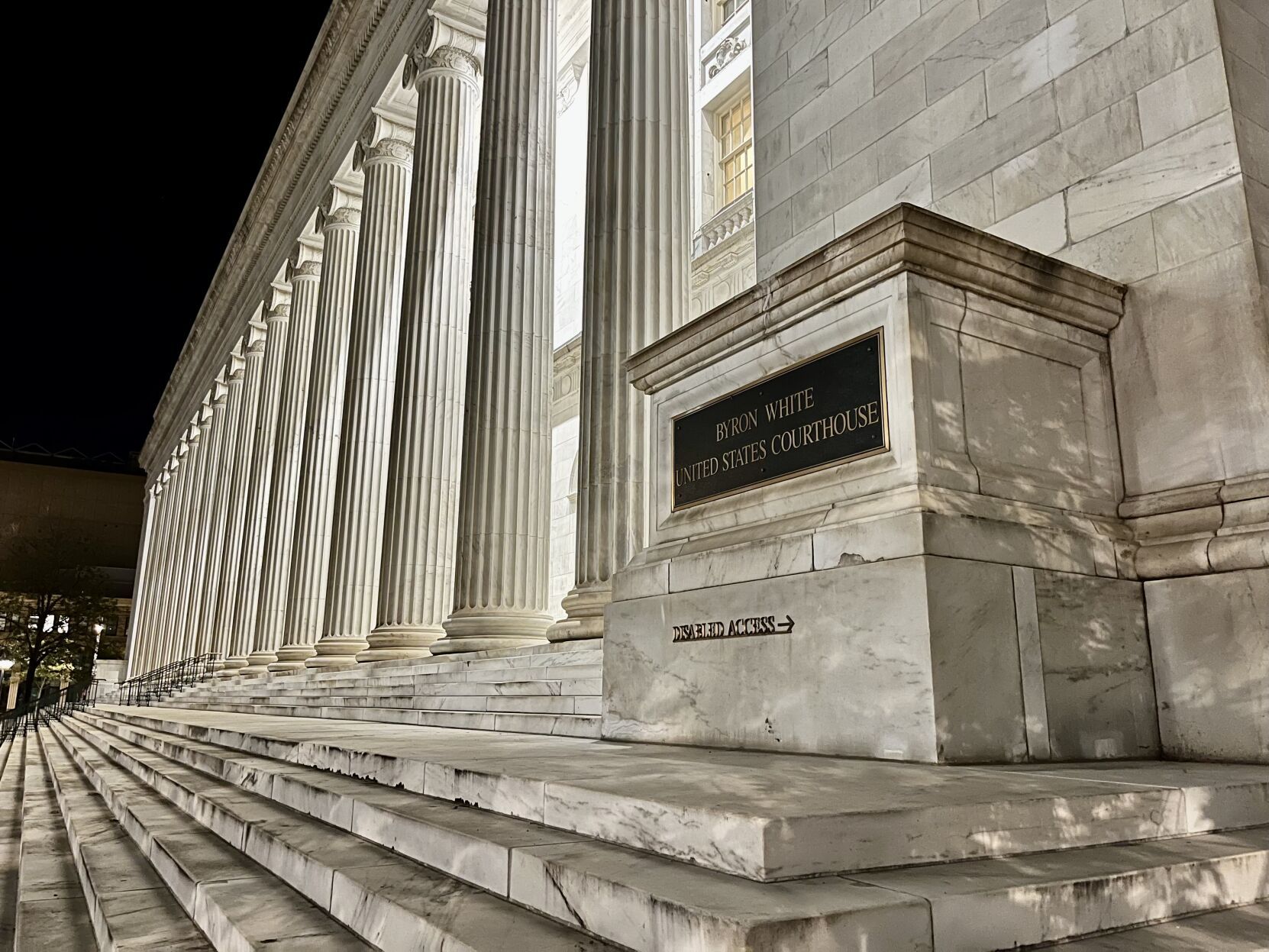
In a rare decision by all 12 of its full-time judges, the Denver-based federal appeals court ruled in a lopsided vote on Friday that one of its members created a sentencing process for probation violators that was out of step with Congress’s intent.
The U.S. Court of Appeals for the 10th Circuit analyzed how federal trial judges should resentence criminal defendants who receive probation and then violate the terms. The case of Colorado defendant Malachi Mathias Moon Seals received an unusual “en banc” review by the full court after he and the government both argued that a recent precedent-setting decision by a panel of judges incorrectly outlined the resentencing process.
By 11-1, the full 10th Circuit agreed.
Judge Timothy M. Tymkovich of Colorado, in the majority’s Aug. 28 opinion, rejected the idea that trial judges must engage in a two-step process for resentencing probation violators, accounting separately for the underlying crime and the “breach of trust” for violating probation. Instead, judges must resentence defendants for their probation violation using the range relevant to the probation violation, but can also consider the range for the underlying offense when deciding on the appropriate punishment.
“In the decades before,” Tymkovich wrote, “we had no difficulty reviewing sentences for probation violations; the difficulties won’t start now.”
Judge Gregory A. Phillips of Wyoming, who authored the original panel decision adopting the two-step process, was the lone dissenter. He argued that the majority’s reasoning flew in the face of Congress’s intent and rewarded probation violators with more lenient sentences.
His prior opinion “measures separate conduct for separate punishments under separate sentencing tables,” Phillips wrote. “But the majority jettisons that for its own system, one that inexplicitly authorizes district courts to disregard the probation violator’s underlying offenses of conviction.”
Case: United States v. Moon Seals en banc
Date: August 28, 2026
Jurisdiction: U.S. District Court for Colorado
Ruling: 11-1
Judges in the majority: Timothy M. Tymkovich (G.W. Bush)
Jerome A. Holmes (G.W. Bush)
Harris L Hartz (G.W. Bush)
Scott M. Matheson Jr. (Obama)
Robert E. Bacharach (Obama)
Carolyn B. McHugh (Obama)
Nancy L. Moritz (Obama)
Allison H. Eid (Trump)
Joel M. Carson III (Trump)
Veronica S. Rossman (Biden)
Richard E.N. Federico (Biden)
Judges in dissent: Gregory A. Phillips (Obama)
In the federal appellate courts, the vast majority of cases are decided in three-judge panels. Occasionally, the courts will vote to have all judges hear a case en banc. Historically, the 10th Circuit receives around 190 requests per year, but grants fewer than one on average.
A key feature of en banc review is a circuit court’s ability to overrule prior precedents established in panel decisions, which are binding on the court itself.
Moon Seals’ attorney persuaded the 10th Circuit to review the 2022 opinion of United States v. Moore, which established the resentencing framework for probation violators that affected defendants like Moon Seals. In that 2-1 panel decision, Phillips, writing for himself and now-retired Senior Judge Stephanie K. Seymour, explained that a trial judge must reimpose a sentence for the underlying crime, without regard to events that occurred since the probation began. Second, the judge adds an increment to the sentence for the probation violation.
Some 10th Circuit judges quickly telegraphed that they had reservations about that two-step process and were willing to consider it in a future en banc case.
While the Moore case unfolded, Moon Seals pleaded guilty to numerous counts of sending threats to federal officials. Despite the sentencing range being 33 to 41 months in prison, both sides asked that Moon Seals be put on probation instead.
U.S. District Court Judge Charlotte N. Sweeney initially balked. But she understood Moon Seals’ longstanding brain injury played a role in his conduct, and begrudgingly imposed probation so his condition could be addressed out of custody. Moon Seals immediately resumed sending threats, amounting to a probation violation.

Although the 10th Circuit had decided the Moore case, Sweeney did not follow the two-step procedure in resentencing Moon Seals. Instead, she appeared to believe she could resentence him under either the range for his original offenses or the range for a probation violation. Relying on the original range, Sweeney imposed 36 months in prison.
The 10th Circuit panel hearing Moon Seals’ appeal agreed Sweeney did not follow the procedure, but it upheld his sentence last October. Phillips, who authored the decision in Moon Seals’ case, defended his two-step resentencing process from Moore as fully supported by Congress’s legislative changes in the early 1990s.
His arguments did not ward off full-court review. After the 10th Circuit judges voted to rehear the case en banc, the government indicated it would not defend Phillips’ two-step process. The 10th Circuit appointed former Colorado solicitor general Frederick R. Yarger to make the argument for upholding Moore.
Moore “didn’t truly create a new rule. It formalizes what many conscientious courts across the country have effectively already been doing,” Yarger said during oral arguments. The two-step process “just makes sure that all the procedural boxes have been checked. That everyone can understand where the sentence came from.”
The government and the public defender’s office asked for the 10th Circuit to overrule Moore and adopt a resentencing process that imposes a sentence for the probation violation anchored by that corresponding range. The government, however, argued that trial judges should also be able to consider the sentencing range for the underlying crime.
The 10th Circuit’s majority agreed that a proper, one-step resentencing must look to the range for probation violations, and should also consider the range for the underlying crime. Tymkovich wrote that no other federal appeals court has adopted Phillips’ two-step process, and any benefit to defendants from eliminating separate sentences would not be as pronounced as in Moon Seals’ case.
“Moon Seals’s probation sentence is the outlier; it was an enormous bet on rehabilitation,” he wrote, adding that Sweeney would be within her rights to go outside the probationary range based upon the original range of imprisonment that Moon Seals faced.
“As with any variance, the court must explain its upward variance,” Tymkovich concluded, returning the case to Sweeney to resentence Moon Seals in line with the full court’s instructions.
Phillips, in dissent, called the majority’s procedure a “big, jagged chip of granite off this circuit’s previously smooth face of uniformity and proportionality for federal sentencings.” He argued that a single-step resentencing fails to meaningfully punish defendants for their underlying offense, or to keep it separate from the probation violation.
“So good-bye to real resentencings at which the court imposes imprisonment for the offense of conviction,” Phillips wrote. “And hello to un-resentencings at which defendants line up to accept freebie, zero-month sentences for their offenses of conviction.”
Calling Moon Seals a “death-threatening menace,” Phillips suggested the U.S. Supreme Court or the U.S. Sentencing Commission should step in to address the issue.
The case is United States v. Moon Seals.


Federal judge dismisses excessive force lawsuit against Colorado Springs, officer
Michael Karlik
michael.karlik@coloradopolitics.com
Updated 35 minutes ago
A federal judge concluded last week that a Colorado Springs police officer could not be held liable for shooting a suspect three times after the man menaced two victims with a gun and fled the scene. Al’morion Germany was involved...

Weld County man sentenced to 236 years for sexually assaulting 9-year-old girl
Kyla Pearce
kyla.pearce@gazette.com
Updated 4 hours ago
A Weld County man was sentenced to 236 years in prison for repeatedly sexually assaulting a 9-year-old girl. Joshua Andrews, 41, was charged in June with 12 counts of sexual assault on a child by a person in a position...
Wrongfully deported man to be returned to U.S., Colorado federal judge orders
Michael Karlik
michael.karlik@coloradopolitics.com
Updated 1 day ago
Colorado’s chief federal judge took the extraordinary step of directing the government on Tuesday to do everything it can to return a man it deported in violation of his order. At the same time, Colorado’s chief magistrate judge has set...
Denver murder, assault convictions reversed due to faulty jury instructions
Michael Karlik
michael.karlik@coloradopolitics.com
Updated 8 hours ago
Colorado’s second-highest court reversed a defendant’s convictions for murder and assault last week after concluding a Denver judge incorrectly omitted key jury instructions that could have affected the verdict and sentencing. Stephen C. Swainson fatally stabbed Israel Casillas in downtown...
‘Understand people for who they are’: 2 federal judges talk about compassion in courtroom
Michael Karlik
michael.karlik@coloradopolitics.com
Updated 23 hours ago
Before taking the bench in 2022, U.S. District Court Judge Charlotte N. Sweeney was an employment discrimination attorney. While the cases could be emotionally charged, they were different from the criminal proceedings she is now handling. “It wasn’t necessarily affecting...

Denver murder conviction reversed for incomplete self-defense instruction
Michael Karlik
michael.karlik@coloradopolitics.com
Updated 3 days ago
Colorado’s second-highest court reversed a defendant’s murder conviction last week because a Denver judge gave an incomplete instruction to the jury about the man’s right to self-defense. Donald R. Gonzales and Gary McLaughlin met up in a Capitol Hill parking...
Colorado lawmaker, House leaders named in workplace-retaliation lawsuit
Marianne Goodland
marianne.goodland@coloradopolitics.com
Updated 3 days ago
A former legislative aide has filed a lawsuit alleging she was mistreated, illegally directed to perform campaign work and harmed by a House leadership structure she charged was fragmented, politicized and ineffective at protecting employees. The lawsuit, filed by Jennifer...
Federal judge hears arguments about Colorado’s 3-day gun purchase waiting period
Michael Karlik
michael.karlik@coloradopolitics.com
Updated 3 days ago
A federal judge heard arguments on Monday about the constitutionality of a 2023 Colorado law that generally imposes a three-day waiting period on firearm purchases after the initiation of a background check. The test that the U.S. Supreme Court created...
Colorado Supreme Court intervenes in Weld County prosecution dismissed due to Missy Woods misconduct
Michael Karlik
michael.karlik@coloradopolitics.com
Updated 3 days ago
The Colorado Supreme Court ordered a Weld County trial judge last week to respond to the district attorney’s claim that he improperly dismissed a criminal case because of “outrageous” conduct by the Colorado Bureau of Investigation. Daniel Lee Eatinger stood...
Schoolchildren’s presence at child sex-related trial did not harm Arapahoe County defendant, appeals court says
Michael Karlik
michael.karlik@coloradopolitics.com
Updated 6 days ago
Colorado’s second-highest court decided on Thursday that the presence of a group of schoolchildren on the first day of a child sexual exploitation trial did not violate an Arapahoe County defendant’s constitutional right to a fair trial. Prosecutors charged Jerry...
PREV
PREVIOUS

Federal judge dismisses excessive force lawsuit against Colorado Springs, officer
A federal judge concluded last week that a Colorado Springs police officer could not be held liable for shooting a suspect three times after the man menaced two victims with a gun and fled the scene. Al’morion Germany was involved in an altercation inside Nova nightclub around midnight in June 2024 that spilled onto the […]

PUC adds weekly comment after killing private talks
The Colorado Public Utilities Commission will take public comment at the start of every commissioner’s weekly meeting beginning Sept. 9 as part of its new transparency mandate, the commission announced, expanding a slot previously limited to the second Wednesday of each month. Virtual comment will be available at the 9 a.m. Wednesday meetings, the commission […]