

10th Circuit analyzes sentencing process for probation violators in rare all-judges’ hearing
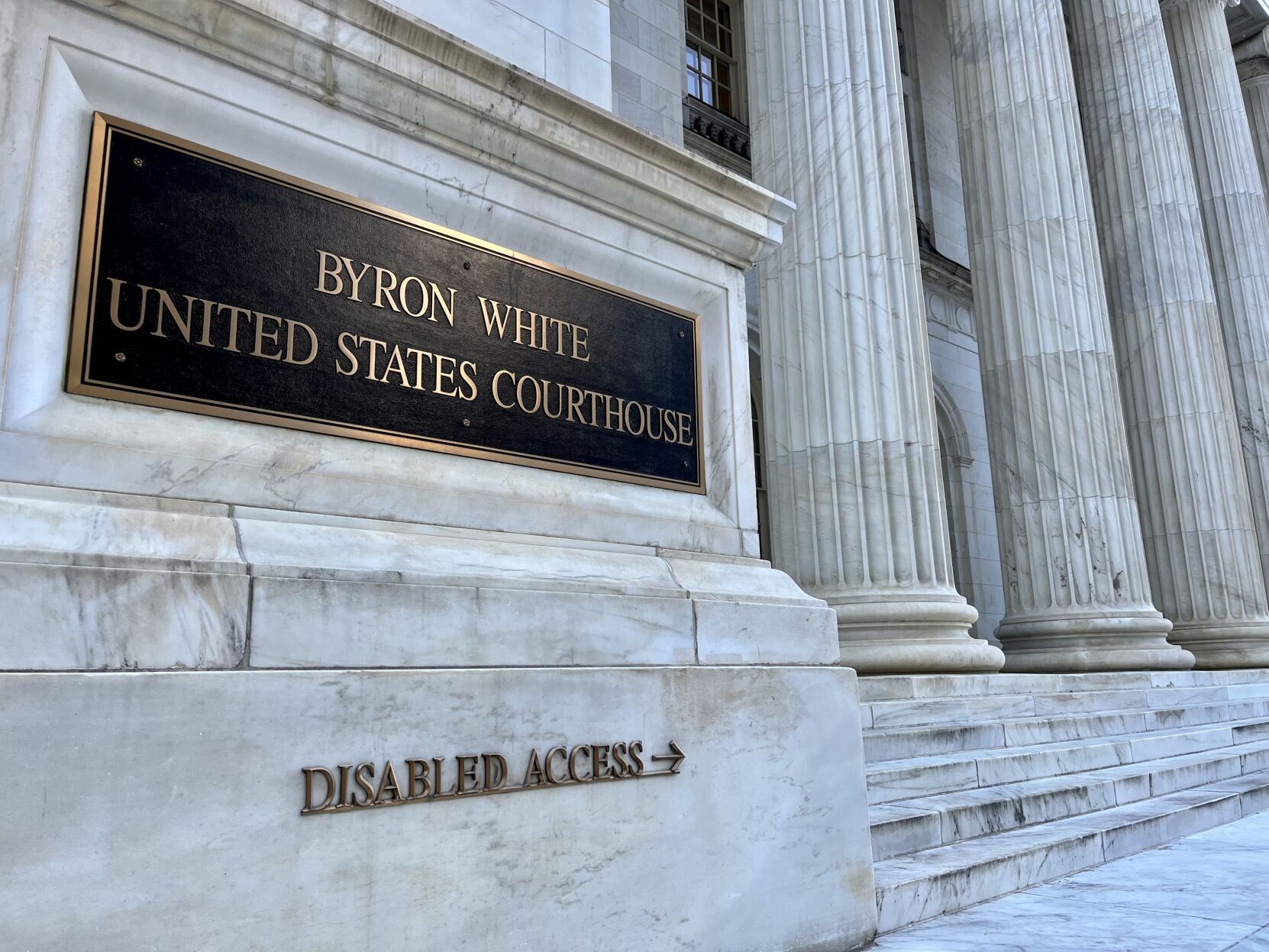
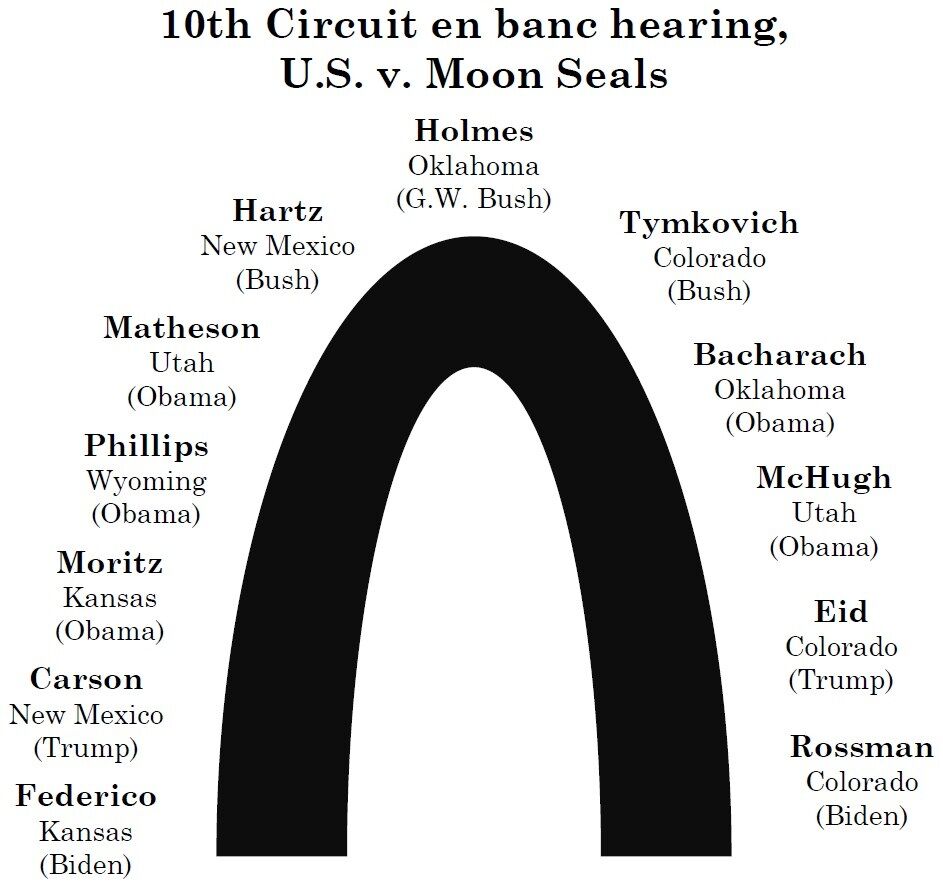
All 12 full-time judges on the Denver-based federal appeals court gathered for a rare oral argument on Monday to consider whether one of the court’s precedent-setting opinions created a process for sentencing probation violators that is out of step with what Congress intended.
Although the judges of the U.S. Court of Appeals for the 10th Circuit probed the intricacies of federal law and the sentencing guidelines, the basic question was how trial judges should resentence criminal defendants who receive probation and then violate the terms.
“My understanding is that if someone gets their probation revoked, it’s a free game on what’s gonna happen,” said Judge Gregory A. Phillips, who authored the original opinion under scrutiny. “You’re right back in front of the court and subject to getting resentenced for whatever crime you’ve committed.”
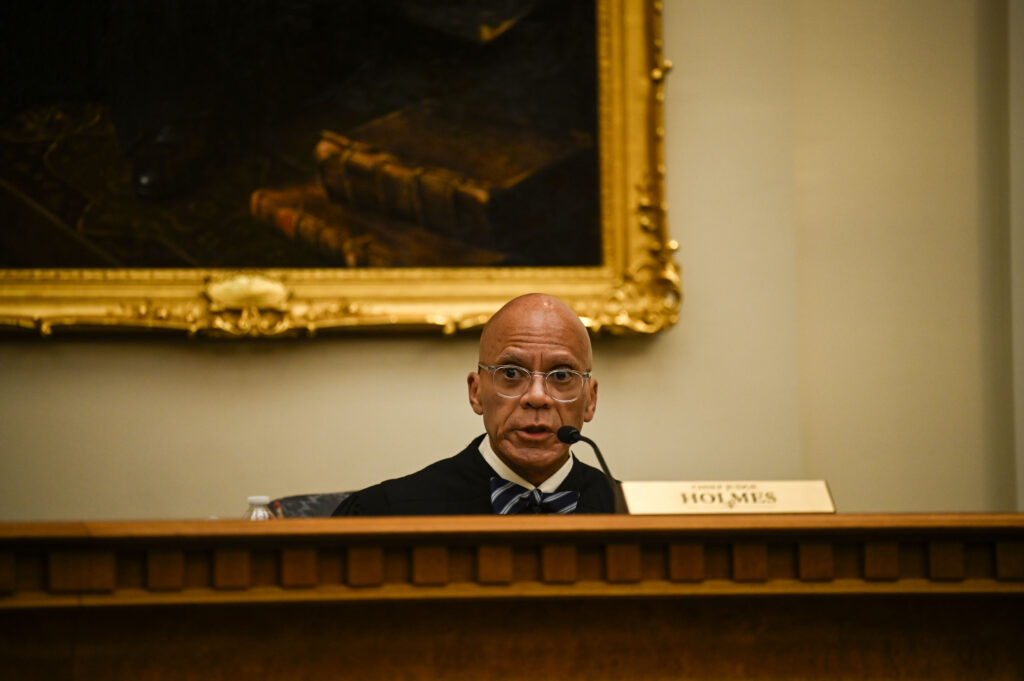
Yes, but “the court has chosen to sentence you for the underlying offense to probation. That’s done,” said Chief Judge Jerome A. Holmes. After a violation, “the only thing on the table is what happens for your breach of trust, and the time of imprisonment after that. Why isn’t that entirely logical if you accept the premise that probation isn’t some add-on? It’s your sentence for the underlying offense.”
In the federal appellate courts, the vast majority of cases are decided in three-judge panels. Occasionally, the courts will vote to have all judges hear a case, known as an “en banc” review. Historically, the 10th Circuit receives approximately 190 requests per year, but grants fewer than one on average.
A key feature of en banc review is a circuit court’s ability to overrule prior precedents established in panel decisions, which are binding on the court itself.
In the case of Malachi Mathias Moon Seals, out of Colorado, his attorney persuaded a majority of the appellate judges to review the 2022 opinion in United States v. Moore, in which a 10th Circuit panel introduced a binding two-step process for resentencing probation violators.
First, wrote Phillips in Moore, a judge must reimpose a sentence for the underlying crime, without regard to events that occurred since the probation began. Second, the judge adds an increment to the sentence for the probation violation.
Some appellate judges quickly telegraphed that they had reservations about that two-step process and were willing to consider it in a future en banc case.
While Moore unfolded, Moon Seals pleaded guilty to numerous counts of sending threats to federal officials, including U.S. Rep. Lauren Boebert. Despite the sentencing range being 33 to 41 months in prison, both sides asked that Moon Seals be put on probation instead.
U.S. District Court Judge Charlotte N. Sweeney initially balked. But she understood Moon Seals’ longstanding brain injury played a role in his conduct, and begrudgingly imposed probation so his condition could be addressed out of custody. Moon Seals immediately resumed sending threats, amounting to a probation violation.

Although the 10th Circuit had decided the Moore case, Sweeney did not follow the two-step procedure in resentencing Moon Seals. Instead, she appeared to believe she could resentence him under either the range for his original offenses or the range for a probation violation. Relying on the original range, Sweeney imposed 36 months in prison.
The 10th Circuit panel hearing Moon Seals’ appeal agreed Sweeney did not follow the procedure, but it upheld his sentence in October. In doing so, Phillips, who also authored the decision in Moon Seals’ case, defended his two-step resentencing process as fully supported by Congress’s legislative changes.
His arguments did not ward off full-court review. After the 10th Circuit judges voted to rehear the case en banc, the government indicated it would not defend Phillips’ two-step process. The 10th Circuit appointed former Colorado solicitor general Frederick R. Yarger to make the argument for upholding Moore.
Moore “didn’t truly create a new rule. It formalizes what many conscientious courts across the country have effectively already been doing,” Yarger said. The two-step process “just makes sure that all the procedural boxes have been checked. That everyone can understand where the sentence came from.”
“Why can’t they understand where the sentence came from, when, as is often the case, the court will explain where it came from?” asked Holmes.
The government and the public defender’s office asked for the 10th Circuit to overrule Moore and adopt a resentencing process that imposes a sentence for the probation violation anchored by that corresponding range. The government, however, argued that trial judges should also be able to consider the sentencing range for the underlying crime.
“What constrains the sentencing range on the probation revocation?” asked Judge Veronica S. Rossman.
The maximum amount for the original offense is the most that a judge can impose, responded U.S. Department of Justice attorney Ethan A. Sachs.
Phillips repeatedly challenged the lawyers about the consequences of departing from his two-step process. He outlined a hypothetical scenario where one judge imposes a single sentence that is relatively harsh for Moon Seals’ violation, “and then you have another judge who says, ‘Everybody knows there are all kinds of screwballs out there who type letters, and there was nothing really threatening about this guy.’
“How can we meaningfully review the difference between those?” he asked. “Under what standard do we say, ‘You went too far’ or ‘You should’ve gone further?’”
Phillips also suggested it was reasonable for judges who resentence probation violators to distinguish between the ranges applicable to each component of the sentence.
The two-step process “is like a railway operator. It’s just a switch. You pull the switch for Santa Fe or Bozeman,” he said. “You pull the switch for (the underlying offense) or (the probation violation).”
The problem, said public defender Jacob Rasch-Chabot, is that “when revoking a probationary sentence, the guideline range operative at the time the defendant was sentenced to probation (for the original offense) is no longer applicable.”
There was lengthy discussion about the need to avoid creating massive sentencing disparities between similarly situated defendants or giving defendants a windfall by imposing a relatively light sentence for a probation violation.
Judge Joel M. Carson III suggested a one-step resentencing that imposes a harsher penalty for a probation violation is not inherently unworkable. He noted Sweeney arguably created a disparity in the first place by giving Moon Seals probation when she had a 41-month prison sentence available.
“Disparity’s OK to have if you have a good reason for having disparity,” he said. “We’re gonna have disparities. You just have to explain why it’s there.”
The case is United States v. Moon Seals.


Bennet, Hickenlooper to vote against Trump’s 10th Circuit nominee from Colorado
Michael Karlik
michael.karlik@coloradopolitics.com
Updated 17 hours ago
Colorado’s two Democratic senators will not vote to confirm President Donald Trump’s nominee to a vacancy on the Denver-based federal appeals court. Trump has selected U.S. District Court Chief Judge Daniel D. Domenico, who he appointed as a federal trial...
U.S. government declines to oppose multiple challenges to immigration detention in Colorado
Michael Karlik
michael.karlik@coloradopolitics.com
Updated 1 day ago
Multiple federal judges in Colorado granted petitions from people challenging the lawfulness of their immigration detention this week after the government took the unusual step of declining to submit arguments in opposition. Colorado’s federal trial court is facing a flood of...
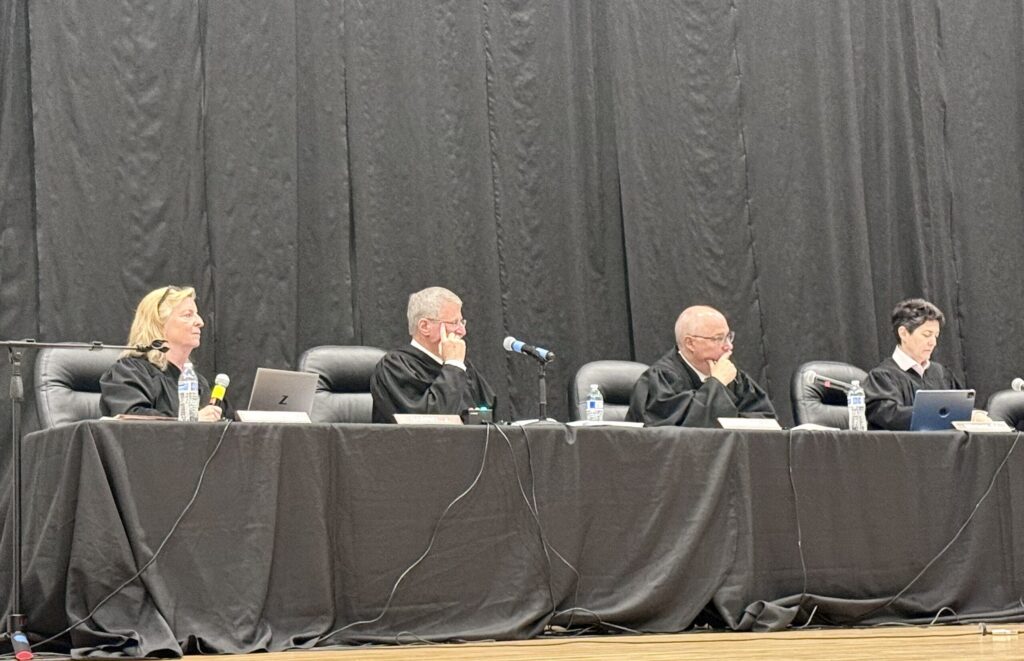
Colorado justices discuss solution to confusion from prior criminal ruling
Michael Karlik
michael.karlik@coloradopolitics.com
Updated 1 day ago
The Colorado Supreme Court pondered the fallout on Tuesday from its nearly six-year-old decision interpreting the state’s impaired driving laws, with the justices now addressing how defendants affected by the legal change must seek postconviction relief. In contrast to other...
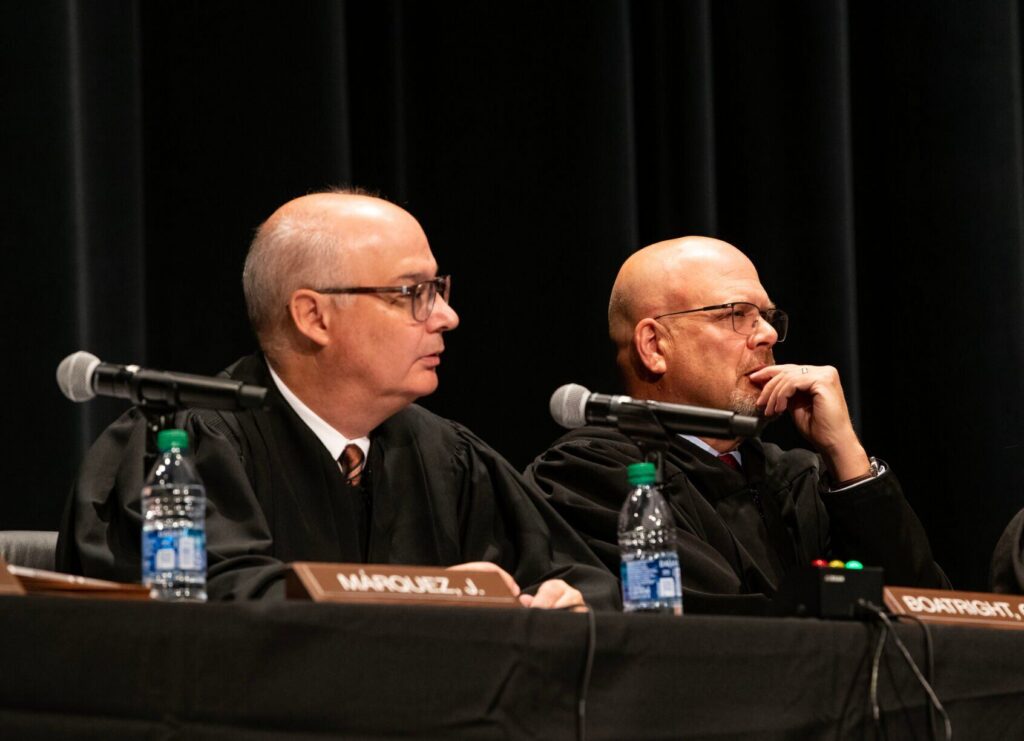
Colorado justices suggest father entitled to appeal of custody decision
Michael Karlik
michael.karlik@coloradopolitics.com
Updated 3 days ago
Members of the Colorado Supreme Court signaled strongly on Tuesday that a father deserved some avenue for challenging a temporary child custody order that no lower court believed it could review due to the unusual circumstances of the case. Because...

Court snuffs out challenge to Denver’s flavored tobacco ban
Deborah Grigsby
deborah.smith@denvergazette.com
Updated 2 days ago
The smoke finally cleared in Denver’s battle over a citywide ban on flavored tobacco products when a Denver court dismissed a challenge from local vape shop owners seeking to declare the ordinance unconstitutional and block its enforcement. On Wednesday, Denver...
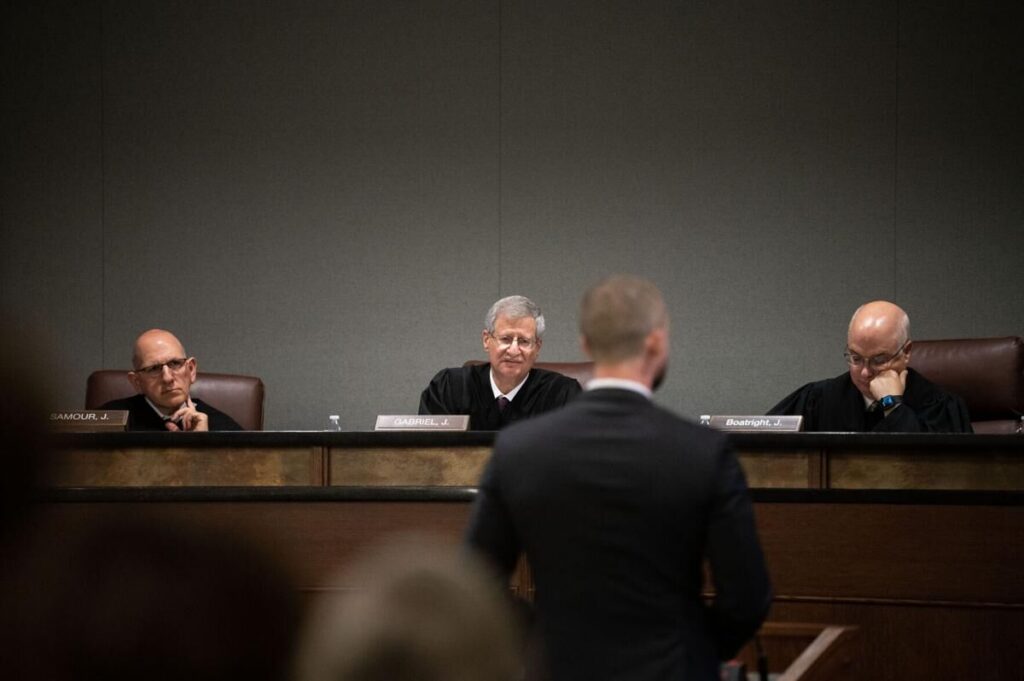
Colorado justices agree fraud claims belong in corporate dispute
Michael Karlik
michael.karlik@coloradopolitics.com
Updated 3 days ago
The Colorado Supreme Court decided on Tuesday that a corporate plaintiff validly pursued fraud claims over conduct that was not covered by a contract or by a set of interrelated business agreements leading up to the contract. Previously, the Court...
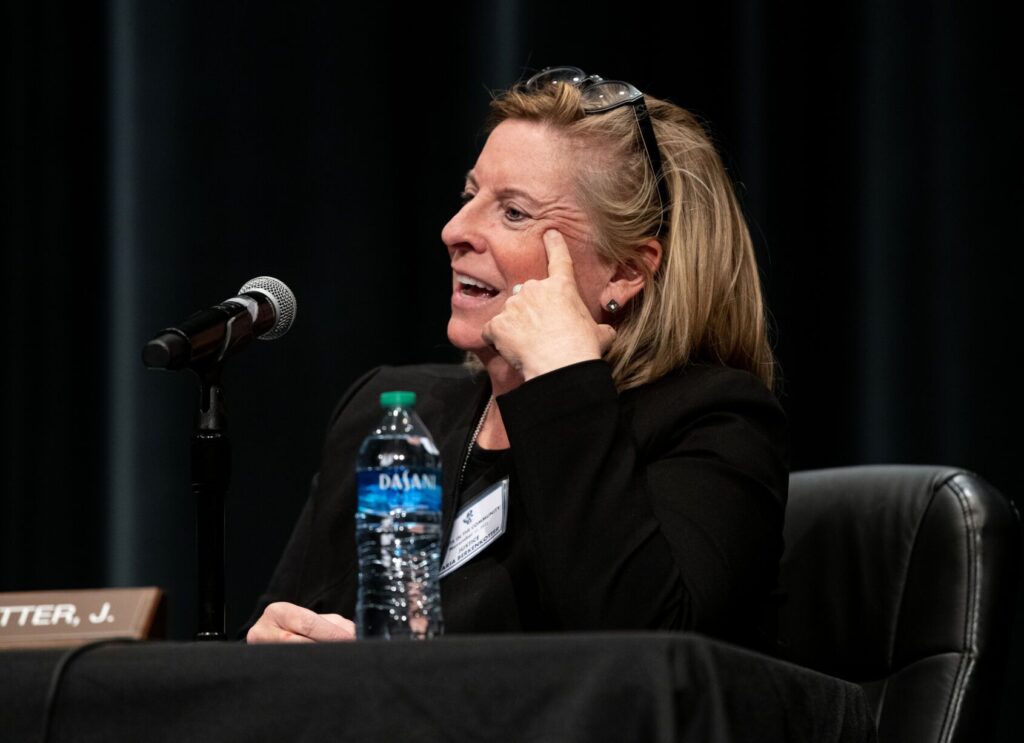
Colorado Supreme Court says intimate messages irrelevant to assault case
Michael Karlik
michael.karlik@coloradopolitics.com
Updated 3 days ago
The Colorado Supreme Court decided on Tuesday that a Douglas County judge acted reasonably by blocking evidence of a defendant’s BDSM-related conversations with the victim in his trial for assault and false imprisonment. While the Court of Appeals believed that...
Trump’s 10th Circuit nominee declines to name 2020 election winner, defends immigration decisions
Michael Karlik
michael.karlik@coloradopolitics.com
Updated 3 days ago
President Donald Trump’s nominee to the Denver-based federal appeals court declined to say who won the 2020 presidential election during his appearance before the U.S. Senate Judiciary Committee on Wednesday, and defended his recent rulings in immigration detention cases. U.S....

Colorado law allowing lawsuits against ‘conversion therapy’ providers takes effect July 1
Marissa Ventrelli
marissa.ventrelli@coloradopolitics.com
Updated 1 day ago
With a new law taking effect July 1, Colorado is creating a legal pathway for people to sue licensed providers of “conversion therapy,” even as debate over the practice’s constitutionality continues in the wake of a recent U.S. Supreme Court...
Colorado justices expand ability for civil defendants to avoid participating, win after trial
Michael Karlik
michael.karlik@coloradopolitics.com
Updated 3 days ago
The Colorado Supreme Court decided on Tuesday that a civil defendant, whose non-participation in the case meant that he legally admitted to the sexual assault allegations against him, could nonetheless prevail after he showed up to testify at trial. A...
PREV
PREVIOUS

Aurora is 'strong and getting stronger,' mayor says in State of City speech
Aurora is “strong and getting stronger,” the city’s mayor said on Tuesday, citing successes in a new homeless navigation campus. Mayor Mike Coffman said he leaves work every Friday and goes straight to the Regional Navigation Campus, where he then sleeps in the low-barrier homeless shelter and helps serve breakfast in the morning. The navigation […]

Colorado legislators ask voters to forfeit thousands in TABOR refunds, redirect money to school spending
A Democratic‑backed proposal to direct money to K‑12 schools using Taxpayer’s Bill of Rights dollars is headed to the ballot, setting up a major debate over taxpayer refunds and long‑term education funding. If voters approve it, the average Coloradan would forfeit more than $7,000 in TABOR refunds over the next decade. Senate Bill 135 includes […]