

Arapahoe County defendant serving life could receive new trial after lawyer withheld key details
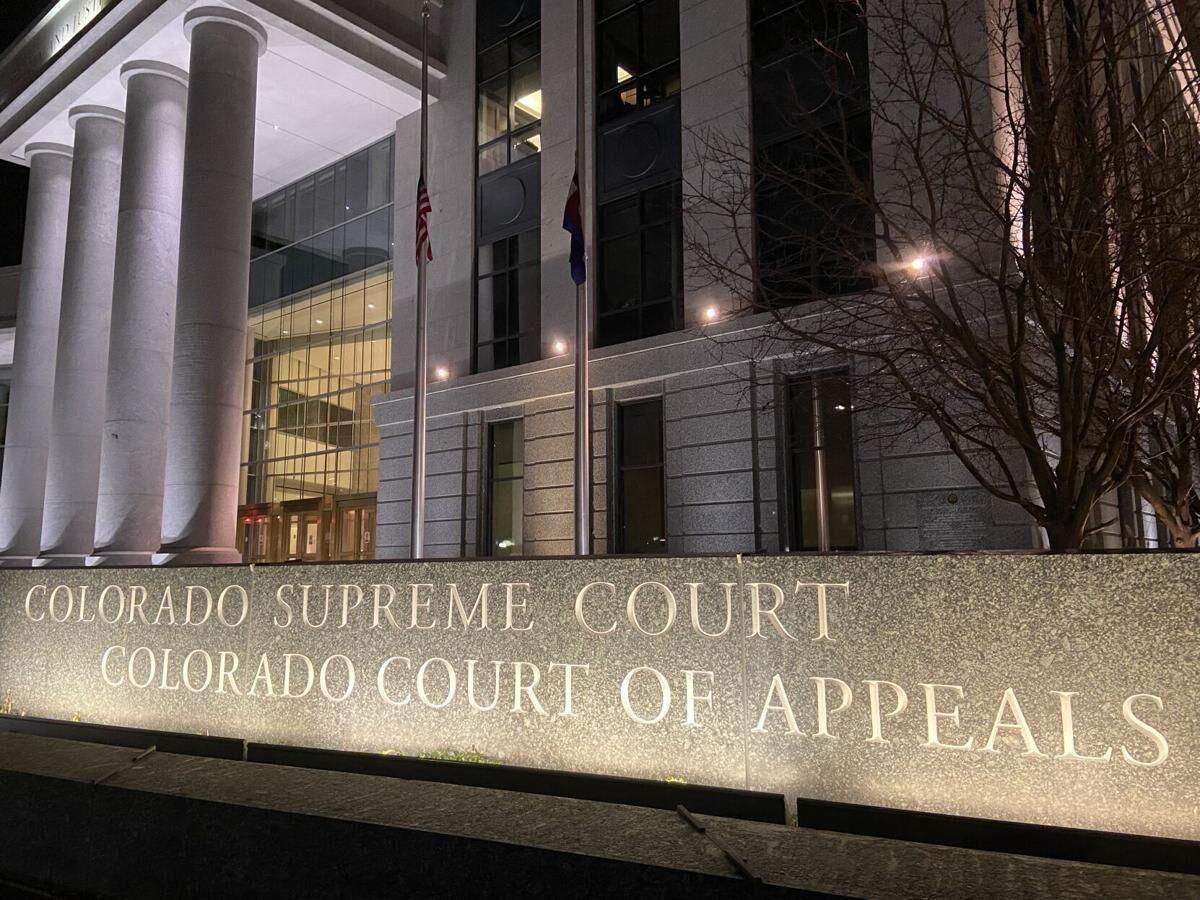
An Arapahoe County defendant who is serving a life sentence for a 20-year-old murder could receive a new trial because his lawyer withheld key details that affected his decision to decline a plea deal, Colorado’s second-highest court ruled last week.
There was no dispute that Michael Evans did not shoot the victim during an October 2005 burglary. Evans denied being present, and the only witness who could have testified to Evans’ participation refused to do so. The prosecution argued that Evans could be held liable for the victim’s death simply by being complicit in the burglary, but jurors’ questions illustrated their struggle with finding Evans guilty.
In the end, the jury convicted Evans of burglary and felony murder, in which a defendant is guilty if he participates in certain crimes, such as robbery or sexual assault, and someone dies as a result. As the law existed at the time, a judge sentenced Evans to mandatory life in prison.
Years later, Evans sought postconviction relief on the grounds that his trial lawyers were constitutionally ineffective for failing to explain how a tentative plea offer from the prosecution of 27 years would have resulted in less time behind bars when accounting for parole and earned time. Had he known, said Evans, “One million percent I would have accepted that offer.”
A three-judge Court of Appeals panel agreed that withholding that information could have been constitutionally unreasonable and could have harmed Evans. The panel rejected the idea that the tentative, or “soft,” nature of the plea offer did not matter as much as a firm commitment from the prosecution.
“If the prosecution floated a soft offer of twenty-seven years to make sure the parties were on the same page, and Evans expressed an interest in accepting the offer, it seems likely that a firm offer would have been forthcoming,” wrote Judge Elizabeth L. Harris in the April 30 opinion. “Here, the disparity was indisputably substantial: twenty-seven years (not accounting for parole eligibility) versus life in prison without the possibility of parole.”
Case: People v. Evans
Decided: April 30, 2026
Jurisdiction: Arapahoe County
Ruling: 3-0
Judges: Elizabeth L. Harris (author)
Matthew D. Grove
Neeti V. Pawar
In 2021, Evans filed a petition for postconviction relief. Among other things, he alleged that his trial lawyers unreasonably failed to explain that he could be found guilty of felony murder if the jury believed he was complicit.
Moreover, his lawyers neglected to mention that the prosecution’s soft plea offer of 27 years, which Evans rejected, would have resulted in less time served in prison based on his parole eligibility. Because Evans had previous convictions as a juvenile where he served the entirety of his sentences, he allegedly had no independent understanding of early release.
In December 2022, District Court Judge Ryan Stuart dismissed Evans’ complicity-related claim, reasoning that the felony murder law put him on notice about his potential criminal exposure. However, Stuart agreed that Evans could have a valid claim if his trial lawyers failed to explain that Evans likely would not serve all 27 years in prison under the plea offer.
After a hearing in which one of Evans’ trial lawyers, one of the trial prosecutors, and an expert witness testified, District Court Judge Theresa Slade denied his request for relief.
Even though there was conflicting testimony, Slade was “convinced” that the prosecution made a soft plea offer. Yet, she believed it was meaningful that no firm plea deal materialized.
“Because there was no plea bargain offered to Defendant, trial counsel was not ineffective for not providing Defendant information about something that did not exist,” Slade wrote. Consequently, “the Defendant cannot suffer a detriment from a decision he was not empowered to make, informed or not.”
Upon review, the Court of Appeals panel concluded her focus on the existence of a firm offer was incorrect.
Drawing from federal court decisions, Harris explained that a defense lawyer can be constitutionally ineffective if their performance prevented the prosecution from extending a firm offer. Evans had essentially alleged that his incomplete understanding of the circumstances precluded that offer.
In Slade’s view, “because only a firm offer has constitutional significance, counsel’s performance during plea negotiations was constitutionally irrelevant until such time as a firm offer was extended,” Harris wrote. “That reasoning cannot be squared with well-settled law.”
She added that the evidence indicated Evans would have taken the plea offer had he known the particulars. Moreover, the fact that the prosecution granted a 25-year plea deal to the actual shooter suggested that Evans could have reasonably expected a similar, firm offer.
The panel returned Evans’ case to the trial court to decide whether, if not for his lawyers’ actions, there would have likely been a firm plea deal in his case, resulting in a less-severe prison sentence.
The panel also reinstated Evans’ claim that his attorneys were ineffective for failing to explain the concept of complicity. Harris wrote that Stuart had incorrectly reasoned that Evans was on notice about the requirements of felony murder.
“According to Evans, the lawyer’s failure to explain his exposure under that alternative theory of liability meant that he overestimated his chances at trial and, as a result, rejected the soft offer,” she wrote. “Evans’s allegations are sufficient to warrant a hearing.”
The case is People v. Evans.

Local party leaders, incoming judge among members of judicial performance commission that violated law
Michael Karlik
michael.karlik@coloradopolitics.com
Updated 16 hours ago
A local Democratic leader and 2024 presidential elector. A legislative aide and leader in the Young Republicans. An incoming county court judge freshly appointed by the governor. They are among the eight members of the northeastern Colorado judicial performance commission...

Judge dismisses lawsuit seeking records from Colorado Democratic group
Marianne Goodland
marianne.goodland@coloradopolitics.com
Updated 17 hours ago
A lawsuit seeking to obtain records from Democratic lawmakers affiliated with a caucus has been thrown out by a Denver District Court judge. On July 17, Judge Ericka Englert dismissed the April lawsuit filed by progressive activist Derrick Blanton, who...
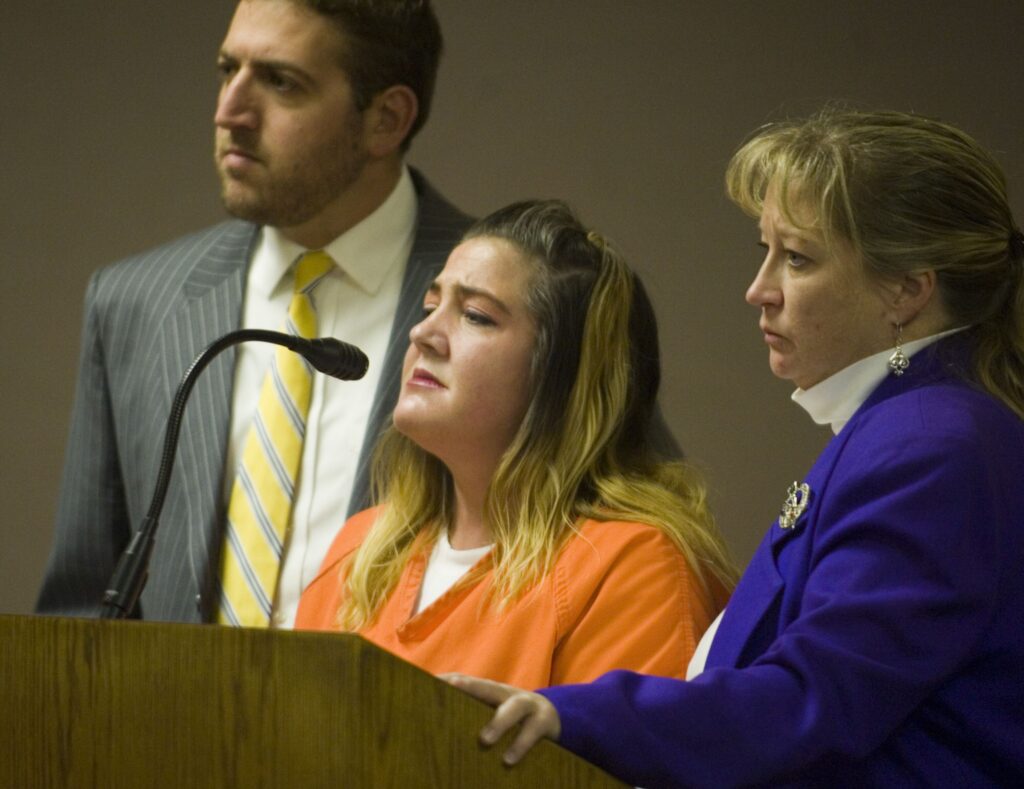
Colorado Springs mother Deborah Nicholls’ murder conviction overturned
Nick Smith
nick-smith@coloradopolitics.com
Updated 2 days ago
A Colorado Springs mother convicted in 2008 of murdering her three children in a house fire might get a new trial after a judge ruled that prosecutors withheld key evidence that could have impacted the jury’s verdict. Deborah Nicholls, whose...
Colorado court overturns illegal $7,000 restitution order
Michael Karlik
michael.karlik@coloradopolitics.com
Updated 12 hours ago
Colorado’s second-highest court overturned a Weld County defendant’s obligation to pay more than $7,000 in crime victim restitution on Thursday because a trial judge failed to issue a legally compliant restitution order at the time of sentencing. In Colorado, as...

Appeals court rejects former DougCo commissioner’s legal fee claim
Nicholas Fogleman
nicholas.fogleman@denvergazette.com
Updated 24 hours ago
The Colorado Court of Appeals rejected a former Douglas County commissioner’s bid for reimbursement of attorney fees she incurred while responding to multiple investigations into her conduct. The dispute stemmed from a 2019 anonymous letter sent to county officials alleging...
Appeals court orders second look at Denver Water’s immunity for cyclist’s injury
Michael Karlik
michael.karlik@coloradopolitics.com
Updated 2 days ago
Colorado’s second-highest court ordered another look at a bicyclist’s negligence lawsuit against Denver Water on Thursday, concluding that a trial judge needed to evaluate the utility’s potential immunity using the state Supreme Court’s new guidance. Joseph A. “Joey” Scott alleged...
Labels, duration not definitive proof of ‘intimate relationship,’ Colorado court rules in domestic violence case
Michael Karlik
michael.karlik@coloradopolitics.com
Updated 18 hours ago
Colorado’s second-highest court clarified on Thursday that the length of a couple’s relationship and the labels they attach to it are not conclusive evidence of whether it is an “intimate relationship” that can give rise to a domestic violence prosecution....

Colorado AG urges Supreme Court to let Boulder climate lawsuit proceed
Marissa Ventrelli
marissa.ventrelli@coloradopolitics.com
Updated 2 days ago
Colorado Attorney General Phil Weiser has filed a court brief with the U.S. Supreme Court in a lawsuit brought by Boulder city officials seeking to hold oil companies liable for their environmental impact. The case began in 2018, when the...
10th Circuit says landowner cannot sue ex-Routt County judge for statements in decision
Michael Karlik
michael.karlik@coloradopolitics.com
Updated 3 days ago
A Routt County landowner cannot sue a former judge for his allegedly inaccurate statements in a case where the landowner was not a party, the Denver-based federal appeals court decided on Wednesday. Anne Fitzsimmons, who lives in Germany, owns a...
Defendant’s competency in question in El Paso County case involving slain Army police officer
Nick Smith
nick-smith@coloradopolitics.com
Updated 2 days ago
It will be another 60 days before a 4th Judicial District court determines if a man charged in the shooting death of an Army police officer is competent to proceed in his case. Judge Erin Sokol granted a request Wednesday...
PREV
PREVIOUS

Colorado Senate honors journalism icon Fred Brown
The Colorado Senate on Thursday honored longtime Denver Post bureau chief Fred Brown with a ceremony as distinctive as the journalist himself, donning masks bearing his likeness and celebrating his five decades of shaping political reporting and ethical standards in the state. The tribute, offered by Sen. Mark Baisley, R-Woodland Park, noted Brown’s 50 years […]

Colorado Gov. Polis faces intense lobbying blitz from DC-based groups over credit card 'swipe-fee' bill
Colorado’s long‑running fight over credit‑card swipe fees entered its final round Tuesday, when lawmakers sent a proposal to Gov. Jared Polis and rival industry coalitions immediately launched competing campaigns to sway his decision. The clash pits groups urging Polis to sign the bill — restaurants, hotels, breweries, liquor stores, small businesses, and big‑box retailers — […]