

Boulder County prosecutor improperly used defendant’s silence as guilt, appeals court finds
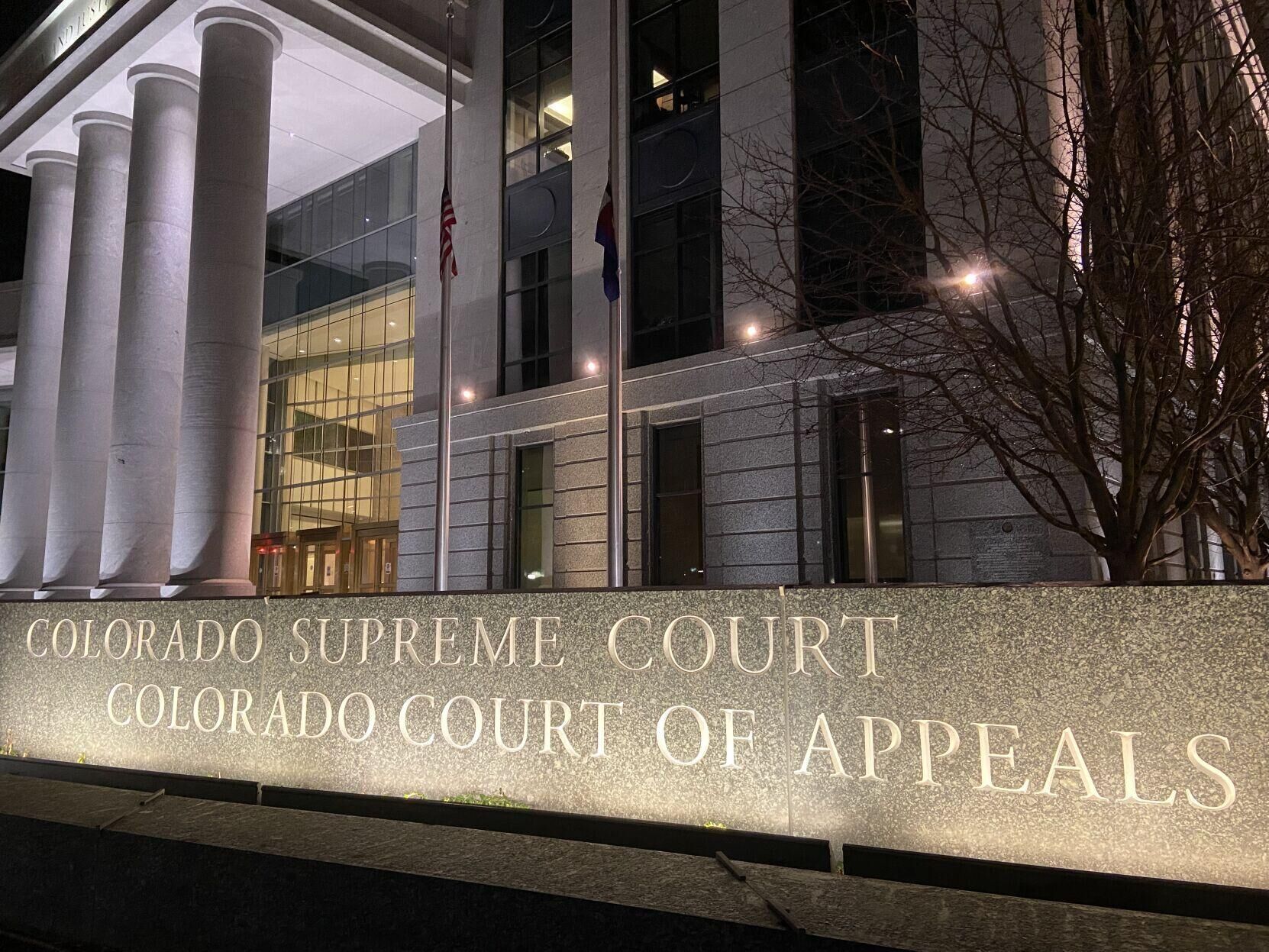
Colorado’s second-highest court reversed a Boulder County defendant’s sexual assault conviction last week after concluding that a trial judge should have intervened to stop the prosecutor from inappropriately using the man’s constitutional right to silence to suggest he was guilty.
Prosecutors charged Charles G. Higdon III with two counts of sexual assault. Jurors acquitted him of one and convicted him of the other. He is serving a six-year prison sentence.
The alleged victim was extremely intoxicated and Higdon had also been drinking prior to the sexual encounter. The dispute at trial was the consensual nature of the interaction.
Case: People v. Higdon
Decided: April 30, 2026
Jurisdiction: Boulder County
Ruling: 3-0
Judges: Jaclyn Casey Brown (author)
Rebecca R. Freyre
Timothy J. Schutz
Although Higdon spoke to Longmont police that same night, they did not arrest him until six months later. At the police station, Det. Esteban Lopez advised Higdon of his Miranda rights to silence and to speak with an attorney. They talked briefly about Higdon’s version of events.
At trial, Higdon testified in his defense. The prosecutor began questioning Higdon about the specifics he shared at trial, but had not told Lopez.
“In terms of the details you provided to him, you didn’t tell him a lot of the things that you talked about today, right?” the prosecutor asked.
“I was very nervous. I could hardly speak,” responded Higdon.
“But you did talk to him about some of the stuff that happened that night, right?” said the prosecutor. “You didn’t break it down for him like you did for this jury today, right?”
“No,” said Higdon. “I thought we would have — there would be the time to speak later.”
“OK. And in terms of giving more details to Det. Lopez, you didn’t do that, either?”
“No,” said Higdon.
Finally, during closing arguments, the prosecutor returned to Higdon’s testimony.
“None of those details were discussed, not on that night, and not in … May of 2021, when (Detective) Lopez talked to him again. At that point in time, he’s under arrest for sexual assault. He’s still not sharing those details,” the prosecutor said.
On appeal, Higdon argued the law clearly establishes that the prosecution cannot imply a defendant is guilty because he chose to exercise his constitutional right to silence after receiving a Miranda warning, which applies to any information Higdon omitted in his statements.
The prosecution “is entitled to cross-examine defendants on prior inconsistent statements,” responded Assistant Attorney General Cata A. Cueno. “Defendant’s mixture of consistent and inconsistent statements, which continued to morph into different variations throughout his testimony, made it difficult to track the level of consistency.”
But a three-judge Court of Appeals panel disagreed.
The prosecutor “did not ask about any specific details or otherwise point to any inconsistencies between Higdon’s statements to Detective Lopez and his testimony at trial,” wrote Judge Jaclyn Casey Brown in the April 30 opinion. “Rather, the prosecutor repeatedly asked Higdon about not having provided ‘the details’ to Detective Lopez that he testified to at trial.”
She added that a defendant’s trial testimony is not inconsistent with an earlier account to police simply because it is more detailed. In Higdon’s case, the prosecutor’s seeming goal was to suggest that Higdon was guilty because he did not tell Lopez everything.
Although the defense at trial did not object, the appellate panel determined the error was so obvious that then-District Court Judge Bruce Langer should have intervened without an objection.
“Accordingly, we conclude that the district court erred by allowing the prosecutor to improperly comment on Higdon’s post-Miranda silence to imply guilt in violation of his constitutional right to due process,” Brown wrote.
The Court of Appeals did not identify the prosecutor whose questioning triggered reversal of Higdon’s conviction, but the district attorney’s office for Boulder County said that Nick Trevino and Alex Zowin were the trial prosecutors.
The case is People v. Higdon.

Local party leaders, incoming judge among members of judicial performance commission that violated law
Michael Karlik
michael.karlik@coloradopolitics.com
Updated 6 hours ago
A local Democratic leader and 2024 presidential elector. A legislative aide and leader in the Young Republicans. An incoming county court judge freshly appointed by the governor. They are among the eight members of the northeastern Colorado judicial performance commission...
Judge dismisses lawsuit seeking records from Colorado Democratic group
Marianne Goodland
marianne.goodland@coloradopolitics.com
Updated 1 day ago
A lawsuit seeking to obtain records from Democratic lawmakers affiliated with a caucus has been thrown out by a Denver District Court judge. On July 17, Judge Ericka Englert dismissed the April lawsuit filed by progressive activist Derrick Blanton, who...
Colorado Springs mother Deborah Nicholls’ murder conviction overturned
Nick Smith
nick-smith@coloradopolitics.com
Updated 2 days ago
A Colorado Springs mother convicted in 2008 of murdering her three children in a house fire might get a new trial after a judge ruled that prosecutors withheld key evidence that could have impacted the jury’s verdict. Deborah Nicholls, whose...
Colorado court overturns illegal $7,000 restitution order
Michael Karlik
michael.karlik@coloradopolitics.com
Updated 23 hours ago
Colorado’s second-highest court overturned a Weld County defendant’s obligation to pay more than $7,000 in crime victim restitution on Thursday because a trial judge failed to issue a legally compliant restitution order at the time of sentencing. In Colorado, as...

Appeals court rejects former DougCo commissioner’s legal fee claim
Nicholas Fogleman
nicholas.fogleman@denvergazette.com
Updated 1 day ago
The Colorado Court of Appeals rejected a former Douglas County commissioner’s bid for reimbursement of attorney fees she incurred while responding to multiple investigations into her conduct. The dispute stemmed from a 2019 anonymous letter sent to county officials alleging...
Appeals court orders second look at Denver Water’s immunity for cyclist’s injury
Michael Karlik
michael.karlik@coloradopolitics.com
Updated 2 days ago
Colorado’s second-highest court ordered another look at a bicyclist’s negligence lawsuit against Denver Water on Thursday, concluding that a trial judge needed to evaluate the utility’s potential immunity using the state Supreme Court’s new guidance. Joseph A. “Joey” Scott alleged...
Labels, duration not definitive proof of ‘intimate relationship,’ Colorado court rules in domestic violence case
Michael Karlik
michael.karlik@coloradopolitics.com
Updated 1 day ago
Colorado’s second-highest court clarified on Thursday that the length of a couple’s relationship and the labels they attach to it are not conclusive evidence of whether it is an “intimate relationship” that can give rise to a domestic violence prosecution....

Colorado AG urges Supreme Court to let Boulder climate lawsuit proceed
Marissa Ventrelli
marissa.ventrelli@coloradopolitics.com
Updated 2 days ago
Colorado Attorney General Phil Weiser has filed a court brief with the U.S. Supreme Court in a lawsuit brought by Boulder city officials seeking to hold oil companies liable for their environmental impact. The case began in 2018, when the...
10th Circuit says landowner cannot sue ex-Routt County judge for statements in decision
Michael Karlik
michael.karlik@coloradopolitics.com
Updated 3 days ago
A Routt County landowner cannot sue a former judge for his allegedly inaccurate statements in a case where the landowner was not a party, the Denver-based federal appeals court decided on Wednesday. Anne Fitzsimmons, who lives in Germany, owns a...
Defendant’s competency in question in El Paso County case involving slain Army police officer
Nick Smith
nick-smith@coloradopolitics.com
Updated 2 days ago
It will be another 60 days before a 4th Judicial District court determines if a man charged in the shooting death of an Army police officer is competent to proceed in his case. Judge Erin Sokol granted a request Wednesday...
PREV
PREVIOUS

Appeals court upholds discipline for Denver officers' inadequate domestic violence investigation
Colorado’s second-highest court last week upheld Denver’s discipline of two officers whose investigation of a domestic violence report was brief, failed to separate the victim from her abuser, and overlooked the victim’s severe injuries. Officers Cory Stuper and Brian Finneran argued that pervasive procedural violations in the adjudicative process and their own desire to respect […]

Colorado legislators reject 'No Kings' bill allowing residents to sue federal officers
A panel of Colorado legislators on Tuesday rejected legislation that would have allowed residents to sue federal and local officials in state court for alleged constitutional violations. Senate Bill 176 would have allowed individuals who have been subjected to a “deprivation of any rights, privileges, or immunities” afforded in the U.S. Constitution to sue for civil […]