

Dismissal sought in Michael Clark’s second trial
The murder conviction of Michael Clark should be dismissed due to a 32-year delay that led to crucial evidence being lost or destroyed, a bungled police investigation and “outrageous conduct” at the state crime lab, according to defense motion filed late Friday afternoon.
Clark, now 50, was convicted of first-degree murder in October 2012 in a case that had languished for nearly two decades. He was sent away for life without parole for the shooting death of Marty Grisham in Boulder in 1994.
Clark has maintained from the start he did not commit the crime.
In April 2025, Clark’s original conviction was set aside due, in part, after an independent retest of DNA evidence in the case — considered key to him being found guilty — found differing results.
Clark was then released on bail after serving 12 years in prison.
For months, speculation swirled around whether prosecutors would attempt to retry him. In September, Boulder County District Attorney Michael Dougherty announced he would do so.
The 72-page defense motion filed in Boulder County Friday seeks to dismiss the case for good.
It is a case that has been closely watched in legal and scientific circles both in Colorado and nationwide, as it embodies the unprecedented scandal that has engulfed the state’s forensic lab and upended the Colorado judicial system.
Yvonne Woods, a former go-to forensic scientist at the lab who worked on the Clark case, is accused of altering data and skipping key steps in her DNA testing throughout her 29-year career at CBI.
So far, CBI has identified 1,045 cases with problems tied to Woods, or roughly one-in-10 of the more than 10,780 cases she had worked on. Woods, who goes by Missy, resigned rather than be fired in 2023 just before the scandal was made public.
She is now facing 102 felony counts, including cybercrime, forgery, perjury and attempting to influence a public servant. She is awaiting trial in Jefferson County.
Friday’s motion in the Clark case lays out three main arguments for dismissal:
The decades-long delay in prosecution makes it improbable if not impossible to mount an effective defense as witnesses are deceased, memories have faded, and evidence has been destroyed, the motion said.
The delay violates Clark’s 14th Amendment rights to due process, the defense contends.
Also, police and prosecutors at the time allegedly failed to thoroughly explore alternative suspects, notably Grisham’s ex-wife and his two children who had animosity towards him and a potential financial gain from his death, according to the motion.
And, notably, the Colorado Bureau of Investigation’s forensic science lab allowed shoddy, rushed results in cases, including Clark’s, that violated accepted scientific standards by turning a blind eye to Woods’ alleged misdeeds, the motion adds.
Adam Frank, Clark’s defense attorney, called the re-prosecution after so many years and with so little evidence a “moral obscenity.”
Further, he claims in his motion that Dougherty, who is running for state attorney general, made his decision to retry out of “politics, not justice.”
Frank also alleges conflict of interest in the district attorney’s actions because one of his fundraisers is Ryan Brackley, who was the original prosecutor in Clark’s first trial and then became Wood’s defense counsel. Brackley now serves as an assistant district attorney for the 18th Judicial District.
The Boulder County District Attorney’s office could not be reached late Friday for comment.
In April, Dougherty said vacating the first conviction “was the right thing to do” due to the “totality” of problems with the case. In addition to DNA questions, the defense has alleged juror misconduct in the first trial.
Five months later, though, the Boulder County district attorney said his office decided to retry the case after it had “carefully and thoroughly analyzed all the remaining evidence to determine the right path forward. Our request for trial dates is a reflection of that process and our decision of what justice requires. We look forward to the trial.”
Boulder County Assistant District Attorney Kenneth Kupfner said at a hearing in September prosecutors believed “we can prove beyond a reasonable doubt (Clark) was responsible for the death of Marty Grisham.”
The second trial could come later this year.
Clark was a teenager on Nov. 1, 1994, when Grisham was shot four times as he answered the door of his Boulder apartment. Although Clark quickly became a suspect because he admitted he had stolen checks from Grisham and forged them for a total of about $4,500, he was not arrested at the time.
Prosecutors said then the case was too shaky.
Although Clark once owned the type of gun that could have fired the fatal bullets, it was never recovered. There were also no witnesses and no physical evidence.
In 2011, the case got new life when a Boulder detective sent a jar of Carmex lip balm, found at the scene the morning after the murder, to the CBI to determine if DNA testing could be done.
It landed with Woods, who concluded that male DNA found inside the Carmex container was consistent with Clark’s and that he was a major contributor, presumably putting him at the scene. She testified at trial and the jury convicted.
But after reports in 2023 that Woods had been allegedly manipulating DNA results for years, Dougherty agreed to have the lip balm retested by an independent lab in Virginia.
When the lab tested the remains of what was on Woods’ original swab, the findings were the same. But in two other tests using other swabs, the results were not consistent with hers, according to the motion.
Clark was considered “statistically excluded,” Dougherty acknowledged in his motion to set aside the conviction last year.
Frank theorized the discrepancies in the retesting results may point to contamination in the lab. He alleged CBI allowed its scientists “unjustified leeway” in their findings and that quality control was lax.
For instance, he argued that, in the Clark testing, a technical review that was supposed to check Woods’ conclusions lasted less than one minute. Typically, a technical review can last several hours, the motion said.
Also, the defense argued in its motion that authorities failed to thoroughly investigate Grisham’s former wife and two children, including his late son, who also had the type of gun used and had had a bitter relationship with his father. The son committed suicide in 2007.
The defense contends that, because there was not a proper investigation at the time and evidence was not preserved, it is impossible to try to recreate one three decades later. That creates a “fundamental unfairness” and warrants a dismissal on lack of due process grounds, the motion says.
A hearing is scheduled for May 5 to set a deadline for the prosecution’s response. It is unclear when the judge will decide.

Tiered or capped? Battle over Colorado’s income taxes might come down to one number
Marianne Goodland
marianne.goodland@coloradopolitics.com
Updated 4 hours ago
The battle between two competing ballot measures — one seeking to cap Colorado’s income tax rate, the other pushing for a tiered system depending on income levels — might come down to whichever ballot proposal gets one more vote. The...

National House Democrats add Colorado seats held by Lauren Boebert, Jeff Hurd to target list
Ernest Luning
ernest.luning@coloradopolitics.com
Updated 4 hours ago
The national House Democrats’ campaign arm on Wednesday added the Colorado congressional district held by Republican U.S. Reps. Jeff Hurd and Lauren Boebert to the list of targeted seats the party believes are vulnerable in this year’s midterms. The Democratic...
Bennet settles campaign finance complaints, admits violating state law
Marianne Goodland
marianne.goodland@coloradopolitics.com
Updated 2 hours ago
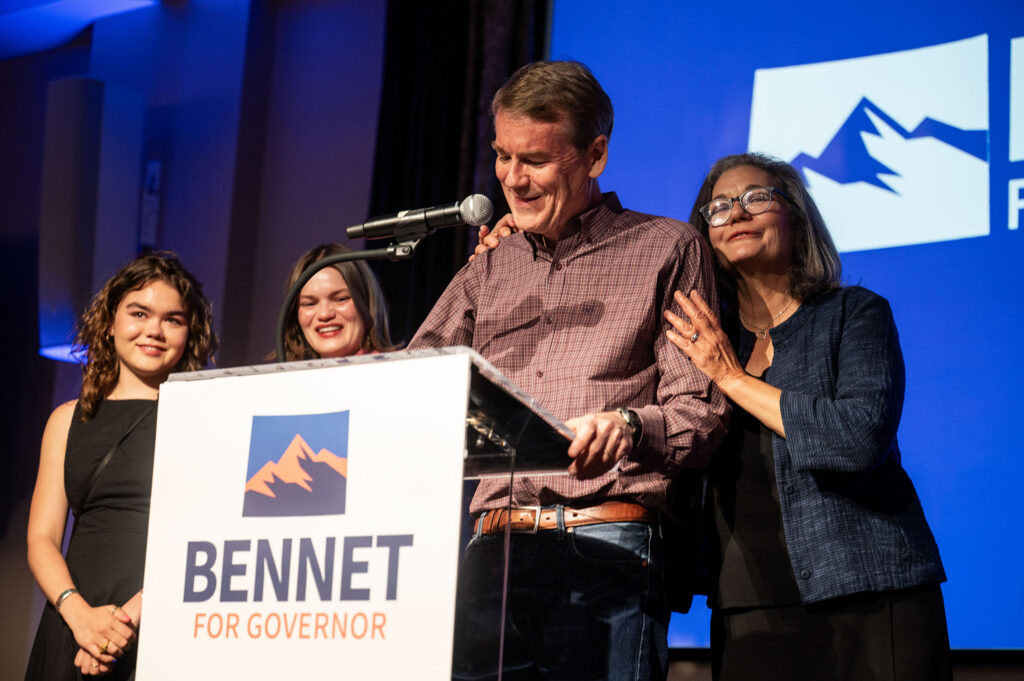
U.S. Sen. Michael Bennet’s gubernatorial campaign has agreed to pay a $7,433 fine for using his Senate campaign account to pay for gubernatorial campaign travel expenses. The July 31 settlement includes an admission by Bennet and his campaign that they...

Colorado to implement new laws on jail standards, safe haven rules, and agricultural labeling
Marissa Ventrelli
marissa.ventrelli@coloradopolitics.com
Updated 8 hours ago
In mid-August every year, a slew of recently passed laws in Colorado go into effect 90 days after the end of the legislative session. This year, all bills without a specified effective date or safety clause — a provision stating...
Colorado records 17th wolf death, a yearling tied to livestock losses
Marianne Goodland
marianne.goodland@coloradopolitics.com
Updated 4 hours ago
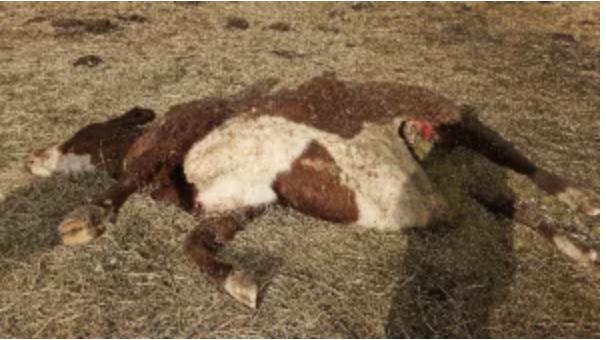
A yearling male wolf in Grand County has become the 17th wolf to die in Colorado in the past two years. Colorado Parks and Wildlife announced that its staff killed the wolf on Aug. 4 because it was believed to...

Douglas County approves $7.5 million for Gold Crown Field House in Castle Rock
Nicholas Fogleman
nicholas.fogleman@denvergazette.com
Updated 10 hours ago
The Douglas County Board of Commissioners approved a $7.5 million funding agreement Tuesday to help build a new indoor sports facility in Castle Rock. The facility is the result of a partnership between the county, the Town of Castle Rock...

Former Parker police sergeant pleads guilty to unlawful sexual conduct, misconduct charge
Nicholas Fogleman
nicholas.fogleman@denvergazette.com
Updated 1 day ago
Former Parker Police Department Sgt. Troy Brienzo pleaded guilty Monday to a felony charge of unlawful sexual conduct by a police officer and first-degree official misconduct in Douglas County District Court. Brienzo entered the guilty pleas before Judge Ryan Stuart,...

U.S. News names Saint Joseph best hospital in Colorado, ending University of Colorado Hospital’s 13-year streak
Nico Brambila
nico.brambila@denvergazette.com
Updated 1 day ago
University of Colorado Hospital is no longer Colorado’s top-ranked hospital for the first time in more than a decade, with Intermountain Health Saint Joseph Hospital taking the No. 1 spot in U.S. News & World Report’s latest rankings. Located on...

Appeals filed to send Project Taurus decision to the Colorado Springs City Council
Brennen Kauffman
brennen-kauffman@coloradopolitics.com
Updated 1 day ago
At least one appeal has been filed over the proposed large-scale data center in Colorado Springs, sending the final decision to the Colorado Springs City Council. The filing seeks to overturn the Planning Commission’s decision on July 23 to deny...
Denver City Council keeps 2 a.m. nightlife cutoff, approves $18 million for George Floyd protest claims
Deborah Grigsby
deborah.smith@denvergazette.com
Updated 1 day ago
Nightlife establishments will not get a two-hour operating extension after the Denver City Council passed an amended version of a bill that keeps the current 2 a.m. closing time. As originally proposed, venues would have been able to keep music,...
PREV
PREVIOUS

The need for a governor to say “no” to his friends | SONDERMANN
A wise man once remarked that the real test of a governor is his willingness to turn down and reject the pleadings of political friends and allies. That gentleman knew something of what he spoke. He occupied the corner-office executive chambers on the main floor of the State Capitol for three terms. For six years, […]

Trump order aims to help more people get retirement savings plans in time for new federal match
WASHINGTON • President Donald Trump signed an executive order on Thursday calling for a new government website where people in the United States can find and compare private-sector retirement savings accounts, aiming to help millions of workers whose employers do not offer such plans. The order is intended to help more people gain access to retirement plans before […]