

Colorado eyes licensure, new oversight body for autism therapy providers
A panel of Colorado legislators on Wednesday approved a bill establishing a new regulatory body and licensure requirements for professionals who provide therapy for children on the autism spectrum, as well as for the facilities in which they work.
House Bill 1425 creates the Colorado Behavior Analyst Board within the Department of Regulatory Agencies and requires professionals working in the field of applied behavior analysis, or ABA, to be licensed starting on July 1, 2028. ABA is a therapeutic approach that centers on managing symptoms by improving social and communication skills for children with autism and intellectual and developmental disabilities.
If the bill passes, Colorado will become the 40th state to enact licensure for applied behavior analysis providers and the third state to license ABA facilities.
The state has seen a recent uptick in reports of alleged fraud and abuse by ABA providers, according to Logan Ellett of the Division of Child Welfare. The Colorado Department of Human Services has received 35 complaints against 15 different clinics across the state, but the agency is unable to do anything about it since it lacks oversight authority over the facilities, officials said.
Ellett said the agency has received complaints of children being served raw chicken, medication overdoses, children being restrained, and facilities employing registered sex offenders.
A federal audit also found nearly $78 million in improper Medicaid payments for ABA services.
Rep. Kyle Brown, D-Louisville, a prime sponsor of HB 1425, said facilities are facing allegations that they are pulling kids out of school to provide them additional ABA services so they can bill more hours when they’re not actually providing services, such as when kids are asleep.
“Without clear statutory authority to license ABA clinics and a regulatory framework for the licensing and monitoring of staff, (CDHS) anticipates continued abuse and neglect complaint allegations and an inability to ensure child safety in these clinics statewide,” Ellett said. “This puts children and staff in the clinics at risk and does not provide consumer protection to parents and guardians who are relying on these needed services for their children.”
A congressional committee is now probing reports of waste, fraud and abuse in Colorado’s Medicaid program, citing the alleged improper payments in autism services, as well as recent stories outlining over-billing in transportation spending.
Colorado’s Medicaid spending had surpassed $14.6 billion, of which $8.6 billion came from the federal government. That spending has doubled in the past decade, despite enrollment growing by only 7%.
Applied Behavior Analysis plays a “critical role” in supporting kids with autism spectrum disorder and intellectual development disabilities, Brown told the committee.
“As more families are relying upon these services, it becomes even more important that the state has clear and consistent standards in place to ensure quality and accountability across the board,” he said.
Rep. Lindsay Gilchrist, D-Denver, Brown’s cosponsor, said the bill is even more important as autism diagnoses continue to increase nationwide. As the mother of a child with autism, Gilchrist said she and her wife considered ABA therapy for their daughter and became familiar with many of the providers in the Denver metro area.
Shawn Davis, the father of a 16-year-old son with autism who has spent nine years in ABA, said raising his child is “one of the greatest blessings in my life.” But, he said, it comes with a lot of struggles most people aren’t aware of.
“When families seek ABA services, they are often not coming from a place of convenience,” he told the committee. “They are coming tired. They are coming worried. They are coming after months or years of trying to help their child. They are coming with hope in one hand and then fear in the other. They are trusting strangers with the person they love the most in the world.”
For children with autism, especially nonverbal children like his son, it can be difficult to communicate with their parents if something happens to them while in the care of an ABA provider, he said.
“There are parents across Colorado who hand their children to providers every day, knowing their child may not be able to describe mistreatment, fear, neglect, or harm,” Davis said. “We are asked to trust completely and to hope the system is worthy of that trust. That is why this bill matters so deeply.”
While no witnesses spoke in opposition to the bill, several members of the House Health and Human Services Committee expressed worries about imposing additional regulations.
The bill was introduced just a day before its committee hearing and is 52 pages long, making it hard for members to get a good understanding of the legislation and reach out to stakeholders in their districts before hearing it in committee, they said.
“I’m scrambling right now in committee trying to reach out to people in rural areas, and my biggest concern is that adding more regulations is actually going to decrease what we have out there, and we’re barely holding on as it is,” said Rep. Dusty Johnson, R-Fort Morgan. “I appreciate all the work you’re doing, I feel like we just need to loop in a few more people and a little more time, which I know we don’t have.”
“I really do want to get to a yes on this,” she said.
The bill passed on an 8-5 party-line vote.

Tiered or capped? Battle over Colorado’s income taxes might come down to one number
Marianne Goodland
marianne.goodland@coloradopolitics.com
Updated 3 hours ago
The battle between two competing ballot measures — one seeking to cap Colorado’s income tax rate, the other pushing for a tiered system depending on income levels — might come down to whichever ballot proposal gets one more vote. The...

National House Democrats add Colorado seats held by Lauren Boebert, Jeff Hurd to target list
Ernest Luning
ernest.luning@coloradopolitics.com
Updated 7 hours ago
The national House Democrats’ campaign arm on Wednesday added the Colorado congressional district held by Republican U.S. Reps. Jeff Hurd and Lauren Boebert to the list of targeted seats the party believes are vulnerable in this year’s midterms. The Democratic...
Bennet settles campaign finance complaints, admits violating state law
Marianne Goodland
marianne.goodland@coloradopolitics.com
Updated 6 hours ago
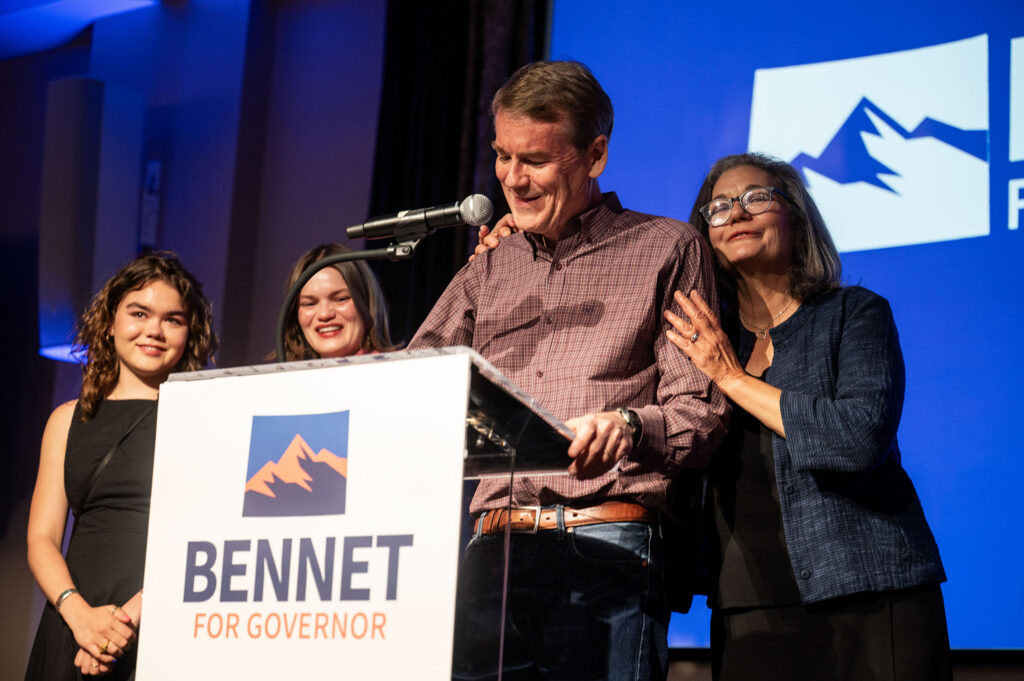
U.S. Sen. Michael Bennet’s gubernatorial campaign has agreed to pay a $7,433 fine for using his Senate campaign account to pay for gubernatorial campaign travel expenses. The July 31 settlement includes an admission by Bennet and his campaign that they...

Colorado to implement new laws on jail standards, safe haven rules, and agricultural labeling
Marissa Ventrelli
marissa.ventrelli@coloradopolitics.com
Updated 11 hours ago
In mid-August every year, a slew of recently passed laws in Colorado go into effect 90 days after the end of the legislative session. This year, all bills without a specified effective date or safety clause — a provision stating...
Colorado records 17th wolf death, a yearling tied to livestock losses
Marianne Goodland
marianne.goodland@coloradopolitics.com
Updated 7 hours ago
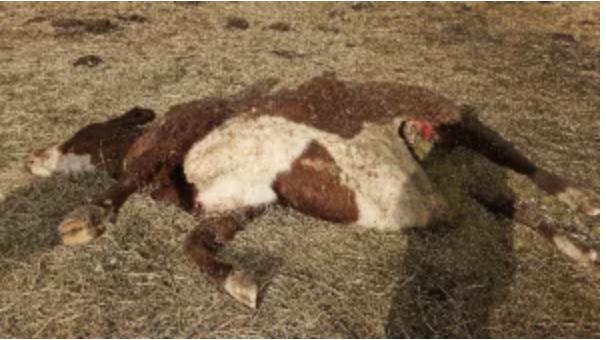
A yearling male wolf in Grand County has become the 17th wolf to die in Colorado in the past two years. Colorado Parks and Wildlife announced that its staff killed the wolf on Aug. 4 because it was believed to...

Douglas County approves $7.5 million for Gold Crown Field House in Castle Rock
Nicholas Fogleman
nicholas.fogleman@denvergazette.com
Updated 13 hours ago
The Douglas County Board of Commissioners approved a $7.5 million funding agreement Tuesday to help build a new indoor sports facility in Castle Rock. The facility is the result of a partnership between the county, the Town of Castle Rock...

Former Parker police sergeant pleads guilty to unlawful sexual conduct, misconduct charge
Nicholas Fogleman
nicholas.fogleman@denvergazette.com
Updated 2 days ago
Former Parker Police Department Sgt. Troy Brienzo pleaded guilty Monday to a felony charge of unlawful sexual conduct by a police officer and first-degree official misconduct in Douglas County District Court. Brienzo entered the guilty pleas before Judge Ryan Stuart,...

U.S. News names Saint Joseph best hospital in Colorado, ending University of Colorado Hospital’s 13-year streak
Nico Brambila
nico.brambila@denvergazette.com
Updated 2 days ago
University of Colorado Hospital is no longer Colorado’s top-ranked hospital for the first time in more than a decade, with Intermountain Health Saint Joseph Hospital taking the No. 1 spot in U.S. News & World Report’s latest rankings. Located on...

Appeals filed to send Project Taurus decision to the Colorado Springs City Council
Brennen Kauffman
brennen-kauffman@coloradopolitics.com
Updated 2 days ago
At least one appeal has been filed over the proposed large-scale data center in Colorado Springs, sending the final decision to the Colorado Springs City Council. The filing seeks to overturn the Planning Commission’s decision on July 23 to deny...

Denver City Council keeps 2 a.m. nightlife cutoff, approves $18 million for George Floyd protest claims
Deborah Grigsby
deborah.smith@denvergazette.com
Updated 2 days ago
Nightlife establishments will not get a two-hour operating extension after the Denver City Council passed an amended version of a bill that keeps the current 2 a.m. closing time. As originally proposed, venues would have been able to keep music,...
PREV
PREVIOUS
Appeals court recognizes weekend, holiday rule applies to judicial review deadline
Colorado’s second-highest court clarified for the first time last week that the rule extending deadlines in civil cases when the final day falls on a weekend or holiday also applies to litigants seeking review of governmental decisions. Nicholas A. Rigato was incarcerated at Fremont Correctional Facility when prison officials found him guilty of three conduct […]

First ever disciplinary trial of a Colorado judge scheduled under new system
A disciplinary panel on Thursday scheduled a mid-August hearing to adjudicate the alleged misconduct of Montezuma County Court Judge Ian J. MacLaren. Following voters’ passage of constitutional Amendment H in November 2024, adjudication of serious judicial misconduct allegations is open to public scrutiny earlier in the process. The amendment also created a system in which three-member panels […]