

Union presses Douglas County School District to negotiate first contract in 13 years
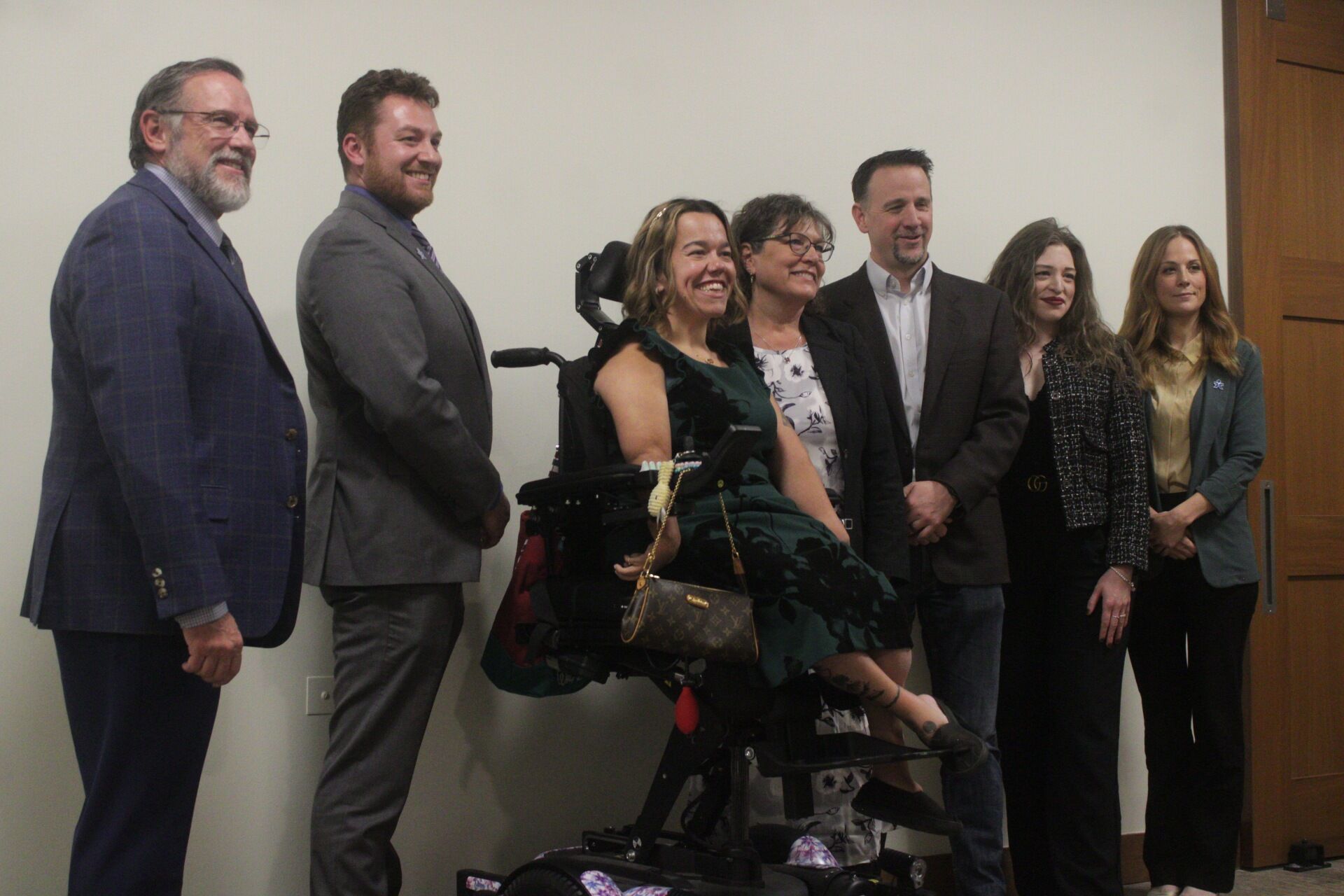
A Douglas County teachers’ union is urging the Douglas County School District to begin negotiations for a collective bargaining agreement after going for more than 13 years without one.
The Douglas County Federation of Teachers (DCF) asked the Douglas County School District Board of Education to pass a resolution recognizing the union as the bargaining representative for teachers and staff and to begin a process to reach a collective bargaining agreement for 2026–2027.
Union officials framed the benefits as serving a common good for staff, parents, students and taxpayers at a time when districts are competing for a limited number of educators.
Critics said a collective bargaining agreement means giving up authority to an outsider — meaning the labor organization. Some suggested that unionization would detract, rather than maintain or improve, the district’s academic performance.
Douglas County boasts of being the top-scoring district in the Denver metro area. The district also prominently notes on its website that its graduation rate — at 93.6% — is the highest in the region.
The discussion occurred at a school board meeting last week.
“Our message tonight is simple — we are here to say collective bargaining strengthens our schools,” DCF President Lucy Squire, a third-grade teacher, said.
Douglas County teachers operated under a periodically renewed collective bargaining agreement for more than 40 years before a board ended future negotiations in 2012 without reaching a new agreement. The district has operated without a CBA since then.
“There was such mutual respect and collaboration that DCF had a seat in the superintendent’s cabinet,” DCF Executive Director Fiona Boomer said.
CBAs can standardize benefits, including planning time, class size, reimbursements, salary, insurance, evaluations, grievance procedures, professional development and staff representation, union officials said.
“Compensation usually only makes up 10% of the topics covered,” Boomer said, noting negotiations include surveys to gather staff input and a vote by union members before an agreement can take effect. “The DCF union is made up of educators. We are not outsiders.”
Union officials noted that similarly sized districts — including Jefferson County, Denver, Cherry Creek and Aurora — have CBAs.
Douglas County is the third‑largest school district in the state, with 61,535 students in the 2025–2026 school year, behind Denver and Jefferson County, according to the Colorado Department of Education.
Douglas County’s average non‑charter full‑time teacher salary ranks 17th in the state at $77,156, below the state average and other similarly sized districts. The district’s student‑teacher ratio is 18:1, higher than in Denver, Jefferson County, Cherry Creek and Aurora, and the state average of 16:1.
“Ultimately, DCSD went from a nationally recognized destination for staff to one that educator preparation programs cautioned graduates to avoid,” Boomer said.
Union officials also shared examples from teacher surveys describing issues they said could be addressed through a CBA, including inconsistent policies across elementary, middle and high schools and sudden workload changes without staff input.
Union officials claimed that, in the years following the end of collective bargaining, DCF was no longer allowed to meet in school buildings after work hours, a practice previously secured by CBAs, they said. They also described actions they claimed inhibited union activity.
These included telling new staff there was no union and discouraging communication about union matters on district email systems, they said.
“It created an environment where teachers and staff worked in fear and isolation,” Boomer said. “Things were done to them, not with them.”
Union officials said the relationship between the district and union has improved in recent years and acknowledged that the district is one of the highest performing in the state.
“There is still room for improvement, and truly, a CBA could be that competitive edge,” Boomer said.
School district officials noted that no official policy prohibiting union‑related communication on district email exists. Union officials countered they have verified that emails containing certain words, such as “union,” were flagged.
“My understanding of the practice that was going on long before we were here was that staff could communicate with their members using district email or with each other using district email, but we were not releasing district email addresses,” Superintendent Erin Kane said.
A number of parents and former and current educators spoke in support of a CBA, saying it would provide stability, teacher recruitment and retention, and representation.
“The more direct communication you have between the hands‑on workers and the administration, the better and more efficient the job is and the better the outcomes are,” Stephen Mirandi, a DCSD educator, said.
“In the past 15 years, the pendulum has swung between traditional and conservative school boards,” Douglas County educator Sarah Spillan said. “A collective bargaining agreement would provide stability through any additional changes.”
Other parents and educators spoke against a CBA, citing existing state labor protections, contract flexibility and concerns about student outcomes.
“When a school board enters into a collective bargaining agreement, it voluntarily gives away significant authority and flexibility to an outside labor union,” Liz Wagner said during public comment.
One parent, Whitney Gragg, described the existing protections at the state level.
“While some say only a collective bargaining agreement can protect teachers, Colorado’s Teacher Employment and Contract Dismissal Act already provides strong statewide protections,” Gragg said. “These protections exist in state statutes for every teacher in Colorado, union contract or not.”
Others pointed to DCSD’s student performance as evidence against the need for change.
“The DCF wants exclusive representation over every teacher in this district, meaning the union speaks for all teachers, including those who don’t want it,” Lauren Rilling said. “DCSD is the No. 1 performing district in the Denver Metro area with a 93.6% graduation rate. This board should be protecting what is working, not handing it over to a political machine.”
The meeting was an information session, and no motion was passed. Board members directed staff to collect information on current policies related to union activity and to respond to follow‑up questions at a later date.
“I would personally like to hear from the superintendent and staff about how this works and what the policies are,” Director Brad Geiger said.

First Air Force Academy class of just 306 cadets started out in WWII barracks, faced high standards
Mary Shinn
mary-shinn@coloradopolitics.com
Updated 2 days ago
When the first class of the Air Force Academy arrived at Lowry Air Force in Denver, they were welcomed with an air show featuring bombers and fighter jets. “Most of us were overwhelmed,” recalled retired Col. Max Miller, the president...
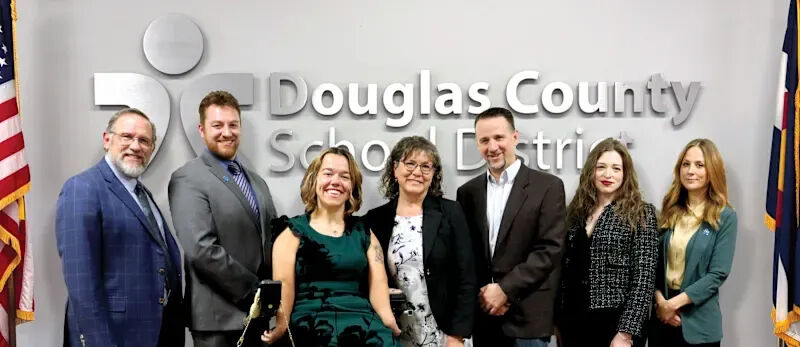
Douglas County schools to consolidate administrative offices into $29M headquarters to cut costs
Nicholas Fogleman
nicholas.fogleman@denvergazette.com
Updated 5 days ago
The Douglas County School Board is moving forward with a $29 million plan to consolidate district administrative operations into a new headquarters. It’s part of an effort to reduce annual costs as the district faces ongoing budget pressures. In June,...

U.S. Department of Education investigates DPS over same-sex kissing assignment
Nico Brambila
nico.brambila@denvergazette.com
Updated 2 days ago
The U.S. Department of Education is investigating Denver Public Schools for its handling of a French high school teacher who was fired earlier this year over requiring students to perform a same-sex kissing scene as part of a classroom acting...
U.S. Department of Education investigates DPS over same-sex kissing assignment
Nico Brambila
nico.brambila@denvergazette.com
Updated 2 days ago
The U.S. Department of Education is investigating Denver Public Schools for its handling of a French high school teacher who was fired earlier this year over requiring students to perform a same-sex kissing scene as part of a classroom acting...
Jeffco taxpayers could be on the hook for a possible child sex assault settlement
Matt Kyle
matt.kyle@denvergazette.com
Updated 5 days ago
Taxpayers may end up on the hook for a child sexual assault settlement, possibly worth up to $15 million, after Jeffco Public Schools failed to notify its insurance company in a timely manner about the case. The incident stems from...

Colorado Springs D-11 may present voters with $775 million bond measure
Eric Young
eric.young@gazette.com
Updated 6 days ago
Colorado Springs’ oldest school district could see new capital funding for the first time in over 20 years. Colorado Springs District 11’s Board of Education will decide whether to present a new, districtwide bond totaling $775 million to voters this...

Jeffco Public Schools sues Trump administration to protect funding after alleged transgender policies violation
Matt Kyle
matt.kyle@denvergazette.com
Updated 6 days ago
In the wake of several threats by the Trump administration to revoke federal funding, Jeffco Public Schools filed a lawsuit against the Department of Education seeking to protect that badly needed money. Jeffco has been under investigation by the DOE’s...
Q&A with Jeffco Public Schools’ interim superintendent on budget deficit, federal investigation
Matt Kyle
matt.kyle@denvergazette.com
Updated 3 days ago
For the upcoming school year, Robert Stein will serve as Jeffco Public Schools’ superintendent. The 66-year-old Denver native has been semi-retired for the last few years. He spent 40 years in education, as both a teacher and administrator. Most recently,...
Gov. Polis celebrates Colorado’s first-place education ranking by U.S. News
Marianne Goodland
marianne.goodland@coloradopolitics.com
Updated 7 days ago
Colorado officials said they have something to celebrate this week, in addition to the state’s sesquicentennial birthday on Saturday. U.S. News & World Report on Tuesday gave Colorado its top ranking for education efforts from pre-K to postsecondary, though it...

Colorado schools receive $24 million for free meals program
Marissa Ventrelli
marissa.ventrelli@coloradopolitics.com
Updated 1 week ago
The Colorado Department of Education is providing Colorado schools with nearly $24 million in grant funding to implement a free lunch program. Approved by voters in 2022, the Healthy School Meals for All provides free breakfast and lunch to all...
PREV
PREVIOUS

Proposal exempting some IT equipment from 'right-to-repair' law fails
A bill proposing an exemption to Colorado’s “right to repair” laws for “critical infrastructure” failed to pass its first committee in the House after clearing the Senate. Senate Bill 090 would have exempted information technology equipment considered “critical infrastructure” — defined by the federal government as physical and information systems and assets essential to the […]

Supreme Court justices to hear arguments on ending legal protections for Haitian, Syrian migrants
The Supreme Court will weigh arguments Wednesday over the Trump administration’s push to end legal protections for Haitians and Syrians as migrants fleeing war and natural disaster. Haitians and Syrians were among those from 17 countries with Temporary Protected Status, which allows migrants already in the U.S. to stay with work permits in 18-month increments, so long as the […]