

U.S. Supreme Court will hear challenge from Colorado Catholic preschools on state funding exclusion
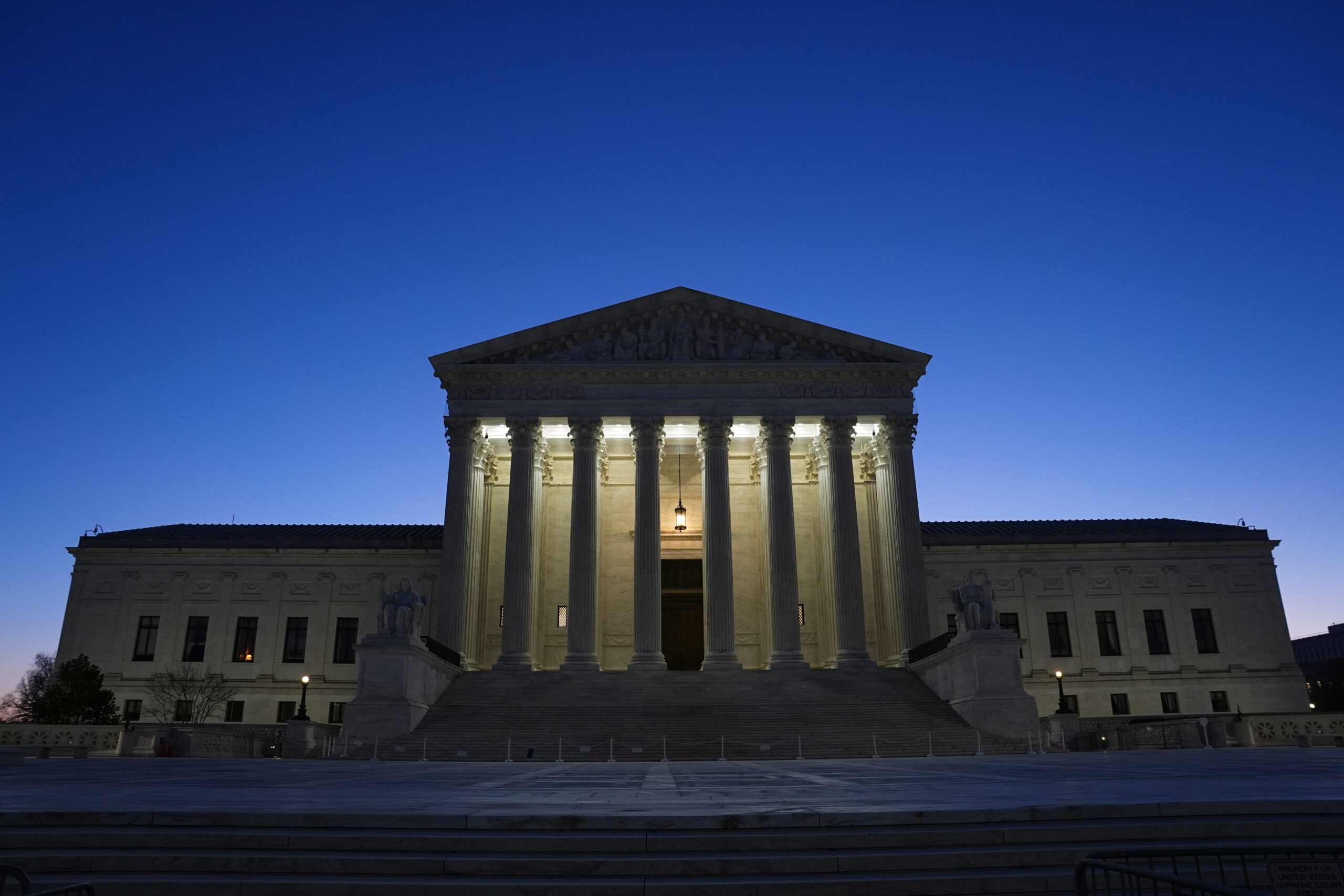
WASHINGTON (AP) — The Supreme Court will hear from Catholic preschools that say Colorado violated their religious rights by excluding them from a state-funded “universal” pre-kindergarten program over their admission policies.
The court agreed on Monday to take up the appeal from St. Mary Catholic Parish in its challenge against a state program. That challenge is supported by the Trump administration.
Joined by the Archdiocese of Denver, two Catholic institutions, St. Mary Catholic Parish in Littleton and St. Bernadette Catholic Parish in Lakewood, filed a lawsuit against the state of Colorado, alleging their preschools cannot participate in the publicly funded program because the church’s religious views on sexual orientation and gender identify run afoul of state requirements. Two parishioners of St. Mary with a preschool-age child are also parties to the litigation.
The state said that religious schools are welcome to participate but are required to follow Colorado’s nondiscrimination laws. The program was created by a 2020 ballot measure and provides public funding for free preschool at centers selected by parents.
It’s the latest religious rights case for the conservative-majority court, which has backed other claims of religious discrimination. Last month, the U.S. Supreme Court rejected the state’s ban on “conversion therapy” for children. The court’s near-unanimous decision called the Colorado law, passed in 2019, an “egregious assault” on the First Amendment.
Approximately 40,000 children are enrolled in the state’s pre-K program in its first year. The expanded access came after Colorado voters approved funding in 2020 for a “mixed-delivery” system of private and public providers, a step toward one of Gov. Jared Polis’ key campaign promises. Included in the program are 40 faith-based preschool operators that enroll more than 900 children.
The plaintiff preschools, however, have abstained from signing up out of concern that their faith-based views on personal pronouns, bathroom usage and same-sex marriage – all related to LGBTQ status – disqualify them from the state-funded program as long as the non-discrimination requirements are in effect.
Last year, the Denver-based federal appeals court ruled that Colorado’s universal pre-kindergarten program does not violate the rights of religious preschool operators by requiring participating organizations to refrain from discriminating on the basis of sexual orientation and gender identity, among other characteristics.
“The program is a model example of maintaining neutral and generally applicable nondiscrimination laws while nonetheless trying to accommodate the exercise of religious beliefs,” wrote Judge Richard E.N. Federico for the panel of Democratic-appointed judges in the Sept. 30 opinion.
In a statement Monday, Dan and Lisa Sheley, the Catholic parents who sued, said all they want is the “freedom to choose the best preschool for our kids without being punished for our faith.”
“Colorado promised families a universal preschool program, then cut out families like ours because we chose a Catholic education. We pray the Supreme Court will remind Colorado that universal means everyone,” they said.
In its brief, the state told the Supreme Court that the appellate court’s ruling is not in error.
“The Tenth Circuit correctly interpreted the state statute to allow no exceptions — and to confer no discretion to create any exceptions — to its equal-opportunity requirements,” the state said.
Meanwhile, the Trump administration filed an amicus brief supporting the challengers to the Colorado program, saying the U.S. government holds a “substantial interest in the preservation of the free exercise of religion” and in the “enforcement of rules prohibiting discrimination by government funding recipients.”
As part of the case, the court will consider narrowing a landmark 1990 decision over the spiritual use of peyote, a cactus that contains a hallucinogen called mescaline. That opinion, written by Justice Antonin Scalia, found religious practices don’t create exemptions from broadly applicable laws.
The case will be heard in the fall.
Denver Gazette and Colorado Politics editor Luige Del Puerto contributed to this report.

Parenting from prison: Inmates hope to be present in their children’s lives, while physically absent
Marianne Goodland
marianne.goodland@coloradopolitics.com
Updated 10 minutes ago
The room was decorated with balloons, the tables sparking bright with colors as the smell of pizza and cake wafted through the air. As did music. This was, after all, a father-daughter dance. Except this was not a typical father-daughter...
Colorado House ethics committee issues ‘stern letter’ to Democrat over caucus funds mismanagement
Marianne Goodland
marianne.goodland@coloradopolitics.com
Updated 1 day ago
The Colorado House ethics committee on Friday voted unanimously to issue a “stern letter” to Rep. Mandy Lindsay, D-Aurora, regarding her mismanagement of House Democratic caucus funds. The committee further voted to request that Lindsay resign as Democratic Caucus co-chair...
State seeks $50K penalty against GOP candidate Victor Marx over alleged campaign finance violations
Deborah Grigsby
deborah.smith@denvergazette.com
Updated 3 days ago
Republican gubernatorial candidate Victor Marx is looking at more than $50,000 in fines in what the Elections Division of the Office of the Secretary of State calls “unprecedented” campaign finance violations. The state has not imposed that fine yet, and...
Judge puts Colorado Libertarians’ secretary of state candidate on ballot after party’s 1st nominee drops out
Ernest Luning
ernest.luning@coloradopolitics.com
Updated 2 days ago
A Denver judge ruled Friday that the Colorado Libertarian Party’s pick for secretary of state will appear on the November ballot after the party’s original nominee withdrew one day after the deadline to replace minor party candidates. Following a hearing...

Regulators knew this marijuana product was harming people. It stayed on shelves for more than a year
Christopher Osher
chris.osher@gazette.com
Updated 9 hours ago
Colorado’s Marijuana Enforcement Division can take months or even years to issue formal safety warnings about marijuana products even when it receives reports that the products are harming people’s health, The Denver Gazette and ProPublica found. This article was produced...
Douglas County commissioners reject challenge to ballot language for 3 to 5 petition
Nicholas Fogleman
nicholas.fogleman@denvergazette.com
Updated 3 days ago
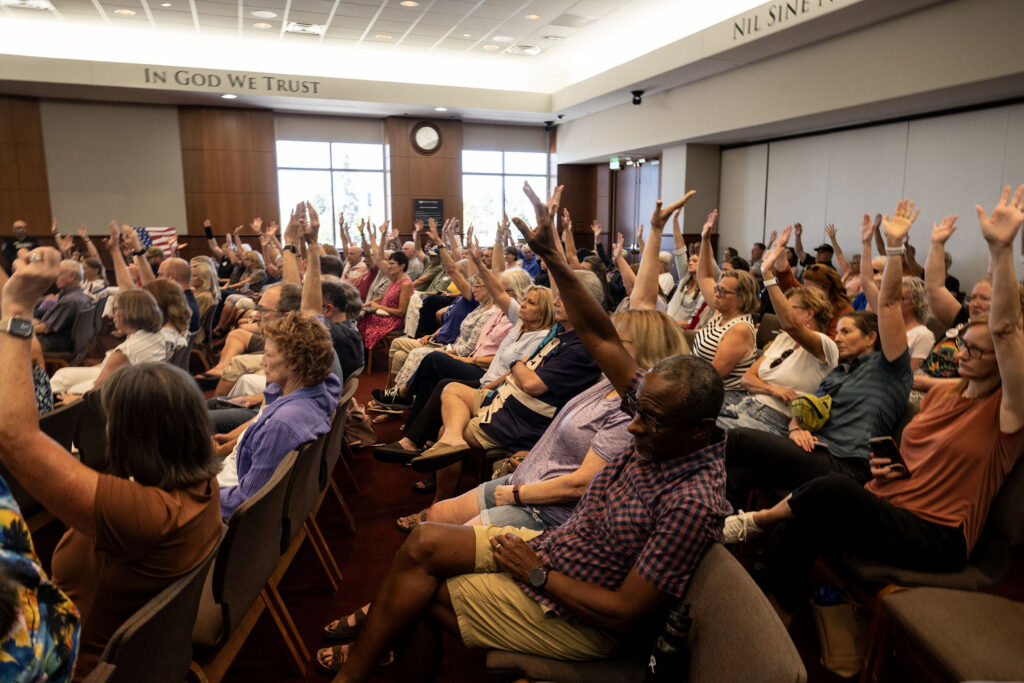
Douglas County commissioners denied a challenge Thursday to the language of a ballot initiative that would expand the board from three to five members. Following a contentious hearing that saw multiple audience members escorted out by police for disruptions, commissioners...
Favorability rating of Mayor Mike Johnston, Denver City Council slides
Nico Brambila
nico.brambila@denvergazette.com
Updated 3 days ago
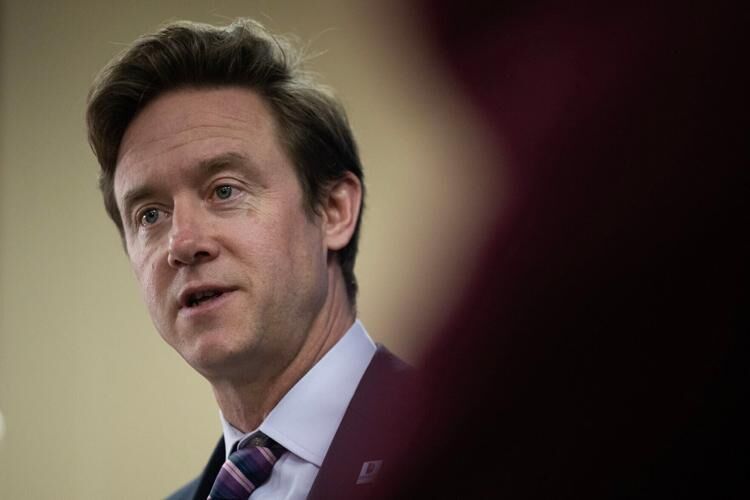
Denver Mayor Mike Johnston’s favorability rating fell 7 percentage points over the past year, while the City Council’s favorability rating dropped 3 percentage points, a new poll has found. A little more than a year after taking office, Johnston had...

Judge orders home confinement for Barry Morphew
Dennis Huspeni
dennis.huspeni@gazette.com
Updated 4 days ago
An Alamosa County district judge has ordered home confinement for Barry Morphew, who is accused of murdering his wife. Barry Morphew, 59, faces a first-degree murder charge in the death of his wife, Suzanne Morphew, who disappeared Mother’s Day weekend...

Ikon Pass company Alterra to move into former Denver Post building, create downtown ‘outdoor hub’
Bernadette Berdychowski
bernadette.berdychowski@denvergazette.com
Updated 4 days ago
What was once the home of two of Colorado’s longest-running daily newspapers could soon become a central location for the state’s ski resort and outdoor companies, city and state leaders said Thursday. Alterra Mountain Co. is moving its headquarters to...
Fentanyl sentencing, tax overhauls, transgender issues anchor Colorado’s 14 ballot measures
Marissa Ventrelli
marissa.ventrelli@coloradopolitics.com
Updated 8 hours ago
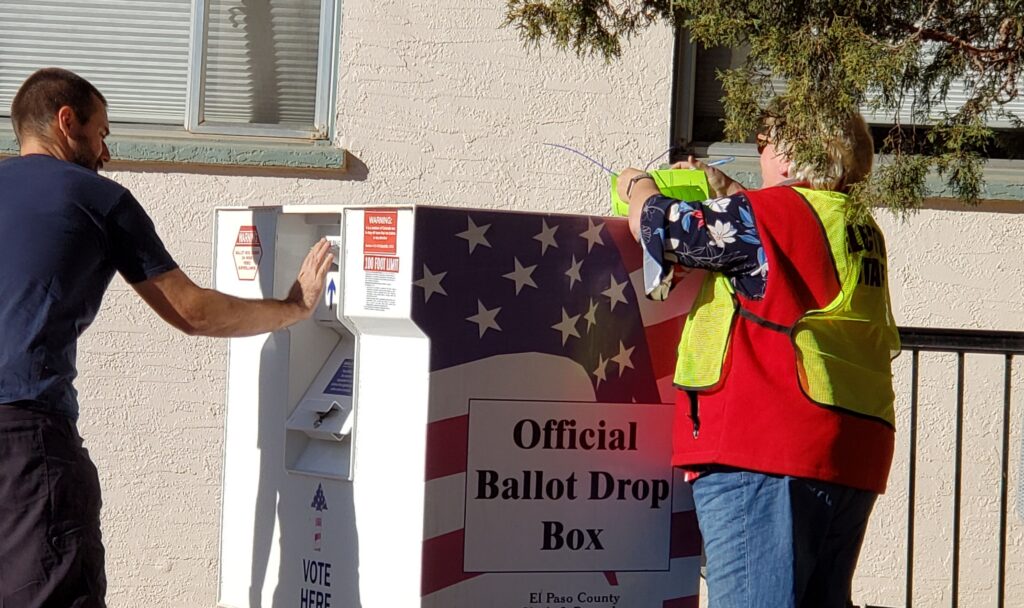
Fourteen statewide ballot measures await Colorado voters this November, offering a mix of criminal justice matters, tax overhauls and constitutional tweaks. Colorado’s 14 statewide ballot measures match the 2024 election for the most number in recent state history. The all-time...
PREV
PREVIOUS

Colorado company ready to build the lunar base, provide 'lunar mobility'
Original concepts for a moon base ranged from believable to outlandish. Following the success of Artemis II, which launched four astronauts around the moon over the course of 10 days, NASA is looking ahead as it attempts to take another giant leap. The goal? A permanent base on the moon. But what might that look […]

Businesses can claim refunds starting Monday for Trump tariffs declared unconstitutional
NEW YORK (AP) — A refund system for businesses that paid tariffs which the U.S. Supreme Court ruled President Donald Trump imposed without the constitutional authority to do so is scheduled to launch Monday. Importers and their brokers will be able to begin claiming refunds through an online portal beginning at 8 a.m., according to […]