

Colorado, Nevada water negotiators split on federal 10-year river management plan
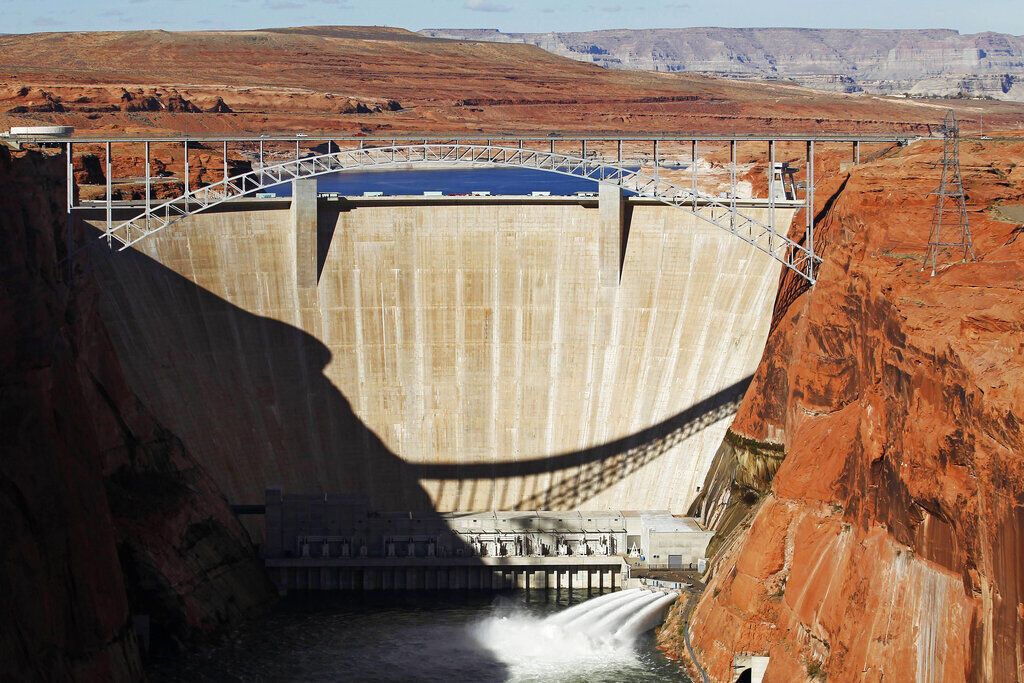
Two of the seven Colorado River negotiators weighed in Friday on a decade-long management framework unveiled a day earlier by the federal government.
With the seven states along the Colorado River failing to reach an agreement, the U.S. Bureau of Reclamation is planning to step in with a 10-year framework that would require negotiations every two years.
The reactions from the two governments — one from the Lower Basin and the other from the Upper Basin — diverged sharply, underscoring the long‑standing divide that has kept the states from agreeing on a post‑2026 operating plan before the current guidelines expire around Oct. 1.
The federal bureau’s Scott Cameron delivered his remarks on Thursday at the Getches‑Wilkinson annual Colorado River conference, hosted by the University of Colorado Boulder law school.
Becky Mitchell, Colorado’s commissioner to the Upper Colorado River Commission, said she “has no idea what that process would look like, constantly negotiating every two years. That would be incredibly difficult.”
She supports the framework tying to actual conditions, what the river is producing as well as what’s in the reservoirs, which she called a definite positive.
But she questioned how to fund projects if the negotiators are constantly renegotiating, and how to create certainty for the 40 million people who rely on the Colorado River.
Last month, the Lower Basin states — California, Arizona, and Nevada — put forward their own proposal, one that Mitchell and others believe could form the basis for the Reclamation plan.
That proposal is intended for 2027 and 2028, with “an estimated contribution of at least 700,000 acre-feet and a target of up to a million acre-feet. In total, the plan identifies more than 3.2 million acre-feet of water contributions to the system through 2028.”
Where do the Upper Basin states of Colorado, Wyoming, New Mexico and Utah fit in? The Lower Basin proposal states they “recognize the Upper Basin’s call for mediation and are open to that process.”
Current conditions, however, require immediate and measurable water reductions from every state.
The Upper Basin states have maintained that they receive only about half the allocation under the current seven-state agreement and would not agree to any further reductions.
Mitchell called the Lower Basin proposal a good start but one that will need “refinement.”
“(The Upper Basin states) stand ready to put a contribution program on the table. We stand ready to figure out what that looks like,” she said.
Mitchell added, “We’ve kicked the can down the road long enough. There’s a lot of cans. There’s a lot of lobbyists.”
The specter of litigation also looms on the horizon should a deal fail to materialize in time.
John Entsminger, the general manager of the Southern Nevada Water Authority and Nevada’s lead negotiator on the Colorado River, agreed that renegotiating every two years as part of the 10-year framework is not a good idea.
He said Nevada had put out a plan with an analysis of the process, not of actual numbers and elevations.
“You don’t have to go back and redo the whole thing every year,” he said.
But Entsminger called the bureau’s plan reasonable and rational, adding “we should take that,” along with a record of decision that would reflect analysis of a process to determine future operations.
Entsminger said he believes that would be the best way to operate the river and avoid litigation, at least until 2029.
Entsminger was among the drafters of the Lower Basin proposal.
Will this lead to ‘federalizing’ the river?
That’s a situation in which the government is making unilateral decisions in the absence of a seven-state agreement.
Entsminger said that, if the seven states can’t even agree on what the law of the river requires, then the decisions will ultimately be made by someone else — whether that ends up being the federal courts or Congress — because “a different set of humans is going to make the decisions other than the seven governors’ representatives.”
The risk for the Upper Basin states under a “federalized” river is that the U.S. Secretary of the Department of the Interior becomes the water master for them — an authority he currently doesn’t have.
“As hydrology worsens, consensus is harder to come by,” Entsminger said.
The strength of the entire basin has been when the seven states have worked together, Mitchell said, adding, “That’s where the durable solutions are.”
She said the question is not whether the river would be federalized. Rather, it’s how the basin can govern itself well enough that federalization is a backstop, not primary management.
But federalization is inevitable without an agreement.
How will water conservation play into making the river sustainable?
Entsminger drew laughs from the audience when he mentioned walking around the Boulder campus, pointing out there’s a metric ton of non-functional turf that doesn’t need to be there. Neither does it belong at Park Meadows Mall.
“The Front Range can do more” to conserve, he said.
He pointed out that Nevada has reduced its water use by over 40%, much of it in Las Vegas, through turf reductions and other landscaping initiatives.
Mitchell, while complimenting Nevada’s efforts, said, “Every state will have to work within our budgets and figure out how to make things work within our own states.”
Is litigation unavoidable?
“We still believe consensus is the best path forward,” Mitchell responded.
She also pointed out that litigation creates neither certainty nor more water.
It’s possible that the seven states will bring in a mediator, or perhaps multiple mediators, to help work out the solution.
Entsminger indicated he’s hopeful the two-year plan can move forward without litigation — and then turn to a mediator.


Regulators knew this marijuana product was harming people. It stayed on shelves for more than a year
Christopher Osher
chris.osher@gazette.com
Updated 21 hours ago
Colorado’s Marijuana Enforcement Division can take months or even years to issue formal safety warnings about marijuana products even when it receives reports that the products are harming people’s health, The Denver Gazette and ProPublica found. This article was produced...

Judge orders home confinement for Barry Morphew
Dennis Huspeni
dennis.huspeni@gazette.com
Updated 19 hours ago
An Alamosa County district judge has ordered home confinement for Barry Morphew, who is accused of murdering his wife. Barry Morphew, 59, faces a first-degree murder charge in the death of his wife, Suzanne Morphew, who disappeared Mother’s Day weekend...

Ikon Pass company Alterra to move into former Denver Post building, create downtown ‘outdoor hub’
Bernadette Berdychowski
bernadette.berdychowski@denvergazette.com
Updated 21 hours ago
What was once the home of two of Colorado’s longest-running daily newspapers could soon become a central location for the state’s ski resort and outdoor companies, city and state leaders said Thursday. Alterra Mountain Co. is moving its headquarters to...
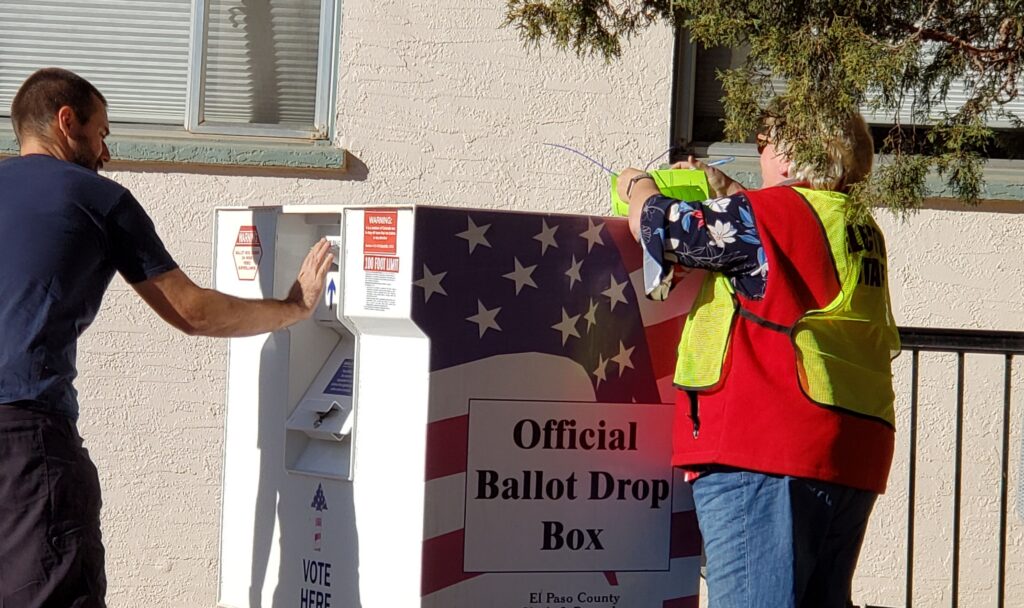
Fentanyl sentencing, tax overhauls and transgender‑related issues anchor Colorado’s 14 ballot measures
Marissa Ventrelli
marissa.ventrelli@coloradopolitics.com
Updated 21 hours ago
Fourteen statewide ballot measures await Colorado voters this November, offering a mix of criminal justice crackdowns, tax overhauls, and constitutional tweaks that ensure no one will accuse the ballot of being boring this year. Colorado’s 14 statewide ballot measures match...
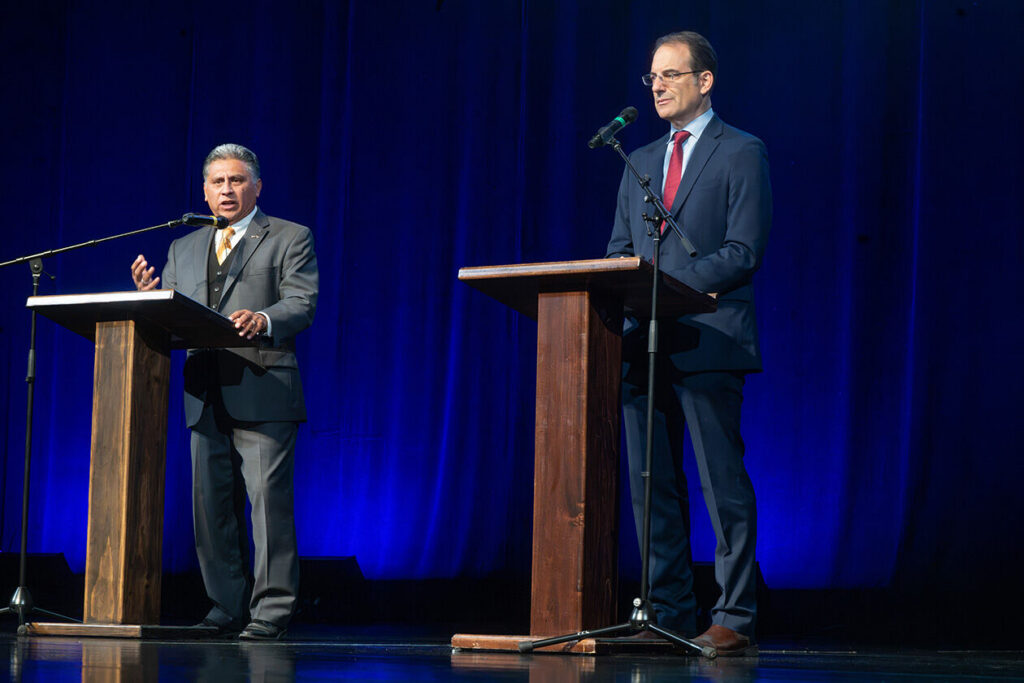
Colorado sues to stop Trump’s ban on Medicaid dollars paying for minors’ transgender transition
Thelma Grimes
thelma.grimes@coloradopolitics.com
Updated 19 hours ago
Colorado on Wednesday filed yet another lawsuit against the Trump administration — this time to stop a new rule that prohibits Medicaid dollars from paying for transgender transition services for minors. The question of transgender services has increasingly become a...
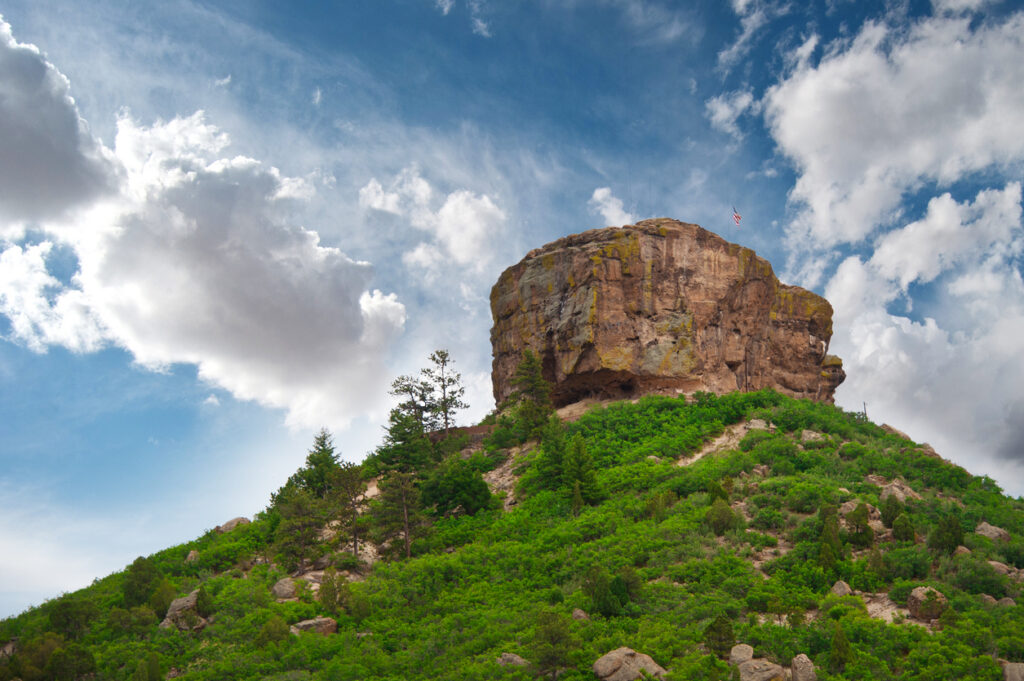
Castle Rock Town Council passes measure expanding authority over school-designated land and funds
Nicholas Fogleman
nicholas.fogleman@denvergazette.com
Updated 21 hours ago
The Castle Rock Town Council passed an ordinance Tuesday that gives the council broader authority to repurpose land and cash designated for school facilities. Douglas County School District officials argue the move would allow the town to do so without...

Denver plans to spend $50M on improvements to Sloan’s Lake
Nicole C. Brambila
nicole-c-brambila@coloradopolitics.com
Updated 2 days ago
Denver plans to spend $50 million for Sloan’s Lake improvements. Mayor Mike Johnston and Councilmembers Amanda P. Sandoval and Jamie Torres announced the project’s launch steps from the lake’s shore near the jetty in the park on Wednesday morning. “After...
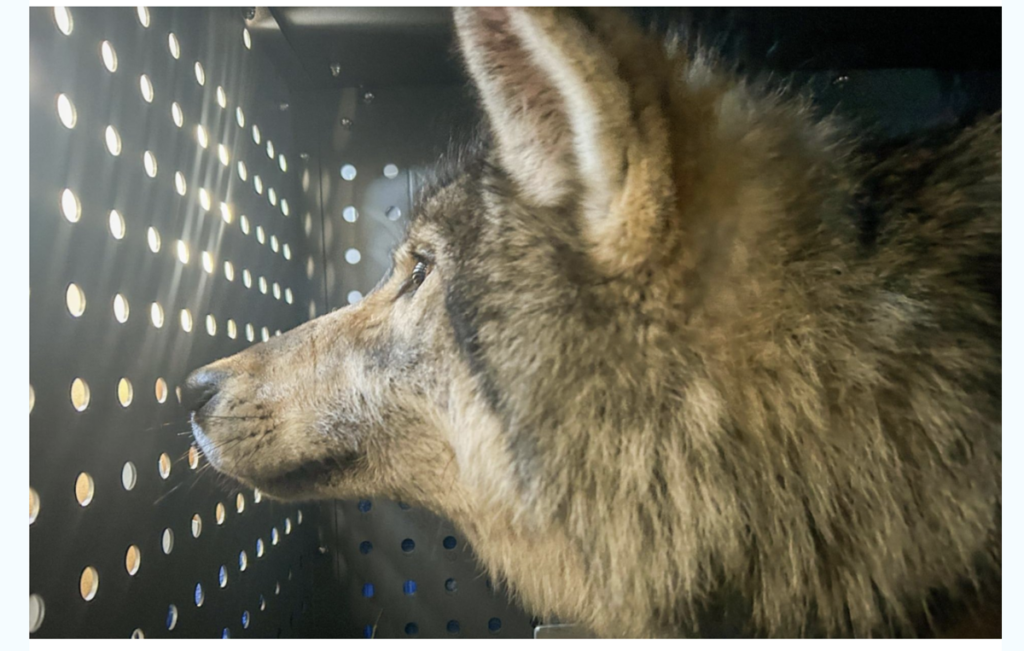
Wildlife commissioner pushes for tougher penalties after hunter accidentally kills Colorado wolf
Marianne Goodland
marianne.goodland@coloradopolitics.com
Updated 2 days ago
Colorado wildlife officials on Wednesday revisited the agency’s handling of violations involving protected species, prompting renewed debate over whether current penalties are sufficient. Colorado Parks and Wildlife Commissioner Rebecca Niemiec on Wednesday urged the agency to impose stronger penalties —...
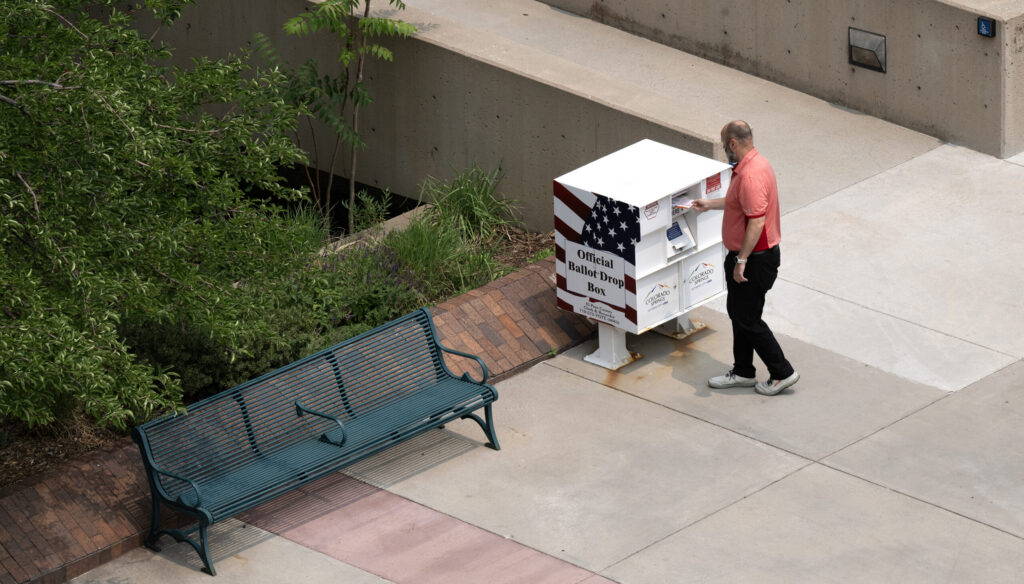
Petitions seek to place noise restrictions, surveillance cameras and water limits on Colorado Springs ballot
Brennen Kauffman
brennen-kauffman@coloradopolitics.com
Updated 21 hours ago
Petitioners in Colorado Springs are preparing to gather signatures to place restrictions on noise levels, developments that use a large volume of water and surveillance cameras that use automatic tracking technology. The City Clerk’s office on Monday gave final approval...

Colorado’s Parks and Wildlife chair’s decision to limit public comments sparks backlash from fellow commissioners
Marianne Goodland
marianne.goodland@coloradopolitics.com
Updated 2 days ago
Last week, the chairman of Colorado’s wildlife commission unilaterally decided to limit public comments, complaining, in particular, that elected officials often “grandstand” at meetings and noting that the election season is well underway. This week, the commission overturned its chair’s...
PREV
PREVIOUS
With no 7-state deal, federal agency turns to 10-year Colorado River strategy
The U.S. Department of the Interior is moving forward with a 10-year framework for managing the Colorado River after 2026, outlining a plan to issue new operating guidelines every two years as the seven basin states remain unable to reach an agreement. Even so, the Trump administration is still pushing for a seven-state process to […]

6 incumbents face challengers in primary in state races
With Colorado’s primary election just weeks away, voters will see plenty of new names on their ballots when they’re sent out next week. There will be some old names, too, as several incumbents are running opposed. Six lawmakers — one senator and five representatives — face challenges in their respective party’s primary. Senate District 9 […]