

With no 7-state deal, federal agency turns to 10-year Colorado River strategy
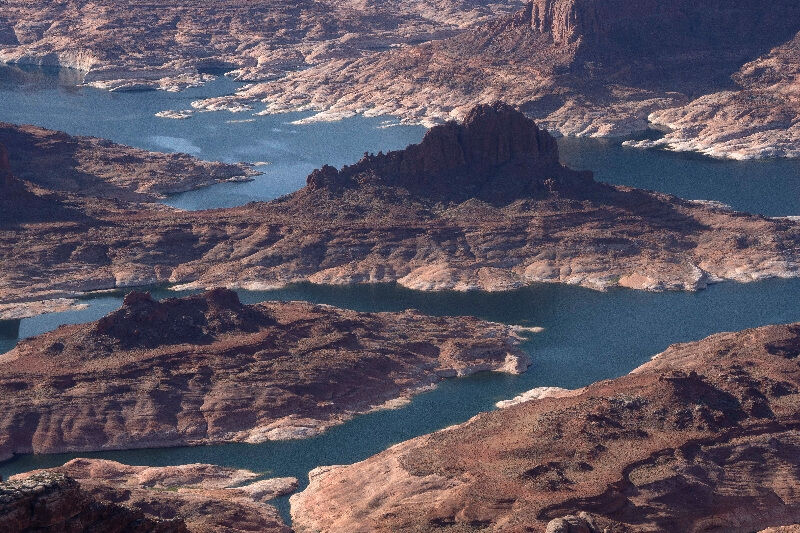
The U.S. Department of the Interior is moving forward with a 10-year framework for managing the Colorado River after 2026, outlining a plan to issue new operating guidelines every two years as the seven basin states remain unable to reach an agreement.
Even so, the Trump administration is still pushing for a seven-state process to craft post-2026 operating guidelines for the river.
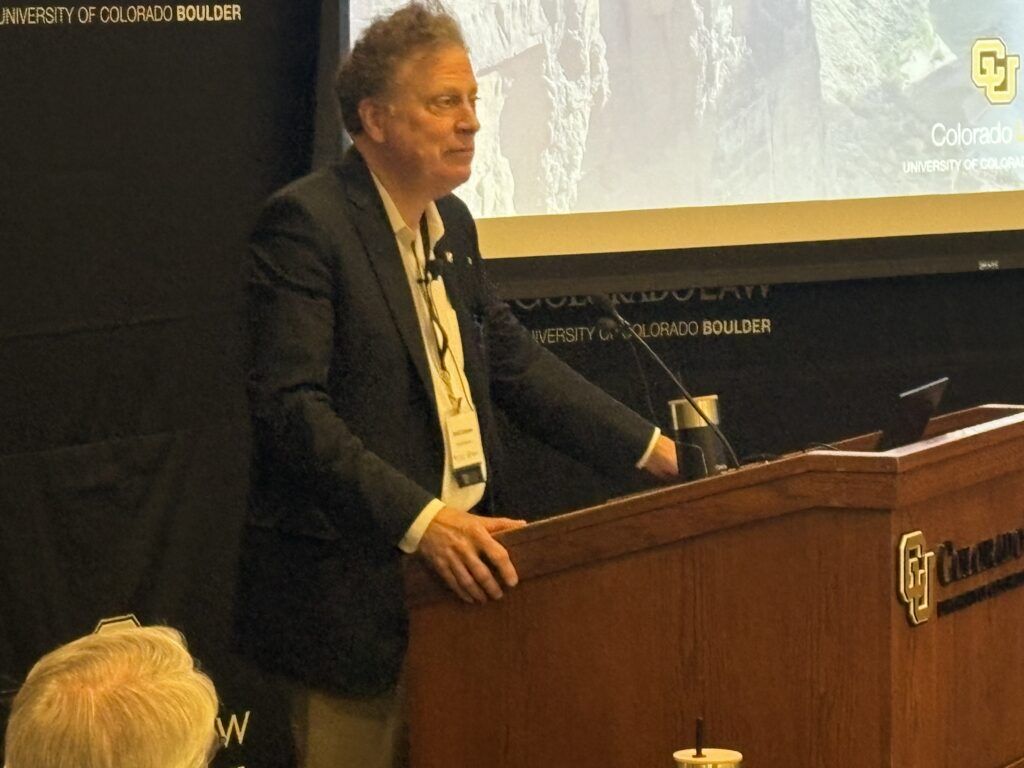
Scott Cameron, acting commissioner for the U.S. Bureau of Reclamation, outlined the department’s ongoing work — and what it may do if states fail to reach an agreement — during remarks on Thursday at the annual Getches-Wilkinson Colorado River conference at the CU Boulder law school.
Cameron told the audience that Interior Secretary Doug Burgum remains committed to helping the seven states solve their collective challenges.
Burghum adopted four principles when he began his role as secretary, according to Cameron.
- A seven-state deal
- The Interior Department’s political leadership must be “heavily, constantly and repeatedly involved with the seven states to get to the deal”
- Indian trust responsibilities
- Finally, if a seven-state deal cannot be reached — which is the status quo — the Interior secretary will do what he has to as water master of the Lower Basin and with limited authority in the Upper Basin.
Cameron joked that he has been spending a day or two at a time in the West with his “seven new best friends” — the representatives of the seven basin states — and their entourages, as they try to chart a path forward.
Then he shifted tone.
“I wish I could tell you that we had a solution,” he said.
Three times now, the department has provided solutions that it thought represented something the seven states could agree on, he said.
“Turns out we were wrong,” Cameron said. “We have certainly made the effort. We have been active. We have not been passive.”
Time is running short
Lake Powell’s new water year begins Oct. 1, and Lake Mead’s starts in December. The department had previously said it wants an agreement in place before those dates.
“Frankly, at this point, we are interested in any multistate agreement that would provide anybody anywhere a little bit more certainty and pose a little bit less risk,” Cameron said.
Given the lack of agreement, the bureau is striking out on its own. It published a draft environmental impact statementin January, with five broadly defined alternatives.
Cameron said, “It was almost inconceivable, at least in our minds, that some seven-state solution could not somehow fall within the boundaries of those five alternatives.”
Based on the impact statement, the bureau — which still does not have a permanent chief — has developed its preferred alternative, known as a 10-year framework.
It’s not what the federal government would have wanted, Cameron said, adding that a 20 or 30-year deal was the goal, but “we haven’t even been able to get seven states to agree on what a two-year deal would look like,” he said.
His next remark caught many in the room off guard.
If the 10-year framework moved forward, it would require the department to issue new operational guidelines every two years.
Colorado’s Becky Mitchell, who spoke on the framework on Friday morning, said that would require almost constant renegotiation, which she emphasized would be “incredibly difficult.”
Cameron explained the logic behind more negotiations, stating it’s based on the “highly unusual hydroelectric situation for the basin.”
He added that if the seven states eventually reach their own agreement — whether that happens in a year and a half or four and a half years — the department would gladly adopt that deal and let it replace the 10-year framework.
He said the guidelines will take into account what’s actually happening in the river and manage conservatively during low-inflow periods, with the option to transition to recovery if conditions improve across the basin.
Cameron wouldn’t commit to a firm deadline for when the final impact statement and a record of decision would be issued, saying they would be issued in mid- to late summer and would cover 2027 and 2028 operations.
Record-low snowpack further complicates situation
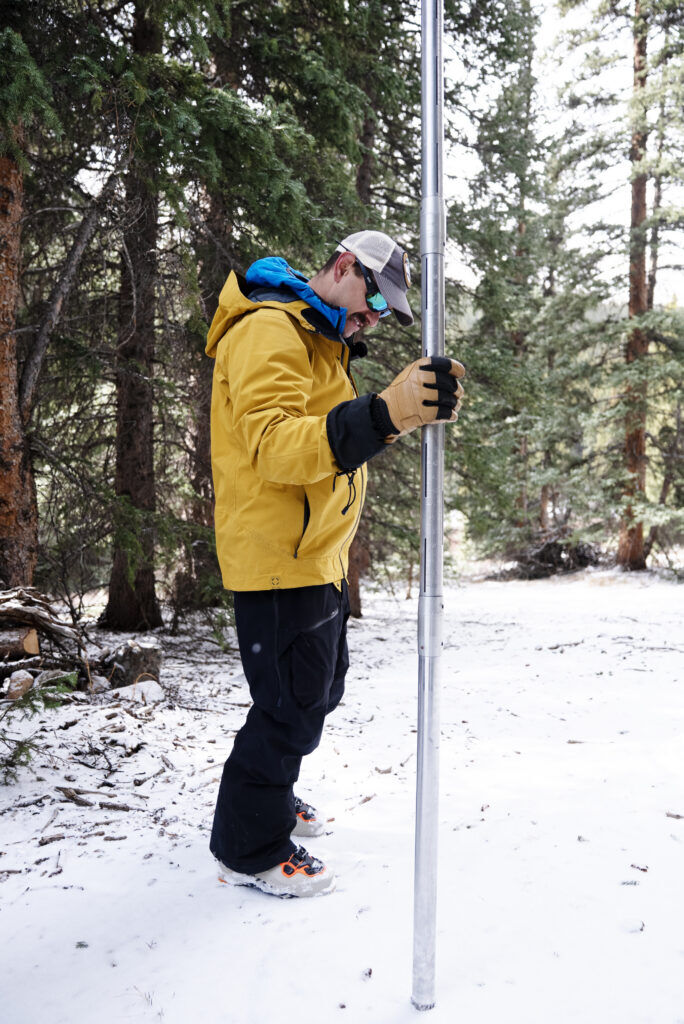
Efforts to reach agreement on post-2026 operating guidelines have been made even more difficult this year by record-low snowpack, which has pushed Lake Mead and Lake Powell to critically low levels.
Lake Powell, in particular, is only about 158 feet above “dead pool,” the point at which the reservoir can no longer generate hydropower.
Federal and state officials are not waiting for the reservoir to fall that far. They have set higher thresholds — about 3,500 feet above sea level — that would trigger additional action.
As of June 4, Powell was at 3,527.94 feet. It dropped more than 32 feet in the past year.
Cameron said maintaining those elevations is essential for protecting operational reliability, redundancy for water delivery and flexibility for power plant operations.
While his “seven best friends” have repeatedly reminded him that energy is not particularly important and that they’re worried about water, Cameron insisted there is a connection.
Cameron said, “If you look at the growth of data centers across the West, some of them, if not all of them, use water. And those data centers absorb between 60 and 80 megawatts of energy each.”
That need for energy for data centers has now become part of the conversation about the next operating guidelines, Cameron said.
The bureau took action in April to release water from Flaming Gorge, one of three reservoirs on the upper Colorado River Basin, to shore up Lake Powell. The bureau chose not to tap the other two reservoirs — Blue Mesa in Gunnison County and Navajo, which straddles the Colorado-New Mexico border — given the low levels at those reservoirs.
The bureau also decided to cut the amount of water sent from Lake Powell to Lake Mead by 1.5 million acre-feet.
“We’ve succeeded in making everybody unhappy and everybody mad, which maybe means we’re doing the right thing,” Cameron said.


Colorado farmers, ranchers wrestle with hurdles amid extreme drought conditions
Shen Wu Tan (Special to The Denver Gazette)
shen-wu-tan@gazette.com
Updated 1 month ago
Some producers take drastic steps to adapt to dry climate, record-low snowpack This is the first time that Jim Magnuson, who operates a family farm in the rural town of Eaton, can ever recall planting only 75% of his acreage. ...

Colorado produce not tied to nationwide cyclospora outbreak, agriculture officials say
Marissa Ventrelli
marissa.ventrelli@coloradopolitics.com
Updated 1 month ago
There is no indication that the recent outbreak of cyclospora, a fecal parasite that has contaminated food and water across nearly every state, can be linked to produce grown in Colorado, according to the state’s Department of Agriculture. “Colorado growers...
Colorado on the hook for $1 million in costs to pay for wolves’ livestock kills
Marianne Goodland
marianne.goodland@coloradopolitics.com
Updated 4 months ago
After paying more than $700,000 in March to ranchers for livestock lost to wolves, the Colorado Parks and Wildlife Commission is poised to approve two additional claims totaling $262,000 at its meeting this week. Those approvals would bring total payouts...
Overtime for farms, school safety, public office rules: What’s new in Colorado law
Marianne Goodland
marianne.goodland@coloradopolitics.com
Updated 4 months ago
Gov. Jared Polis signed 25 bills into law Monday, bringing changes that will affect workers, families, schools, and local governments across Colorado. The new laws deal with a range of issues – from overtime rules for farmworkers to limits on...

While growth slows statewide, small-town populations in Colorado boom
Savannah Eller
savannah-eller@coloradopolitics.com
Updated 4 months ago
A proposed housing project could more than double the population of Calhan, a town of just 760 on the Eastern Plains outside Colorado Springs. For some small towns on the Front Range, it’s a familiar situation. Colorado’s overall population growth...
Governor’s wildlife commission picks face pushback ahead of Colorado Senate hearing
Marianne Goodland
marianne.goodland@coloradopolitics.com
Updated 5 months ago
Colorado’s largest coalition of hunters, anglers, and wildlife conservation groups is urging state lawmakers to reject two of Gov. Jared Polis’ latest nominees to the Colorado Parks and Wildlife Commission, setting up a contentious confirmation hearing before the Senate Agriculture...
Cannabis overhaul introduced in Colorado Senate
Chris Osher
chris-osher@gazette.com
Updated 5 months ago
Colorado lawmakers on Wednesday introduced a measure that, if approved, would place a ballot proposal before voters this fall that contains changes backers say would improve consumer safety and overhauls how the marijuana industry is taxed. The proposed ballot initiative would fund a testing...
Colorado House passed a bill raising threshold for agriculture overtime by one vote
Marianne Goodland
marianne.goodland@coloradopolitics.com
Updated 5 months ago
The bill that would raise the overtime threshold for overtime pay for certain agricultural workers won the narrowest of votes Thursday in the Colorado House. Senate Bill 121 won a 33-32 vote, a dramatic difference from votes cast Wednesday on...
Colorado marijuana regulators pledge crackdown on intoxicating hemp
Christopher Osher
chris.osher@gazette.com
Updated 5 months ago
Citing potential tax avoidance, ‘serious risk to public safety,’ Marijuana Enforcement Division warns companies about swapping illegal chemically converted hemp for marijuana This article was produced for ProPublica’s Local Reporting Network in partnership with The Denver Gazette. Colorado regulators announced...
Senate-passed farmworkers overtime bill easily clears Colorado House committee
Marianne Goodland
marianne.goodland@coloradopolitics.com
Updated 5 months ago
A proposal to ease Colorado’s overtime requirements for agricultural employers cleared a key House committee Monday, setting up a broader fight over whether the state should scale back a labor policy adopted just five years ago. The House Agriculture, Water...
PREV
PREVIOUS

After prison release, Tina Peters faces tight parole limits, ongoing legal troubles
Released from prison this week, former Mesa County Clerk Tina Peters now begins a parole term that outlines strict limits on her movements and conduct, while separate ethics and campaign‑finance cases continue to move forward. Peters’ parole, as first reported by 9News, required her to report immediately to Mesa County upon release and check in […]
Colorado, Nevada water negotiators split on federal 10-year river management plan
Two of the seven Colorado River negotiators weighed in Friday on a decade-long management framework unveiled a day earlier by the federal government. With the seven states along the Colorado River failing to reach an agreement, the U.S. Bureau of Reclamation is planning to step in with a 10-year framework that would require negotiations every […]